• Fri frakt över 249 kr
  • •
  • Snabba leveranser
  • •
  • Billiga böcker
Kundservice

Du är på sajten för privatpersoner.

Företag, bibliotek eller offentlig verksamhet?

Du handlar på classic.bokus.com, där alla dina funktioner finns intakta.
Till classic.bokus.com
Bokus logotyp. Gå till startsidan.
  • Erbjudanden
  • Student
  • Topplistor
  • Barn & ungdom
  • Bokus Play
  • E-böcker
  • Ljudböcker
  • Pocketböcker
  • Spel & pussel

10% rabatt på allt med kod NYSTART10 →

Sidfot

Mina sidor

    Hjälp

    • Kundservice
    • Vanliga frågor och svar
    • Frakt och leverans
    • Retur vid ångerrätt
    • Reklamera vara
    • Betalning
    • Köpvillkor
    • Allmänna villkor
    • Information om webbplatsens tillgänglighet

    Om Bokus

    • Om oss
    • Pressrum
    • För studenter
    • För företag
    • För bibliotek och offentlig verksamhet
    • För leverantörer
    • Hållbarhet

    Populärt

    • Aktuella erbjudanden
    • Presentkort
    • Studentlitteratur
    • Nya böcker
    • Topplistor
    • Signerade böcker
    • Engelska böcker

    Inspiration

    • Boktips
    • BookTok
    • Populära bokserier
    • Barnbokskaraktärer
    • Populära författare
    Logotyp för Bokus
    Följ oss på Facebook (extern länk)Följ oss på Instagram (extern länk)Följ oss på YouTube (extern länk)Följ oss på TikTok (extern länk)
    bokus @ CookiesAnpassa cookiesIntegritetspolicyKöpvillkor
    Till Citymail hemsida (extern länk)Till Budbee hemsida (extern länk)Till Postnord hemsida (extern länk)Till Schenker hemsida (extern länk)Till Early Bird hemsida (extern länk)Till Walleys hemsida (extern länk)
    1. Ekonomi och Ledarskap
    2. Nationalekonomi
    3. Internationell ekonomi

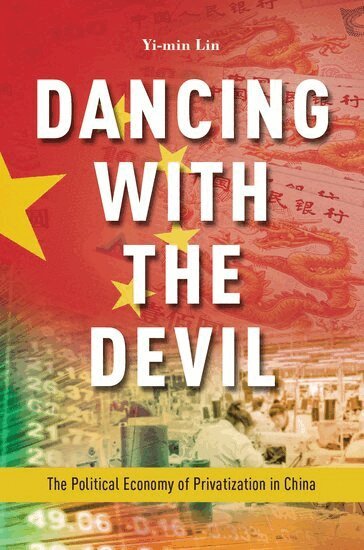
    Dancing with the Devil

    The Political Economy of Privatization in China

    AvYi-min Lin

    Häftad, Engelska, 2017

    598 kr

    Beställningsvara. Skickas inom 5-8 vardagar. Fri frakt över 249 kr.

    Fler format och utgåvor

    Inbunden

    2 145 kr

    E-bok

    347 kr

    E-bok

    347 kr

    Beskrivning

    From 1978 through the turn of the century, China was transformed from a state-owned economy into a predominantly private economy. This fundamental change took place under the Chinese Communist Party (CCP), which has been ideologically and politically predisposed to suppress private ownership.In Dancing with the Devil, Yi-min Lin explains how and why such a paradoxical reality came about. He shows that private ownership became a necessary evil for the CCP because the public sector was increasingly unable to address two essential concerns for regime survival: employment and revenue. Focusing on political actors as major change agents, Lin examines how their self-interested behavior led to the decline of public ownership in the context of China's evolving demographics and fiscal system. The constraints and incentives associated with these factors help explain CCP leaders' initial decision to allow limited private economic activities at the outset of reform. They also shed light on the ballooning opportunism among lower officials, which undermined the vitality of public enterprises. Furthermore, they hold a key to understanding the timing of the massive privatization in the late 1990s, as well as its tempo and spread thereafter.Dancing with the Devil illustrates how the driving forces developed and played out in these intertwined episodes of the story. In so doing, it offers new insights into the mechanisms of China's economic transformation and enriches theories of institutional change.

    Produktinformation

    • Utgivningsdatum:2017-06-15
    • Mått:231 x 155 x 17 mm
    • Vikt:408 g
    • Format:Häftad
    • Språk:Engelska
    • Antal sidor:288
    • Förlag:OUP USA
    • ISBN:9780190682835

    Utforska kategorier

    • Internationell ekonomi inom Ekonomi och Ledarskap
    • Ekonomisk politik inom Ekonomi och Ledarskap
    • Statsvetenskap och politisk teori inom Samhälle och politik

    Mer om författaren

    Lin

    Recensioner i media

    Yi-min Lin's study illuminates the underlying economic and political forces that led the Chinese Communist Party to tolerate and even encourage the growth of private businesses, which he estimates accounted for about two-thirds of China's economic activity by 2014.

    Innehållsförteckning

    • Introduction Privatization and Institutional Change: Toward an Eclectic Perspective Driving Forces of Privatization Political Actors as Change Agents: The Main StorylineNote on Statistical Analyses, Data Sources and Chinese Materials 1. The Changing Fate of Private Ownership since 1949 Socialist Transformation and the Mao Era From Getihu to "Equal Protection" of Public and Private Property Rights Reversal or Moderation of Privatization? Broad Trends of ChangeSummary and Questions 2. Demographic Pressures Structure and Change of the Post-1949 Population Buildup of Employment Pressures Labor Market: Occupational and Spatial Movements Ageing and Old Age Support Summary 3. The Evolving Structure of Public Finance "Unified Revenue and Spending" Fiscal Contracts Revenue Partitioning Implications 4. Careerism and Moral Hazard in Early Marketization Large Is Beautiful: Political Performance Assessment under Economic Decentralization The TVE Spectacle The SOE Sideshow Summary5. Rule Bending for the Necessary Evil Uneven Paces of Early Privatization The Wenzhou Story RetoldBeyond Wenzhou Summary 6. FDI and Privatization Centrally Imposed Constraints and Local Rule Bending FDI Entry Mode and Resource Dependence Bi-polar Concentration of Risk Taking Summary 7. The Tipping Point and Beyond The Triggers The Political Bandwagon From Industrial Development to Urbanization Asset Stripping and Insider Control The End Game: SASAC and the Remaining SOEs Summary Conclusion Institutional Stability and Unintended Consequences of Rule Compliance Non-compliance and Political Risk Management Path Dependence in Endogenous Institutional Change Bibliography