Yinghong Cheng – författare
Visar alla böcker från författaren Yinghong Cheng. Handla med fri frakt och snabb leverans.
6 produkter
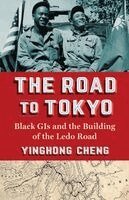
The Road to Tokyo
Black GIs and the Building of the Ledo Road
Inbunden, 2027
976 kr
Kommande
On a forgotten front of World War II, an all-Black Army unit, the 823rd Engineer Aviation Battalion, along with 9,000 Black GIs, was tasked with a perilous project. Their mission: build an international highway to send supplies to support China’s war against Japanese invasion. Dubbed the “Ledo …
The Road to Tokyo
Black GIs and the Building of the Ledo Road
Häftad, 2027
254 kr
Kommande
On a forgotten front of World War II, an all-Black Army unit, the 823rd Engineer Aviation Battalion, along with 9,000 Black GIs, was tasked with a perilous project. Their mission: build an international highway to send supplies to support China’s war against Japanese invasion. Dubbed the “Ledo …
Discourses of Race and Rising China
Inbunden, 2019
1128 kr
Lägg i varukorg
This book is a critical study of the development of a racialised nationalism in China, exploring its unique characteristics and internal tensions, and connecting it to other forms of global racism. The growth of this discourse is contextualised within the party-state’s political agenda to seek …
Discourses of Race and Rising China
E-bok, 2019
1502 kr
Lägg i varukorg
This book is a critical study of the development of a racialised nationalism in China, exploring its unique characteristics and internal tensions, and connecting it to other forms of global racism. The growth of this discourse is contextualised within the party-state’s political agenda to seek …
Discourses of Race and Rising China
Inbunden, 2027
1553 kr
Kommande
While the first edition analysed the historical roots of a racialized Chinese nationalism and its contemporary development, reflected in official ideology, popular culture as well as its perceptions of China in the world, the second edition will add a new chapter focusing on how the genetic science …
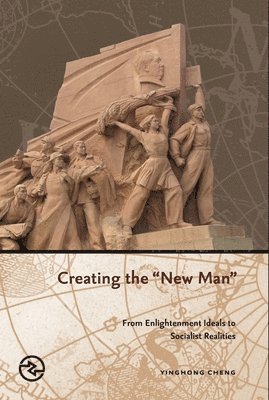
Creating the New Man
From Enlightenment Ideals to Socialist Realities
Inbunden, 2008
697 kr
Tillfälligt slut
The idea of eliminating undesirable elements from human nature to create a ""new man"" has been part of moral and political thinking worldwide for millennia. During the Enlightenment, European philosophers sought to construct an ideological framework for reshaping human nature. But it was only …