Yolanda Padilla - Böcker
Visar alla böcker från författaren Yolanda Padilla. Handla med fri frakt och snabb leverans.
2 produkter
2 produkter
360 kr
Skickas inom 10-15 vardagar
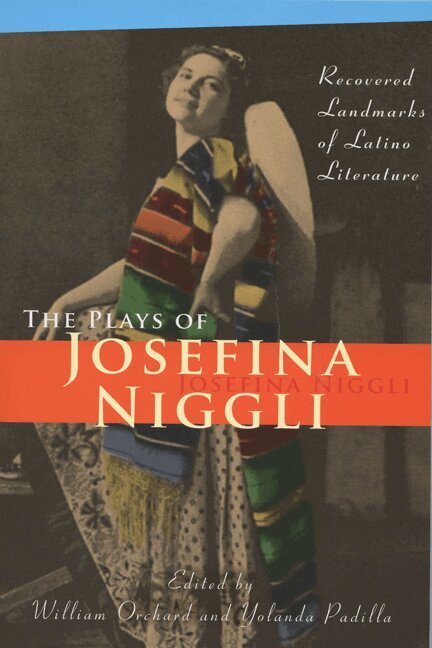
Josefina Niggli (1910-1983) was one of the most successful Mexican American writers of the early twentieth century. Born of European parents and raised in Mexico, she spent most of her adult life in the United States, and in her plays and novels she aimed to portray authentic Mexican experiences for English-speaking audiences. Niggli crossed borders, cultures, and genres, and her life and work prompt interesting questions about race, class, gender, modernity, ethnic and national identity, and the formation of literary canons. Although Niggli is perhaps best known for her fiction and folk plays, this anthology recovers her historical dramas, most of which have been long out of print or were never published. These plays are deeply concerned with the aftermath of the 1910 Mexican Revolution, imagining its implications for Mexico, Mexican Americans, and U.S.-Mexico relations. Included are ""Mexican Silhouettes"" (1928), ""Singing Valley"" (1936), ""The Cry of Dolores"" (1936), ""The Fair God"" (1936), ""Soldadera"" (1938), ""This Is Villa!"" (1939), and ""The Ring of General Macias"" (1943). These works reflect on the making of history and often portray the Revolution through the lens of women's experiences. Also included in this volume are an extensive critical introduction to Niggli, a chronology of her life and writings, and a selection of letters and reviews by, to, and about Josefina Niggli that provide illuminating context for the plays.
Bridges, Borders, and Breaks
History, Narrative, and Nation in Twenty-First-Century Chicana/o Literary Criticism
Häftad, Engelska, 2016
737 kr
Skickas inom 7-10 vardagar
This volume reassesses the field of Chicana/o literary studies in light of the rise of Latina/o studies, the recovery of a large body of early literature by Mexican Americans, and the "transnational turn" in American studies. The chapters reveal how "Chicano" defines a literary critical sensibility as well as a political one and show how this view can yield new insights about the status of Mexican Americans, the legacies of colonialism, and the ongoing prospects for social justice. Chicana/o literary representations emerge as significant examples of the local that interrogate globalization's attempts to erase difference. They also highlight how Chicana/o literary studies' interests in racial justice and the minority experience have produced important intersections with new disciplines while also retaining a distinctive character. The recalibration of Chicana/o literary studies in light of these shifts raises important methodological and disciplinary questions, which these chapters address as they introduce the new tools required for the study of Chicana/o literature at this critical juncture.