Yongshun Cai - Böcker
Visar alla böcker från författaren Yongshun Cai. Handla med fri frakt och snabb leverans.
9 produkter
9 produkter
State and Laid-Off Workers in Reform China
The Silence and Collective Action of the Retrenched
Inbunden, Engelska, 2005
578 kr
Skickas inom 10-15 vardagar
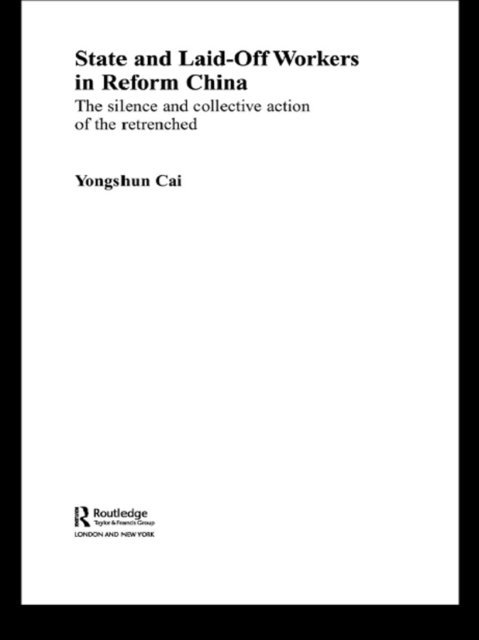
In the 1990s, the Chinese government launched an unprecedented reform of state enterprises, putting tens of millions of people out of work. This empirically rich study calls on comprehensive surveys and interviews, combining quantitative data with qualitative in its examination of the variation in workers' collective action. Cai investigates the difference in interests of and options available to workers that reduce their solidarity, as well as the obstacles that prevent their coordination. In addition, and perhaps more importantly, this book explores the Chinese Government’s policies and how their feedback shaped workers’ incentives and capacity of action.
State and Laid-Off Workers in Reform China
The Silence and Collective Action of the Retrenched
Häftad, Engelska, 2014
333 kr
Skickas inom 10-15 vardagar
In the 1990s, the Chinese government launched an unprecedented reform of state enterprises, putting tens of millions of people out of work. This empirically rich study calls on comprehensive surveys and interviews, combining quantitative data with qualitative in its examination of the variation in workers' collective action. Cai investigates the difference in interests of and options available to workers that reduce their solidarity, as well as the obstacles that prevent their coordination. In addition, and perhaps more importantly, this book explores the Chinese Government’s policies and how their feedback shaped workers’ incentives and capacity of action.
1 184 kr
Skickas inom 10-15 vardagar
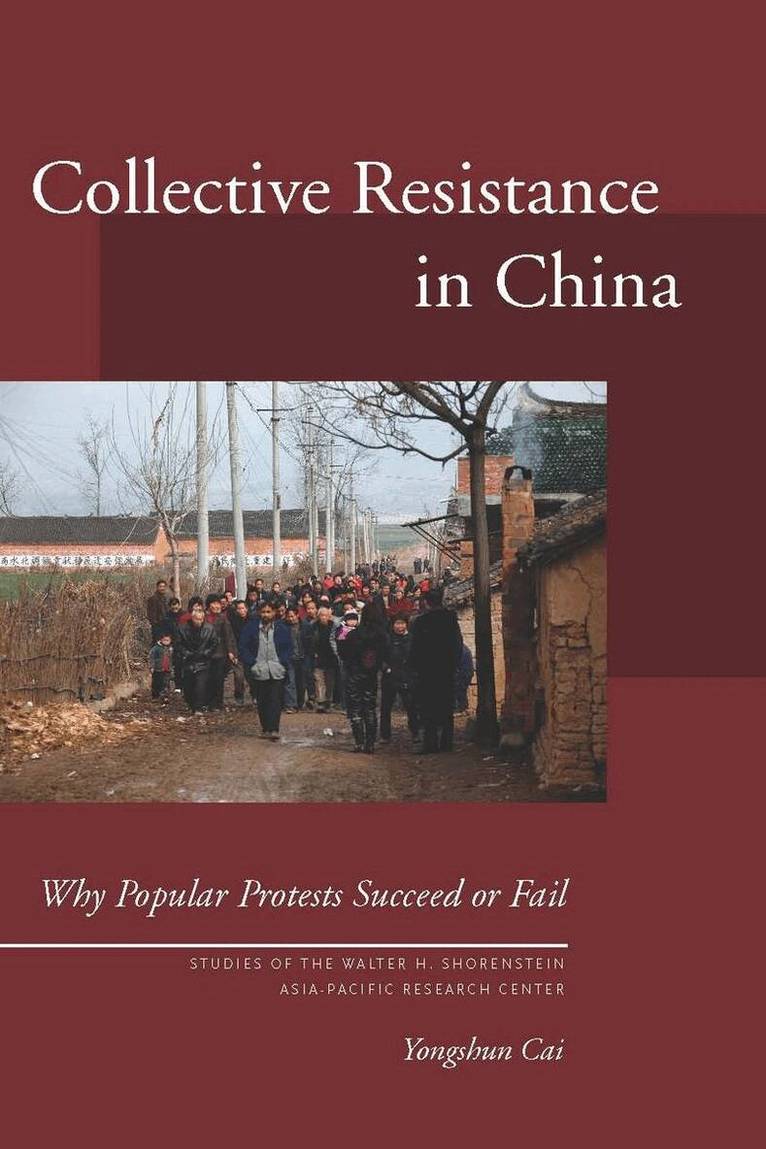
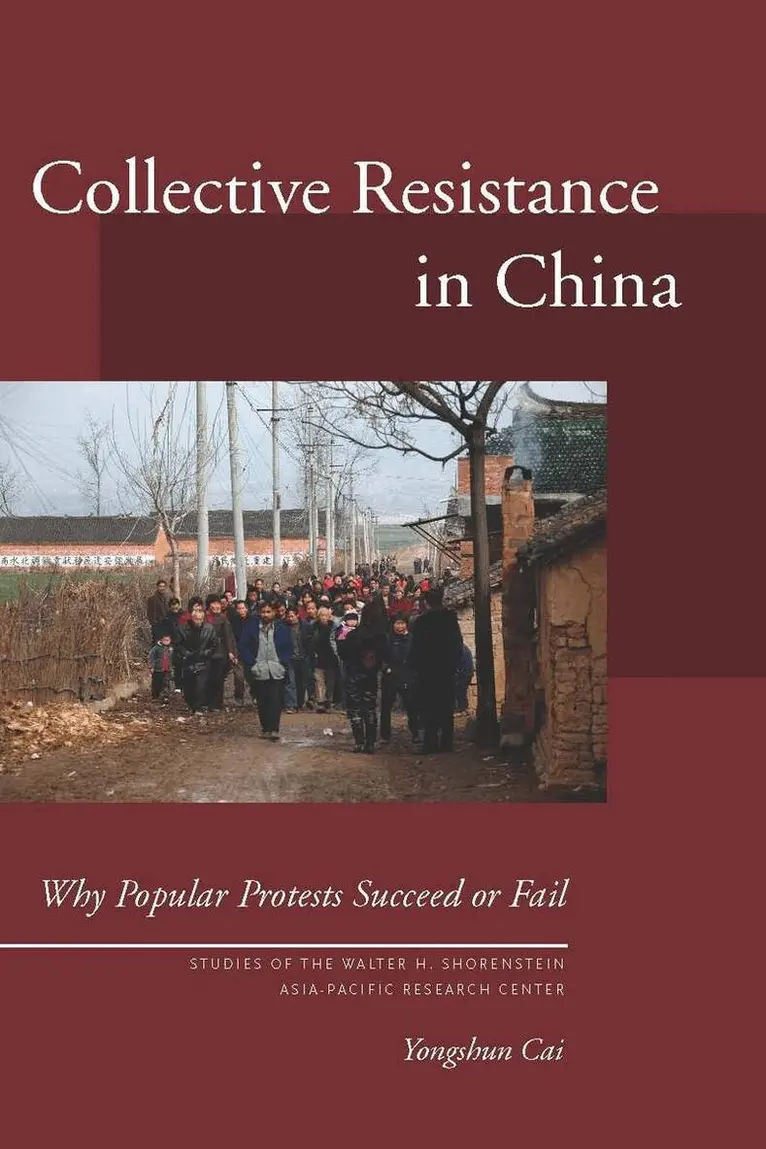
Although academics have paid much attention to contentious politics in China and elsewhere, research on the outcomes of social protests, both direct and indirect, in non-democracies is still limited. In this new work, Yongshun Cai combines original fieldwork with secondary sources to examine how social protest has become a viable method of resistance in China and, more importantly, why some collective actions succeed while others fail. Cai looks at the collective resistance of a range of social groups—peasants to workers to homeowners—and explores the outcomes of social protests in China by adopting an analytical framework that operationalizes the forcefulness of protestor action and the cost-benefit calculations of the government. He shows that a protesting group's ability to create and exploit the divide within the state, mobilize participants, or gain extra support directly affects the outcome of its collective action. Moreover, by exploring the government's response to social protests, the book addresses the resilience of the Chinese political system and its implications for social and political developments in China.
284 kr
Skickas inom 7-10 vardagar
Although academics have paid much attention to contentious politics in China and elsewhere, research on the outcomes of social protests, both direct and indirect, in non-democracies is still limited. In this new work, Yongshun Cai combines original fieldwork with secondary sources to examine how social protest has become a viable method of resistance in China and, more importantly, why some collective actions succeed while others fail. Cai looks at the collective resistance of a range of social groups—peasants to workers to homeowners—and explores the outcomes of social protests in China by adopting an analytical framework that operationalizes the forcefulness of protestor action and the cost-benefit calculations of the government. He shows that a protesting group's ability to create and exploit the divide within the state, mobilize participants, or gain extra support directly affects the outcome of its collective action. Moreover, by exploring the government's response to social protests, the book addresses the resilience of the Chinese political system and its implications for social and political developments in China.
1 483 kr
Skickas inom 7-10 vardagar
Chinese government officials have played a crucial role in China's economic development, but they are also responsible for severe problems, including environmental pollution, violation of citizens' rights, failure in governance, and corruption. How does the Chinese Party-state respond when a government official commits a duty-related malfeasance or criminal activity? And how does it balance the potential political costs of disciplining its own agents versus the loss of legitimacy in tolerating their misdeeds? State and Agents in China explores how the party-state addresses this dilemma, uncovering the rationale behind the selective disciplining of government officials and its implications for governance in China.By examining the discipline of state agents, Cai shows how selective punishment becomes the means of balancing the need for and difficulties of disciplining agents, and explains why some erring agents are tolerated while others are punished. Cai finds that the effectiveness of punishing erring officials in China does not depend so much on the Party-state's capacity to detect and punish each erring official but on the threat it creates when the Party-state decides to mete out punishment. Importantly, the book also shows how relaxed discipline allows reform-minded officials to use rule-violating reform measures to address local problems, and how such reform measures have significant implications for the regime's resilience.
363 kr
Skickas inom 7-10 vardagar
Chinese government officials have played a crucial role in China's economic development, but they are also responsible for severe problems, including environmental pollution, violation of citizens' rights, failure in governance, and corruption. How does the Chinese Party-state respond when a government official commits a duty-related malfeasance or criminal activity? And how does it balance the potential political costs of disciplining its own agents versus the loss of legitimacy in tolerating their misdeeds? State and Agents in China explores how the party-state addresses this dilemma, uncovering the rationale behind the selective disciplining of government officials and its implications for governance in China.By examining the discipline of state agents, Cai shows how selective punishment becomes the means of balancing the need for and difficulties of disciplining agents, and explains why some erring agents are tolerated while others are punished. Cai finds that the effectiveness of punishing erring officials in China does not depend so much on the Party-state's capacity to detect and punish each erring official but on the threat it creates when the Party-state decides to mete out punishment. Importantly, the book also shows how relaxed discipline allows reform-minded officials to use rule-violating reform measures to address local problems, and how such reform measures have significant implications for the regime's resilience.
234 kr
Skickas inom 7-10 vardagar
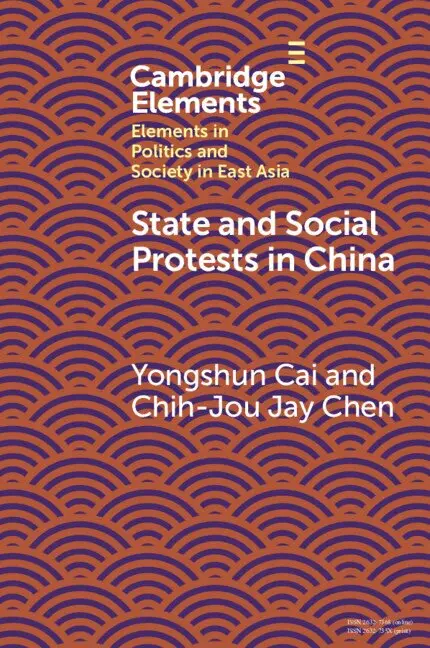
China has witnessed numerous incidents of social protests over the past three decades. Protests create uncertainty for authoritarian governments, and the Chinese government has created, strengthened, and coordinated multiple dispute-resolution institutions to manage social conflicts and protests. Accommodating the aggrieved prevents the accumulation of grievances in society, but concessions require resources. As the frequency and scale of collective action are closely tied to the political opportunity for action, the Chinese government has also contained protest by shaping the political opportunity available to the aggrieved. Cai and Chen show that when the Chinese central government prioritizes social control, as it has under Xi Jinping's leadership, it signals that it will tolerate local governments' use of coercion. The result is an environment that is not conducive to the mobilization of collective action, large-scale occurrences of which have been uncommon in China in recent years.
693 kr
Skickas inom 10-15 vardagar
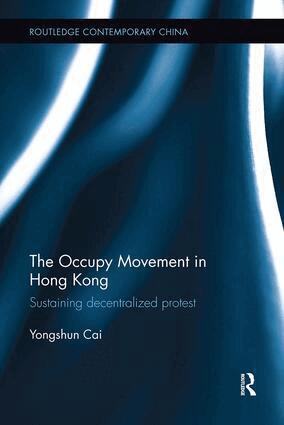
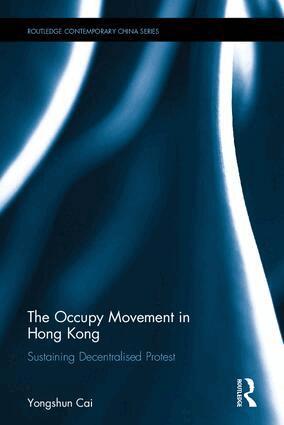
The Occupy movement in Hong Kong was sustained for about 80 days because of government tolerance, the presence of determined participants, and a weak leadership. The government tolerated the occupation because its initial use of force, in particular teargas, was counterproductive and provoked large-scale participation. Unlike other social movements, such as the 1989 Tiananmen movement, the Occupy movement reached its peak of participation at the very beginning, making it difficult to sustain the momentum. The presence of determined participants who chose to stay until the government responded was crucial to the sustaining of the movement. These self-selected participants were caught in a dilemma between fruitless occupation and reluctance to retreat without a success. The movement lasted also because the weak leadership was unable to force the government to concede or devise approaches for making a "graceful exit." Consequently, site clearance became the common choice of both the government and the protestors.This book develops a new framework to explain the sustaining of decentralized protest in the absence of strong movement organizations and leadership. Sustained protests are worth research because they not only reveal the broad social context in which the protests arise and persist but also point out the dynamics of the escalation or the decline of the protests. In addition, sustained protest may not only lead to more dramatic action, but they also result in the diffusion of protests or lead to significant policy changes.
2 246 kr
Skickas inom 10-15 vardagar
The Occupy movement in Hong Kong was sustained for about 80 days because of government tolerance, the presence of determined participants, and a weak leadership. The government tolerated the occupation because its initial use of force, in particular teargas, was counterproductive and provoked large-scale participation. Unlike other social movements, such as the 1989 Tiananmen movement, the Occupy movement reached its peak of participation at the very beginning, making it difficult to sustain the momentum. The presence of determined participants who chose to stay until the government responded was crucial to the sustaining of the movement. These self-selected participants were caught in a dilemma between fruitless occupation and reluctance to retreat without a success. The movement lasted also because the weak leadership was unable to force the government to concede or devise approaches for making a "graceful exit." Consequently, site clearance became the common choice of both the government and the protestors.This book develops a new framework to explain the sustaining of decentralized protest in the absence of strong movement organizations and leadership. Sustained protests are worth research because they not only reveal the broad social context in which the protests arise and persist but also point out the dynamics of the escalation or the decline of the protests. In addition, sustained protest may not only lead to more dramatic action, but they also result in the diffusion of protests or lead to significant policy changes.