Yuanming Shi – författare
Visar alla böcker från författaren Yuanming Shi. Handla med fri frakt och snabb leverans.
9 produkter
Mobile Edge Artificial Intelligence
Opportunities and Challenges
Av Yuanming Shi, Kai Yang m. fl.
Häftad, 2021
1355 kr
Lägg i varukorg
Mobile Edge Artificial Intelligence: Opportunities and Challenges presents recent advances in wireless technologies and nonconvex optimization techniques for designing efficient edge AI systems. The book includes comprehensive coverage on modeling, algorithm design and theoretical analysis. Through …
Mobile Edge Artificial Intelligence
Opportunities and Challenges
Av Yong Zhou, Zhanpeng Yang m. fl.
E-bok, 2021
1887 kr
Lägg i varukorg
Mobile Edge Artificial Intelligence: Opportunities and Challenges presents recent advances in wireless technologies and nonconvex optimization techniques for designing efficient edge AI systems. The book includes comprehensive coverage on modeling, algorithm design and theoretical analysis. Through …
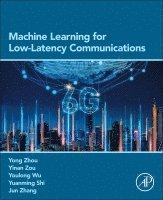
Machine Learning for Low-Latency Communications
Av Yong Zhou, Yinan Zou m. fl.
Häftad, 2024
1624 kr
Lägg i varukorg
Machine Learning for Low-Latency Communications presents the principles and practice of various deep learning methodologies for mitigating three critical latency components: access latency, transmission latency, and processing latency. In particular, the book develops learning to estimate methods …
Machine Learning for Low-Latency Communications
Av Jun Zhang, Yuanming Shi m. fl.
E-bok, 2024
2053 kr
Lägg i varukorg
Machine Learning for Low-Latency Communications presents the principles and practice of various deep learning methodologies for mitigating three critical latency components: access latency, transmission latency, and processing latency. In particular, the book develops learning to estimate methods …
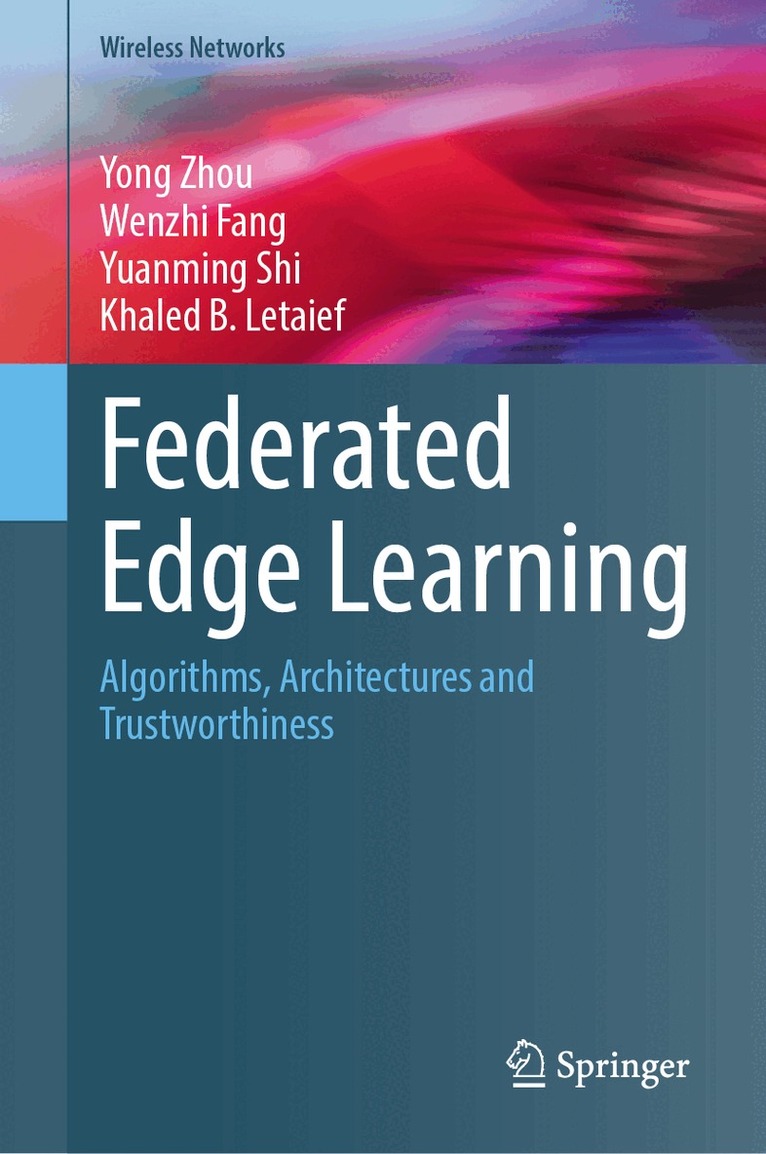
Federated Edge Learning
Algorithms, Architectures and Trustworthiness
Av Yong Zhou, Wenzhi Fang m. fl.
Inbunden, 2025
1753 kr
Lägg i varukorg
This book presents various effective schemes from the perspectives of algorithms, architectures, privacy, and security to enable scalable and trustworthy Federated Edge Learning (FEEL). From the algorithmic perspective, the authors elaborate various federated optimization algorithms, including …
Federated Edge Learning
Algorithms, Architectures and Trustworthiness
Av Khaled B. Letaief, Yuanming Shi m. fl.
E-bok, 2025
2274 kr
Lägg i varukorg
This book presents various effective schemes from the perspectives of algorithms, architectures, privacy, and security to enable scalable and trustworthy Federated Edge Learning (FEEL). From the algorithmic perspective, the authors elaborate various federated optimization algorithms, including …
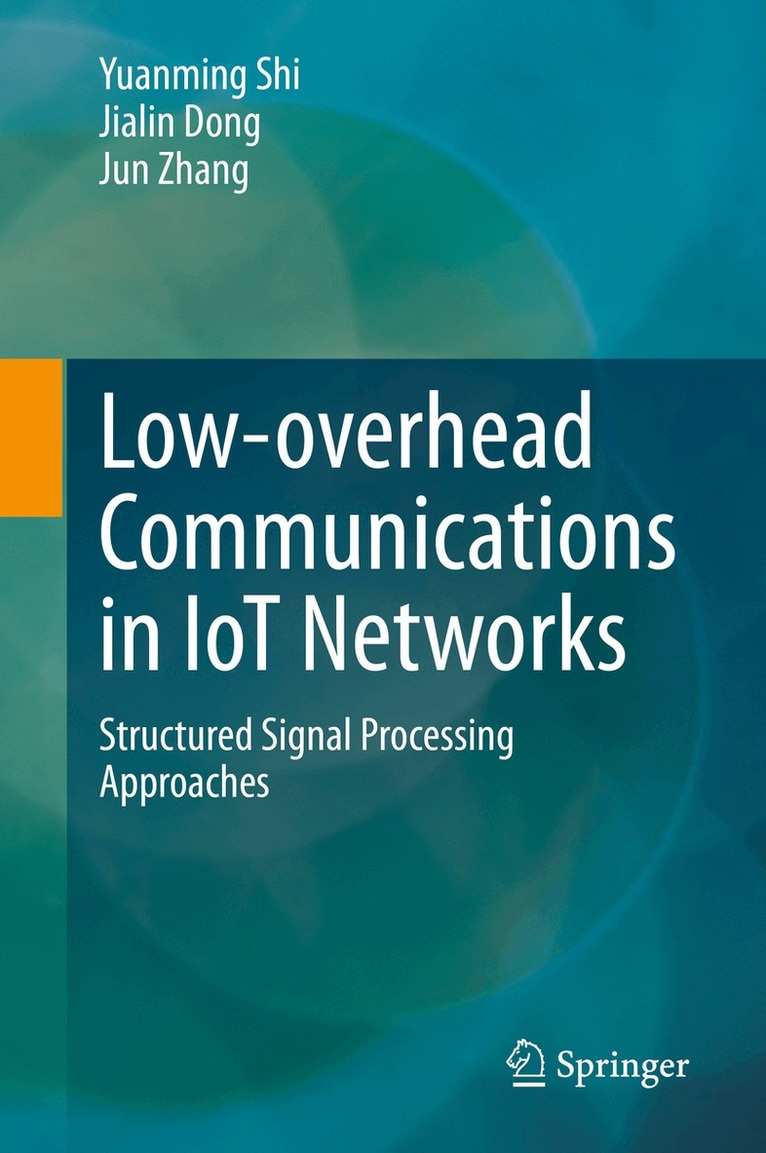
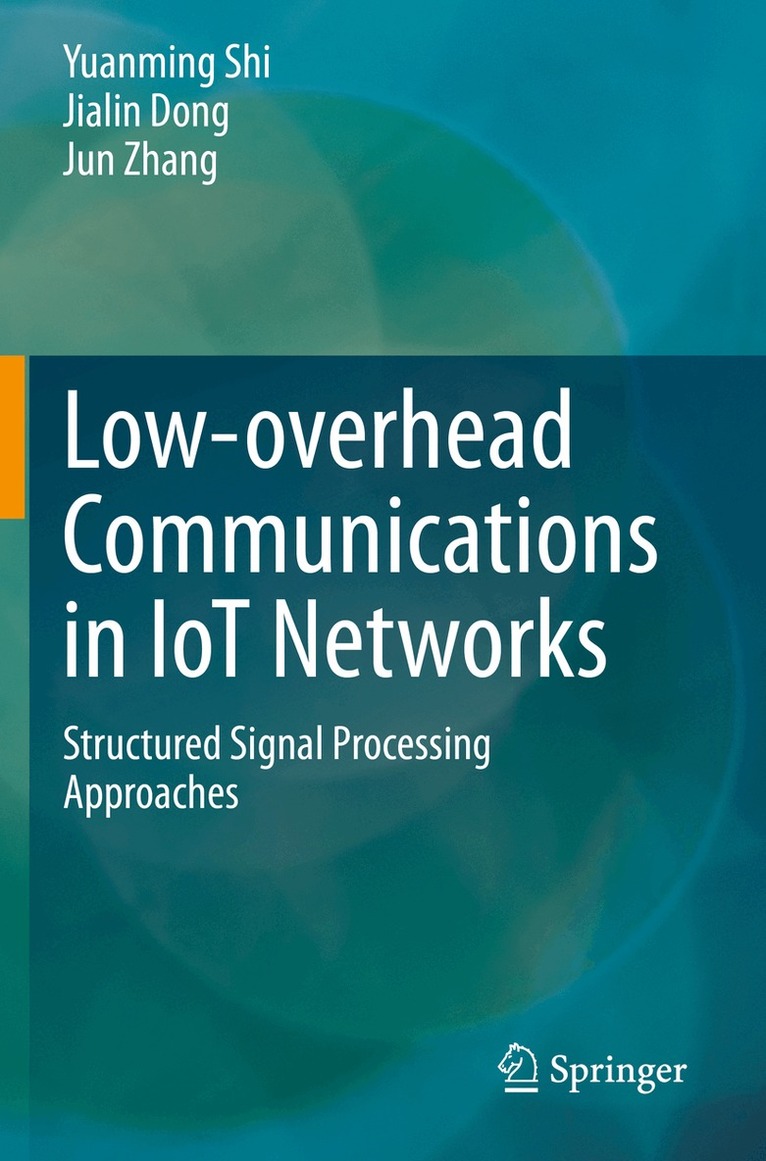
Low-overhead Communications in IoT Networks
Structured Signal Processing Approaches
Av Yuanming Shi, Jialin Dong m. fl.
Inbunden, 2020
1098 kr
Lägg i varukorg
The recent developments in wireless communications, networking, and embedded systems have driven various innovative Internet of Things (IoT) applications, e.g., smart cities, mobile healthcare, autonomous driving and drones. A common feature of these applications is the stringent requirements for …
Low-overhead Communications in IoT Networks
Structured Signal Processing Approaches
Av Jun Zhang, Jialin Dong m. fl.
E-bok, 2020
1434 kr
Lägg i varukorg
The recent developments in wireless communications, networking, and embedded systems have driven various innovative Internet of Things (IoT) applications, e.g., smart cities, mobile healthcare, autonomous driving and drones. A common feature of these applications is the stringent requirements for …
Low-overhead Communications in IoT Networks
Structured Signal Processing Approaches
Av Yuanming Shi, Jialin Dong m. fl.
Häftad, 2021
1098 kr
Lägg i varukorg
The recent developments in wireless communications, networking, and embedded systems have driven various innovative Internet of Things (IoT) applications, e.g., smart cities, mobile healthcare, autonomous driving and drones. A common feature of these applications is the stringent requirements for …