Yujie Chen – författare
Visar alla böcker från författaren Yujie Chen. Handla med fri frakt och snabb leverans.
4 produkter
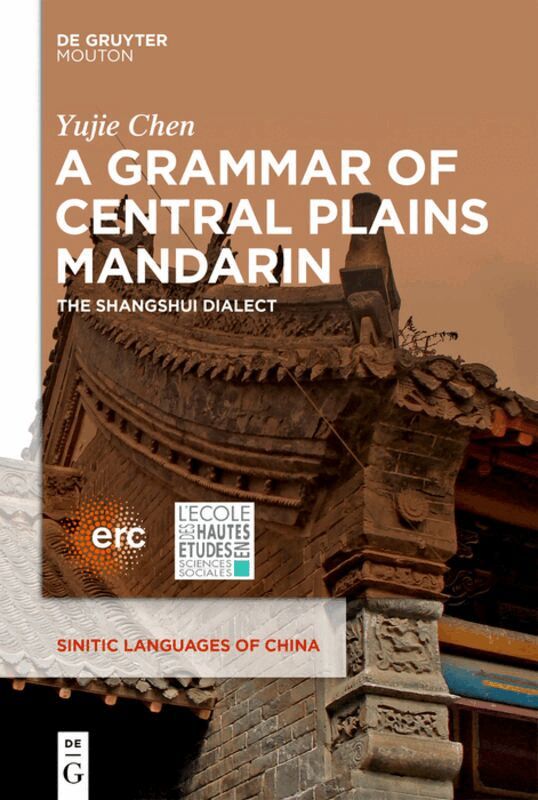
Grammar of Central Plains Mandarin
The Shangshui Dialect
Av Yujie Chen
Inbunden, 2025
1808 kr
Kommande
This grammar presents a linguistic study of the Shangshui dialect, which belongs to Central Plains Mandarin. The latter is a sub-branch of Mandarin and is spoken over a vast region of the middle of China in a long, narrow belt, extending across 11 provinces and covering an area of about 200,000 …
Super-sticky WeChat and Chinese Society
Av Jack Linchuan Qiu, Zhifei Mao m. fl.
E-bok, 2018
512 kr
Lägg i varukorg
App designers dream of creating a platform that users never want to leave, that keeps them glued forever - a platform that is "sticky". Over 846 million WeChat users leave text and voice messages, share life moments, play games, use stickers, purchase rail and flight tickets, shop online, pay …
Super-sticky WeChat and Chinese Society
Av Yujie Chen, Zhifei Mao m. fl.
Häftad, 2018
650 kr
Lägg i varukorg
App designers dream of creating a platform that users never want to leave, that keeps them glued forever - a platform that is "sticky". Over 846 million WeChat users leave text and voice messages, share life moments, play games, use stickers, purchase rail and flight tickets, shop online, pay …
Super-sticky WeChat and Chinese Society
Av Jack Linchuan Qiu, Zhifei Mao m. fl.
E-bok, 2018
512 kr
Lägg i varukorg
App designers dream of creating a platform that users never want to leave, that keeps them glued forever - a platform that is "sticky". Over 846 million WeChat users leave text and voice messages, share life moments, play games, use stickers, purchase rail and flight tickets, shop online, pay …