Yuk Hui – författare
Visar alla böcker från författaren Yuk Hui. Handla med fri frakt och snabb leverans.
30 produkter
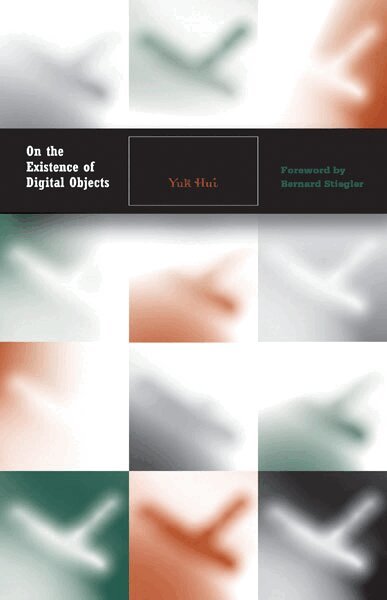
On the Existence of Digital Objects
Av Yuk Hui
Häftad, 2016
287 kr
Lägg i varukorg
Digital objects, in their simplest form, are data. They are also a new kind of industrial object that pervades every aspect of our life today-as online videos, images, text files, e-mails, blog posts, Facebook events.Yet, despite their ubiquity, the nature of digital objects remains unclear.On the …
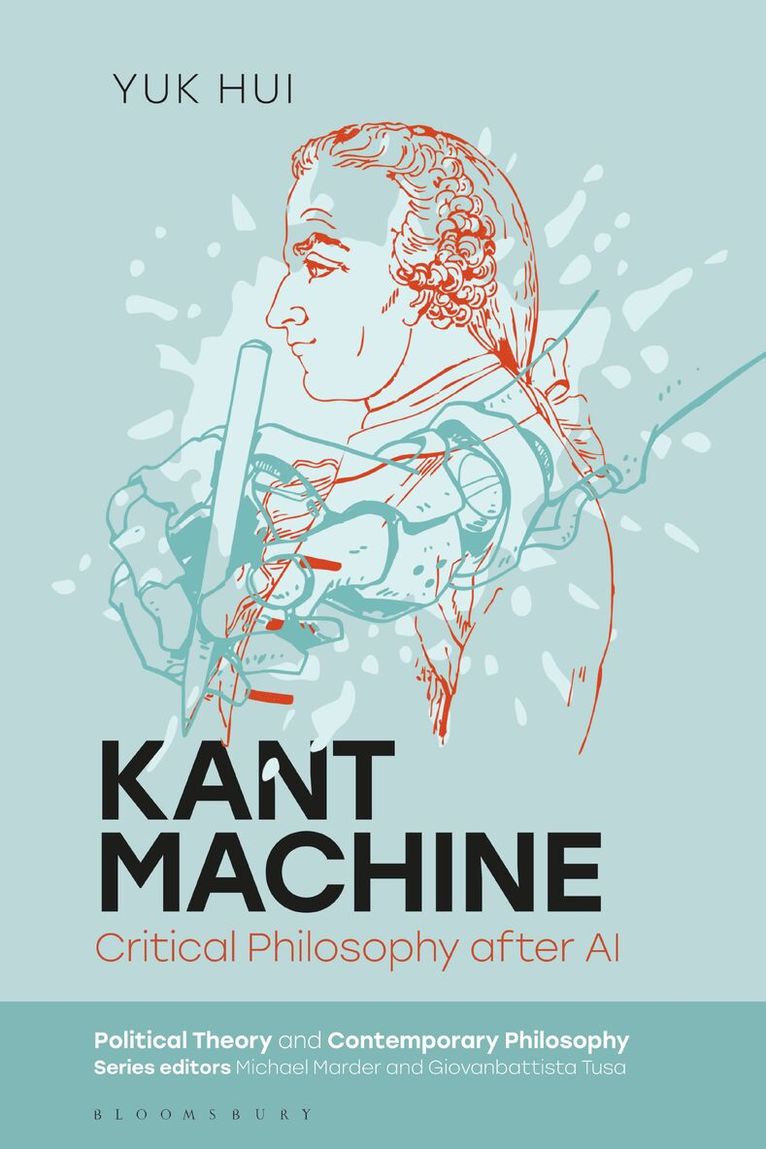
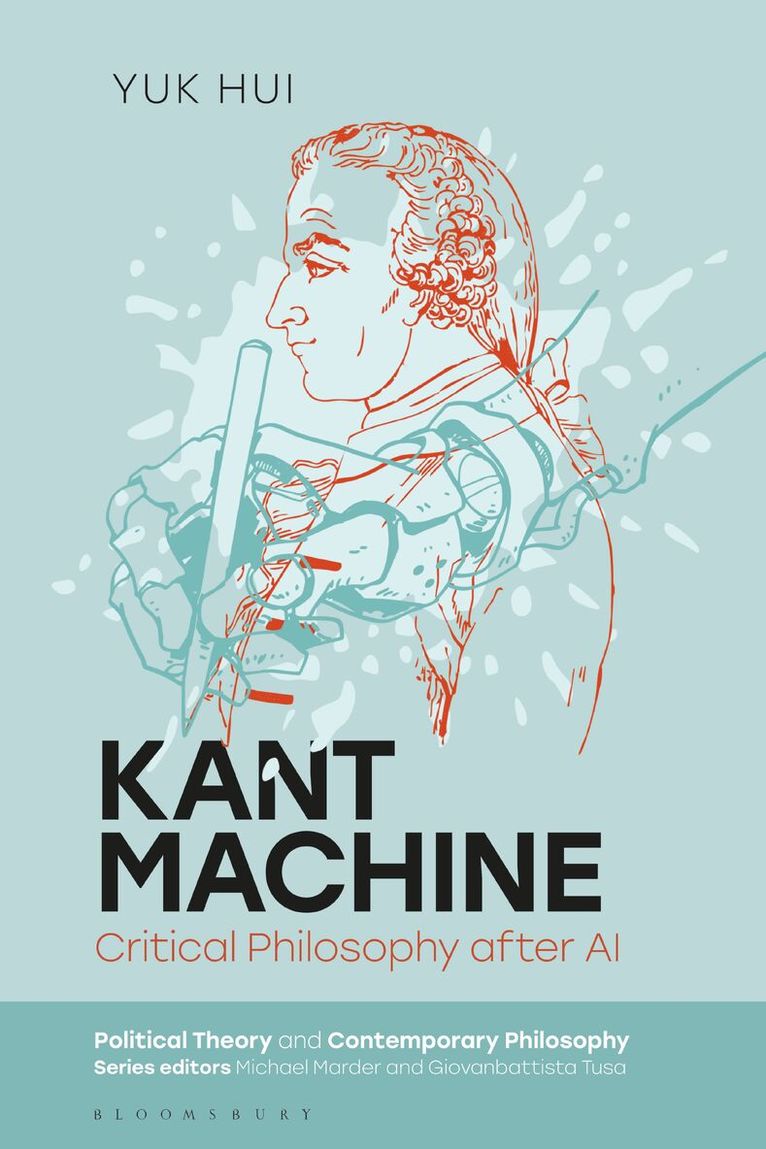
Kant Machine
Critical Philosophy after AI
Häftad, 2026
257 kr
Lägg i varukorg
Rethinking the philosophy of Immanuel Kant in the age of artificial intelligence.What could be called an intelligent machine? Are machines capable of being moral? Does an algorithm for perpetual peace exist? In this groundbreaking new work, Yuk Hui considers how current debates on artificial …
Inscription
Av Akram Zaatari, Amalia Ulman m. fl.
Inbunden, 2018
5,0 utav 5 stjärnor. Totalt antal röster: (1)
161 kr
Lägg i varukorg
What conditions inscription? Why are certain statements allowed to emerge in archival substrates? These questions are asked in this publication as it explores the concept of inscription—the archival moment that is constituted by the materialization of statements. It does so by including approaches …
Post-Europe
Av Yuk Hui
Häftad, 2024
5,0 utav 5 stjärnor. Totalt antal röster: (1)
191 kr
Lägg i varukorg
Envisioning a post-European thinking: not through a neutralization of differences nor a return to tradition, but through an individuation of thinking between East and West. With the unstoppable advance of global capitalism, the Heimatlosigkeit (homelessness) which twentieth-century European …
30 Years After Les Immatériaux
Art, Science and Theory
Av Andreas Broeckmann, Yuk Hui
Inbunden, 2020
558 kr
Lägg i varukorg
Cosmotechnics
For a Renewed Concept of Technology in the Anthropocene
Inbunden, 2021
2510 kr
Lägg i varukorg
This volume is initial reflections on the meaning and the implications of Yuk Hui’s notion of cosmotechnics, which opens up an anti-universalist and pluralist perspective on technology beyond the West.Martin Heidegger’s famous analysis of the essence of technology as enframing and as rooted in …
Cosmotechnics
For a Renewed Concept of Technology in the Anthropocene
Häftad, 2023
647 kr
Lägg i varukorg
This volume is initial reflections on the meaning and the implications of Yuk Hui’s notion of cosmotechnics, which opens up an anti-universalist and pluralist perspective on technology beyond the West.Martin Heidegger’s famous analysis of the essence of technology as enframing and as rooted in …
On the Existence of Digital Objects
Av Yuk Hui
Inbunden, 2016
1091 kr
Lägg i varukorg
Digital objects, in their simplest form, are data. They are also a new kind of industrial object that pervades every aspect of our life today-as online videos, images, text files, e-mails, blog posts, Facebook events.Yet, despite their ubiquity, the nature of digital objects remains unclear.On the …
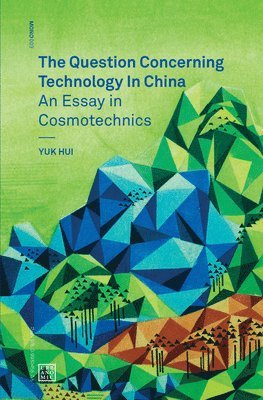
Question Concerning Technology in China
An Essay in Cosmotechnics
Av Yuk Hui
Häftad, 2016
197 kr
Lägg i varukorg
A systematic historical survey of Chinese thought is followed by an investigation of the historical-metaphysical questions of modern technology, asking how Chinese thought might contribute to a renewed questioning of globalized technics. Heidegger's critique of modern technology and its relation to …
Cosmotechnics
For a Renewed Concept of Technology in the Anthropocene
E-bok, 2021
762 kr
Lägg i varukorg
This volume is initial reflections on the meaning and the implications of Yuk Hui’s notion of cosmotechnics, which opens up an anti-universalist and pluralist perspective on technology beyond the West. Martin Heidegger’s famous analysis of the essence of technology as enframing and as rooted in …
Cosmotechnics
For a Renewed Concept of Technology in the Anthropocene
E-bok, 2021
746 kr
Lägg i varukorg
This volume is initial reflections on the meaning and the implications of Yuk Hui’s notion of cosmotechnics, which opens up an anti-universalist and pluralist perspective on technology beyond the West. Martin Heidegger’s famous analysis of the essence of technology as enframing and as rooted in …
30 Years After Les Immatériaux
Art, Science and Theory
Av Andreas Broeckmann, Yuk Hui
Häftad, 2020
499 kr
Lägg i varukorg
Kant Machine
Critical Philosophy after AI
Av Yuk Hui, Michael Marder m. fl.
Inbunden, 2026
784 kr
Lägg i varukorg
Rethinking the philosophy of Immanuel Kant in the age of artificial intelligence.What could be called an intelligent machine? Are machines capable of being moral? Does an algorithm for perpetual peace exist? In this groundbreaking new work, Yuk Hui considers how current debates on artificial …
Kant Machine
Critical Philosophy After Ai
Av Yuk Hui
E-bok, 2025
281 kr
Lägg i varukorg
Rethinking the philosophy of Immanuel Kant in the age of artificial intelligence.What could be called an intelligent machine? Are machines capable of being moral? Does an algorithm for perpetual peace exist? In this groundbreaking new work, Yuk Hui considers how current debates on artificial …
Kant Machine
Critical Philosophy After Ai
Av Yuk Hui
E-bok, 2025
281 kr
Lägg i varukorg
Rethinking the philosophy of Immanuel Kant in the age of artificial intelligence.What could be called an intelligent machine? Are machines capable of being moral? Does an algorithm for perpetual peace exist? In this groundbreaking new work, Yuk Hui considers how current debates on artificial …
Art and Cosmotechnics
Av Yuk Hui
Inbunden, 2021
1267 kr
Lägg i varukorg
In light of current discourses on AI and robotics, what do the various experiences of art contribute to the rethinking of technology today?Art and Cosmotechnics addresses the challenge of technology to the existence of art and traditional thought, especially in light of current discourses on …
Art and Cosmotechnics
Av Yuk Hui
Häftad, 2021
301 kr
Lägg i varukorg
In light of current discourses on AI and robotics, what do the various experiences of art contribute to the rethinking of technology today?Art and Cosmotechnics addresses the challenge of technology to the existence of art and traditional thought, especially in light of current discourses on …
Machine and Sovereignty
For a Planetary Thinking
Av Yuk Hui
Inbunden, 2024
1351 kr
Lägg i varukorg
Developing a new political thought to address today’s planetary crisesWhat is “planetary thinking” today? Arguing that a new approach is urgently needed, Yuk Hui develops a future-oriented mode of political thought that encompasses the unprecedented global challenges we are confronting: the rise of …
Machine and Sovereignty
For a Planetary Thinking
Av Yuk Hui
Häftad, 2024
329 kr
Lägg i varukorg
Developing a new political thought to address today’s planetary crisesWhat is “planetary thinking” today? Arguing that a new approach is urgently needed, Yuk Hui develops a future-oriented mode of political thought that encompasses the unprecedented global challenges we are confronting: the rise of …
Recursivity and Contingency
Av Yuk Hui
Inbunden, 2019
1701 kr
Lägg i varukorg
This book employs recursivity and contingency as two principle concepts to investigate into the relation between nature and technology, machine and organism, system and freedom. It reconstructs a trajectory of thought from an Organic condition of thinking elaborated by Kant, passing by the …
Recursivity and Contingency
Av Yuk Hui
Häftad, 2019
572 kr
Lägg i varukorg
This book employs recursivity and contingency as two principle concepts to investigate into the relation between nature and technology, machine and organism, system and freedom. It reconstructs a trajectory of thought from an Organic condition of thinking elaborated by Kant, passing by the …
Recursivity and Contingency
Av Yuk Hui
E-bok, 2019
624 kr
Lägg i varukorg
This book employs recursivity and contingency as two principle concepts to investigate into the relation between nature and technology, machine and organism, system and freedom. It reconstructs a trajectory of thought from an Organic condition of thinking elaborated by Kant, passing by the …
Die Frage nach der Technik in China
Ein Essay über die Kosmotechnik
Av Yuk Hui
E-bok, 2020
227 kr
Lägg i varukorg
Heideggers Kritik der modernen Technologie, die er in seinem berühmten Aufsatz "Die Frage der Technik" formulierte, grundiert alles philosophische Nachdenken über Technik. Auch im östlichen Denken ist die darin festgestellte Beziehung der Technik zur Metaphysik allgemein akzeptiert. Doch ist die …
30 Years after Les Immatériaux
Art, Science, and Theory
Av Yuk Hui, Andreas Broeckmann
Häftad, 2015
213 kr
Lägg i varukorg
Post-Europa
Av Yuk Hui
E-bok, 2025
153 kr
Lägg i varukorg
Con el imparable avance del capitalismo global, laHeimatlosigkeit (falta de hogar) de la que hablaronlos filósofos europeos del siglo XX —y que Heideggerdeclaró que se había convertido en el «destino delmundo»— está llamada a tener consecuencias cadavez más patológicas. Pero en lugar de soñar con …
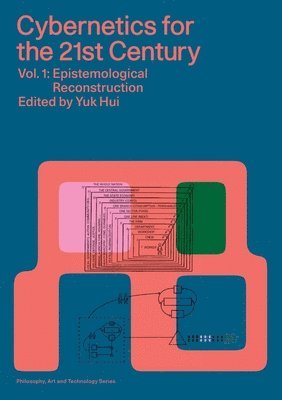
Cybernetics for the 21st Century Vol. 1
Epistemological Reconstruction
Av Andrew Pickering, Katherine Hayles m. fl.
Häftad, 2024
314 kr
Lägg i varukorg