Yulia Frumer – författare
Visar alla böcker från författaren Yulia Frumer. Handla med fri frakt och snabb leverans.
3 produkter
3 produkter
Inbunden, Engelska, 2018
417 kr
Skickas inom 5-8 vardagar
What is time made of? We might balk at such a question, and reply that time is not made of anything--it is an abstract and universal phenomenon. In Making Time, Yulia Frumer upends this assumption, using changes in the conceptualization of time in Japan to show that humans perceive time as constructed and concrete. In the mid-sixteenth century, when the first mechanical clocks arrived in Japan from Europe, the Japanese found them interesting but useless, because they failed to display time in units that changed their length with the seasons, as was customary in Japan at the time. In 1873, however, the Japanese government adopted the Western equal-hour system as well as Western clocks. Given that Japan carried out this reform during a period of rapid industrial development, it would be easy to assume that time consciousness is inherent to the equal-hour system and a modern lifestyle, but Making Time suggests that punctuality and time-consciousness are equally possible in a society regulated by a variable-hour system, arguing that this reform occurred because the equal-hour system better reflected a new conception of time--as abstract and universal--which had been developed in Japan by a narrow circle of astronomers, who began seeing time differently as a result of their measurement and calculation practices. Over the course of a few short decades this new way of conceptualizing time spread, gradually becoming the only recognized way of treating time.
Inbunden, Engelska, 2026
731 kr
Kommande
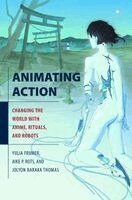
How do humans invest nonhuman entities with agency, personhood, and feelings? Responding to calls to reconsider human-nonhuman relations in a time of global polycrisis, Animating Action offers a novel framework for imagining connections between animated matter and political action. Rather than studying animism as a specific cultural tradition distinct from supposedly non-animistic cultures and their putatively disenchanted worldviews, the authors argue that practices of animation are universal, even as they stress that specific methods of animation differ according to time and place. Drawing on their expertise in the history of science, religious studies, media studies, and the environmental humanities, the authors present a new theory of animation as action. Through cases from contemporary Japan, Vietnam, and elsewhere, they investigate how humans make persons through rituals, use the technique of compositing to construct worlds in illustrated films, and evoke feelings and associations to forge a sense of intimacy with robots. Additionally, they show how humans deanimate entities that have become unruly, dysfunctional, or unwanted. These concrete practices have political consequences. Animated films may encourage audiences to accept the environmentally destructive status quo, while robotic designs may naturalize and reinforce harmful gender hierarchies and biases. But animating practices also hold transformative political potential: a person-making ritual may give animals voice in courts of law, and the very techniques roboticists use to evoke positive feelings in human users can provide fruitful models for resisting the harmful effects of technologies that manipulate users by emulating agency and empathy. Animating Action does not simply advocate an alternative worldview or story. Rather, it shows how people can deploy existing animation techniques to change the world for the better. It offers both a call to action and a model for how to instigate transformative change.
Häftad, Engelska, 2026
341 kr
Kommande
How do humans invest nonhuman entities with agency, personhood, and feelings? Responding to calls to reconsider human-nonhuman relations in a time of global polycrisis, Animating Action offers a novel framework for imagining connections between animated matter and political action. Rather than studying animism as a specific cultural tradition distinct from supposedly non-animistic cultures and their putatively disenchanted worldviews, the authors argue that practices of animation are universal, even as they stress that specific methods of animation differ according to time and place. Drawing on their expertise in the history of science, religious studies, media studies, and the environmental humanities, the authors present a new theory of animation as action. Through cases from contemporary Japan, Vietnam, and elsewhere, they investigate how humans make persons through rituals, use the technique of compositing to construct worlds in illustrated films, and evoke feelings and associations to forge a sense of intimacy with robots. Additionally, they show how humans deanimate entities that have become unruly, dysfunctional, or unwanted. These concrete practices have political consequences. Animated films may encourage audiences to accept the environmentally destructive status quo, while robotic designs may naturalize and reinforce harmful gender hierarchies and biases. But animating practices also hold transformative political potential: a person-making ritual may give animals voice in courts of law, and the very techniques roboticists use to evoke positive feelings in human users can provide fruitful models for resisting the harmful effects of technologies that manipulate users by emulating agency and empathy. Animating Action does not simply advocate an alternative worldview or story. Rather, it shows how people can deploy existing animation techniques to change the world for the better. It offers both a call to action and a model for how to instigate transformative change.