Yunmin Zhu – författare
Visar alla böcker från författaren Yunmin Zhu. Handla med fri frakt och snabb leverans.
6 produkter
6 produkter
Inbunden, Engelska, 2002
1 622 kr
Skickas inom 10-15 vardagar
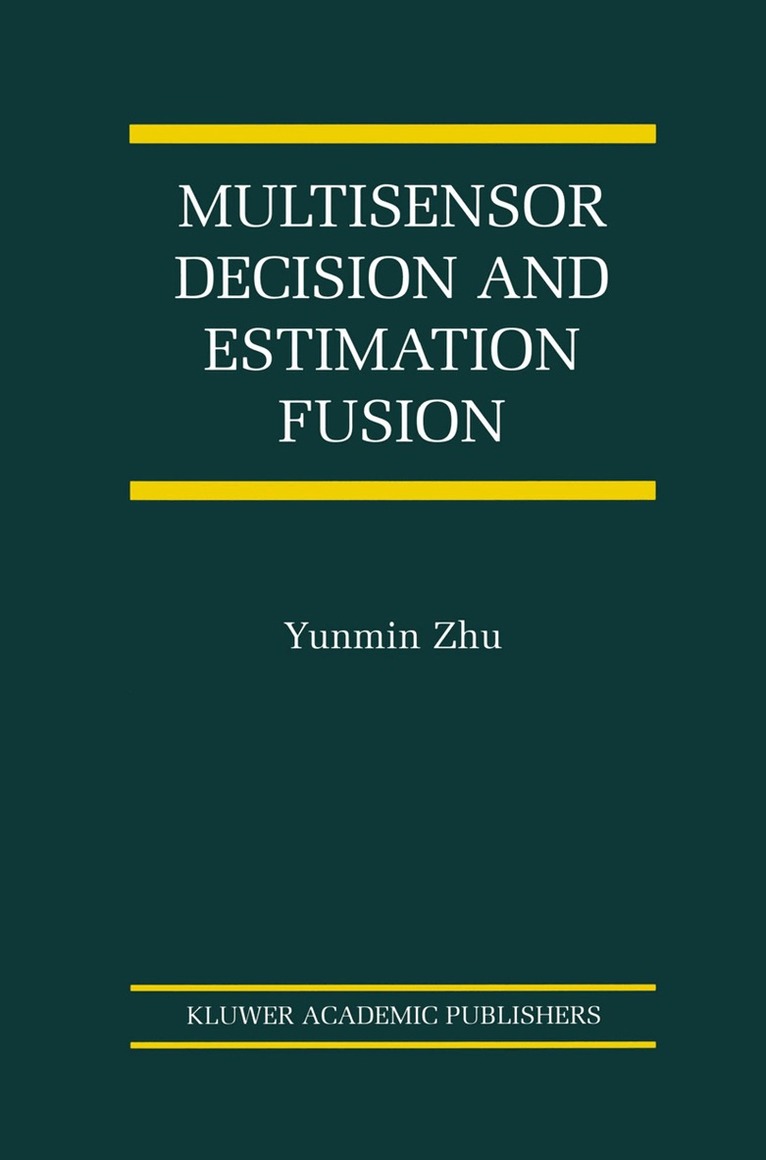
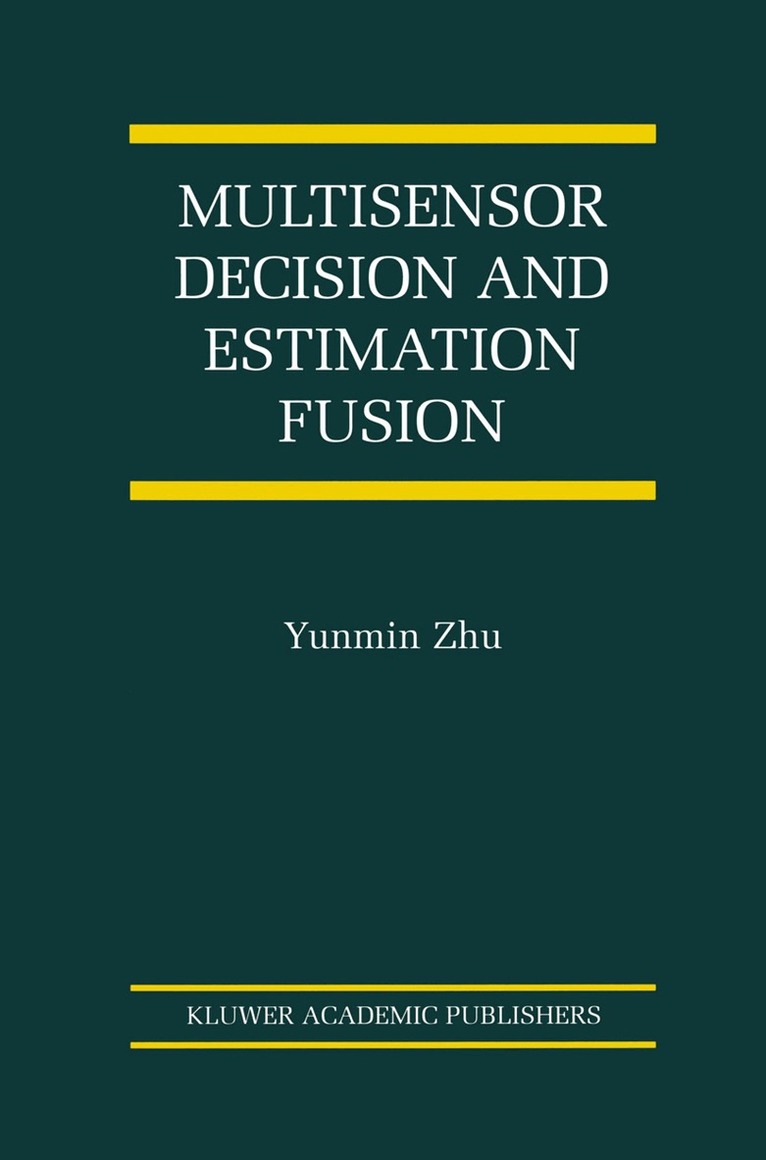
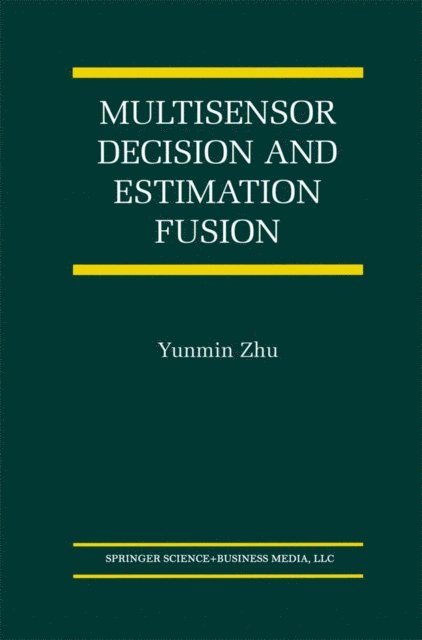
YUNMIN ZHU In the past two decades, multi sensor or multi-source information fusion tech niques have attracted more and more attention in practice, where observations are processed in a distributed manner and decisions or estimates are made at the individual processors, and processed data (or compressed observations) are then transmitted to a fusion center where the final global decision or estimate is made. A system with multiple distributed sensors has many advantages over one with a single sensor. These include an increase in the capability, reliability, robustness and survivability of the system. Distributed decision or estimation fusion prob lems for cases with statistically independent observations or observation noises have received significant attention (see Varshney's book Distributed Detec tion and Data Fusion, New York: Springer-Verlag, 1997, Bar-Shalom's book Multitarget-Multisensor Tracking: Advanced Applications, vol. 1-3, Artech House, 1990, 1992,2000). Problems with statistically dependent observations or observation noises are more difficult and have received much less study. In practice, however, one often sees decision or estimation fusion problems with statistically dependent observations or observation noises. For instance, when several sensors are used to detect a random signal in the presence of observation noise, the sensor observations could not be statistically independent when the signal is present. This book provides a more complete treatment of the fundamentals of multi sensor decision and estimation fusion in order to deal with general random ob servations or observation noises that are correlated across the sensors.
Inbunden, Engelska, 2012
1 155 kr
Skickas inom 3-6 vardagar
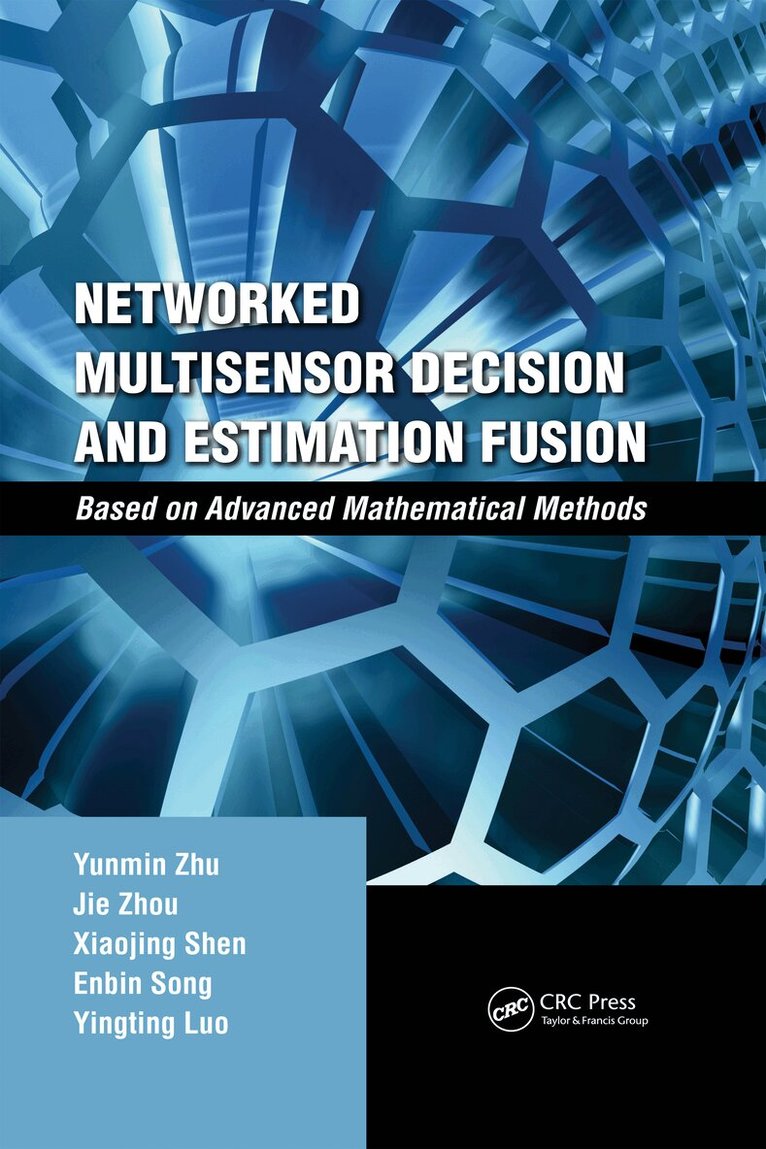
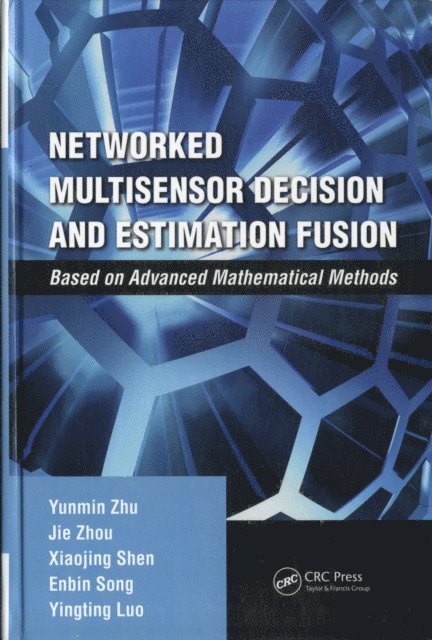
Due to the increased capability, reliability, robustness, and survivability of systems with multiple distributed sensors, multi-source information fusion has become a crucial technique in a growing number of areas—including sensor networks, space technology, air traffic control, military engineering, agriculture and environmental engineering, and industrial control. Networked Multisensor Decision and Estimation Fusion: Based on Advanced Mathematical Methods presents advanced mathematical descriptions and methods to help readers achieve more thorough results under more general conditions than what has been possible with previous results in the existing literature. Examining emerging real-world problems, this book summarizes recent research developments in problems with unideal and uncertain frameworks. It presents essential mathematical descriptions and methods for multisensory decision and estimation fusion. Deriving thorough results under general conditions, this reference book: Corrects several popular but incorrect results in this area with thorough mathematical ideasProvides advanced mathematical methods, which lead to more general and significant resultsPresents updated systematic developments in both multisensor decision and estimation fusion, which cannot be seen in other existing booksIncludes numerous computer experiments that support every theoretical resultThe book applies recently developed convex optimization theory and high efficient algorithms in estimation fusion, which opens a very attractive research subject on minimizing Euclidean error estimation for uncertain dynamic systems. Supplying powerful and advanced mathematical treatment of the fundamental problems, it will help to greatly broaden prospective applications of such developments in practice.
E-bok
PDF, Engelska, 2012942 kr
Läs direkt efter köp
Due to the increased capability, reliability, robustness, and survivability of systems with multiple distributed sensors, multi-source information fusion has become a crucial technique in a growing number of areas-including sensor networks, space technology, air traffic control, military engineering, agriculture and environmental engineering, and i
Häftad, Engelska, 2012
1 622 kr
Skickas inom 10-15 vardagar
YUNMIN ZHU In the past two decades, multi sensor or multi-source information fusion tech niques have attracted more and more attention in practice, where observations are processed in a distributed manner and decisions or estimates are made at the individual processors, and processed data (or compressed observations) are then transmitted to a fusion center where the final global decision or estimate is made. A system with multiple distributed sensors has many advantages over one with a single sensor. These include an increase in the capability, reliability, robustness and survivability of the system. Distributed decision or estimation fusion prob lems for cases with statistically independent observations or observation noises have received significant attention (see Varshney's book Distributed Detec tion and Data Fusion, New York: Springer-Verlag, 1997, Bar-Shalom's book Multitarget-Multisensor Tracking: Advanced Applications, vol. 1-3, Artech House, 1990, 1992,2000). Problems with statistically dependent observations or observation noises are more difficult and have received much less study. In practice, however, one often sees decision or estimation fusion problems with statistically dependent observations or observation noises. For instance, when several sensors are used to detect a random signal in the presence of observation noise, the sensor observations could not be statistically independent when the signal is present. This book provides a more complete treatment of the fundamentals of multi sensor decision and estimation fusion in order to deal with general random ob servations or observation noises that are correlated across the sensors.
E-bok
PDF, Engelska, 20122 049 kr
Läs direkt efter köp
YUNMIN ZHU In the past two decades, multi sensor or multi-source information fusion tech niques have attracted more and more attention in practice, where observations are processed in a distributed manner and decisions or estimates are made at the individual processors, and processed data (or compressed observations) are then transmitted to a fusion center where the final global decision or estimate is made. A system with multiple distributed sensors has many advantages over one with a single sensor. These include an increase in the capability, reliability, robustness and survivability of the system. Distributed decision or estimation fusion prob lems for cases with statistically independent observations or observation noises have received significant attention (see Varshney''s book Distributed Detec tion and Data Fusion, New York: Springer-Verlag, 1997, Bar-Shalom''s book Multitarget-Multisensor Tracking: Advanced Applications, vol. 1-3, Artech House, 1990, 1992,2000). Problems with statistically dependent observations or observation noises are more difficult and have received much less study. In practice, however, one often sees decision or estimation fusion problems with statistically dependent observations or observation noises. For instance, when several sensors are used to detect a random signal in the presence of observation noise, the sensor observations could not be statistically independent when the signal is present. This book provides a more complete treatment of the fundamentals of multi sensor decision and estimation fusion in order to deal with general random ob servations or observation noises that are correlated across the sensors.
E-bok
Engelska, 2012942 kr
Läs direkt efter köp
Due to the increased capability, reliability, robustness, and survivability of systems with multiple distributed sensors, multi-source information fusion has become a crucial technique in a growing number of areas-including sensor networks, space technology, air traffic control, military engineering, agriculture and environmental engineering, and i