Yushim Kim - Böcker
Visar alla böcker från författaren Yushim Kim. Handla med fri frakt och snabb leverans.
5 produkter
5 produkter
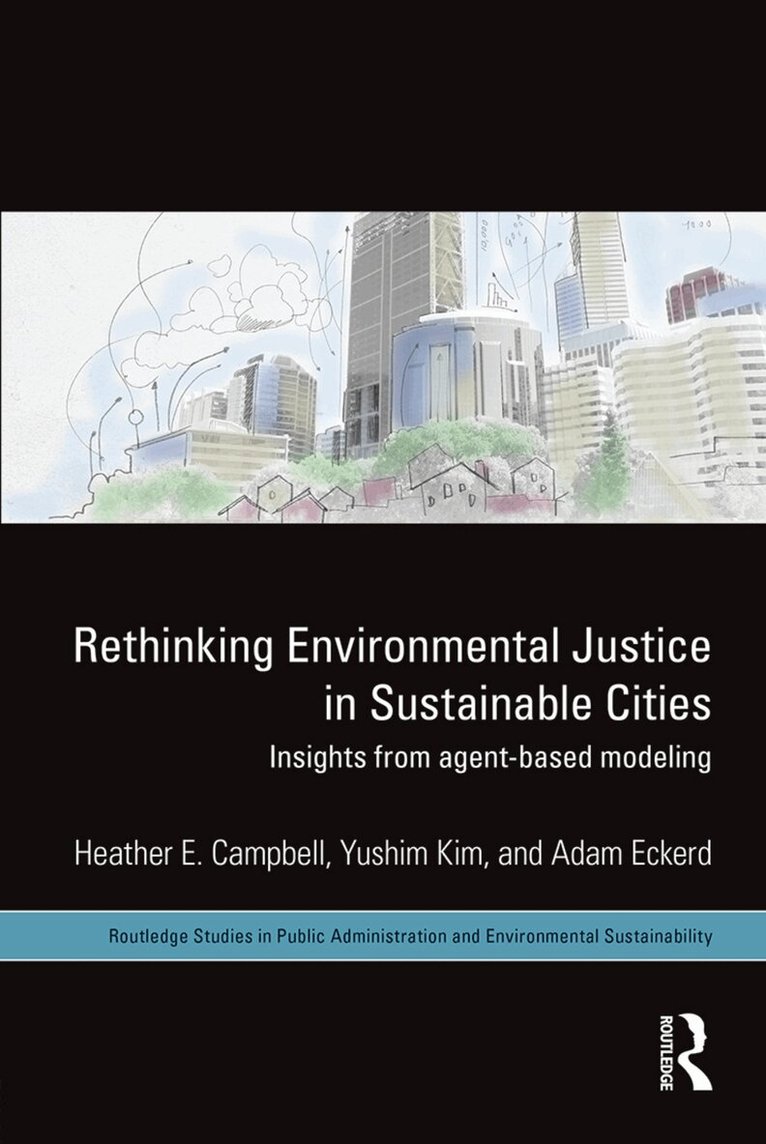
Rethinking Environmental Justice in Sustainable Cities
Insights from Agent-Based Modeling
Inbunden, Engelska, 2015
2 181 kr
Skickas inom 10-15 vardagar
As the study of environmental policy and justice becomes increasingly significant in today’s global climate, standard statistical approaches to gathering data have become less helpful at generating new insights and possibilities. None of the conventional frameworks easily allow for the empirical modeling of the interactions of all the actors involved, or for the emergence of outcomes unintended by the actors. The existing frameworks account for the "what," but not for the "why."Heather E. Campbell, Yushim Kim, and Adam Eckerd bring an innovative perspective to environmental justice research. Their approach adjusts the narrower questions often asked in the study of environmental justice, expanding to broader investigations of how and why environmental inequities occur. Using agent-based modeling (ABM), they study the interactions and interdependencies among different agents such as firms, residents, and government institutions. Through simulation, the authors test underlying assumptions in environmental justice and discover ways to modify existing theories to better explain why environmental injustice occurs. Furthermore, they use ABM to generate empirically testable hypotheses, which they employ to check if their simulated findings are supported in the real world using real data.The pioneering research on environmental justice in this text will have effects on the field of environmental policy as a whole. For social science and policy researchers, this book explores how to employ new and experimental methods of inquiry on challenging social problems, and for the field of environmental justice, the authors demonstrate how ABM helps illuminate the complex social and policy interactions that lead to both environmental justice and injustice.
Rethinking Environmental Justice in Sustainable Cities
Insights from Agent-Based Modeling
Häftad, Engelska, 2017
673 kr
Skickas inom 10-15 vardagar
As the study of environmental policy and justice becomes increasingly significant in today’s global climate, standard statistical approaches to gathering data have become less helpful at generating new insights and possibilities. None of the conventional frameworks easily allow for the empirical modeling of the interactions of all the actors involved, or for the emergence of outcomes unintended by the actors. The existing frameworks account for the "what," but not for the "why."Heather E. Campbell, Yushim Kim, and Adam Eckerd bring an innovative perspective to environmental justice research. Their approach adjusts the narrower questions often asked in the study of environmental justice, expanding to broader investigations of how and why environmental inequities occur. Using agent-based modeling (ABM), they study the interactions and interdependencies among different agents such as firms, residents, and government institutions. Through simulation, the authors test underlying assumptions in environmental justice and discover ways to modify existing theories to better explain why environmental injustice occurs. Furthermore, they use ABM to generate empirically testable hypotheses, which they employ to check if their simulated findings are supported in the real world using real data.The pioneering research on environmental justice in this text will have effects on the field of environmental policy as a whole. For social science and policy researchers, this book explores how to employ new and experimental methods of inquiry on challenging social problems, and for the field of environmental justice, the authors demonstrate how ABM helps illuminate the complex social and policy interactions that lead to both environmental justice and injustice.
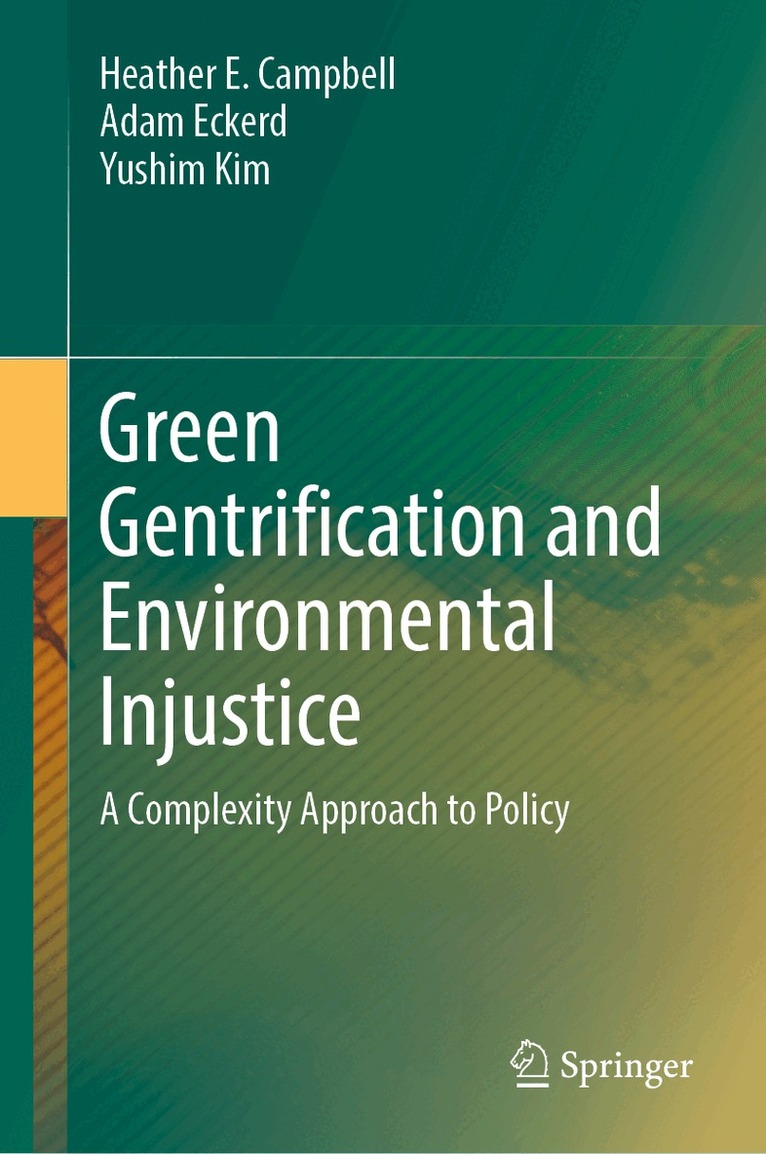
Green Gentrification and Environmental Injustice
A Complexity Approach to Policy
Inbunden, Engelska, 2024
1 273 kr
Skickas inom 10-15 vardagar
This book argues that, given the complex nature of the urban environment, we cannot find one optimal solution to reducing environmental injustice, in part because there is no singular cause. Environmental injustice emerges in particular settings because of the combined and interdependent effects of a variety of different policy and community characteristics. The authors argue that addressing these interlinked problems requires an understanding of the clusters of community and contextual factors that combine in a variety of ways to both create problems and imply policy approaches to managing them. They argue for the use of complexity-informed methods to assist in making public policy choices, such as Qualitative Comparative Analysis (QCA) and Agent-based Modeling (ABM), to enable us to better identify plausible solutions for specific contexts.This volume offers a new perspective for strategically managing urban policy that considers the risk of gentrification and gentrification-related displacement, with the ultimate goal of improving social justice. Environmental injustice, pollution remediation, gentrification, and displacement are interlinked problems, all of which impinge on social justice in US cities. However, public policy research, and often practice as well, has tended to separately consider urban policy issues such as environmental injustice, brownfields and other pollution remediation, how to redevelop neighborhoods, and how to contend with gentrification and displacement. In this book the authors take a new perspective to such intertwined urban policy issues, using complexity thinking and, more importantly, complex adaptive systems approaches, in order to develop context-sensitive policy approaches to managing these ongoing problems.
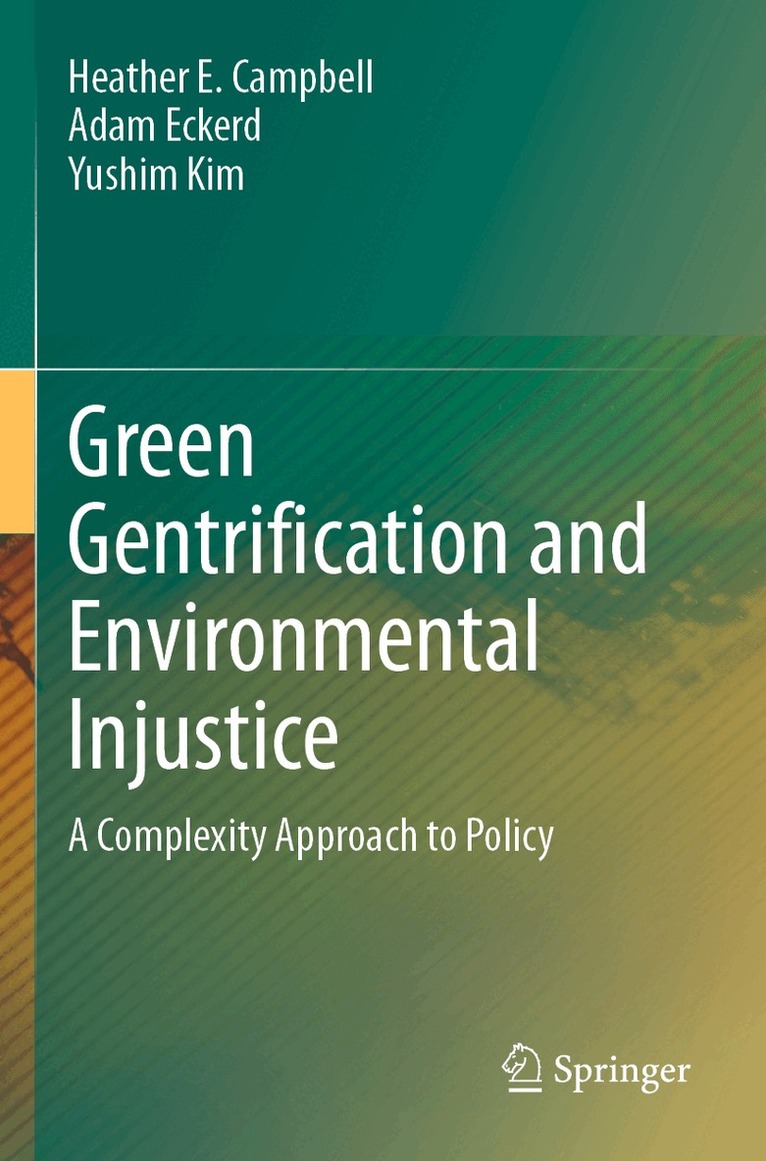
Green Gentrification and Environmental Injustice
A Complexity Approach to Policy
Häftad, Engelska, 2025
1 273 kr
Skickas inom 10-15 vardagar
This book argues that, given the complex nature of the urban environment, we cannot find one optimal solution to reducing environmental injustice, in part because there is no singular cause. Environmental injustice emerges in particular settings because of the combined and interdependent effects of a variety of different policy and community characteristics. The authors argue that addressing these interlinked problems requires an understanding of the clusters of community and contextual factors that combine in a variety of ways to both create problems and imply policy approaches to managing them. They argue for the use of complexity-informed methods to assist in making public policy choices, such as Qualitative Comparative Analysis (QCA) and Agent-based Modeling (ABM), to enable us to better identify plausible solutions for specific contexts.This volume offers a new perspective for strategically managing urban policy that considers the risk of gentrification and gentrification-related displacement, with the ultimate goal of improving social justice. Environmental injustice, pollution remediation, gentrification, and displacement are interlinked problems, all of which impinge on social justice in US cities. However, public policy research, and often practice as well, has tended to separately consider urban policy issues such as environmental injustice, brownfields and other pollution remediation, how to redevelop neighborhoods, and how to contend with gentrification and displacement. In this book the authors take a new perspective to such intertwined urban policy issues, using complexity thinking and, more importantly, complex adaptive systems approaches, in order to develop context-sensitive policy approaches to managing these ongoing problems.
Computational Approaches To Policy Challenges: Novel Methods And Applications
Inbunden, Engelska, 2026
1 238 kr
Skickas inom 3-6 vardagar
This book addresses a critical gap between the nature of contemporary policy challenges and the way most academic research is conducted. Policymakers and practitioners routinely face complex, interconnected problems — ranging from climate resilience and public health crises to social equity and organizational management — that demand interdisciplinary perspectives and computationally informed approaches. Yet, public policy scholarship often remains fragmented, narrowly disciplinary, and slow to integrate the rapidly advancing tools of data science. This book provides a timely intervention by demonstrating how computational approaches can be meaningfully applied to policy analysis, bridging a persistent divide between aspiration and practice in the field. Through exploring cutting-edge interdisciplinary research and examples of how computational tools can address real-world problems, this book provides both inspiration and practical guidance for advancing public policy scholarship and practice.