Yvonne C. Martin – författare
Visar alla böcker från författaren Yvonne C. Martin. Handla med fri frakt och snabb leverans.
11 produkter
3D QSAR in Drug Design
Ligand-Protein Interactions and Molecular Similarity
Av Yvonne C. Martin, Gerd Folkers m. fl.
E-bok, 2006
2925 kr
Lägg i varukorg
Significant progress has been made in the study of three-dimensional quantitative structure-activity relationships (3D QSAR) since the first publication by Richard Cramer in 1988 and the first volume in the series. 3D QSAR in Drug Design. Theory, Methods and Applications, published in 1993. The aim …
3D QSAR in Drug Design
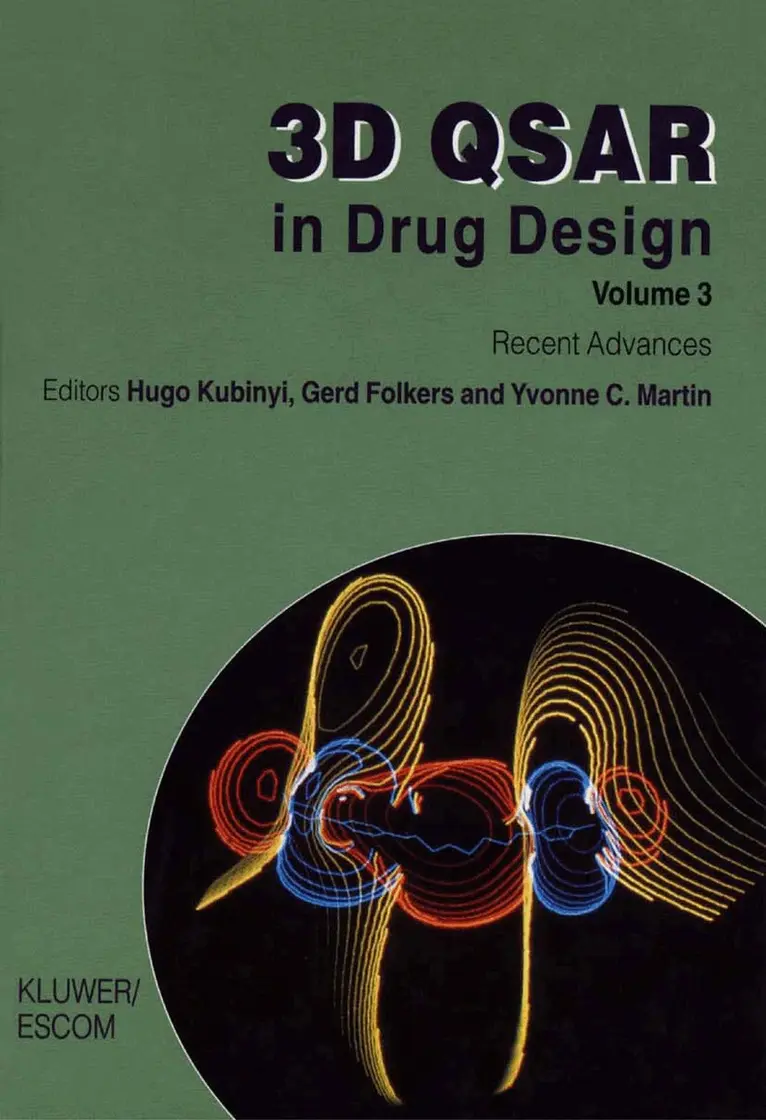
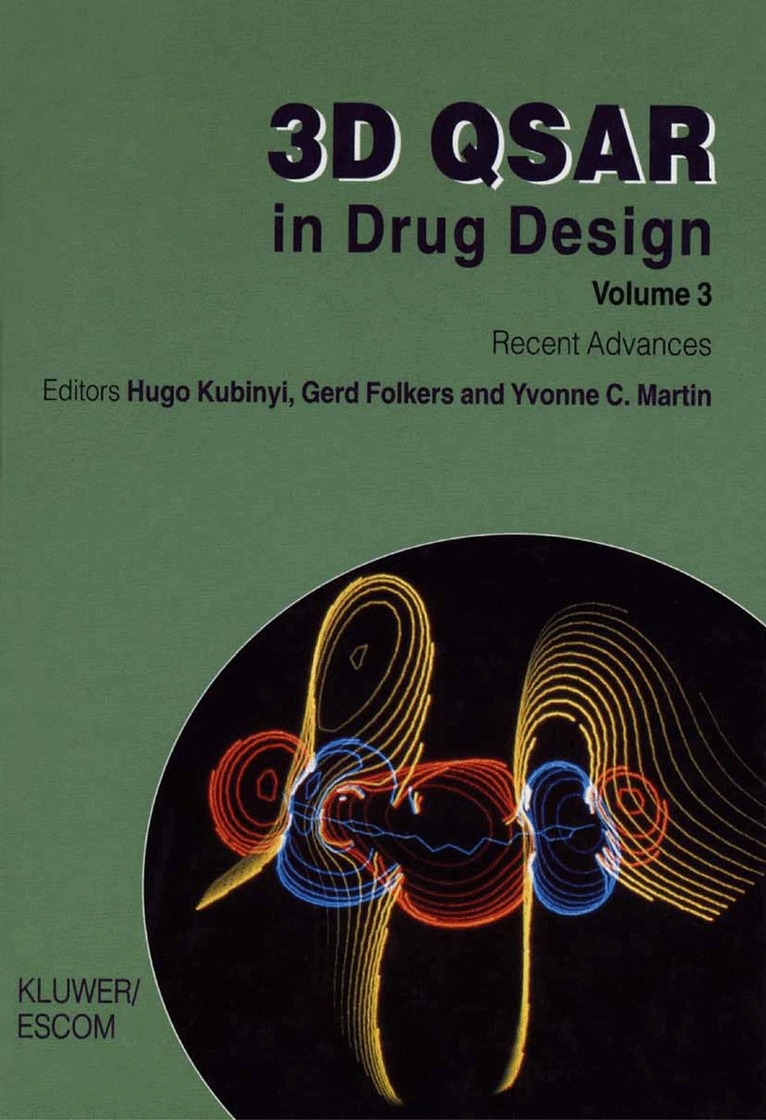
Recent Advances
Av Yvonne C. Martin, Gerd Folkers m. fl.
E-bok, 2006
2925 kr
Lägg i varukorg
Significant progress has been made in the study of three-dimensional quantitative structure-activity relationships (3D QSAR) since the first publication by Richard Cramer in 1988 and the first volume in the series, 3D QSAR in Drug Design. Theory, Methods and Applications, published in 1993. The aim …
Quantitative Drug Design
A Critical Introduction, Second Edition
Häftad, 2019
1071 kr
Lägg i varukorg
Since the publication of the first edition, the field has changed dramatically. Scientists can now explicitly consider 3D features in quantitative structure-activity relationship (QSAR) studies and often have the 3D structure of the macromolecular target to guide the 3D QSAR. Improvements in …
3D QSAR in Drug Design
Ligand-Protein Interactions and Molecular Similarity
Av Hugo Kubinyi, Gerd Folkers m. fl.
Inbunden, 1998
2171 kr
Lägg i varukorg
This volume, the second in the "3D QSAR in Drug Design" series, aims to review the progress being made in CoMFA and other 3D QSAR approaches since the publication of the first volume. It divides into three sections dealing with: ligand-protein interactions; quantum chemical models and molecular …
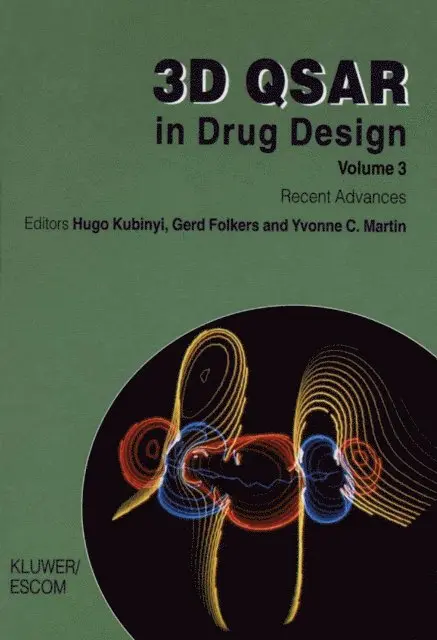
3D QSAR in Drug Design
Recent Advances
Av Yvonne C. Martin, Gerd Folkers m. fl.
Inbunden, 1998
2171 kr
Lägg i varukorg
Significant progress has been made in the study of three-dimensional quantitative structure-activity relationships (3D QSAR) since the first publication by Richard Cramer in 1988 and the first volume in the series, 3D QSAR in Drug Design. Theory, Methods and Applications, published in 1993. The aim …
3D QSAR in Drug Design
Volume 2: Ligand-Protein Interactions and Molecular Similarity Volume 3: Recent Advances
Av Hugo Kubinyi, Gerd Folkers m. fl.
1998
3564 kr
Lägg i varukorg
This is a set comprising the second and third volumes in the series. They review the progress being made in CoMFA and other 3D QSAR approaches since the publication of the first volume. Volume Two, "Ligand-Protein Interactions and Molecular Similarity", is divided into three sections dealing with: …
Quantitative Drug Design
A Critical Introduction, Second Edition
E-bok, 2010
1239 kr
Lägg i varukorg
Since the publication of the first edition, the field has changed dramatically. Scientists can now explicitly consider 3D features in quantitative structure-activity relationship (QSAR) studies and often have the 3D structure of the macromolecular target to guide the 3D QSAR. Improvements in …
Quantitative Drug Design
A Critical Introduction, Second Edition
Inbunden, 2010
3149 kr
Lägg i varukorg
Since the publication of the first edition, the field has changed dramatically. Scientists can now explicitly consider 3D features in quantitative structure-activity relationship (QSAR) studies and often have the 3D structure of the macromolecular target to guide the 3D QSAR. Improvements in …
Quantitative Drug Design
A Critical Introduction, Second Edition
E-bok, 2010
1266 kr
Lägg i varukorg
Since the publication of the first edition, the field has changed dramatically. Scientists can now explicitly consider 3D features in quantitative structure-activity relationship (QSAR) studies and often have the 3D structure of the macromolecular target to guide the 3D QSAR. Improvements in …
3D QSAR in Drug Design
Ligand-Protein Interactions and Molecular Similarity
Av Hugo Kubinyi, Gerd Folkers m. fl.
Häftad, 2010
2179 kr
Lägg i varukorg
Volumes 2 and 3 of the 3D QSAR in Drug Design series aim to review the progress being made in CoMFA and other 3D QSAR approaches since the publication of the highly successful first volume about four years ago. Volume 2 (Ligand-Protein Interactions and Molecular Similarity) divides into three …
3D QSAR in Drug Design
Recent Advances
Av Hugo Kubinyi, Gerd Folkers m. fl.
Häftad, 2010
2179 kr
Lägg i varukorg
Significant progress has been made in the study of three-dimensional quantitative structure-activity relationships (3D QSAR) since the first publication by Richard Cramer in 1988 and the first volume in the series, 3D QSAR in Drug Design. Theory, Methods and Applications, published in 1993. The aim …