Hugo Kubinyi – författare
Visar alla böcker från författaren Hugo Kubinyi. Handla med fri frakt och snabb leverans.
12 produkter
12 produkter
E-bok
PDF, Engelska, 20062 741 kr
Läs direkt efter köp
Significant progress has been made in the study of three-dimensional quantitative structure-activity relationships (3D QSAR) since the first publication by Richard Cramer in 1988 and the first volume in the series. 3D QSAR in Drug Design. Theory, Methods and Applications, published in 1993. The aim of that early book was to contribute to the understanding and the further application of CoMFA and related approaches and to facilitate the appropriate use of these methods. Since then, hundreds of papers have appeared using the quickly developing techniques of both 3D QSAR and computational sciences to study a broad variety of biological problems. Again the editor(s) felt that the time had come to solicit reviews on published and new viewpoints to document the state of the art of 3D QSAR in its broadest definition and to provide visions of where new techniques will emerge or new appli- tions may be found. The intention is not only to highlight new ideas but also to show the shortcomings, inaccuracies, and abuses of the methods. We hope this book will enable others to separate trivial from visionary approaches and me-too methodology from in- vative techniques. These concerns guided our choice of contributors. To our delight, our call for papers elicited a great many manuscripts.
E-bok
PDF, Engelska, 20062 741 kr
Läs direkt efter köp
Significant progress has been made in the study of three-dimensional quantitative structure-activity relationships (3D QSAR) since the first publication by Richard Cramer in 1988 and the first volume in the series, 3D QSAR in Drug Design. Theory, Methods and Applications, published in 1993. The aim of that early book was to contribute to the understanding and the further application of CoMFA and related approaches and to facilitate the appropriate use of these methods. Since then, hundreds of papers have appeared using the quickly developing techniques of both 3D QSAR and computational sciences to study a broad variety of biological problems. Again the editor(s) felt that the time had come to solicit reviews on published and new viewpoints to document the state of the art of 3D QSAR in its broadest definition and to provide visions of where new techniques will emerge or new appli- tions may be found. The intention is not only to highlight new ideas but also to show the shortcomings, inaccuracies, and abuses of the methods. We hope this book will enable others to separate trivial from visionary approaches and me-too methodology from in- vative techniques. These concerns guided our choice of contributors. To our delight, our call for papers elicited a great many manuscripts.
Inbunden, Engelska, 1998
2 174 kr
Skickas inom 10-15 vardagar
This volume, the second in the "3D QSAR in Drug Design" series, aims to review the progress being made in CoMFA and other 3D QSAR approaches since the publication of the first volume. It divides into three sections dealing with: ligand-protein interactions; quantum chemical models and molecular dynamics simulations; and pharmacophore modelling and molecular similarity, respectively. Volume 3 "Recent Advances" is also divided into three sections, namely: 3D QSAR methodology - CoMFA and related approaches; receptor models and other 3D QSAR approaches; and 3D QSAR applications. More than 70 scientists have contributed nearly 40 reviews of their work and related research to these two volumes, which present coverage of recent developments in all fields of 3D QSAR.
Del 3 - Three-Dimensional Quantitative Structure Activity Relationships
3D QSAR in Drug Design
Recent Advances
Inbunden, Engelska, 1998
2 174 kr
Skickas inom 10-15 vardagar
Significant progress has been made in the study of three-dimensional quantitative structure-activity relationships (3D QSAR) since the first publication by Richard Cramer in 1988 and the first volume in the series, 3D QSAR in Drug Design. Theory, Methods and Applications, published in 1993. The aim of that early book was to contribute to the understanding and the further application of CoMFA and related approaches and to facilitate the appropriate use of these methods. Since then, hundreds of papers have appeared using the quickly developing techniques of both 3D QSAR and computational sciences to study a broad variety of biological problems. Again the editor(s) felt that the time had come to solicit reviews on published and new viewpoints to document the state of the art of 3D QSAR in its broadest definition and to provide visions of where new techniques will emerge or new appli- tions may be found. The intention is not only to highlight new ideas but also to show the shortcomings, inaccuracies, and abuses of the methods. We hope this book will enable others to separate trivial from visionary approaches and me-too methodology from in- vative techniques. These concerns guided our choice of contributors. To our delight, our call for papers elicited a great many manuscripts.
3 564 kr
Skickas inom 10-15 vardagar
This is a set comprising the second and third volumes in the series. They review the progress being made in CoMFA and other 3D QSAR approaches since the publication of the first volume. Volume Two, "Ligand-Protein Interactions and Molecular Similarity", is divided into three sections dealing with: ligand-protein interactions, quantum chemical models and molecular dynamics simulations; and pharmacophore modelling and molecular similarity, respectively. Volume Three, "Recent Advances" is also divided into three sections, namely: 3D QSAR methodology - CoMFA and related approaches; receptor models and other 3D QSAR approaches; and 3D QSAR applications. More than 70 scientists have contributed nearly 40 reviews of their work and related research to these two volumes. The works present an up-to-date coverage of the latest developments in all fields of 3D QSAR.
E-bok
PDF, Engelska, 20062 473 kr
Läs direkt efter köp
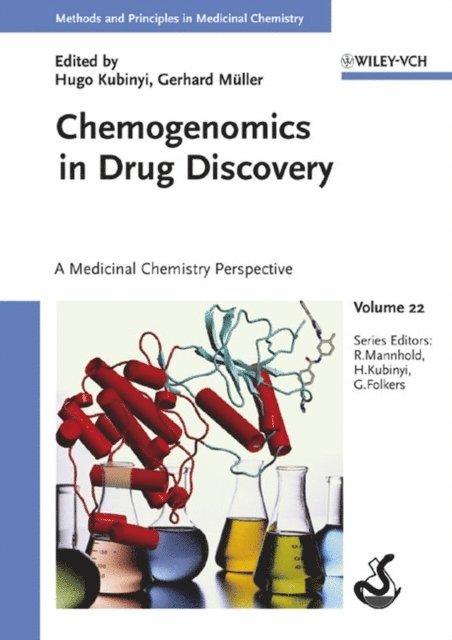
Chemogenomics brings together the most powerful concepts in modern chemistry and biology, linking combinatorial chemistry with genomics and proteomics. This first reference devoted to the topic covers all stages of the early drug discovery process, from target selection to compound library and lead design. With the combined expertise of 20 research groups from academia and leading pharmaceutical companies, this is a must-have for every drug developer and medicinal chemist applying the powerful methods of chemogenomics to speed up the drug discovery process.
E-bok
PDF, Engelska, 20081 603 kr
Läs direkt efter köp
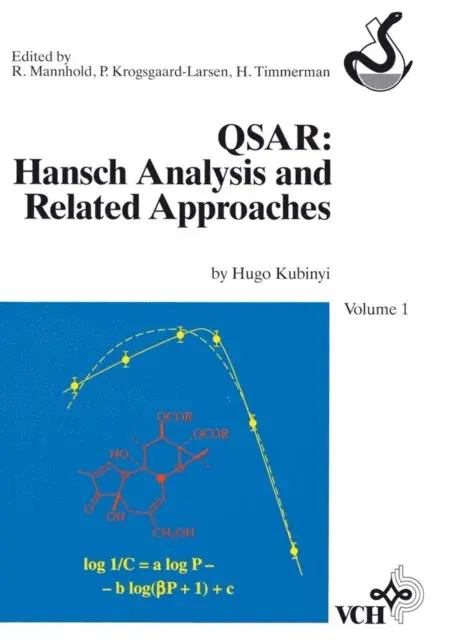
Finding the new remedy for a certain disease: an inspired goal. QSAR, an invaluable tool in drug design, aids scientists to attain this aim. This book is a long-awaited comprehensive text to QSAR and related approaches. It provides a practice-oriented introduction to the theory, methods and analyses for QSAR relationships, including modelling-based and 3D approaches. Hugo Kubinyi is a leading expert in QSAR. Readers will benefit from the author''s 20 years of practical experience, from his careful calculations and recalculations of thousands of QSAR equations. Among the topics covered are: - physiocochemical parameters - quantitative models - statistical methods - Hansch analysis - Free Wilson analysis - 3D-QSAR approaches The book can readily be used as a textbook due to its high didactic value and numerous examples (over 200 equations and 1100 references).
Häftad, Engelska, 2010
2 174 kr
Skickas inom 10-15 vardagar
Volumes 2 and 3 of the 3D QSAR in Drug Design series aim to review the progress being made in CoMFA and other 3D QSAR approaches since the publication of the highly successful first volume about four years ago. Volume 2 (Ligand-Protein Interactions and Molecular Similarity) divides into three sections dealing with Ligand-Protein Interactions, Quantum Chemical Models and Molecular Dynamics Simulations, and Pharmacophore Modelling and Molecular Similarity, respectively. Volume 3 (Recent Advances) is also divided into three sections, namely 3D QSAR Methodology: CoMFA and Related Approaches, Receptor Models and Other 3D QSAR Approaches, and 3D QSAR Applications. More than seventy distinguished scientists have contributed nearly forty reviews of their work and related research to these two volumes which are of outstanding quality and timeliness. These works present an up-to-date coverage of the latest developments in all fields of 3D QSAR.
Del 3 - Three-Dimensional Quantitative Structure Activity Relationships
3D QSAR in Drug Design
Recent Advances
Häftad, Engelska, 2010
2 174 kr
Skickas inom 10-15 vardagar
Significant progress has been made in the study of three-dimensional quantitative structure-activity relationships (3D QSAR) since the first publication by Richard Cramer in 1988 and the first volume in the series, 3D QSAR in Drug Design. Theory, Methods and Applications, published in 1993. The aim of that early book was to contribute to the understanding and the further application of CoMFA and related approaches and to facilitate the appropriate use of these methods. Since then, hundreds of papers have appeared using the quickly developing techniques of both 3D QSAR and computational sciences to study a broad variety of biological problems. Again the editor(s) felt that the time had come to solicit reviews on published and new viewpoints to document the state of the art of 3D QSAR in its broadest definition and to provide visions of where new techniques will emerge or new appli- tions may be found. The intention is not only to highlight new ideas but also to show the shortcomings, inaccuracies, and abuses of the methods. We hope this book will enable others to separate trivial from visionary approaches and me-too methodology from in- vative techniques. These concerns guided our choice of contributors. To our delight, our call for papers elicited a great many manuscripts.
Del 1 - Three-Dimensional Quantitative Structure Activity Relationships
3D QSAR in Drug Design
Volume 1: Theory Methods and Applications
Häftad, Engelska, 2011
5 426 kr
Skickas inom 10-15 vardagar
Progress in medicinal chemistry and in drug design depends on our ability to understand the interactions of drugs with their biological targets. Classical QSAR studies describe biological activity in terms of physicochemical properties of substituents in certain positions of the drug molecules. The purpose of this book is twofold: On the one hand, both the novice and the experienced user will be introduced to the theory and application of 3D QSAR analyses, and on the other, a comprehensive overview of the scope and limitations of these methods is given. The detailed discussion of the present state of the art should enable scientists to further develop and improve these powerful new tools. The greater part of the book is dedicated to the theoretical background of 3D QSAR and to a discussion of CoMFA applications. In addition, various other 3D QSAR approaches and some CoMFA-related methods are described in detail. Thus, the book should be valuable for medicinal, agricultural and theoretical chemists, biochemists and biologists, as well as for other scientists interested in drug design. Its content, starting at a very elementary level and proceeding to the latest methodological results, the strengths and limitations of 3D QSAR approaches, makes the book also appropriate as a text for teaching and for graduate student courses.
Inbunden, Engelska, 1993
5 588 kr
Skickas inom 10-15 vardagar
Progress in medicinal chemistry and in drug design depends on our ability to understand the interactions of drugs with their biological targets. Classical QSAR studies describe biological activity in terms of physicochemical properties of substituents in certain positions of the drug molecules. The purpose of this book is twofold: On the one hand, both the novice and the experienced user will be introduced to the theory and application of 3D QSAR analyses, and on the other, a comprehensive overview of the scope and limitations of these methods is given. The detailed discussion of the present state of the art should enable scientists to further develop and improve these powerful new tools. The greater part of the book is dedicated to the theoretical background of 3D QSAR and to a discussion of CoMFA applications. In addition, various other 3D QSAR approaches and some CoMFA-related methods are described in detail. Thus, the book should be valuable for medicinal, agricultural and theoretical chemists, biochemists and biologists, as well as for other scientists interested in drug design. Its content, starting at a very elementary level and proceeding to the latest methodological results, the strengths and limitations of 3D QSAR approaches, makes the book also appropriate as a text for teaching and for graduate student courses.
Inbunden, Engelska, 2005
2 798 kr
Tillfälligt slut