Gerd Folkers – författare
Visar alla böcker från författaren Gerd Folkers. Handla med fri frakt och snabb leverans.
12 produkter
12 produkter
E-bok
PDF, Engelska, 20062 741 kr
Läs direkt efter köp
Significant progress has been made in the study of three-dimensional quantitative structure-activity relationships (3D QSAR) since the first publication by Richard Cramer in 1988 and the first volume in the series. 3D QSAR in Drug Design. Theory, Methods and Applications, published in 1993. The aim of that early book was to contribute to the understanding and the further application of CoMFA and related approaches and to facilitate the appropriate use of these methods. Since then, hundreds of papers have appeared using the quickly developing techniques of both 3D QSAR and computational sciences to study a broad variety of biological problems. Again the editor(s) felt that the time had come to solicit reviews on published and new viewpoints to document the state of the art of 3D QSAR in its broadest definition and to provide visions of where new techniques will emerge or new appli- tions may be found. The intention is not only to highlight new ideas but also to show the shortcomings, inaccuracies, and abuses of the methods. We hope this book will enable others to separate trivial from visionary approaches and me-too methodology from in- vative techniques. These concerns guided our choice of contributors. To our delight, our call for papers elicited a great many manuscripts.
E-bok
PDF, Engelska, 20062 741 kr
Läs direkt efter köp
Significant progress has been made in the study of three-dimensional quantitative structure-activity relationships (3D QSAR) since the first publication by Richard Cramer in 1988 and the first volume in the series, 3D QSAR in Drug Design. Theory, Methods and Applications, published in 1993. The aim of that early book was to contribute to the understanding and the further application of CoMFA and related approaches and to facilitate the appropriate use of these methods. Since then, hundreds of papers have appeared using the quickly developing techniques of both 3D QSAR and computational sciences to study a broad variety of biological problems. Again the editor(s) felt that the time had come to solicit reviews on published and new viewpoints to document the state of the art of 3D QSAR in its broadest definition and to provide visions of where new techniques will emerge or new appli- tions may be found. The intention is not only to highlight new ideas but also to show the shortcomings, inaccuracies, and abuses of the methods. We hope this book will enable others to separate trivial from visionary approaches and me-too methodology from in- vative techniques. These concerns guided our choice of contributors. To our delight, our call for papers elicited a great many manuscripts.
Inbunden, Engelska, 1998
2 174 kr
Skickas inom 10-15 vardagar
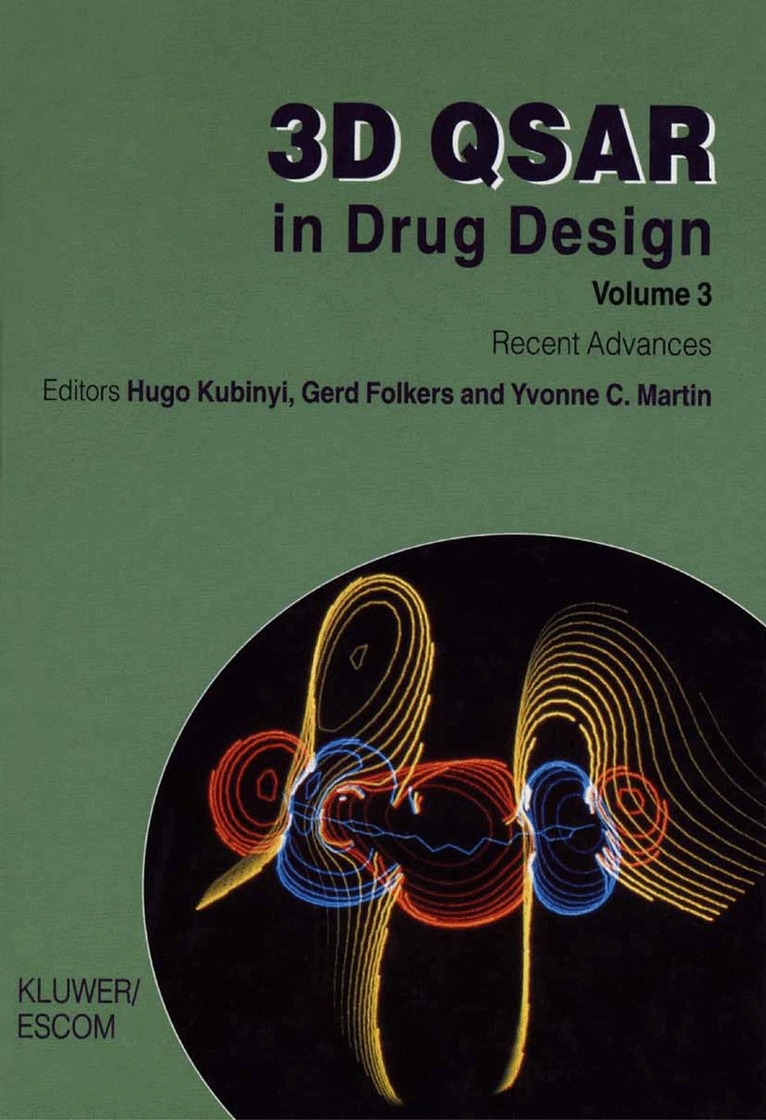
This volume, the second in the "3D QSAR in Drug Design" series, aims to review the progress being made in CoMFA and other 3D QSAR approaches since the publication of the first volume. It divides into three sections dealing with: ligand-protein interactions; quantum chemical models and molecular dynamics simulations; and pharmacophore modelling and molecular similarity, respectively. Volume 3 "Recent Advances" is also divided into three sections, namely: 3D QSAR methodology - CoMFA and related approaches; receptor models and other 3D QSAR approaches; and 3D QSAR applications. More than 70 scientists have contributed nearly 40 reviews of their work and related research to these two volumes, which present coverage of recent developments in all fields of 3D QSAR.
Del 3 - Three-Dimensional Quantitative Structure Activity Relationships
3D QSAR in Drug Design
Recent Advances
Inbunden, Engelska, 1998
2 174 kr
Skickas inom 10-15 vardagar
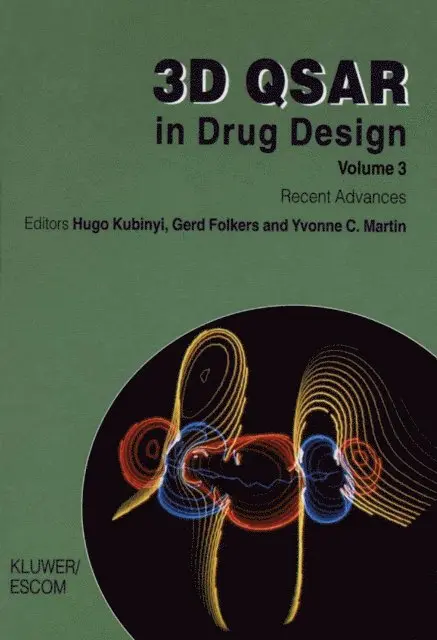
Significant progress has been made in the study of three-dimensional quantitative structure-activity relationships (3D QSAR) since the first publication by Richard Cramer in 1988 and the first volume in the series, 3D QSAR in Drug Design. Theory, Methods and Applications, published in 1993. The aim of that early book was to contribute to the understanding and the further application of CoMFA and related approaches and to facilitate the appropriate use of these methods. Since then, hundreds of papers have appeared using the quickly developing techniques of both 3D QSAR and computational sciences to study a broad variety of biological problems. Again the editor(s) felt that the time had come to solicit reviews on published and new viewpoints to document the state of the art of 3D QSAR in its broadest definition and to provide visions of where new techniques will emerge or new appli- tions may be found. The intention is not only to highlight new ideas but also to show the shortcomings, inaccuracies, and abuses of the methods. We hope this book will enable others to separate trivial from visionary approaches and me-too methodology from in- vative techniques. These concerns guided our choice of contributors. To our delight, our call for papers elicited a great many manuscripts.
3 564 kr
Skickas inom 10-15 vardagar
This is a set comprising the second and third volumes in the series. They review the progress being made in CoMFA and other 3D QSAR approaches since the publication of the first volume. Volume Two, "Ligand-Protein Interactions and Molecular Similarity", is divided into three sections dealing with: ligand-protein interactions, quantum chemical models and molecular dynamics simulations; and pharmacophore modelling and molecular similarity, respectively. Volume Three, "Recent Advances" is also divided into three sections, namely: 3D QSAR methodology - CoMFA and related approaches; receptor models and other 3D QSAR approaches; and 3D QSAR applications. More than 70 scientists have contributed nearly 40 reviews of their work and related research to these two volumes. The works present an up-to-date coverage of the latest developments in all fields of 3D QSAR.
Del 21 - Methods & Principles in Medicinal Chemistry
Molecular Biology in Medicinal Chemistry
Inbunden, Engelska, 2004
2 656 kr
Skickas inom 5-8 vardagar
This readily comprehensible book explains the identification of molecular targets via cellular assays, reporter genes or transgenic models, as well as surveying recent advances in the synthesis, separation and analysis of drugs. A special section is devoted to molecular genetics methods.With its examination of these novel methods and generous practical advice, this is essential reading for all pharmaceutical chemists, molecular biologists and medical researchers using molecular methods to study drugs and their action.
Häftad, Engelska, 2008
843 kr
Skickas
Ideal for beginners, this book explains the basics of modeling in a competent yet easily understandable way. Following complete sections on the modeling of small molecules, protein modeling and chemogenomics, completely worked-out examples show the way to the reader's first modeling experiment. This new, third edition features a new chapter on chemogenomics, reflecting the trend towards 'chemical biology', as well as the protein modeling example being completely rewritten for a better 'feel' of modeling complex biomolecules. The authors are experienced university teachers who regularly hold courses on molecular modeling, making this a tried-and-tested text for teachers. It is equally valuable for experts, since it is the only book to evaluate the strengths and limitations of the molecular modeling techniques and software currently available.
E-bok
PDF, Engelska, 20063 160 kr
Läs direkt efter köp
This readily comprehensible book explains the identification of molecular targets via cellular assays, reporter genes or transgenic models, as well as surveying recent advances in the synthesis, separation and analysis of drugs. A special section is devoted to molecular genetics methods. With its examination of these novel methods and generous practical advice, this is essential reading for all pharmaceutical chemists, molecular biologists and medical researchers using molecular methods to study drugs and their action.
E-bok
PDF, Engelska, 20081 725 kr
Läs direkt efter köp
Written by experienced experts in molecular modeling, this books describes the basics to the extent that is necessary if one wants to be able to reliably judge the results from molecular modeling calculations. Its main objective is the description of the various pitfalls to be avoided. Without unnecessary overhead it leads the reader from simple calculations on small molecules to the modeling of proteins and other relevant biomolecules. A textbook for beginners as well as an invaluable reference for all those dealing with molecular modeling in their daily work!
Häftad, Tyska, 2025
345 kr
Skickas inom 3-6 vardagar
Häftad, Engelska, 2010
2 174 kr
Skickas inom 10-15 vardagar
Volumes 2 and 3 of the 3D QSAR in Drug Design series aim to review the progress being made in CoMFA and other 3D QSAR approaches since the publication of the highly successful first volume about four years ago. Volume 2 (Ligand-Protein Interactions and Molecular Similarity) divides into three sections dealing with Ligand-Protein Interactions, Quantum Chemical Models and Molecular Dynamics Simulations, and Pharmacophore Modelling and Molecular Similarity, respectively. Volume 3 (Recent Advances) is also divided into three sections, namely 3D QSAR Methodology: CoMFA and Related Approaches, Receptor Models and Other 3D QSAR Approaches, and 3D QSAR Applications. More than seventy distinguished scientists have contributed nearly forty reviews of their work and related research to these two volumes which are of outstanding quality and timeliness. These works present an up-to-date coverage of the latest developments in all fields of 3D QSAR.
Del 3 - Three-Dimensional Quantitative Structure Activity Relationships
3D QSAR in Drug Design
Recent Advances
Häftad, Engelska, 2010
2 174 kr
Skickas inom 10-15 vardagar
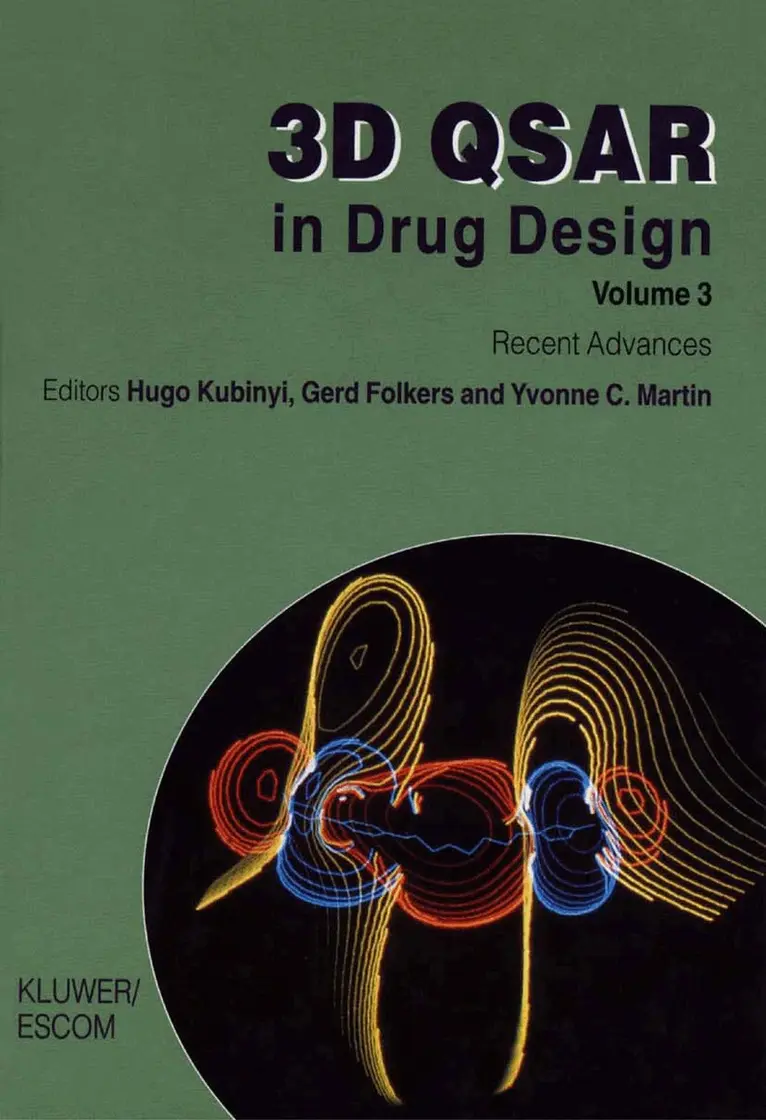
Significant progress has been made in the study of three-dimensional quantitative structure-activity relationships (3D QSAR) since the first publication by Richard Cramer in 1988 and the first volume in the series, 3D QSAR in Drug Design. Theory, Methods and Applications, published in 1993. The aim of that early book was to contribute to the understanding and the further application of CoMFA and related approaches and to facilitate the appropriate use of these methods. Since then, hundreds of papers have appeared using the quickly developing techniques of both 3D QSAR and computational sciences to study a broad variety of biological problems. Again the editor(s) felt that the time had come to solicit reviews on published and new viewpoints to document the state of the art of 3D QSAR in its broadest definition and to provide visions of where new techniques will emerge or new appli- tions may be found. The intention is not only to highlight new ideas but also to show the shortcomings, inaccuracies, and abuses of the methods. We hope this book will enable others to separate trivial from visionary approaches and me-too methodology from in- vative techniques. These concerns guided our choice of contributors. To our delight, our call for papers elicited a great many manuscripts.