Zhaoguang Ge - Böcker
Visar alla böcker från författaren Zhaoguang Ge. Handla med fri frakt och snabb leverans.
2 produkter
2 produkter
427 kr
Skickas inom 10-15 vardagar
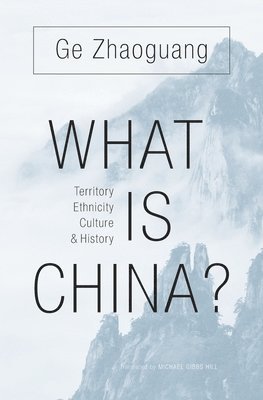
Ge Zhaoguang, an eminent historian of traditional China and a public intellectual, takes on fundamental questions that shape the domestic and international politics of the world’s most populous country and its second largest economy. What Is China? offers an insider’s account that addresses sensitive problems of Chinese identity and shows how modern scholarship about China—whether conducted in China, East Asia, or the West—has attempted to make sense of the country’s shifting territorial boundaries and its diversity of ethnic groups and cultures.Ge considers, for example, the ancient concept of tianxia, or All-Under-Heaven, which assigned supremacy to the imperial court and lesser status to officials, citizens, tributary states, and tribal peoples. Does China’s government still operate with a belief in divine rule of All-Under-Heaven, or has it taken a different view of other actors, inside and outside its current borders? Responding both to Western theories of the nation-state and to Chinese intellectuals eager to promote “national learning,” Ge offers an insightful and erudite account of how China sees its place in the world. As he wrestles with complex historical and cultural forces guiding the inner workings of an often misunderstood nation, Ge also teases out many nuances of China’s encounter with the contemporary world, using China’s past to explain aspects of its present and to provide insight into various paths the nation might follow as the twenty-first century unfolds.
Utopia and Utopianism in the Contemporary Chinese Context
Texts, Ideas, Spaces
Inbunden, Engelska, 2020
727 kr
Skickas inom 5-8 vardagar
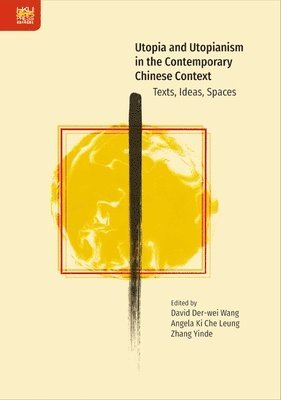
Utopia and Utopianism in the Contemporary Chinese Context: Texts, Ideas, Spaces decisively demonstrates the extent to which utopianism has shaped political thought, cultural imaginaries, and social engagement after it was introduced into the Chinese context in the nineteenth century. In fact, pursuit of utopia has often led to action—such as the Chinese Revolution and the Umbrella Movement—and contested consequences. Covering a time span that goes from the late Qing to our days, the authors show that few ideas have been as influencing as utopia, which has compellingly shaped the imaginaries that underpin China’s historical change. Utopianism contributed to the formation of the Chinese state itself—shaping the thought of key figures of the late Qing and early Republican eras such as Kang Youwei and Sun Yat-sen—and outlived the labyrinthine debates of the second halve of the twentieth century, both under Mao’s rule and during the post-socialist era. Even in the current times of dystopian narratives, a period in which utopia seems to be less influential than in the past, its manifestations persistently provide lifelines against fatalism or cynicism. This collection shows how profoundly utopian ideas have nurtured both the thought of crucial figures during these historical times, the new generation of mainland Chinese and Sinophone intellectuals, and the hopes of twenty-first-century Hong Kong activists.