Zheng Yangwen – författare
Visar alla böcker från författaren Zheng Yangwen. Handla med fri frakt och snabb leverans.
5 produkter
5 produkter
327 kr
Skickas inom 7-10 vardagar
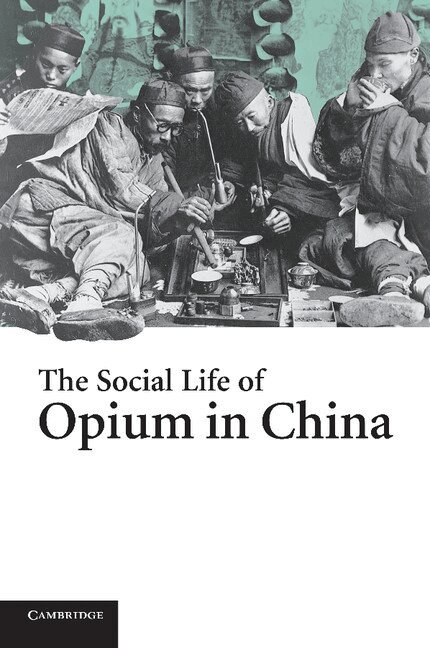
In a remarkable and broad-ranging narrative, Yangwen Zheng's book explores the history of opium consumption in China from 1483 to the late twentieth century. The story begins in the mid-Ming dynasty, when opium was sent as a gift by vassal states and used as an aphrodisiac in court. Over time, the Chinese people from different classes and regions began to use it for recreational purposes, so beginning a complex culture of opium consumption. The book traces this transformation over a period of five hundred years, asking who introduced opium to China, how it spread across all sections of society, embraced by rich and poor alike as a culture and an institution. The book, which is accompanied by a fascinating collection of illustrations, will appeal to students and scholars of history, anthropology, sociology, political science, economics, and all those with an interest in China.
1 113 kr
Skickas inom 7-10 vardagar
In a remarkable and broad-ranging narrative, Yangwen Zheng's book explores the history of opium consumption in China from 1483 to the late twentieth century. The story begins in the mid-Ming dynasty, when opium was sent as a gift by vassal states and used as an aphrodisiac in court. Over time, the Chinese people from different classes and regions began to use it for recreational purposes, so beginning a complex culture of opium consumption. The book traces this transformation over a period of five hundred years, asking who introduced opium to China, how it spread across all sections of society, embraced by rich and poor alike as a culture and an institution. The book, which is accompanied by a fascinating collection of illustrations, will appeal to students and scholars of history, anthropology, sociology, political science, economics, and all those with an interest in China.
1 956 kr
Skickas inom 3-6 vardagar
The past few decades have seen growing interest in the study of the body. However, the increasing number of exciting and influential publications has primarily, if not exclusively, focused on the body in Western cultures. The various works produced by Asian scholars remain largely unknown to Western academic debates even though Asia is home to a host of rich body cultures and religions. The peoples of Asia have experienced colonization, decolonization, and now globalization, all of which make the ‘body in Asia’ a rewarding field of research. This unique volume brings together a number of scholars who work on East, Southeast and South Asia and presents original and cutting edge research on the body in various Asian cultures.
2 606 kr
Skickas inom 3-6 vardagar
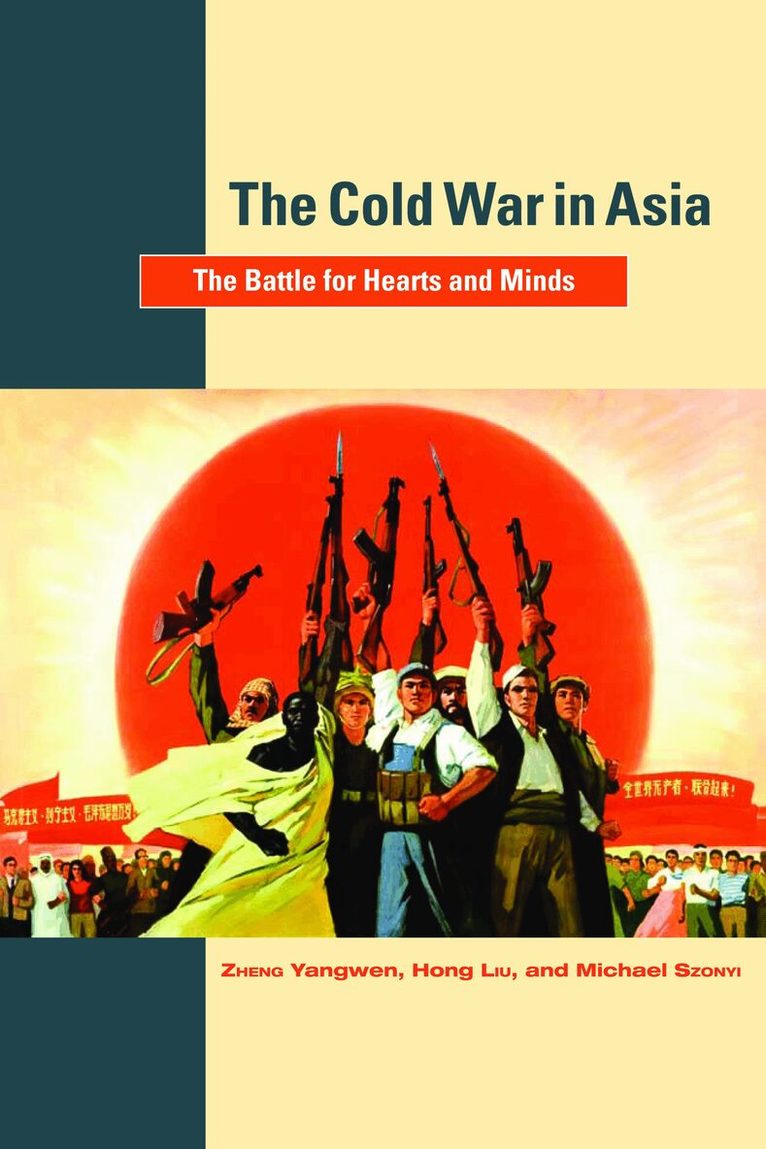
The Cold War stayed cold in Europe but it was hot in Asia. Its legacy lives on in the region. In none of the three dominant historiographical paradigms: orthodox, revisionist and post-revisionist, does Asia, or the rest of the Third World, figure with much significance. What happens to these narratives if we put them to the test in Asia? This volume argues that attention to what has been conventionally considered the periphery is essential to a full understanding of the global Cold War. Foregrounding Asia necessarily leads to a re-assessment of the dominant narratives. This volume also argues for a shift in focus from diplomacy and high politics alone towards research into the culture of the Cold War era and its public diplomacy. "As a whole, the essays contribute to enriching our understanding of what was really happening in an era that is too often understood in the catch-all framework of the Cold War." - Akira Iriye, Harvard University
Del 21 - China Studies
China on the Sea
How the Maritime World Shaped Modern China
Inbunden, Engelska, 2011
2 908 kr
Skickas inom 5-8 vardagar
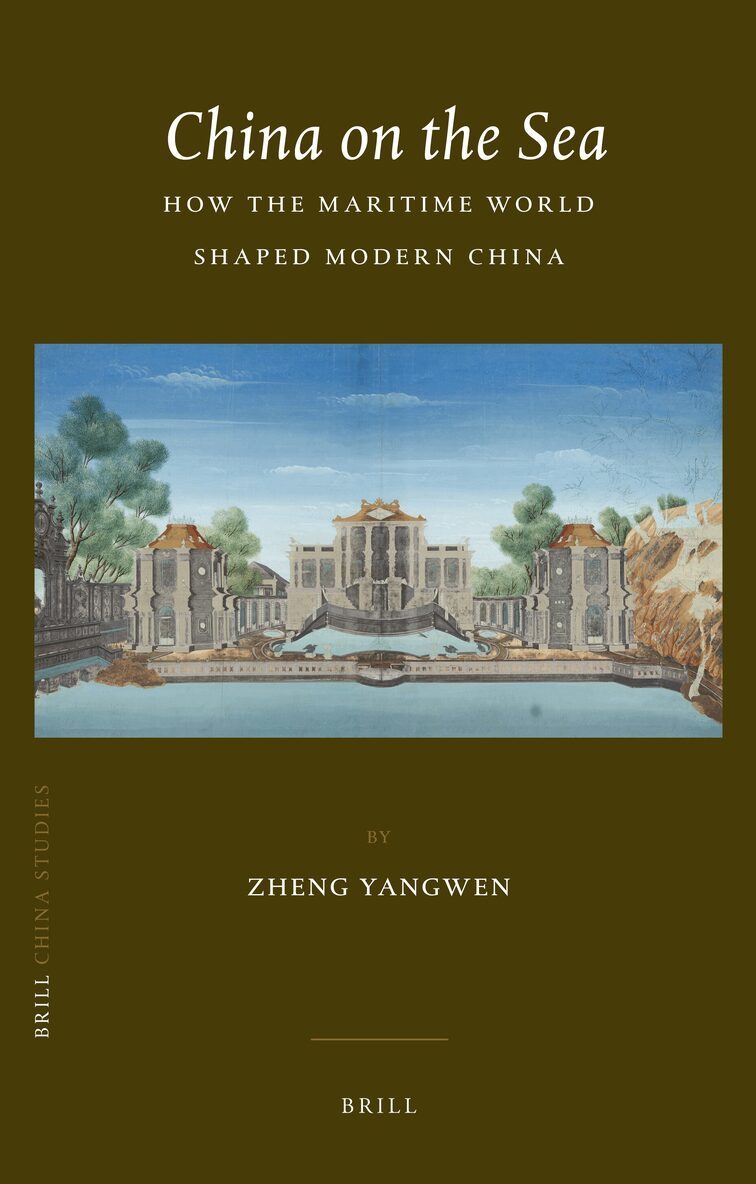
Generations of Chinese scholars have made China synonymous with the Great Wall and presented its civilization as fundamentally land-bound. This volume challenges this perspective, demonstrating that China was not a “Walled Kingdom”, certainly not since the Yongjia Disturbance in 311. China reached out to the maritime world far more actively than historians have acknowledged, while the seas and what came from the seas—from Islam, fragrances and Jesuits to maize, opium and clocks—significantly changed the course of history, and have been of inestimable importance to China since the Ming. This book integrates the maritime history of China, especially the Qing period, a subject which has hitherto languished on the periphery of scholarly analysis, into the mainstream of current historical narrative. It was the seas that made Tang China a “Cosmopolitan Empire” (Mark Lewis), the Song dynasty China’s “Greatest Age” (John Fairbank), China at 1600 “the largest and most sophisticated of all unified realms on earth” (Jonathan Spence), and the reign of the three Qing emperors (Kangxi, Yongzheng and Qianlong) China’s “last golden age” (Charles Hucker).