Zoë Laidlaw – författare
Visar alla böcker från författaren Zoë Laidlaw. Handla med fri frakt och snabb leverans.
4 produkter
4 produkter
Del 59 - Studies in Imperialism
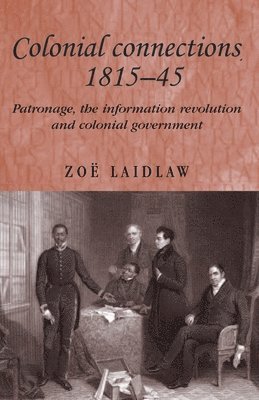
Colonial connections, 1815–45
Patronage, the information revolution and colonial government
Häftad, Engelska, 2012
359 kr
Skickas inom 5-8 vardagar
This groundbreaking book challenges standard interpretations of metropolitan strategies of rule in the early nineteenth century. After the Napoleonic wars, the British government ruled a more diverse empire than ever before, and the Colonial Office responded by cultivating strong personal links with governors and colonial officials through which influence, patronage and information could flow. By the 1830s the conviction that personal connections were the best way of exerting influence within the imperial sphere went well beyond the metropolitan government.This book challenges traditional notions of a radical revolution in government, identifying a more profound and general transition from a metropolitan reliance on gossip and personal information to the embrace of new statistical forms of knowledge. The analysis moves between London, New South Wales and the Cape Colony, encompassing both government insiders and those who struggled against colonial and imperial governments.
E-bok
Engelska, 2021489 kr
Läs direkt efter köp
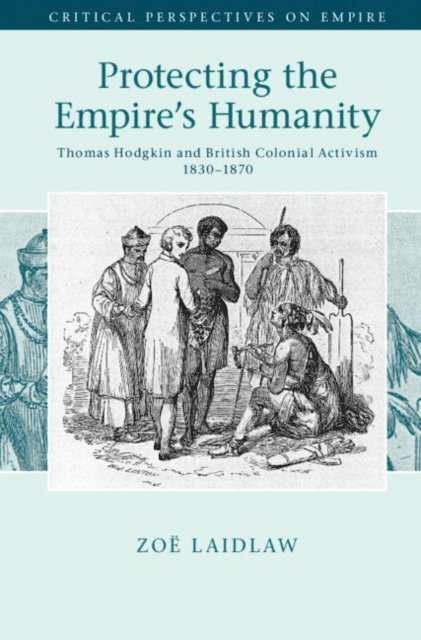
Rooted in the extraordinary archive of Quaker physician and humanitarian activist, Dr Thomas Hodgkin, this book explores the efforts of the Aborigines'' Protection Society to expose Britain''s hypocrisy and imperial crimes in the mid-nineteenth century. Hodgkin''s correspondents stretched from Liberia to Lesotho, New Zealand to Texas, Jamaica to Ontario, and Bombay to South Australia; they included scientists, philanthropists, missionaries, systematic colonizers, politicians and indigenous peoples themselves. Debating the best way to protect and advance indigenous rights in an era of burgeoning settler colonialism, they looked back to the lessons and limitations of anti-slavery, lamented the imperial government''s disavowal of responsibility for settler colonies, and laid out elaborate (and patronizing) plans for indigenous ''civilization''. Protecting the Empire''s Humanity reminds us of the complexity, contradictions and capacious nature of British colonialism and metropolitan ''humanitarianism'', illuminating the broad canvas of empire through a distinctive set of British and Indigenous campaigners.
E-bok
PDF, Engelska, 2021472 kr
Läs direkt efter köp
Rooted in the extraordinary archive of Quaker physician and humanitarian activist, Dr Thomas Hodgkin, this book explores the efforts of the Aborigines'' Protection Society to expose Britain''s hypocrisy and imperial crimes in the mid-nineteenth century. Hodgkin''s correspondents stretched from Liberia to Lesotho, New Zealand to Texas, Jamaica to Ontario, and Bombay to South Australia; they included scientists, philanthropists, missionaries, systematic colonizers, politicians and indigenous peoples themselves. Debating the best way to protect and advance indigenous rights in an era of burgeoning settler colonialism, they looked back to the lessons and limitations of anti-slavery, lamented the imperial government''s disavowal of responsibility for settler colonies, and laid out elaborate (and patronizing) plans for indigenous ''civilization''. Protecting the Empire''s Humanity reminds us of the complexity, contradictions and capacious nature of British colonialism and metropolitan ''humanitarianism'', illuminating the broad canvas of empire through a distinctive set of British and Indigenous campaigners.
Del 222 - Studies in Imperialism
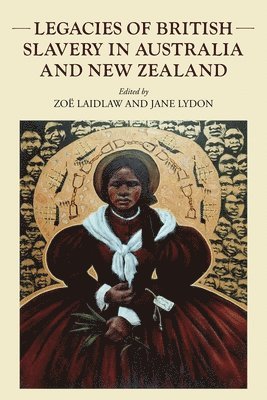
Legacies of British slavery in Australia and New Zealand
Inbunden, Engelska, 2026
1 298 kr
Skickas inom 5-8 vardagar
This book investigates the legacies of British slavery beyond Britain, focusing upon the colonisation of Australia and New Zealand, and explores why this history has been overlooked. After August 1833, when the British Parliament abolished slavery in the British Caribbean, Mauritius and the Cape, the former slave-owners were paid compensation for the loss of their ‘property’. New research has begun to show that many beneficiaries had ties to other parts of the British Empire, including the settler colonies of Australia, New Zealand, Canada and South Africa. Through a range of case studies, contributors to this collection trace the movement of people, goods, capital, and practices from the Caribbean to the new Australasian settler colonies. Chapters consider a range of places, people and themes to reveal the varied ways that slavery continued to shape imperial relationships, economic networks, and racial labour regimes after 1833.