
Zohreh T. Sullivan – författare
Visar alla böcker från författaren Zohreh T. Sullivan. Handla med fri frakt och snabb leverans.
3 produkter
3 produkter
Häftad, Engelska, 2002
207 kr
Skickas inom 5-8 vardagar
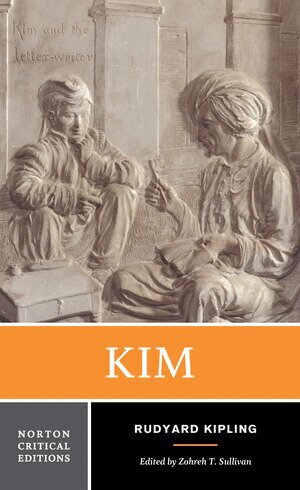
The text—that of the 1901 Sussex Edition—is fully annotated and accompanied by three maps that help students place the novel in geographical and historical contexts."Backgrounds" explores the novel's complicated issues of multiculturalism, imperialism, and racism, allowing readers to glimpse Kipling's personal thoughts about British expansionism. Included are two short stories, poems, and letters by Kipling, as well as autobiographical and biographical memoirs and contemporary reviews of Kim."Criticism" collects fourteen wide-ranging assessments of the novel by Noel Annan, Irving Howe, Edward Said, Ian Baucom, A. Michael Matin, John A. McClure, Anne Parry, Michael Hollington, Parama Roy, Sara Suleri, Patrick Williams, Suvir Kaul, Mark Kinkead-Weekes, and Zohreh T. Sullivan.A Chronology and a Selected Bibliography are included.
Häftad, Engelska, 2008
516 kr
Skickas inom 7-10 vardagar
Writers whose work reflects the experience of empire betray the anxieties and contradictions at the heart of the imperial enterprise. Zohreh T. Sullivan's reading of Rudyard Kipling's writings about India expands our sense of colonial discourse and recovers the cultural context and recurring tropes in his early journalism and fiction, in Kim, and in his late autobiography. She charts the fragmentation of Kipling's position as child, as colonizer and as 'poet of empire', finding in his representation of childhood's loss the site of repressed and disavowed desires and fears that resurface in later work. In using Kipling's troubled intimacy with empire as the link between history and narrative, Sullivan sees in Kipling's ambivalence his negotiation between the desire for union with his golden 'best-beloved' India and the historic imperatives of separation from it.
Inbunden, Engelska, 1993
1 426 kr
Skickas inom 7-10 vardagar
Writers whose work reflects the experience of empire betray the anxieties and contradictions at the heart of the imperial enterprise. Zohreh T. Sullivan's reading of Rudyard Kipling's writings about India expands our sense of colonial discourse and recovers the cultural context and recurring tropes in his early journalism and fiction, in Kim, and in his late autobiography. She charts the fragmentation of Kipling's position as child, as colonizer and as 'poet of empire', finding in his representation of childhood's loss the site of repressed and disavowed desires and fears that resurface in later work. In using Kipling's troubled intimacy with empire as the link between history and narrative, Sullivan sees in Kipling's ambivalence his negotiation between the desire for union with his golden 'best-beloved' India and the historic imperatives of separation from it.