Zoltán Balázs - Böcker
Visar alla böcker från författaren Zoltán Balázs. Handla med fri frakt och snabb leverans.
5 produkter
5 produkter
1 076 kr
Skickas inom 10-15 vardagar
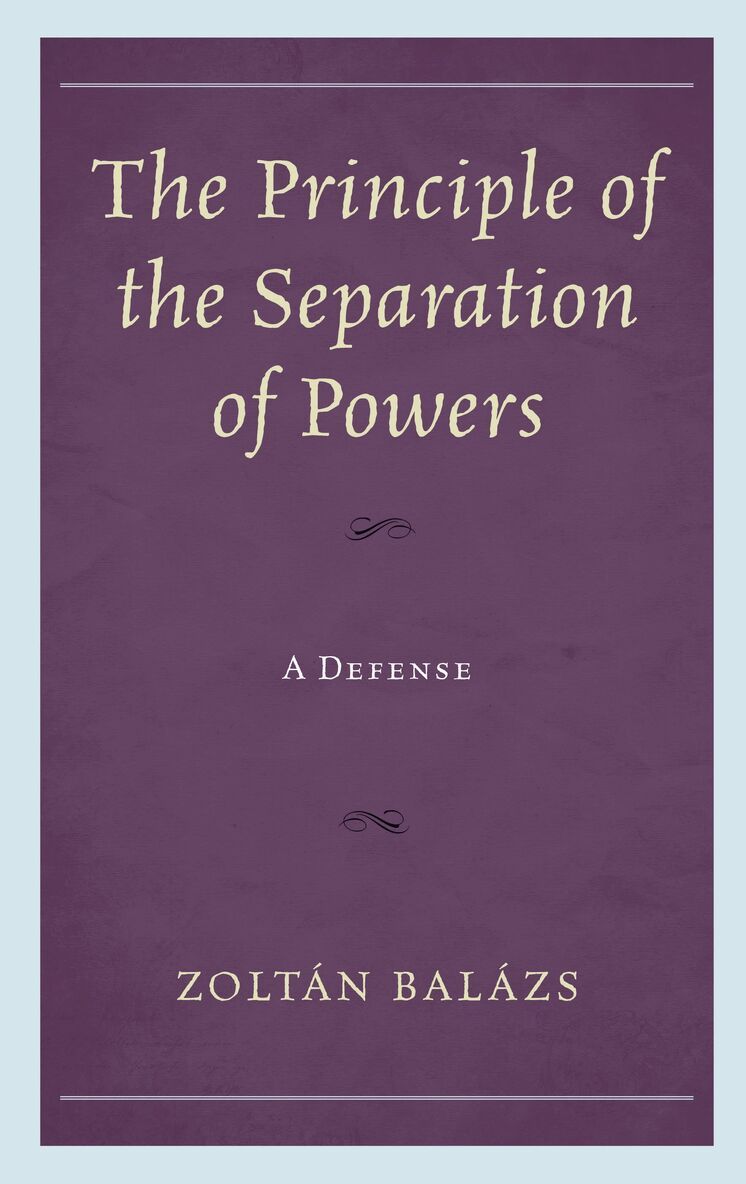
The separation of powers is one of the most cherished principles of constitutional government in the Western tradition. Despite its prestigious status, however, it has always been controversial. It has been attacked for being inadequate to account for institutional realities; for being inapplicable to parliamentary systems; for lacking a convincing normative grounding and even for being harmful, inasmuch as it hampers both the immediate enforcement of popular will and efficient political leadership. Current political crises all over the world, especially the rise of populist democracies and authoritarian regimes, however, make the principle worth a closer, more positive examination. This book takes stock of the criticisms of the principle of separation of powers and attempts to offer a new normative account of it. It argues that the separation of powers cannot be restricted to governmental institutions, agencies and decision-making procedures. Rather, it must be derived from the very basics of government, from the very notions of political order and articulated government and from the distinct though related concepts of social and governmental power and of authority. Once these distinctions are made, institutional separations are easier to be established. Contrary to the classical and most contemporary conceptions of the principle, the present account argues for a relational and negative conception of the separation of powers. The legislative branch in conceived of as the one where political authority, political power and social power are all equally represented. The executive branch is best understood as excluding social power whereas the judicial branch is marked for its opposition to the influence of political power. This conception avoids the pitfalls of essentialism and functionalism and makes the principle applicable in a much wider international context.
1 142 kr
Skickas inom 10-15 vardagar
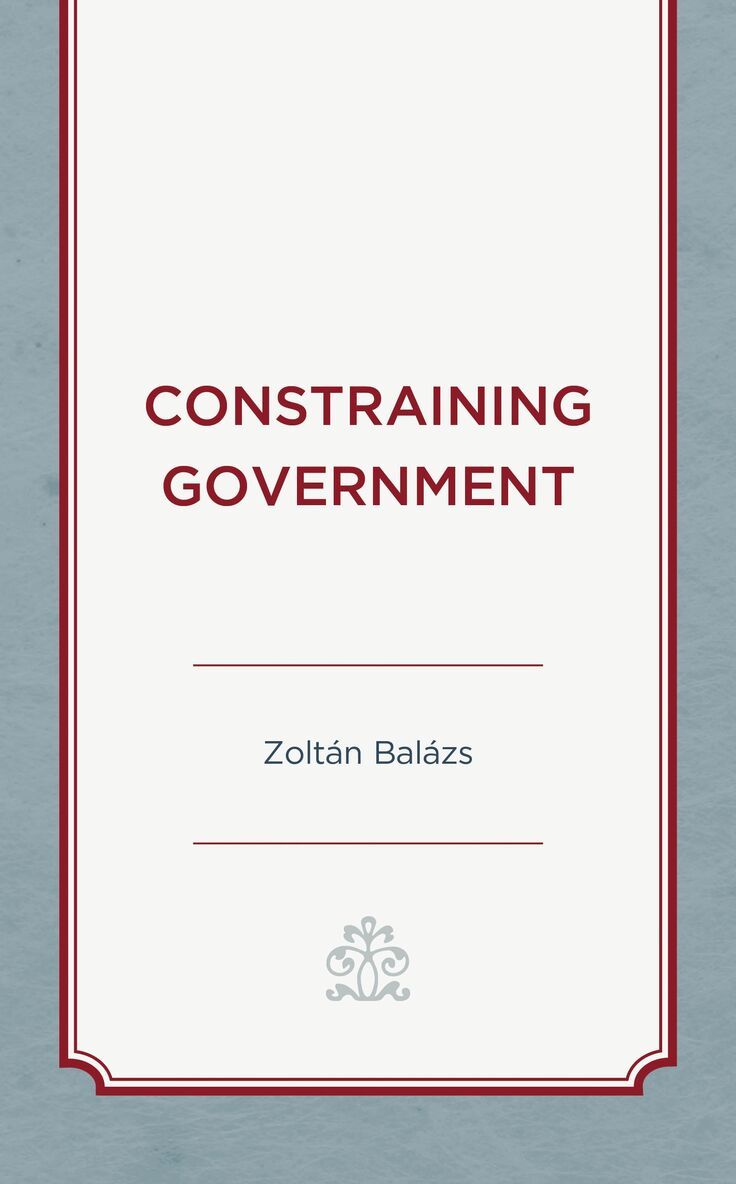
Moderate government is a time-honored and cherished doctrine. It has been considered the best solution of preventing tyranny and anarchy alike. However, expositions of the doctrine tend either to be entrenched by the technicalities of constitutional and public choice theory, or to remain largely exhortative. This book aims at providing a larger and more commonsensical defense of it. It addresses the issue of moderation but within a broader perspective of reflecting on how governments have developed with inherent constraints. This offers an analysis of the Antigone and Measure for Measure to discuss the necessary fall of tyranny, and the problems of how to distinguish between order and disorder. It is then argued that doing political theory is another important constraint on governments. Even conceptions that envision an unconstrained sort of government run into difficulties and as an unintended consequence, confirm the soundness of the idea that governing is an inherently constrained business. The book then takes issue with the recently growing awareness, associated with political realism, that governing is as much a personal as an institutional activity. In this context, the virtue of moderation will be discussed, and shown how it grows out of the experience of shame, whereby we are made conscious of our limitations of control over ourselves. Governing is to a large part about control, and as a personal activity it preserves the centrality of shame, and the insight that moderation is the best way to maintain effective control without pretending to have full control. Then, the book discusses three offices of government, traditionally considered to be the pivotal ones: the legislator, the chief executive, and the judge. Each will be analyzed by help of three fundamental distinctions: normal vs exceptional times, personal vs institutional aspects, and governing vs anti-governing. They highlight and confirm the inherent constraints of each office. Finally, three political conceptions of governing will be discussed, ending with a reflection on the principle of the separation of powers.
1 517 kr
Skickas inom 10-15 vardagar
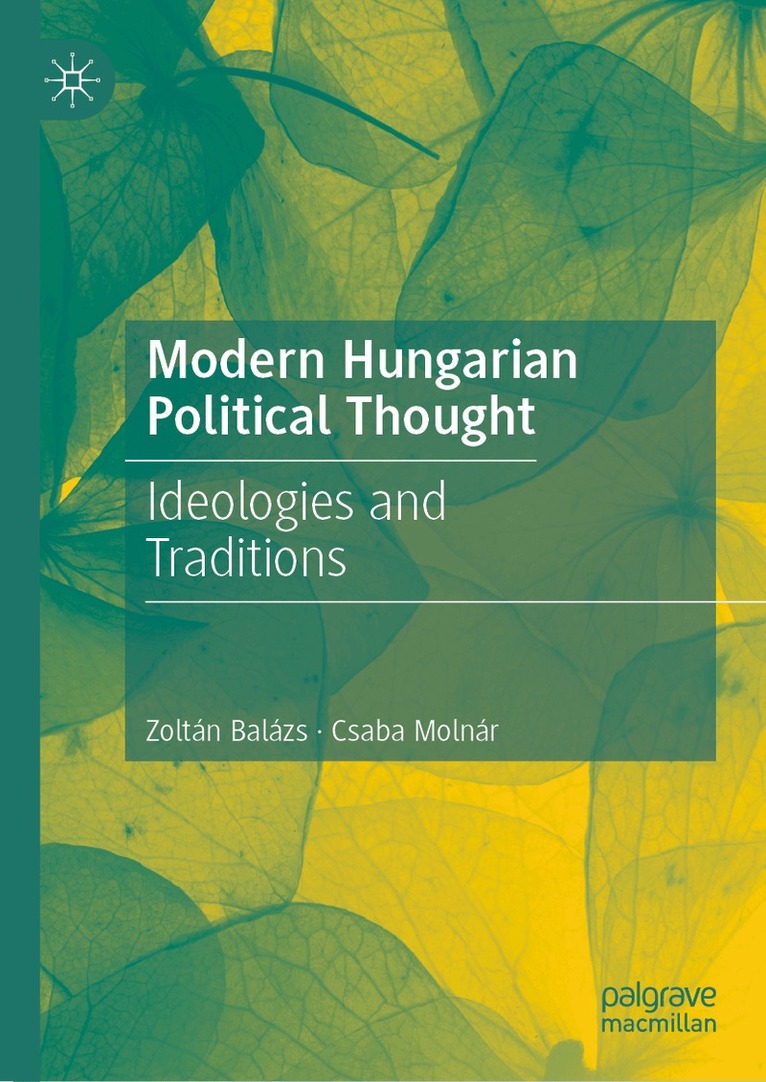
This book introduces the reader into the discursive political pluralism of modern Hungary, roughly from the mid-19th century, with a particular emphasis on the spectrum of contemporary political thought.
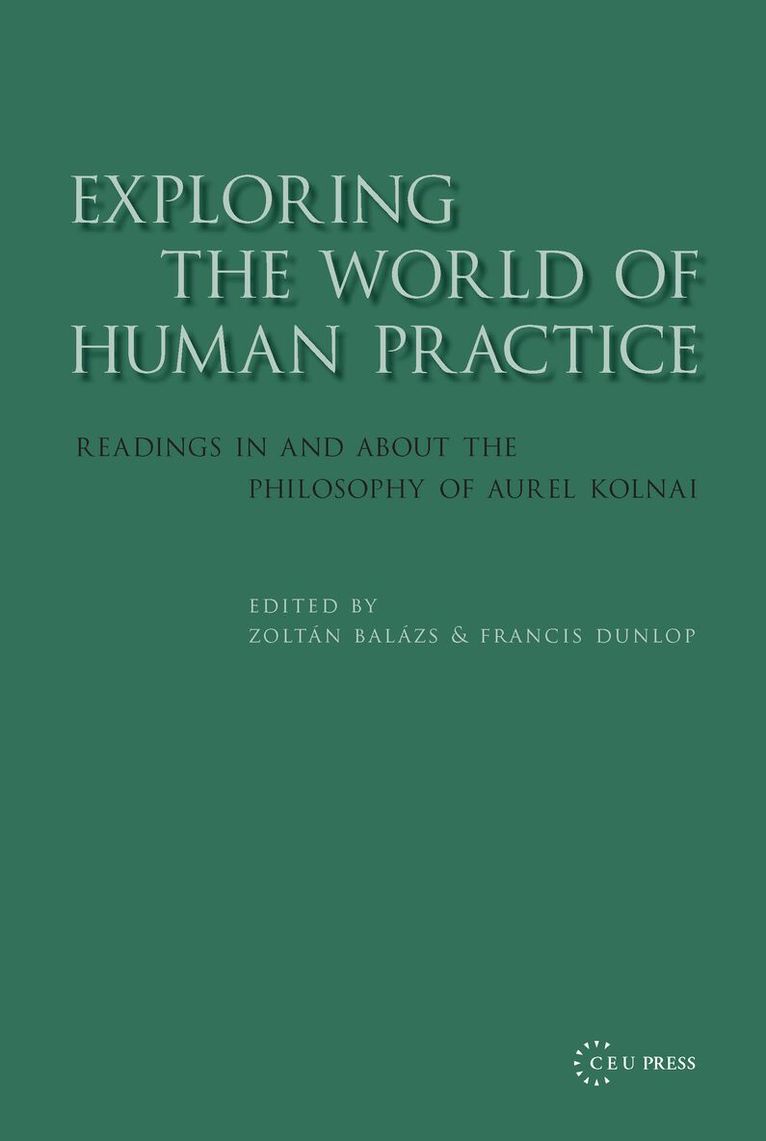
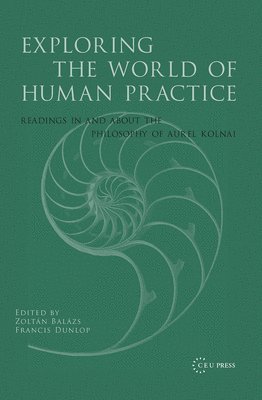
Exploring the World of Human Practice
Readings in and about the Philosophy of Aurel Kolnai
Häftad, Engelska, 2004
887 kr
Skickas inom 10-15 vardagar
Aurel Kolnai was born in Budapest, in 1900 and died in London, in 1973. He was, according to Karl Popper and the late Bernard Williams, one of the most original, provocative, and sensitive philosophers of the twentieth century. Kolnai's moral philosophy is best described in his own words as intrinsicalist, non-naturalist, non-reductionist", which took its original impetus from Scheler's value ethics, and was developed by using a natural phenomenologist method. The unique combination of linguistic analysis and phenomenology yields highly original ideas on classical fields of moral theory, such as responsibility and free will, the meaning of right and wrong, the universalisability of ethical norms, the role of moral emotions, internalism vs externalism, to mention a few. The volume presents a selection of essays by Kolnai, including his main political theoretical work, "What is Politics About", available in English here for the first time. The second half of the book Kolnai's work is analyzed in a series of essays by eminent scholars
Exploring the World of Human Practice: Readings in and about the Philosophy of Aurel Kolnai
Inbunden, Engelska, 2004
1 792 kr
Skickas inom 10-15 vardagar