Zuzanna Ladyga - Böcker
Visar alla böcker från författaren Zuzanna Ladyga. Handla med fri frakt och snabb leverans.
3 produkter
3 produkter
2 329 kr
Skickas inom 3-6 vardagar
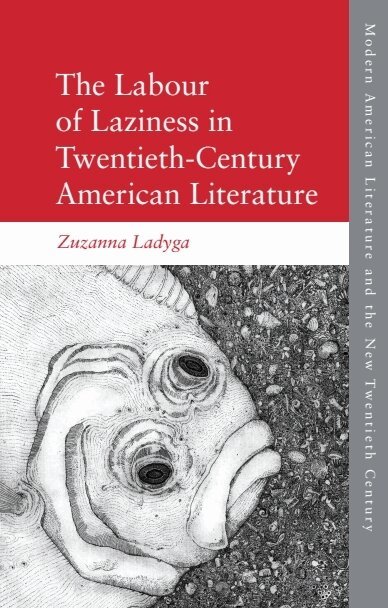
Analyses the theme of laziness in twentieth-century American LiteratureUncovers the ethical dimension of the writing of Stein, Hemingway, Barth, Barthelme and Wallace by situating them in the context of the 20th century non-normative ethical and aesthetic traditionShows how the Romantic interest in laziness plays out through the modernist and postmodernist moments in 20th century American literatureOffers an innovative model of ethical reading based on the concept of unproductivity as an alternative to the dominant post-Romantic trends in the field of ethical criticismPresents the first comprehensive study of laziness as a theoretical concept, which draws on a range of religious and philosophical references points, spanning John Locke, Immanuel Kant, Martin Heidegger, Emmanuel Levinas, Theodor Adorno, Roland Barthes, Gilles Deleuze, Michel Foucault, Giorgio Agamben and Catherine MalabouThe Labour of Laziness in Twentieth-Century American Literature focuses on the issue of productivity, using the figure of laziness to negotiate the relation between the ethical and the aesthetic. This book argues that major twentieth-century American writers such as Gertrude Stein, Ernest Hemingway, John Barth, Donald Barthelme and David Foster Wallace provocatively challenge the ethos of productivity by filtering their ethical interventions through culturally stigmatised imagery of laziness. Ladyga argues that when the motif of laziness appears, it invariably reveals the underpinnings of an emerging value system at a given historical moment, while at the same time offering a glimpse into the strategies of rebelling against the status quo.
571 kr
Skickas inom 3-6 vardagar
Analyses the theme of laziness in twentieth-century American LiteratureUncovers the ethical dimension of the writing of Stein, Hemingway, Barth, Barthelme and Wallace by situating them in the context of the 20th century non-normative ethical and aesthetic traditionShows how the Romantic interest in laziness plays out through the modernist and postmodernist moments in 20th century American literatureOffers an innovative model of ethical reading based on the concept of unproductivity as an alternative to the dominant post-Romantic trends in the field of ethical criticismPresents the first comprehensive study of laziness as a theoretical concept, which draws on a range of religious and philosophical references points, spanning John Locke, Immanuel Kant, Martin Heidegger, Emmanuel Levinas, Theodor Adorno, Roland Barthes, Gilles Deleuze, Michel Foucault, Giorgio Agamben and Catherine MalabouThe Labour of Laziness in Twentieth-Century American Literature focuses on the issue of productivity, using the figure of laziness to negotiate the relation between the ethical and the aesthetic. This book argues that major twentieth-century American writers such as Gertrude Stein, Ernest Hemingway, John Barth, Donald Barthelme and David Foster Wallace provocatively challenge the ethos of productivity by filtering their ethical interventions through culturally stigmatised imagery of laziness. Ladyga argues that when the motif of laziness appears, it invariably reveals the underpinnings of an emerging value system at a given historical moment, while at the same time offering a glimpse into the strategies of rebelling against the status quo.
Del 35 - Anglo-Amerikanische Studien - Anglo-American Studies
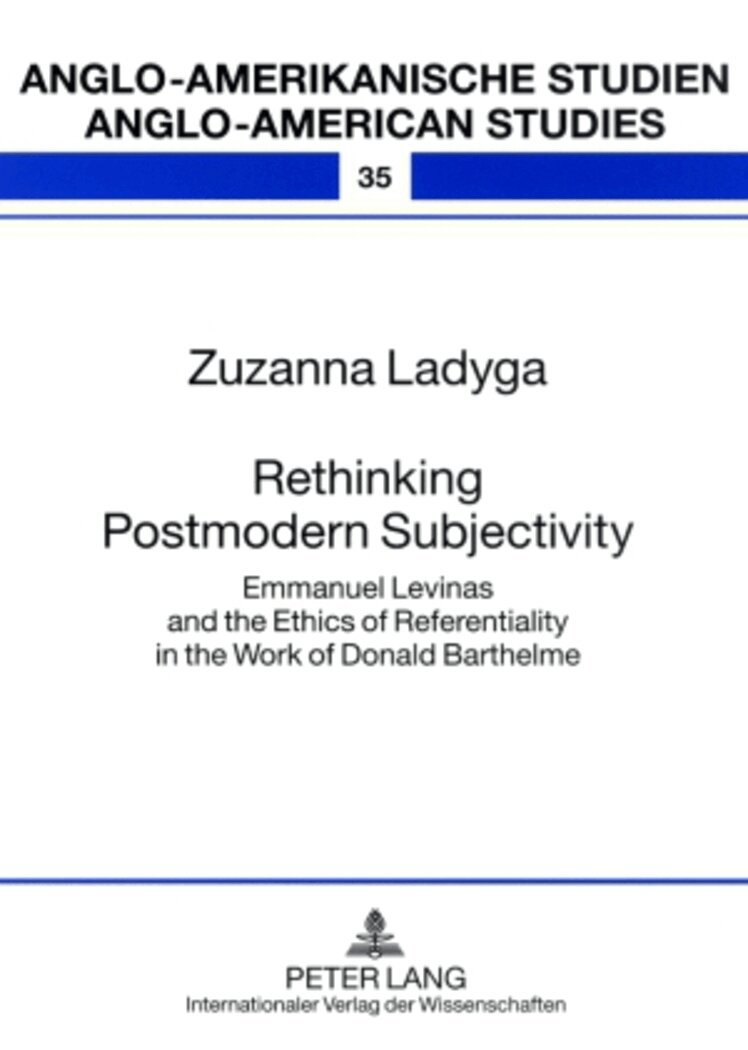
Rethinking Postmodern Subjectivity
Emmanuel Levinas and the Ethics of Referentiality in the Work of Donald Barthelme
Häftad, Engelska, 2009
995 kr
Skickas inom 5-8 vardagar
What is postmodern literary subjectivity? How to talk about it without falling in the trap of negative hyper-essentialism or being seduced by exuberant lit speak? One way out of this dilemma, as this book suggests, is via a redefinition of the concept in the context of Emmanuel Levinas and his radical ethics. By defining subjectivity as an ethically charged act of language, Levinas provides a fresh perspective on the often trivialized aspects of postmodern poetics such as referentiality and affect construction strategies. The foregrounding of the ethical dimension of those poetic elements has far-reaching consequences for how we read postmodern texts and understand postmodernism in general. Thus, to prove the benefits of the Levinasian approach, the author applies it to the work of the canonical American postmodernist, Donald Barthelme, and explains the distinctly ethical character of his apparently surfictional experiments.