
Visar resultat för..."Felice Frankel"
8 produkter
8 produkter
275 kr
Skickas inom 3-6 vardagar
Visual Elements—Photography
A Handbook for Communicating Science and Engineering
Häftad, Engelska, 2023
169 kr
Skickas inom 7-10 vardagar
For novice or pro, primary investigator or postdoc, the essentials for photographing science and technology for journals, grant applications, and public understanding. Award-winning photographer Felice C. Frankel, whose work has graced the covers of Science, Nature, and Scientific American, among other publications, offers a quick guide for scientists and engineers who want to communicate—and better understand—their research by creating compelling photographs. Like all the books in the Visual Elements series, this short guide uses engaging examples to train researchers to learn visual communication. Distilling her celebrated books and courses to the essentials, Frankel shows scientists and engineers the importance of thinking visually. When she creates stunning images of scientific phenomena, she is not only interested in helping researchers to convey understanding to others in their research community or to gain media attention, but also in making these experts themselves “look longer” to understand more fully. Ideal for researchers who want a foothold for presenting and preparing their work for conferences, journal publications, and funding agencies, the book explains four tools that all readers can use—a phone, a camera, a scanner, and a microscope—and then offers important advice on composition and image manipulation ethics. The Visual Elements—Photography is an essential element in any scientist’s, engineer’s, or photographer’s library.
169 kr
Skickas inom 7-10 vardagar
With insights and examples from designers at publications from Nature to the New York Times, an essential guide to creating figures and presentations. In this short handbook, award-winning science communicator Felice C. Frankel offers a quick guide for scientists and engineers who want to share—and better understand—their research by designing compelling graphics for journal submissions, grant applications, presentations, and posters. Like all the books in the Visual Elements series, this handbook is also a training tool for researchers. Distilling her celebrated books and courses to the essentials, Frankel shows scientists and engineers, from students to primary investigators, the importance of thinking visually. This crucial volume in the Visual Elements series offers a wealth of engaging design examples. Case studies and advice from designers at prestigious publications and researchers’ own before-and-after examples show how even the smallest changes—to color, type, composition, and layering—can greatly improve communication. Ideal for researchers who want a foothold for presenting and preparing their work for everything from conferences to publications, the book explains the steps for creating a concise and communicative graphic to highlight the most important aspects of research—and to clarify researchers’ own thinking. The resulting book is an essential element of any scientist’s, engineer’s, or designer’s library.
Visual Elements—Abstraction
A Handbook for Communicating Science and Engineering
Häftad, Engelska, 2026
247 kr
Kommande
For anyone interested in visual communication, a training guide for evaluating and developing visual representations for the big ideas in science and technology, essential skills for journal submissions, grant applications, and public understanding. As a scientist, engineer, or other researcher, you may have written an abstract. In a paragraph, you explain the purpose of your research, your approach, the questions you have asked and answered, and your work’s impact. The abstract is a summary and an invitation—to read the paper, attend your talk, and join you in your thinking. You may even have been asked to create a visual abstract—a single image—to achieve the same goals. As a designer or public information officer, you may have had a similar brief—to explain a compelling subject with a visual for a journal cover or press release. And yet, this important skill—devising visual metaphors—isn’t typically taught. With her decades of experience creating compelling images and instructing MIT researchers, award-winning photographer and science communicator Felice C. Frankel helps readers evaluate and create their own visual abstractions. Like in her other books in the Visual Elements series, on photography and design, Frankel asks readers to evaluate different choices—for example, in conveying the uncertainty of a hurricane’s path or the organization of the Standard Model for elementary particles. But in Abstraction, she offers more. With examples from science, engineering, and beyond, the book helps readers consider and evaluate the visuals around them and determine how they work and when they fail: Is this representation the best for communication? Will these abstractions encourage others to engage with my work? Will they mislead? Will they help my ideas evolve? Frankel invites researchers to think about the many meanings behind their images—and, in turn, to think more deeply about their research.
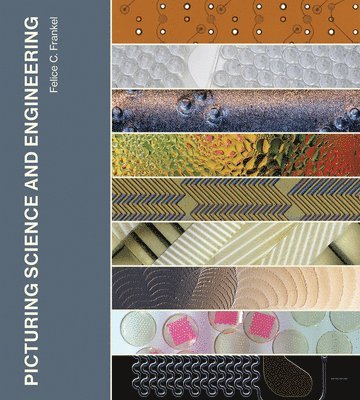
487 kr
Tillfälligt slut
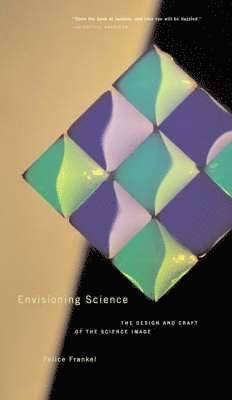
192 kr
Tillfälligt slut
303 kr
Skickas inom 7-10 vardagar
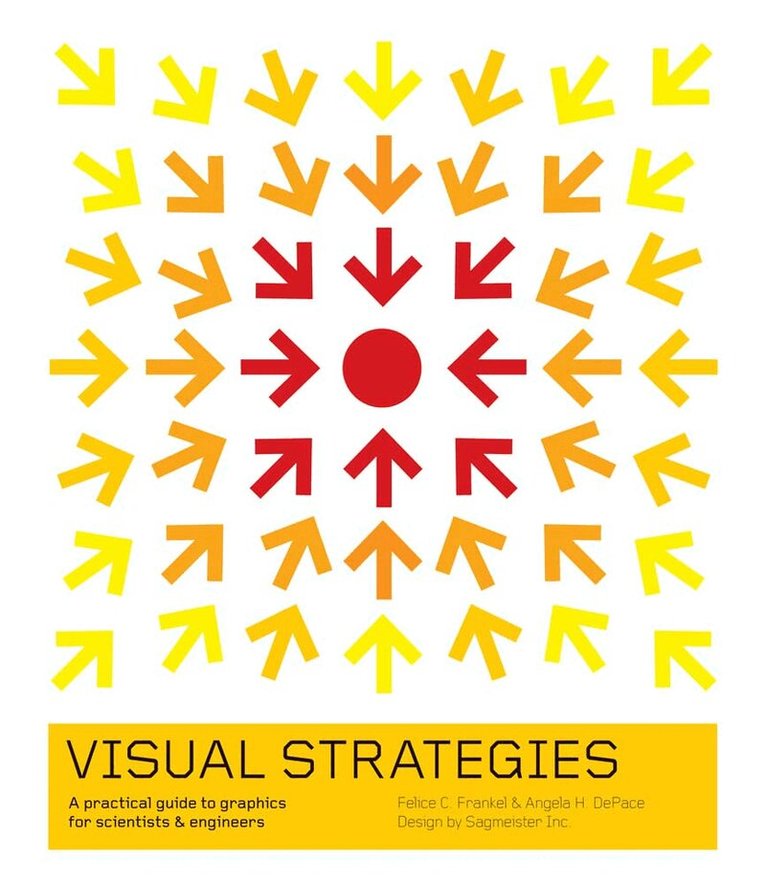
For researchers in all disciplines, this book offers a practical, hands-on course in communicating scientific findings and concepts through visual graphicsAny scientist or engineer who communicates research results will immediately recognize this practical handbook as an indispensable tool. The guide sets out clear strategies and offers abundant examples to assist researchers—even those with no previous design training—with creating effective visual graphics for use in multiple contexts, including journal submissions, grant proposals, conference posters, or presentations.Visual communicator Felice Frankel and systems biologist Angela DePace, along with experts in various fields, demonstrate how small changes can vastly improve the success of a graphic image. They dissect individual graphics, show why some work while others don't, and suggest specific improvements. The book includes analyses of graphics that have appeared in such journals as Science, Nature, Annual Reviews, Cell, PNAS, and the New England Journal of Medicine, as well as an insightful personal conversation with designer Stefan Sagmeister and narratives by prominent researchers and animators.
282 kr
Skickas inom 7-10 vardagar
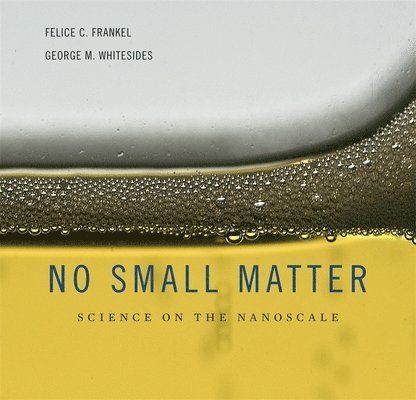
A small revolution is remaking the world. The only problem is, we can’t see it. This book uses dazzling images and evocative descriptions to reveal the virtually invisible realities and possibilities of nanoscience. An introduction to the science and technology of small things, No Small Matter explains science on the nanoscale.Authors Felice C. Frankel and George M. Whitesides offer an overview of recent scientific advances that have given us our ever-shrinking microtechnology—for instance, an information processor connected by wires only 1,000 atoms wide. They describe the new methods used to study nanostructures, suggest ways of understanding their often bizarre behavior, and outline their uses in technology. This book explains the various means of making nanostructures and speculates about their importance for critical developments in information processing, computation, biomedicine, and other areas.No Small Matter considers both the benefits and the risks of nano/microtechnology—from the potential of quantum computers and single-molecule genomic sequencers to the concerns about self-replicating nanosystems. By making the practical and probable realities of nanoscience as comprehensible and clear as possible, the book provides a unique vision of work at the very boundaries of modern science.
Letar du efter digitala böcker?
E-böcker och ljudböcker handlar du än så länge på vår tidigare sajt.