Visar resultat för..."Frankensteins"
Sökningen "Frankensteins gud Sam Lidman" gav inga träffar.213 kr
Skickas
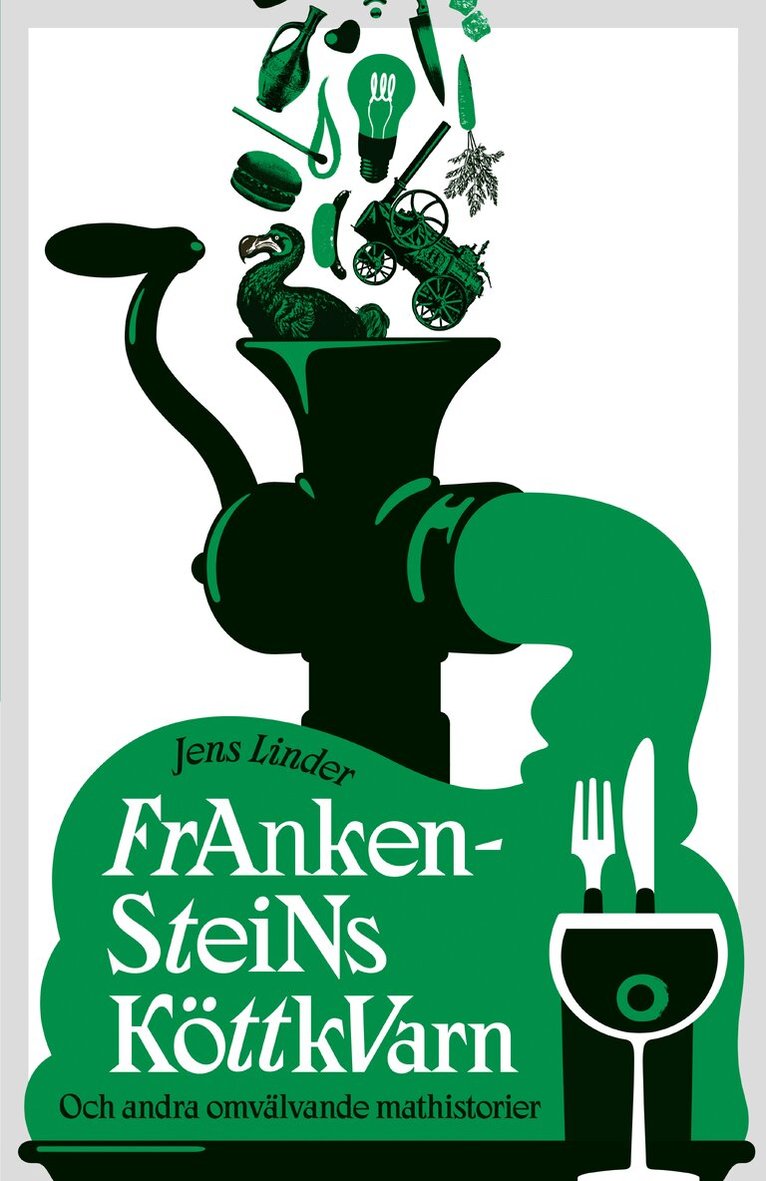
HUR GICK DET TILL när glasspinnar började överskölja västvärlden? Och har snabbmat alltid varit stigmatiserad »fattigmansmat«? Genom historien har människors ätande gått hand i hand med tekniska innovationer och följt med tidens strömningar. På samma sätt har det vi har på tallriken ofta påverkat vår blick på samhället. Ett exempel är den ikoniska köttkvarnen, som inte bara är ursprunget till hamburgare och varmkorv, utan även används som en metafor för politik, krig och arbetsliv. Och kan det förresten verkligen vara en slump att den är samtida med Mary Shelleys hoptråcklade monster?
I Frankensteins köttkvarn gör Jens Linder ett antal nedslag i vår gemensamma mathistoria. Han berättar om hur allt från eld och is till krukor, knivar och klimatförändringar har påverkat vårt ätande. Boken innehåller också ett dussin recept med historisk anknytning.
"Lustfylld läsning som också bereder plats för nya smaksensationer i de recept som finns i slutet i varje kapitel, en utmaning för hemmakockar. Matlagningens konst är variationsrik och bara bristen på fantasi sätter gränser."Dala-Demokraten, Lena S. Karlsson

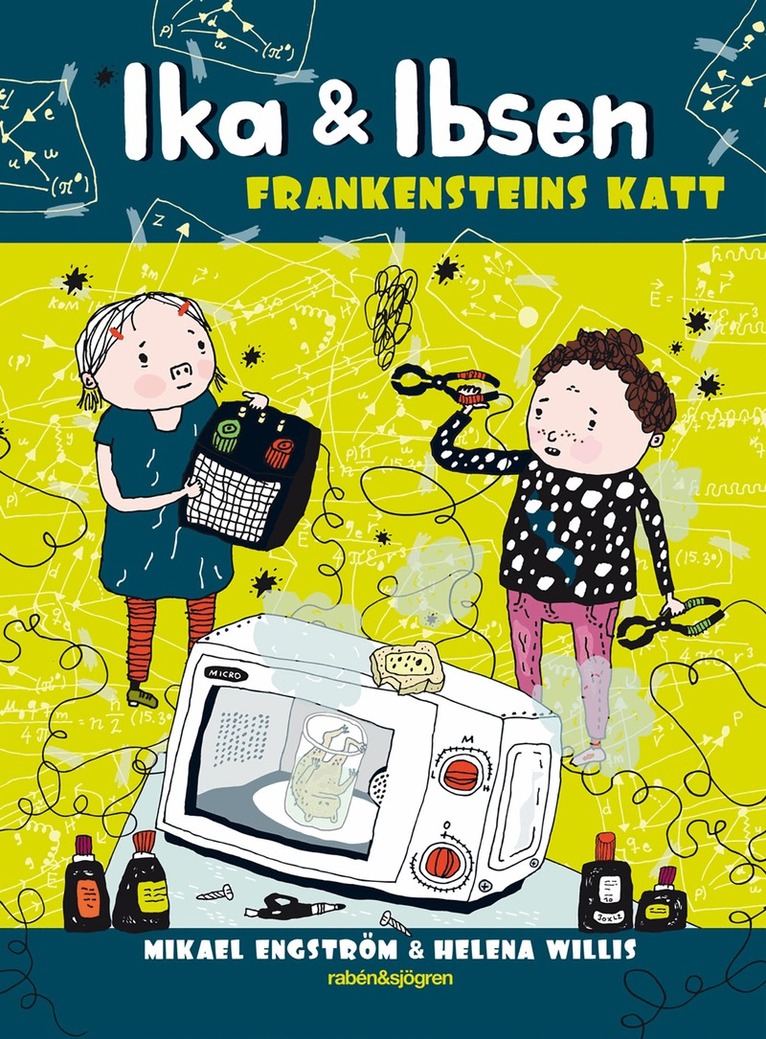
Frankensteins katt
194 kr
Skickas inom 5-8 vardagar
Det är lappar uppsatta på alla träd och stolpar kring lekplatsen. En katt är bortsprungen. Ika och Ibsen är världens bästa kattletare. De tar ner alla lappar så att ingen annan ska leta efter katten och inkassera hittelönen. Sedan gör de en smart kattletarlista.1. Katten har blivit kär i en tjejkatt.2. Katten är instängd någonstans på tippen.3. Katten är kidnappad.4. Katten har åkt till månen.5. Katten är vilse i stora skogen.Men tänk om det värsta har hänt? Tänk om katten är död? Deras vän Hängde Hassan, uppfinnaren som bor i skolans källare, håller på och uppfinner evigt liv. Kan de i så fall väcka katten till liv igen? Precis som Frankenstein gjorde med sitt monster?Den tredje galna berättelsen om förstagluttarna Ika och Ibsen bjuder på skön absurd humor, härliga karaktärer och lite filosofi.
876 kr
Skickas inom 5-8 vardagar
120 kr
Skickas
513 kr
Skickas inom 5-8 vardagar
162 kr
Läs direkt efter köp
21 kr
Läs direkt efter köp
254 kr
Skickas inom 3-6 vardagar
627 kr
Skickas inom 7-10 vardagar
199 kr
Skickas inom 5-8 vardagar
698 kr
Skickas inom 5-8 vardagar
2 851 kr
Skickas inom 3-6 vardagar
3 047 kr
Skickas inom 10-15 vardagar
284 kr
Skickas inom 5-8 vardagar
385 kr
Skickas inom 5-8 vardagar
294 kr
Läs direkt efter köp
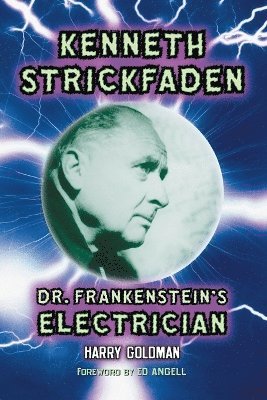
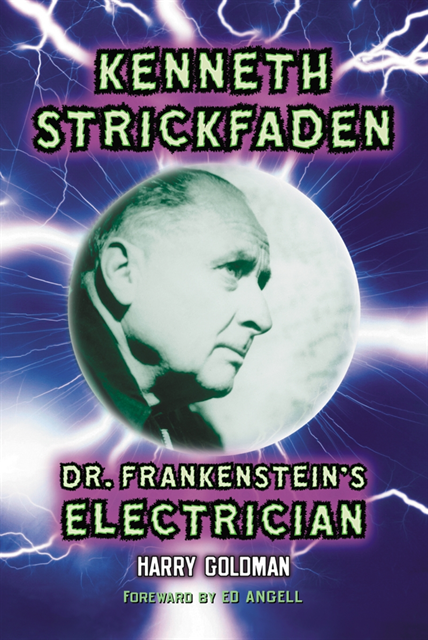
Kenneth Strickfaden, innovative genius of illusionary special effects from silent films to the age of television, set the standard for Hollywood''s mad scientists. Strickfaden created the science fiction apparatus in more than 100 motion picture films and television programs, from 1931''s Frankenstein to the Wizard of Oz and The Mask of Fu Manchu to television''s The Munsters. The skilled technician, known around Hollywood''s back lots as "Mr. Electric," once doubled for Boris Karloff in a dangerous scene and was nearly electrocuted.
From his birth in 1896 to his death in 1984, Strickfaden''s life was filled with adventure. He spent his early years working the amusement parks on both coasts, served overseas as a Marine during World War I, took a 1919 cross-country trip in a dilapidated Model T, and favored risky pursuits like automobile and speedboat racing. He worked as an aeronautical mechanic, constructing airplanes for an historic around-the-world flight. A science teacher at heart, he gave 1,500 traveling science demonstration lectures across the U.S. and Canada.
Besides covering Strickfaden''s entire personal and professional life, this book discusses how later films show his influence. It reveals the fate of his collection of equipment, and is richly illustrated with numerous rare and previously unpublished photographs. Appendices provide a selection of notes, doodles, and scribbles from Strickfaden''s notebooks, informal sketches, correspondence, documents, a chronology of his film and television contributions, a bibliography, a film index, and a complete subject index.
248 kr
Skickas inom 10-15 vardagar
Frankenstein's Creation: The Book, The Monster, and the Human Reality
286 kr
Skickas inom 3-6 vardagar
256 kr
Skickas inom 5-8 vardagar
11 kr
Läs direkt efter köp
22 kr
Läs direkt efter köp
1 024 kr
Skickas inom 10-15 vardagar
120 kr
Skickas inom 5-8 vardagar
27 kr
Läs direkt efter köp
1 218 kr
Läs direkt efter köp
1 218 kr
Läs direkt efter köp
19 kr
Läs direkt efter köp
142 kr
Skickas inom 5-8 vardagar
101 kr
Skickas inom 5-8 vardagar
942 kr
Läs direkt efter köp
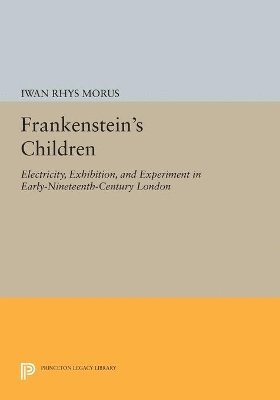
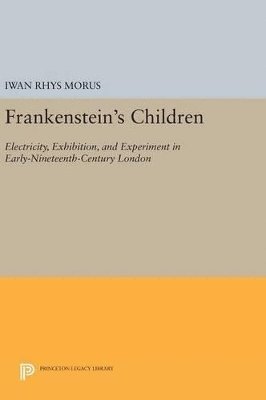
During the second quarter of the nineteenth century, Londoners were enthralled by a strange fluid called electricity. In examining this period, Iwan Morus moves beyond the conventional focus on the celebrated Michael Faraday to discuss other electrical experimenters, who aspired to spectacular public displays of their discoveries. Revealing connections among such diverse fields as scientific lecturing, laboratory research, telegraphic communication, industrial electroplating, patent conventions, and innovative medical therapies, Morus also shows how electrical culture was integrated into a new machine-dominated, consumer society. He sees the history of science as part of the history of production, and emphasizes the labor and material resources needed to make electricity work.Frankenstein''s Children explains that Faraday, with his colleagues at the Royal Society and the Royal Institution, looked at science as the province of a highly trained elite, who presented their abstract picture of nature only to select groups. The book contrasts Faraday''s views with those of other practitioners, to whom science was a practical, skill-based activity open to all. In venues such as the Galleries of Practical Science, electrical phenomena were presented to a public less distinguished but no less enthusiastic and curious than Faraday''s audiences. William Sturgeon, for instance, emphasized building apparatus and exhibiting electrical phenomena, while chemists, instrument-makers, and popular lecturers supported the London Electrical Society. These previously little studied "electricians" contributed much to the birth of "Frankenstein''s children"--the not completely benign effects of electricity on a new consumer world.Originally published in 1998.The Princeton Legacy Library uses the latest print-on-demand technology to again make available previously out-of-print books from the distinguished backlist of Princeton University Press. These editions preserve the original texts of these important books while presenting them in durable paperback and hardcover editions. The goal of the Princeton Legacy Library is to vastly increase access to the rich scholarly heritage found in the thousands of books published by Princeton University Press since its founding in 1905.