
Visar resultat för..."Macat International Limited"
443 produkter
443 produkter

Inbunden, Engelska, 2017
285 kr
The history of anthropology is, to a large extent, the history of differing modes of interpretation. As anthropologists have long known, examining, analyzing and recording cultures in the quest to understand humankind as a whole is a vastly complex task, in which nothing can be achieved without careful and incisive interpretative work. Edward Evans-Pritchard’s seminal 1937 Witchcraft, Oracles, and Magic Among the Azande is a model contribution to anthropology’s grand interpretative project, and one whose success is based largely on its author’s thinking skills. A major issue in anthropology at the time was the common assumption that the faiths and customs of other cultures appeared irrational or illogical when compared to the “civilized” and scientific beliefs of the western world. Evans-Pritchard sought to challenge such definitions by embedding himself within a tribal culture in Africa – that of the Azande – and attempting to understand their beliefs in their proper contexts. By doing so, Evans-Pritchard proved just how vital context is to interpretation. Seen within their context, he was able to show, the beliefs of the Azande were far from irrational – and magic actually formed a coherent system that helped mould a functional community and society for the tribe. Evans-Pritchard’s efforts to clarify meaning in this way have proved hugely influential, and have played a major part in guiding later generations of anthropologists from his day to ours.
Häftad, Engelska, 2017
97 kr
Skickas
To the dismay of many commentators – who had hoped the world was evolving into a more tolerant and multicultural community of nations united under the umbrellas of supranational movements like the European Union – the nationalism that was such a potent force in the history of the 20th-century has made a comeback in recent years. Now, more than ever, it seems important to understand what it is, how it works, and why it is so attractive to so many people. A fine place to start any such exploration is with Ernest Gellner's seminal Nations and Nationalism, a ground-breaking study that was the first to flesh out the counter-intuitive – but enormously influential – thesis that modern nationalism has little if anything in common with old-fashioned patriotism or loyalty to one's homeland. Gellner's intensely creative thesis is that the nationalism we know today is actually the product of the 19th-century industrial revolution, which radically reshaped ancient communities, encouraging emigration to cities at the same time as it improved literacy rates and introduced mass education. Gellner connected these three elements in an entirely new way, contrasting developments to the structures of pre-industrial agrarian economies to show why the new nationalism could not have been born in such communities. He was also successful in generating a typology of nationalisms in an attempt to explain why some forms flourished while others fizzled out. His remarkable ability to produce novel explanations for existing evidence marks out Nations and Nationalism as one of the most radical, stimulating – and enduringly influential – works of its day.
Häftad, Engelska, 2017
97 kr
Skickas inom 10-15 vardagar
David Riesman’s The Lonely Crowd: A Study in the Changing American Character is one of the best-known books in the history of sociology – holding a mirror up to contemporary America and showing the nation its own character as it had never seen it before. Its success is a testament to Riesman’s mastery of one key critical thinking skill: interpretation. In critical thinking, interpretation focuses on understanding the meaning of evidence, and is frequently characterized by laying down clear definitions, and clarifying ideas and categories for the reader. All these processes are on full display in The Lonely Crowd – which, rather than seeking to challenge accepted wisdom or generate new ideas, provides incisive interpretations and definitions of ideas and data from a variety of sources. Above all, Riesman’s book is a work of categorization – a form of interpretation that can be vital to building and communicating systematic arguments. With the aid of his two co-authors (Nathan Glazer and Reuel Denney), he defined three cultural types that formed a perfect pattern for understanding mid-century American society and the changes it was undergoing. The clarity of the book’s definitions tapped directly into the zeitgeist of the 1950s, powering it to best-seller status and an audience that extended far beyond academia.
Häftad, Engelska, 2018
94 kr
Skickas
Social anthropologist Jean Lave and computer scientist Etienne Wenger’s seminal Situated Learning helped change the fields of cognitive science and pedagogy by approaching learning from a novel angle. Traditionally, theories of learning and education had focused on processes of cognition – the mental processes of knowledge formation that occur within an individual. Lave and Wenger chose to look at learning not as an individual process, but a social one. As so often with the creative thinking process, a small, simple shift in emphasis was all that was required to show things in an entirely different light. What Situated Learning illustrated – and emphasized – was that learning is dependent on its social situation. Even though the most effective way to learn is through interaction with experts and peers in a community organized around a common interest, the traditional cognitive learning model failed to account for the way in which learners interact with their ‘community of practice.’ The new hypothesis that Lave and Wenger developed was that learning can be seen as a continuously evolving set of relationships situated within a social context. This allowed Lave and Wenger to place discussions of apprenticeship and workplace learning on a new footing – and led in turn to the book’s impressive impact in business and management scholarship.

Häftad, Engelska, 2017
97 kr
Skickas
Rachel Carson’s 1962 Silent Spring is one of the few books that can claim to be epoch-making. Its closely reasoned attack on the use of pesticides in American agriculture helped thrust environmental consciousness to the fore of modern politics and policy, creating the regulatory landscape we know today. The book is also a monument to the power of closely reasoned argument – built from well organised and carefully evidenced points that are not merely persuasive, but designed to be irrefutable. Indeed, it had to be: upon its publication, the chemical industry utilised all its resources to attempt to discredit both Silent Spring and Carson herself – to no avail. The central argument of the book is that the indiscriminate use of pesticides encouraged by post-war advances in agriculture and chemistry was deeply harmful to plants, animals and the whole environment, with devastating effects that went far beyond protecting crops. At the time, the argument directly contradicted government policy and scientific orthodoxy – and many studies that corroborated Carson’s views were deliberately suppressed by hostile business interests. Carson, however, gathered, organised and set out the evidence in Silent Spring in a way that proved her contentions without a doubt. While environmental battles still rage, few now deny the strength and persuasiveness of her reasoning.
Häftad, Engelska, 2017
112 kr
Skickas
A critical analysis of Karl Marx’s Capital, which is without question one of the most influential books to be published in the course of the past two centuries. Controversial in its politics, and arriving at conclusions that are passionately debated to this day, it is nonetheless a fine example of the creative combination of a philosophical method (the dialectic) with historical and economic information to produce a new interpretation of history. Capitalism, thought Marx, works by exploiting the working class. Their wages do not reflect the value of their labor. Marx concluded that capitalism would fail because of this contradiction at the heart of the capitalist system. He wrote Capital to give activists the theories and language they needed to criticize the system. But the work also outlines the new communist society that Marx hoped would rise in its place, and it helped to inspire the rise of states that largely shaped the modern history of our planet. Today, after a century of conflict, Marx’s analysis still offers valuable tools that help us analyze the modern world. Marx's belief that he had arrived at a scientific way of describing the present and predicting the future may not be shared by many of his modern interpreters. But his ability to connect things together in new ways is not in doubt – and nor is the influence of the new hypotheses that he generated as a result of so much careful analysis.
Häftad, Engelska, 2017
97 kr
Skickas inom 10-15 vardagar
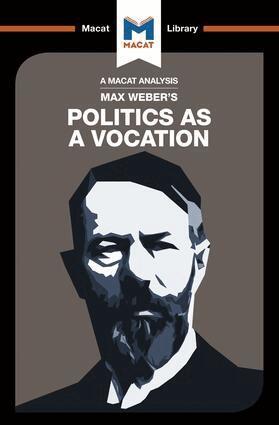
German sociologist Max Weber’s 1919 lecture Politics as a Vocation is widely regarded as a masterpiece of political theory and sociology. Its central strength lies in Weber’s deployment of masterful interpretative skills to power his discussion of modern politics.Interpretation involves understanding both the meaning of evidence and the meaning of terms – questioning definitions, clarifying terms and processes, and supplying good, clear definitions of the author’s own. As a sociologist accustomed to working with historical evidence, Weber based his own work on precisely these skills, solidly backed up by analytical acuity. Politics as a Vocation, written in a Germany shocked by its crippling defeat in World War I, saw Weber turn his eye to an examination of how the modern nation state emerged, and the different ways in which it can be run – interpreting and defining the different types of rule that are possible. It is testament to Weber’s interpretative skills that Politics is famous above all in sociological circles for its clear definition of a state as an institution that claims “the monopoly of legitimate physical violence” in a given territory.
Häftad, Engelska, 2017
97 kr
Skickas inom 10-15 vardagar
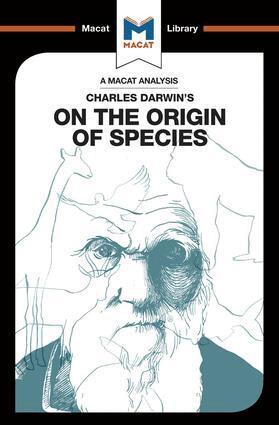
Charles Darwin called on a broad and unusually powerful combination of critical thinking skills to create his wide-ranging explanation for biological change, On the Origin of Species. It’s one of those rare books that takes a huge problem – the enormous diversity of different species – and seeks to use a vast range of evidence to solve it. But it was perhaps Darwin’s towering creative prowess that made the most telling contribution to this masterpiece, for it was this that enabled him to make the necessary fresh connections between so much disparate evidence from such a diversity of fields. All of Darwin’s critical thinking skills were required, however, in the course of the decades of work that went into this volume. Taken as a whole, Darwin’s solution to the problem that he set himself is carefully researched, considers multiple explanations, and justifies its conclusions with well-organised reasoning. At the time of the publication, in 1859, there were various explanations for the changes that Darwin – and others – observed; what separated Darwin from so many of his contemporaries is that he deployed critical thinking to arrive at a significantly new way of fitting explanation to evidence; one that remains elegant, complete and predictive to this day.

Häftad, Engelska, 2018
97 kr
Skickas
In Outline of a Theory of Practice, Bourdieu questions the preeminent ideas of social anthropologists such as Levi-Strauss who stressed the structural principles governing human action rather than the actions themselves and, Bourdieu asserts, doesn’t account for all observable nuances of behaviour. Drawing on his fieldwork in Algeria, he expresses the need for a theory of practice focusing on the dynamic flow of human actions in the social world. Bourdieu coins the term ‘habitus’- a relational concept linking structures to the practice of agents. Outline is a significant and original contribution, providing an account of many of the issues Bourdieu continued to develop through his career.
Inbunden, Engelska, 2018
293 kr
Skickas inom 10-15 vardagar
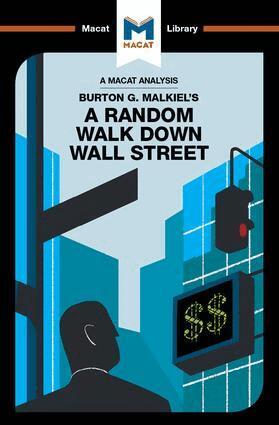
Burton Malkiel’s 1973 A Random Walk Down Wall Street was an explosive contribution to debates about how to reap a good return on investing in stocks and shares. Reissued and updated many times since, Malkiel’s text remains an indispensable contribution to the world of investment strategy – one that continues to cause controversy among investment professionals today.At the book’s heart lies a simple question of evaluation: just how successful are investment experts? The financial world was, and is, full of people who claim to have the knowledge and expertise to outperform the markets, and produce larger gains for investors as a result of their knowledge. But how successful, Malkiel asked, are they really? Via careful evaluations of performance – looking at those who invested via ‘technical analysis’ and ‘fundamental analysis’ – he was able to challenge the adequacy of many of the claims made for analysts’ success. Malkiel found the major active investment strategies to be significantly flawed. Where actively managed funds posted big gains one year, they seemingly inevitably posted below average gains in succeeding years. By evaluating the figures over the medium and long term, indeed, Malkiel discovered that actively-managed funds did far worse on average than those that passively followed the general market index.Though many investment professionals still argue against Malkiel’s influential findings, his exploration of the strengths and weaknesses of the argument for believing investors’ claims provides strong evidence that his own passive strategy wins out overall.

Häftad, Engelska, 2018
100 kr
Skickas
How do you solve a problem like understanding Iraq? For Hanna Batatu, the solution to this conundrum lay in generating alternative possibilities that effectively side-stepped the conventional wisdom of the time. Historians had long held that Iraq – like other artificial creations of ex-colonial European powers, who drew lines onto the world map that ignored longstanding tribal, ethnic and religious ties – was best understood by delving into its political and religious history. Batatu used the problem solving skills of asking productive questions and generating alternative possibilities to argue that Iraq’s history was better understood through the lens of a Marxist analysis focused on socio-economic history.The Old Social Classes concludes that the divisions present in Iraq – and exposed by the revolutionary movements of the 1950s – are those characterized by the struggle for control over property and the means of production. Additionally, Batatu sought to establish that the most important political movements of the time, notably the nationalist Ba'athists and the pan-Arab Free Officers Movement, had their origins in a homegrown communist ideology inspired by local conditions and local inequality. By posing new questions – and by undertaking a vast amount of research in primary sources, a rarity in the history of this region – Batatu was able to produce a strong, new solution to a longstanding historiographical puzzle.
Inbunden, Engelska, 2018
293 kr
Skickas inom 10-15 vardagar
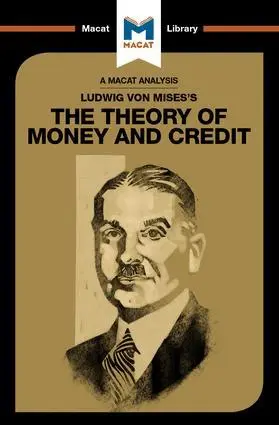
Ludwig Von Mises’s 1912 contribution to the theory of monetary policy and the current prevailing consensus in modern economic liberalism, The Theory of Money and Credit, was a milestone achievement. The author’s familiarity with the historical literature on banking and credit allows him to present a coherent theoretical structure that links private exchange between individuals, business and banks to condition the markets affecting money and credit. Through its wider influence on liberal thinkers and politicians, the Theory of Money and Credit has become a classic reference for those seeking to understand the advance of economic liberalism since the 20th century.

Häftad, Engelska, 2017
97 kr
Skickas
The end of the Cold War, which occurred early in the 1990s, brought joy and freedom to millions. But it posed a difficult question to the world's governments and to the academics who studied them: how would world order be remade in an age no longer dominated by the competing ideologies of capitalism and communism? Samuel P. Huntington was one of the many political scientists who responded to this challenge by conceiving works that attempted to predict the ways in which conflict might play out in the 21st century, and in The Clash of Civilizations he suggested that a new kind of conflict, one centred on cultural identity, would become the new focus of international relations. Huntington's theories, greeted with scepticism when his book first appeared in the 1990s, acquired new resonance after 9/11. The Clash of Civilizations is now one of the most widely-set and read works of political theory in US universities; Huntington's theories have also had a measurable impact on American policy. In large part, this is a product of his problem-solving skills. Clash is a monument to its author's ability to generate and evaluate alternative possibilities and to make sound decisions between them. Huntington's view, that international politics after the Cold War would be neither peaceful, nor liberal, nor cooperative, ran counter to the predictions of almost all of his peers, yet his position – the product of an unusual ability to redefine an issue so as to see it in new ways – has been largely vindicated by events ever since.
285 kr
Skickas inom 10-15 vardagar
Before Browning’s 1992 book, most Holocaust scholarship focused either on the experience of the victims or on the Nazi political ideology driving the slaughter. Browning investigates something else: the men who carried out acts of extreme violence.
Häftad, Engelska, 2017
97 kr
Skickas
Herrnstein & Murray's The Bell Curve is a deeply controversial text that raises serious issues about the stakes involved in reasoning and interpretation.The authors’ central contention is that intelligence is the primary factor determining social outcomes for individuals – and that it is a better predictor of achievement than income, background or socioeconomic status. One of the major issues raised by the book was its discussion of 'racial differences in intelligence,' and its contention that there is a link between the low observed test scores and social outcomes for African-Americans and their lack of social attainment.While the authors produce and interpret a great deal of data to back up their contentions, they ultimately fail to tackle the problem that neither 'intelligence' nor 'race' have widely accepted definitions in biology, anthropology or sociology. In consequence, the book has been termed both ‘racist’ and ‘pseudoscientific’ thanks to what its critics see as both its faulty reasoning and its uncautious interpretation of evidence. The debate continues to this day, with academics on both sides engaged in fierce arguments over what can be argued from the data that Herrnstein and Murray used.

Inbunden, Engelska, 2017
293 kr
Skickas inom 10-15 vardagar
Daniel Goldhagen's study of the Holocaust offers conclusions that run directly counter to those reached by Christopher Browning, whose book Ordinary Men is also the subject of a Macat analysis. As such, the two analyses make possible some interesting critical thinking exercises focused on evaluation of the evidence used by the two historians. For Goldhagen, a chief reason for German actions was not the mundane good comradeship stressed by Browning, but a longstanding hatred of Jews and Judaism specific to Germany that dated back well into the previous century. Debating which historian is right, which has made better use of the available evidence, which has most successfully written objectively – and which advances the most secure interpretation of contested documents – forces students to think critically about one of the most important and (on the surface at least) incomprehensible events of the past century.
Häftad, Engelska, 2017
111 kr
Skickas
Reasoning is the critical thinking skill concerned with the production of arguments: making them coherent, consistent, and well-supported; and responding to opposing positions where necessary. The Better Angels of Our Nature offers a step-by-step class in precisely these skills. Author Steven Pinker's central thesis is simple: mankind has become increasingly less violent over the centuries, and will continue to do so. Pinker is aware, though, that many people instinctively believe the opposite, and Better Angels is devoted to marshalling data to support and illustrate this central argument, as well as a series of secondary arguments about how and why humanity has become less violent. Pinker's interpretative skills – understanding the meaning of the complex evidence from history – are also on display throughout, as he tackles the ambiguities of his data, the problems it presents, and the viable inferences one can draw from it.
Analysis of Daniel Jonah Goldhagen's Hitler's Willing Executioners
Ordinary Germans and the Holocaust
Häftad, Engelska, 2017
97 kr
Skickas inom 10-15 vardagar
Daniel Goldhagen's study of the Holocaust offers conclusions that run directly counter to those reached by Christopher Browning, whose book Ordinary Men is also the subject of a Macat analysis. As such, the two analyses make possible some interesting critical thinking exercises focused on evaluation of the evidence used by the two historians. For Goldhagen, a chief reason for German actions was not the mundane good comradeship stressed by Browning, but a longstanding hatred of Jews and Judaism specific to Germany that dated back well into the previous century. Debating which historian is right, which has made better use of the available evidence, which has most successfully written objectively – and which advances the most secure interpretation of contested documents – forces students to think critically about one of the most important and (on the surface at least) incomprehensible events of the past century.

Häftad, Engelska, 2018
112 kr
Skickas inom 10-15 vardagar
In this book, Sedgwick examines texts from Europe and America such as Wilde, Nietzsche and Proust and considers the historical moment when sexual orientation came to be as important a signifier of personhood as gender had been for centuries. In doing this, Sedgwick provides a history of sexuality that contends that the dualistic homo/heterosexual model is as much a basis for modern culture as it is an outcome of it. Thus, Sedgwick laid the foundations of Queer Theory, contributing to the contemporary debates regarding the relationship between desire and normative structures of power, the question of empirical sexuality, and the intricacies of the relationship between sexuality and gender.

Inbunden, Engelska, 2017
285 kr
Skickas inom 10-15 vardagar
The end of the Cold War, which occurred early in the 1990s, brought joy and freedom to millions. But it posed a difficult question to the world's governments and to the academics who studied them: how would world order be remade in an age no longer dominated by the competing ideologies of capitalism and communism? Samuel P. Huntington was one of the many political scientists who responded to this challenge by conceiving works that attempted to predict the ways in which conflict might play out in the 21st century, and in The Clash of Civilizations he suggested that a new kind of conflict, one centred on cultural identity, would become the new focus of international relations. Huntington's theories, greeted with scepticism when his book first appeared in the 1990s, acquired new resonance after 9/11. The Clash of Civilizations is now one of the most widely-set and read works of political theory in US universities; Huntington's theories have also had a measurable impact on American policy. In large part, this is a product of his problem-solving skills. Clash is a monument to its author's ability to generate and evaluate alternative possibilities and to make sound decisions between them. Huntington's view, that international politics after the Cold War would be neither peaceful, nor liberal, nor cooperative, ran counter to the predictions of almost all of his peers, yet his position – the product of an unusual ability to redefine an issue so as to see it in new ways – has been largely vindicated by events ever since.

Häftad, Engelska, 2017
97 kr
Skickas inom 10-15 vardagar
Few historians trace grand themes across many centuries and places, but Ernst Kantorowicz's great work on the symbolic powers of kingship is a fine example of what can happen when they do. The King's Two Bodies is at once a superb example of the critical thinking skill of evaluation – assessing huge quantities of evidence, both written and visual, and drawing sound comparative conclusions from it – and of creative thinking; the work connects art history, literature, legal records and historical documents together in innovative and revealing ways across more than 800 years of history. Kantorowicz's key conclusions (that history is at root about ideas, that these ideas power institutions, and that both are commonly expressed and understood through symbols) have had a profound impact on several different disciplines, and even underpin many works of popular fiction – not least The DaVinci Code. And they were all made possible by fresh evaluation of evidence that other historians had ignored, or could not see the significance of.
Häftad, Engelska, 2017
114 kr
Skickas
Homi K. Bhabha’s 1994 The Location of Culture is one of the founding texts of the branch of literary theory called postcolonialism. While postcolonialism has many strands, at its heart lies the question of interpreting and understanding encounters between the western colonial powers and the nations across the globe that they colonized. Colonization was not just an economic, military or political process, but one that radically affected culture and identity across the world. It is a field in which interpretation comes to the fore, and much of its force depends on addressing the complex legacy of colonial encounters by careful, sustained attention to the meaning of the traces that they left on colonized cultures. What Bhabha’s writing, like so much postcolonial thought, shows is that the arts of clarification and definition that underpin good interpretation are rarely the same as simplification. Indeed, good interpretative clarification is often about pointing out and dividing the different kinds of complexity at play in a single process or term. For Bhabha, the object is identity itself, as expressed in the ideas colonial powers had about themselves. In his interpretation, what at first seems to be the coherent set of ideas behind colonialism soon breaks down into a complex mass of shifting stances – yielding something much closer to postcolonial thought than a first glance at his sometimes dauntingly complex suggests.

Häftad, Engelska, 2017
97 kr
Skickas
American political scientist Robert Putnam wasn’t the first person to recognize that social capital – the relationships between people that allow communities to function well – is the grease that oils the wheels of society. But by publishing Bowling Alone, he moved the debate from one primarily concerned with family and individual relationships one that studied the social capital generated by people’s engagement with the civic life. Putnam drew heavily on the critical thinking skill of interpretation in shaping his work. He took fresh looks at the meaning of evidence that other scholars had made too many assumptions about, and was scrupulous in clarifying what his evidence was really saying. He found that strong social capital has the power to boost health, lower unemployment, and improve life in major ways. As such, any decrease in civic engagement could create serious consequences for society. Putnam’s interpretation of these issues led him to the understanding that if America is to thrive, its citizens must connect.

Häftad, Engelska, 2017
112 kr
Skickas
What makes good people capable of committing bad – even evil – acts? Few psychologists are as well-qualified to answer that question as Philip Zimbardo, a psychology professor who was not only the author of the classic Stanford Prison Experiment – which asked two groups of students to assume the roles of prisoners and guards in a makeshift jail, to dramatic effect – but also an active participant in the trial of a US serviceman who took part in the violent abuse of Iraqi prisoners in the wake of the second Gulf War. Zimbardo’s book The Lucifer Effect is an extended analysis that aims to find solutions to the problem of how good people can commit evil acts. Zimbardo used his problem-solving skills to locate the solution to this question in an understanding of two conditions. Firstly, he writes, situational factors (circumstances and setting) must override dispositional ones, meaning that decent and well-meaning people can behave uncharacteristically when placed in unusual or stressful environments. Secondly, good and evil are not alternatives; they are interchangeable. Most people are capable of being both angels and devils, depending on the circumstances.In making this observation, Zimbardo also built on the work of Stanley Milgram, whose own psychological experiments had shown the impact that authority figures can have on determining the actions of their subordinates. Zimbardo's book is a fine example of the importance of asking productive questions that go beyond the theoretical to consider real-world events.

Häftad, Engelska, 2018
112 kr
Skickas inom 10-15 vardagar
Haraway’s ‘A Cyborg Manifesto’ is a key postmodern text and is widely taught in many disciplines as one of the first texts to embrace technology from a leftist and feminist perspective using the metaphor of the cyborg to champion socialist, postmodern, and anti-identitarian politics. Until Haraway’s work, few feminists had turned to theorizing science and technology and thus her work quite literally changed the terms of the debate. This article continues to be seen as hugely influential in the field of feminism, particularly postmodern, materialist, and scientific strands. It is also a precursor to cyberfeminism and posthumanism and perhaps anticipates the development of digital humanities.
Häftad, Engelska, 2018
111 kr
Skickas inom 5-8 vardagar

Häftad, Engelska, 2019
161 kr
Skickas inom 5-8 vardagar
Häftad, Engelska, 2021
136 kr
Skickas inom 5-8 vardagar
Häftad, Engelska, 2017
97 kr
Skickas
Benedict Anderson’s 1983 masterpiece Imagined Communities is a ground-breaking analysis of the origins and meanings of “nations” and “nationalism”. A book that helped reshape the field of nationalism studies, Imagined Communities also shows the critical thinking skills of interpretation and analysis working at their highest levels. One crucial aspect of Anderson’s work involves the apparently simple act of defining precisely what we mean when we say ‘nation’ or ‘nationalism’ – an interpretative step that is vital to the analysis he proceeds to carry out. For Anderson, it is clear that nations are not ‘natural;’ as historians and anthropologists are well aware, nations as we understand them are a relatively modern phenomenon, dating back only as far as around 1500. But if this is the case, how can we agree what a ‘nation’ is? Anderson’s proposed definition is that they are “imagined communities” – comprising groups of people who regard themselves as belonging to the same community, even if they have never met, and have nothing in common otherwise. The analysis that follows from this insight is all about examining and breaking down the historical processes that helped foster these communities – above all the birth of printing, and the development of capitalism. Brilliantly incisive, Anderson’s analysis shows how good interpretative skills can form the foundations for compelling and original insight.
Häftad, Engelska, 2017
94 kr
Skickas
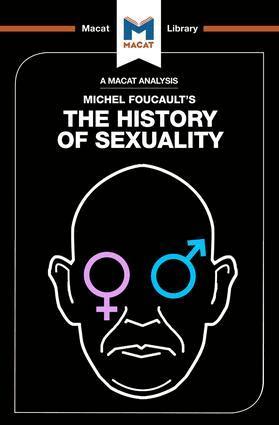
Michel Foucault is famous as one of the 20th-century’s most innovative and wide-ranging thinkers. The qualities that made him one of the most-read and influential theorists of the modern age find full expression in History of Sexuality, the last project Foucault was able to complete before his death in 1984.Central to Foucault’s appeal is the creativity of his thought. Creative thinking takes many forms – from redefining an issue in a novel way to making unexpected and illuminating connections. Foucault’s particular talent could perhaps best be described as turning questions inside out. In the case of sexuality, for instance, his interpretation of the historical evidence led him to argue that the sexual categories that we are used to (homosexual, lesbian, straight, and so on) are not “natural,” but constructs that are products of the ways in which power and knowledge interact in society.Such categories, Foucault continues, actually serve to produce the desires they seek to name. And their creation, in turn, is closely linked to the power that society exerts on those who belong to different sexual groups.Foucault’s ideas – familiar now – were so novel in their time that they proved highly challenging. But to see the world through Foucault’s thought is to see it in a profoundly different and illuminating way – an example of creative thinking at its best.