
Visar resultat för..."Munshiram"
Sökningen "Munshiram Manoharlal Publishers" gav inga träffar.4 produkter
4 produkter
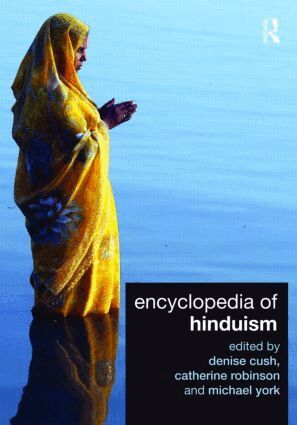
Häftad, Engelska, 2009
825 kr
Skickas inom 10-15 vardagar
The Encyclopedia of Hinduism contains over 900 entries reflecting recent advances in scholarship which have raised new theoretical and methodological issues as well as identifying new areas of study which have not been addressed previously. The debate over the term 'Hinduism' in the light of post-Orientalist critiques is just one example of how once standard academic frameworks have been called into question. Entries range from 150-word definitions of terms and concepts to 5,000-word in-depth investigations of major topics.The Encyclopedia covers all aspects of Hinduism but departs from other works in including more ethnographic and contemporary material in contrast to an exclusively textual and historical approach. It includes a broad range of subject matter such as: historical developments (among them nineteenth and twentieth century reform and revival); geographical distribution (especially the diaspora); major and minor movements; philosophies and theologies; scriptures; deities; temples and sacred sites; pilgrimages; festivals; rites of passage; worship; religious arts (sculpture, architecture, music, dance, etc.); religious sciences (e.g. astrology); biographies of leading figures; local and regional traditions; caste and untouchability; feminism and women's religion; nationalism and the Hindu radical right; and new religious movements. The history of study and the role of important scholars past and present are also discussed.Accessibility to all levels of reader has been a priority and no previous knowledge is assumed. However, the in-depth larger entries and the design of the work in line with the latest scholarly advances means that the volume will be of considerable interest to specialists.The whole is cross-referenced and bibliographies attach to the larger entries. There is a full index.
Inbunden, Engelska, 2007
3 684 kr
Skickas inom 10-15 vardagar
The Encyclopedia of Hinduism contains over 900 entries reflecting recent advances in scholarship which have raised new theoretical and methodological issues as well as identifying new areas of study which have not been addressed previously. The debate over the term 'Hinduism' in the light of post-Orientalist critiques is just one example of how once standard academic frameworks have been called into question. Entries range from 150-word definitions of terms and concepts to 5,000-word in-depth investigations of major topics.The Encyclopedia covers all aspects of Hinduism but departs from other works in including more ethnographic and contemporary material in contrast to an exclusively textual and historical approach. It includes a broad range of subject matter such as: historical developments (among them nineteenth and twentieth century reform and revival); geographical distribution (especially the diaspora); major and minor movements; philosophies and theologies; scriptures; deities; temples and sacred sites; pilgrimages; festivals; rites of passage; worship; religious arts (sculpture, architecture, music, dance, etc.); religious sciences (e.g. astrology); biographies of leading figures; local and regional traditions; caste and untouchability; feminism and women's religion; nationalism and the Hindu radical right; and new religious movements. The history of study and the role of important scholars past and present are also discussed.Accessibility to all levels of reader has been a priority and no previous knowledge is assumed. However, the in-depth larger entries and the design of the work in line with the latest scholarly advances means that the volume will be of considerable interest to specialists.The whole is cross-referenced and bibliographies attach to the larger entries. There is a full index.
Häftad, Engelska, 2024
650 kr
Skickas inom 10-15 vardagar
The essays in New Mansions for Music: Performance, Pedagogy and Criticism look at one of the most ancient and rigorous classical musical traditions of India, the Karnatik music system, and the kind of changes it underwent once it was relocated from traditional spaces of temples and salons to the public domain. Nineteenth-century Madras led the way in the transformation that Karnatik music underwent as it encountered the forces of modernization and standardization. This study also contributes to our understanding of the experience of modernity in India through the prism of music. The role of Madras city as patron and custodian of the performing arts, especially classical music offers an invaluable perspective on the larger processes of modernization in India. As the title suggests, the areas of classical music, which were most influenced by these developments were pedagogy or modes of musical transmission, performance conventions and criticism or music appreciation. Once the urban elite demanded the widening of the teaching of classical music, traditional modes of music instruction underwent a major change involving a breakdown of the gurushishya parampara or the tradition wherein the teacher imparted knowledge to a chosen few. Caste and kinship were important determining factors for the selection of these shishyas or students, but in modern institutions like the universities these boundaries had to be demolished. Simultaneously, the public staging of music brought the performer into a new relationship with his audience, especially as the art form became subject to validation and criticism by the newly emerging music critic. In an immensely readable book peppered with anecdotes and conversations with leading musicians and critics of the day, as well as humorous visual representations, part caricature, part satirical, the author describes a rapidly changing society and its new look in early twentieth century Madras.
Inbunden, Engelska, 2017
2 222 kr
Skickas inom 10-15 vardagar
The essays in New Mansions for Music: Performance, Pedagogy and Criticism look at one of the most ancient and rigorous classical musical traditions of India, the Karnatik music system, and the kind of changes it underwent once it was relocated from traditional spaces of temples and salons to the public domain. Nineteenth-century Madras led the way in the transformation that Karnatik music underwent as it encountered the forces of modernization and standardization. This study also contributes to our understanding of the experience of modernity in India through the prism of music. The role of Madras city as patron and custodian of the performing arts, especially classical music offers an invaluable perspective on the larger processes of modernization in India. As the title suggests, the areas of classical music, which were most influenced by these developments were pedagogy or modes of musical transmission, performance conventions and criticism or music appreciation. Once the urban elite demanded the widening of the teaching of classical music, traditional modes of music instruction underwent a major change involving a breakdown of the gurushishya parampara or the tradition wherein the teacher imparted knowledge to a chosen few. Caste and kinship were important determining factors for the selection of these shishyas or students, but in modern institutions like the universities these boundaries had to be demolished. Simultaneously, the public staging of music brought the performer into a new relationship with his audience, especially as the art form became subject to validation and criticism by the newly emerging music critic. In an immensely readable book peppered with anecdotes and conversations with leading musicians and critics of the day, as well as humorous visual representations, part caricature, part satirical, the author describes a rapidly changing society and its new look in early twentieth century Madras.
Letar du efter digitala böcker?
E-böcker och ljudböcker handlar du än så länge på vår tidigare sajt.