Studies in Islamic Finance, Accounting and Governance series – serie
Visar alla böcker i serien Studies in Islamic Finance, Accounting and Governance series. Handla med fri frakt och snabb leverans.
16 produkter
16 produkter
2 148 kr
Skickas inom 7-10 vardagar
This illuminating and thought-provoking book questions whether classical Islamic capitalism, which has served Muslims so well for centuries, can provide a viable alternative world economic system. In the current recession - the worst since 1929 - this is surely a provocative question. But if Islamic capitalism is to emerge as a viable alternative, its nature and systems must be well understood. Murat Çizakça explores key issues within Islamic capitalism and finance, shedding light on whether the Islamic system can indeed be called 'capitalist', the principles on which the system was built, the institutions that were consequently developed, how they function and have evolved, and, perhaps, most importantly, whether they can be modernized to meet today's needs. Against the backdrop of rapid change in the Middle East, this book gives a solid background to the economic systems that will emerge in the world of Islam. An essential guide to the past, present and future of Islamic economy and finance, this compelling book will prove to be of particular interest to academics and researchers of economics, finance, economic and financial history and political science.
858 kr
Skickas inom 7-10 vardagar
This illuminating and thought-provoking book questions whether classical Islamic capitalism, which has served Muslims so well for centuries, can provide a viable alternative world economic system. In the current recession - the worst since 1929 - this is surely a provocative question. But if Islamic capitalism is to emerge as a viable alternative, its nature and systems must be well understood. Murat Çizakça explores key issues within Islamic capitalism and finance, shedding light on whether the Islamic system can indeed be called 'capitalist', the principles on which the system was built, the institutions that were consequently developed, how they function and have evolved, and, perhaps, most importantly, whether they can be modernized to meet today's needs. Against the backdrop of rapid change in the Middle East, this book gives a solid background to the economic systems that will emerge in the world of Islam. An essential guide to the past, present and future of Islamic economy and finance, this compelling book will prove to be of particular interest to academics and researchers of economics, finance, economic and financial history and political science.
2 002 kr
Skickas inom 7-10 vardagar
Providing a comprehensive account of the progress, potential and challenges facing Islamic finance in Eurasia, this prescient book explores Islamic finance’s history and development across the Asian and European continents and argues that in order for this market to continue to prosper, innovation and adaptation is a necessity.Islamic Finance in Eurasia brings together a wealth of expert scholars, making a significant contribution to the emerging literature available on this topic. Chapters cover in depth the progress, potential, innovative practices and challenges of Islamic finance in Eurasia, analysing selected case studies from the region. This incisive book argues that sustainable and inclusive Islamic finance has the potential to promote economic growth, reduce poverty and increase financial independence. Offering an extensive overview of the topic, this book will prove a highly beneficial read for students and researchers interested in understanding both the efficacies and challenges of adopting Islamic finance in this region. Islamic finance stakeholders, policymakers and regional standard setting bodies will also find this book an invaluable resource.
2 376 kr
Skickas inom 7-10 vardagar
This book investigates the integration of emerging technologies within Islamic finance, reconciling Islamic values with contemporary financial innovations and ensuring ethical integrity in the face of rapid digital transformation.Islamic Finance in the Digital Age delves into the challenges and opportunities posed by 21st-century technological advancements, including decentralized finance and AI. Furthermore, it examines the theoretical foundations of Islamic finance, compliance with Shariah law, and innovative finance solutions, advocating for a maqasid-centric approach to leveraging the benefits of digitalization. Featuring insights from leading experts, the book provides a forward-thinking perspective to guide the Islamic finance industry towards a sustainable, prosperous, and ethically grounded future.This book is a crucial reference for students and scholars of financial economics and regulation, and Islamic economics and finance. It is also beneficial for practitioners and policymakers in the financial sector.
1 856 kr
Skickas inom 7-10 vardagar
The study of Islamic economics provides an interesting complement to conventional economics as they both study economic behaviour to enhance human well-being. Muhammad Akram Khan articulates an expert view on how to use distinct approaches to achieve this in the context of Islamic economics.In this comprehensive book, Akram Khan not only illustrates the empirical evidence found in traditional economics but also explores the divine revelation found in the Qur’an and the traditions of the Prophet Muhammad. Highlighting the five dimensions of Islamic justice, namely equality, accountability, reciprocity, fairness and empowering the weak, the book emphasises moderation in the creation and consumption of wealth and outlines a plan for sharing resources with those in need. It goes a step further from material well-being to demonstrate how enhancing human happiness is the goal for a modern society.This visionary read will be an excellent resource for academics involved in teaching, researching, and writing on Islamic economics. It will also be of great benefit to policy makers and economic managers in Muslim and Western countries who would like to focus on social and economic justice in their societies.
2 197 kr
Skickas inom 7-10 vardagar
In this illuminating book, esteemed scholars examine how Islamic finance, guided by strong ethical and moral principles, can help to create a more just and sustainable global economy. The book argues that Islamic finance, which is rooted in social justice and responsibility, holds the potential to provide inclusive, forward-looking financial models.Multidisciplinary chapters integrate perspectives from economics, finance, and environmental studies to emphasize how Islamic finance can uphold ethical values and promote economic growth. The book combines Islamic values with novel financial solutions to address urgent challenges such as climate change, social welfare, and economic inequalities. It includes practical case studies to demonstrate applications in small and medium-sized enterprise financing as well as for microfinancing in conflict zones, and details innovative financial tools such as sukuk and debt alternatives. Ultimately, it concludes that embracing sustainability, ethical governance, and emerging technologies can strengthen Islamic finance’s role in shaping a prosperous future.Bridging the gap between theory and practice on how environmental, social, and governance challenges intersect with sustainability in finance, this book is an invaluable resource for scholars and students of Islamic economics and finance. Industry experts, policymakers, regulators, and professionals in Islamic finance and sustainability will also benefit from its actionable insights.
1 945 kr
Skickas inom 7-10 vardagar
Highlighting the impact of current globalization on financial markets, this topical book challenges the universality of Western property rights and interprets Islamic finance in Europe as part of a plural financial system, where different conceptions of economic justice(s) co-exist and influence each other.The contributing authors analyse key economic development and social integration issues from an Islamic perspective and outline the European approach to accommodating Islamic finance, with particular regard to the peculiarities of individual nation-states. Set in this context, the book presents financial pluralism as a device to enhance a level playing field in the global marketplace, as well as to foster a plural open society.Providing a comprehensive and methodological guide to Islamic finance in Europe, this book will prove an illuminating and informative read for academics, students and policymakers with an interest in the impact on financial regulation of an increasingly globalized world.Contributors: S.S. Ali, M. Asutay, V. Cattelan, I.-Z. Cekici, E. de Rosmorduc, J. Ercanbrack, A. Farhoush, G. Gimigliano, M. Mahlknecht, W. Menski, E.M. Napolitano, C. Porzio, D. Scolart, F. Stainier, M.G. Starita, L.M. Visconti, L. Weill
What is Wrong with Islamic Economics?
Analysing the Present State and Future Agenda
Inbunden, Engelska, 2013
2 747 kr
Skickas inom 7-10 vardagar
'I read with great interest the current state of Islamic economics and finance as examined by Muhammad Akram Khan, who has given a fresh outlook for the readers to find out its limitations and to search for its solutions. Khan has read widely in the subject matter, and presented his views with reference to literature and thoughtful and logical arguments. While many may not agree with his arguments or will have a better explanation, I find his arguments at least worthy of examination to strengthen the arguments of those who might oppose him. Although Khan is critical of the subject matter, he is very sympathetic to the greater objectives of Islamic economics and provides his own prescriptions to achieve those objectives.'- M. Kabir Hassan, University of New Orleans, USWhat is Wrong with Islamic Economics? takes an objective look at the state of the art in Islamic economics and finance. It analyses reasons for perceived stagnation and also suggests a way forward.As well as probing various myths, the book presents several innovative ideas and a methodology for developing the subject on new foundations. It also highlights weaknesses in the conventional position on prohibition of interest, which has led Islamic banks devise a series of legal tricks. The author notes how the original aim of devising a new brand of banking has become less prominent whilst Islamic banks now position themselves more closely to conventional banks. The book also offers insights into how certain traditional thinking has seemingly ignored the egalitarian spirit of the law of zakah and created a scenario where zakah is not able to help the billions of poor people around the globe.This detailed book will appeal to students, professors, researchers, Islamic banks and finance houses, consulting companies, accounting firms, and regulatory bodies. Professional economists, libraries in research and training organizations, as well as anyone with a general interest in the topic will find much to interest them.
What is Wrong with Islamic Economics?
Analysing the Present State and Future Agenda
Häftad, Engelska, 2014
781 kr
Skickas inom 7-10 vardagar
'I read with great interest the current state of Islamic economics and finance as examined by Muhammad Akram Khan, who has given a fresh outlook for the readers to find out its limitations and to search for its solutions. Khan has read widely in the subject matter, and presented his views with reference to literature and thoughtful and logical arguments. While many may not agree with his arguments or will have a better explanation, I find his arguments at least worthy of examination to strengthen the arguments of those who might oppose him. Although Khan is critical of the subject matter, he is very sympathetic to the greater objectives of Islamic economics and provides his own prescriptions to achieve those objectives.'- M. Kabir Hassan, University of New Orleans, USWhat is Wrong with Islamic Economics? takes an objective look at the state of the art in Islamic economics and finance. It analyses reasons for perceived stagnation and also suggests a way forward.As well as probing various myths, the book presents several innovative ideas and a methodology for developing the subject on new foundations. It also highlights weaknesses in the conventional position on prohibition of interest, which has led Islamic banks devise a series of legal tricks. The author notes how the original aim of devising a new brand of banking has become less prominent whilst Islamic banks now position themselves more closely to conventional banks. The book also offers insights into how certain traditional thinking has seemingly ignored the egalitarian spirit of the law of zakah and created a scenario where zakah is not able to help the billions of poor people around the globe.This detailed book will appeal to students, professors, researchers, Islamic banks and finance houses, consulting companies, accounting firms, and regulatory bodies. Professional economists, libraries in research and training organizations, as well as anyone with a general interest in the topic will find much to interest them.
1 808 kr
Skickas inom 7-10 vardagar
Mankind is faced with a number of serious problems that demand an effective solution. The prevalence of injustice and the frequency of financial crises are two of the most serious of these problems. Consisting of an in-depth introduction along with a selection of eight of Muhammad Umer Chapra's essays - four on Islamic economics and four on Islamic finance - this timely book raises the question of what can be done to not only minimize the frequency and severity of the financial crises, but also make the financial system more equitable.The author considers the origins of Islamic economics and outlines its development and underlying principles. He compares the approach taken to ethics and economics in Islam with that taken in the West, considering whether lessons can be applied to the global financial architecture in order to mitigate against financial crises. The book also examines the case against interest and looks at both innovation in Islamic finance, as well as challenges facing the industry.Written by a leading authority in the field, this book will be a stimulating resource for students and researchers in Islamic economics and finance, as well as providing valuable insight to all of those with an interest in financial systems and their interaction with society.Contents: Preface Introduction Part I Islamic Economics 1. Is it Necessary to Have Islamic Economics? 2. Islamic Economics: What it is and How it Developed 3. Ethics and Economics: The Islamic Imperative 4. Ibn Khaldun's Theory of Development: Does it Help Explain the Low Performance of the Present Day Muslim World? Part II Islamic Finance 5. The Case Against Interest: Is it Compelling? 6. Innovation and Authenticity in Islamic Finance 7. Challenges Facing the Islamic Financial Industry 8. The Global Financial Crisis: Some Suggestions for Reform of the Global Financial System in the Light of Islamic Finance Index
2 096 kr
Skickas inom 7-10 vardagar
Islamic finance distinguishes itself from conventional finance with its strong emphasis on the moral consequences of financial transactions; prohibiting interest, excessive uncertainty, and finance of harmful business. When it comes to risk mitigation, it is unique in its risk sharing approach.This authoritative book tracks the evolution of the takaful industry over the course of the last four decades and makes a major attempt to highlight the importance of risk sharing through a discussion of various models of cooperation and critical analysis of their performance, including illuminating case studies and a critical assessment of the Islamic insurance model and the role of alternate financing mechanisms. Its high level discourse on shari'ah compliance and its nuances places emphasis on the importance of solidarity, cooperation, mutuality and reciprocity.Scholars and practitioners working in Islamic Finance will appreciate the context and nuance of this important book, and it will be essential reading for anyone interested in alternative forms of shari'ah compliant cooperative finance. The book is equally vital for academics and researchers interested in understanding various takaful models and their shari'ah considerations.Contributors include: A. Abozaid, A.U.F. Ahmad, A. Akhtar, S.N. Ali, H. Allam, M. Ayub, M. Al Bashir Al Amine, A. Bhatty, J.W. Bradford, S.E.B. Carmody, M.A. El-Gamal, M. Faisal, M.F. Haq, I. Bin Mahbob, A. Nana, V. Nienhaus, S. Nisar, U.A. Oseni, M. Rahman, A. Rehman, M.A. Samad, B. Shafiq, H. Sultan, A.-R. Syed, T.A. Uddin
1 646 kr
Skickas inom 7-10 vardagar
This book explores and analyses economic development within Islamic Moral Economy (IME), which is proposed as an alternative economic and social system to capitalism and socialism. It presents a new model of Islamic development based on the substantive morality of Islam via micro dynamics expressed through an Islamic framework of spiritual development.Shafiullah Jan and Mehmet Asutay argue that the observed development failures of Muslim countries to provide basic necessities and an environment free of oppression and injustice can be overcome with an authentic Islamic development framework and its corresponding value system explored in the book, rather than the existing Eurocentric theory and policy making. In addition, it identifies the theological, political, social and economic boundaries for changing society to produce IME oriented development. Utilising a novel approach to development in Islam, through its substantive ethical and moral framework, the authors critically examine and evaluate the progress of Islamic banking and finance institutions in relation to its aspirations as identified by IME.Advanced Islamic economics and finance scholars will find this a useful source as it explores the intersection between Islamic development and the moral economy. The book will also be a valuable reference for those seeking to align public policies with ethical and moral Islamic frameworks.
1 613 kr
Skickas inom 7-10 vardagar
This original book examines how investment theory and regulatory constraints are linked to the professional processes of portfolio investments, and how the principles of Islam as defined by sharia fit into these processes. It also explores the measures required to create and grow a global Islamic asset management industry.Established on a foundation of Modern Portfolio Theory, the book extends the theory to include asset management based on sharia. Chapters also consider how ethical investing is quickly becoming the driving force of the $100 trillion asset management industry. Taking a practical approach, John A. Sandwick, M. Kabir Hassan and Pablo Collazzo compare conventional and sharia portfolio performance and risk through measurement tools commonly used in asset management, including Sharpe ratio, standard deviation, Value at Risk, annualized mean return, and correlation. They map conventional portfolio construction and optimization, then reproduce the same processes with real-world, sharia-compliant portfolios.This book will be critical reading for scholars and students of Islamic economics and finance, Islamic studies, and financial regulation. Considering Islamic asset management as a unique function of Islamic finance, this book will also be a useful resource for practitioners and finance professionals.
2 415 kr
Skickas inom 7-10 vardagar
Islamic Finance in Africa discusses the progress, issues and innovations in African Islamic financial markets. It provides a comprehensive overview of Islamic finance in Africa by exploring legal, regulatory and governance challenges while balancing the issues and innovations found in both Islamic commercial and social finance.The chapters in the book can be broadly classified into three parts. The first part covers legal, regulatory and governance developments and issues of Islamic finance in Africa, the second part deals with issues and innovations in Islamic commercial finance, and the third explores issues and innovations in Islamic social finance. The editors use a case study format to present the topic in discussion effectively and provide insight into actual or potential areas of growth.Scholars and Islamic finance stakeholders, including research and education institutes, will find this book invaluable in understanding this important topic and region. In depth case studies allow the reader to zoom into selected markets to understand issues/innovation in detail. This book also will be useful to policymakers and regional standard setting bodies, including multilateral and humanitarian agencies, in understanding the potential of Islamic finance in financial inclusion and resolving humanitarian crises.
1 386 kr
Skickas inom 7-10 vardagar
Islamic Social Finance provides an introduction to the Waqf system, which has played a significant socio-economic role throughout the history of Islamic civilization. In a contemporary framework, Waqf creates new networks between micro-entrepreneurs, Small and Medium Sized Enterprises (SMEs), and entrepreneurship through voluntary donations made by individuals in a society. In other contexts, Waqf supports the financial system and contributes to the UN sustainable development goals (SDGs).The authors explore the relationship between the roles Waqf plays in realizing the SDGs, its contributions in many sectors of the economy, and the Waqf practices among the Southeast Asia countries, particularly Malaysia. They highlight the existing Waqf models and framework that have been used by many countries for entrepreneurship that can be used or adapted for the benefits of SMEs.This book is a comprehensive overview for academics, postgraduate students, entrepreneurs, and policy makers who wish to understand how Waqf can contribute to the economic progress of individuals and society at large.
1 808 kr
Skickas inom 7-10 vardagar
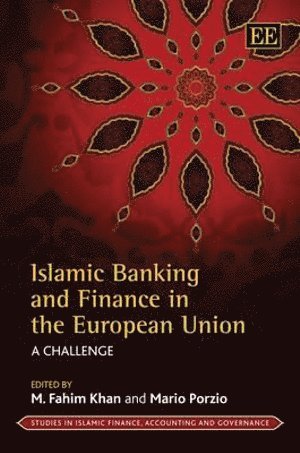
This timely book examines the authorization of Shari’ah-compliant intermediaries as either credit institutions or as investment companies in the European Union.The contributing authors explore the key topics of this area through differing yet parallel perspectives – for example, comparing economic and legal standpoints, looking at both European and national levels and considering both academic and technical approaches. The book discusses the common origin of Islamic and Western traditions in commercial and banking transactions, reviewing a period in which the Italian merchants and their organizations drove the rebirth of post-medieval society in trade and law. The editors investigate whether the Islamic banking and financial model complies with the European framework, spelling out the different experiences in single Member States (Germany, France, Italy, and the United Kingdom). Notwithstanding the obstacles to being authorized as domestic credit institutions, they conclude that the access of Islamic intermediaries is suitable and may have positive effects on European integration, as well as increasing the competition among the stand-still operators and evoking the ethical dimension of banking and finance. The book also highlights how Islamic banking would make the industry more inclusive.This multidisciplinary book will appeal greatly to economics and legal scholars with an interest in European and international banking and financial law, as well as postgraduate students in international law and banking law. Practitioners and regulators will also find this book an invaluable resource.