S. Nazim Ali - Böcker
Visar alla böcker från författaren S. Nazim Ali. Handla med fri frakt och snabb leverans.
7 produkter
7 produkter
2 155 kr
Skickas inom 10-15 vardagar
In the recent past, Islamic finance has made an impressive case on the banking scene by becoming an alternative to the popular conventional financial systems, spurring a lively academic debate on how the Islamic finance industry can expand its services to cover the poor. Several propositions have been aired which suggest that the Islamic finance industry should consider developing an efficient Shari‘a compliant microfinance model. This book brings together original contributions from leading authorities on the subject of Shari‘a Compliant Microfinance (Islamic Microfinance) to propose innovative solutions and models by carefully studying experiments conducted in various countries. Where critiques of the current microfinance concepts, methods, regulatory measures and practices have often revolved around its practice of charging very high interest, this book discusses the several models that draw on both theory and case studies to provide a sustainable Shari‘a compliant alternative. Arguing that while Islamic finance might have made a remarkable contribution in the financial markets, there remains a big question with regards to its social relevance, the book provides new perspectives and innovative solutions to issues facing the Islamic microfinance industry. A comprehensive reference book for anyone wanting to learn more about Shari‘a Compliant Microfinance, this book will also be of use to students and scholars of microfinance, Islamic finance, and to anyone interested in learning about ethical and socially responsible businesses.
2 155 kr
Skickas inom 10-15 vardagar
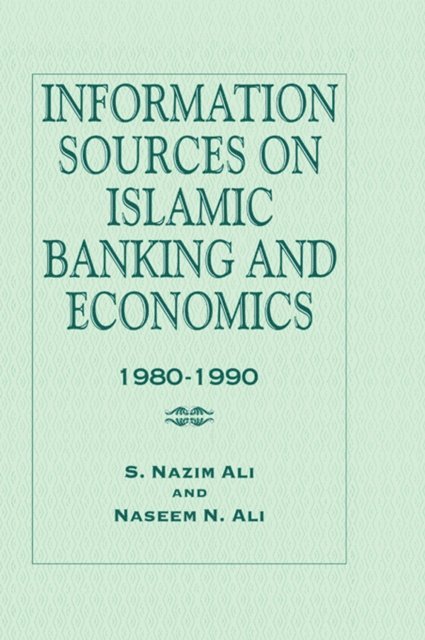
Islamic banking and economics (IBE) is a fast-growing subject of vital interest in both East and West as Muslims change their attitudes towards investments and find ways to invest their funds according to the Islamic faith. Along with the rapid developments in Islamic banking there has been a concomitant increase in the quantity of relevant IBE material generated. Since IBE is a highly specialized cross-disciplinary field involving economics, business, marketing, religion, philosophy and culture, it is difficult for researchers to locate and obtain information without having to go through several secondary sources such as indexing and abstracting services. In this electronic age, it is essential for researchers to be aware of the various forms of information available for consultation. Yet, until now, the few previous works on IBE information sources have been limited to the coverage of materials available during the early 1980s, before the most recent period of expansion, and in addition the materials cited were often unpublished and therefore unobtainable. In answer to a long-felt need, "Information Sources on Islamic Banking and Economics" provides a detailed bibliography of IBE sources concentrating on the period 1980-1990 with some data from 1991 and 1992, and with the additional unique feature of setting out, for the first time, the information infrastructure of the IBE discipline. A comprehensive author index and a keyword subject index for important terms are provided, and only published - and therefore easily obtainable - items have been included. This book is essential reading for all researchers, economists, bankers and others who need information on the increasingly important field of Islamic banking and economics, and related areas.
2 088 kr
Skickas inom 10-15 vardagar
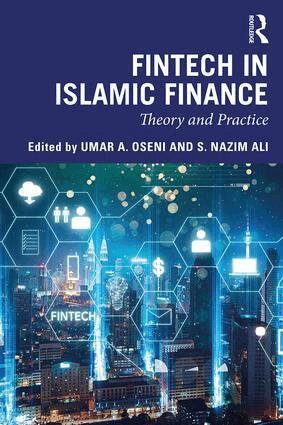
Featuring high-level analysis of Islamic law, this book examines fintech in Islamic finance from both theoretical and empirical perspectives. Whilst building on existing approaches, it also discusses the current application of fintech in promoting financial inclusion through innovative solutions in Muslim-majority countries, identifying future directions for policy-makers.With original chapters written by prominent academics, senior lawyers and practitioners in the global Islamic finance industry, this book serves as the first standalone pioneering reference work on fintech in Islamic finance. It also, for the first time, examines the position of Islamic law on cryptocurrencies, such as bitcoin. Besides the conceptual analysis of the Sharīʿah and legal aspects of fintech in Islamic finance, this book provides relevant case studies showing current and potential developments in the application of fintech in various sectors ranging from crowdfunding and smart contracts, to Online Dispute Resolution, Investment Account Platform and identity verification in the KYC process.Setting the agenda for researchers in the field, Fintech in Islamic Finance will be useful to students and scholars of Islamic finance and financial technology.
576 kr
Skickas inom 10-15 vardagar
Featuring high-level analysis of Islamic law, this book examines fintech in Islamic finance from both theoretical and empirical perspectives. Whilst building on existing approaches, it also discusses the current application of fintech in promoting financial inclusion through innovative solutions in Muslim-majority countries, identifying future directions for policy-makers.With original chapters written by prominent academics, senior lawyers and practitioners in the global Islamic finance industry, this book serves as the first standalone pioneering reference work on fintech in Islamic finance. It also, for the first time, examines the position of Islamic law on cryptocurrencies, such as bitcoin. Besides the conceptual analysis of the Sharīʿah and legal aspects of fintech in Islamic finance, this book provides relevant case studies showing current and potential developments in the application of fintech in various sectors ranging from crowdfunding and smart contracts, to Online Dispute Resolution, Investment Account Platform and identity verification in the KYC process.Setting the agenda for researchers in the field, Fintech in Islamic Finance will be useful to students and scholars of Islamic finance and financial technology.
698 kr
Skickas inom 10-15 vardagar
In the recent past, Islamic finance has made an impressive case on the banking scene by becoming an alternative to the popular conventional financial systems, spurring a lively academic debate on how the Islamic finance industry can expand its services to cover the poor. Several propositions have been aired which suggest that the Islamic finance industry should consider developing an efficient Shari‘a compliant microfinance model. This book brings together original contributions from leading authorities on the subject of Shari‘a Compliant Microfinance (Islamic Microfinance) to propose innovative solutions and models by carefully studying experiments conducted in various countries. Where critiques of the current microfinance concepts, methods, regulatory measures and practices have often revolved around its practice of charging very high interest, this book discusses the several models that draw on both theory and case studies to provide a sustainable Shari‘a compliant alternative. Arguing that while Islamic finance might have made a remarkable contribution in the financial markets, there remains a big question with regards to its social relevance, the book provides new perspectives and innovative solutions to issues facing the Islamic microfinance industry. A comprehensive reference book for anyone wanting to learn more about Shari‘a Compliant Microfinance, this book will also be of use to students and scholars of microfinance, Islamic finance, and to anyone interested in learning about ethical and socially responsible businesses.
434 kr
Skickas inom 10-15 vardagar
Islamic banking and economics (IBE) is a fast-growing subject of vital interest in both East and West as Muslims change their attitudes towards investments and find ways to invest their funds according to the Islamic faith. Along with the rapid developments in Islamic banking there has been a concomitant increase in the quantity of relevant IBE material generated. Since IBE is a highly specialized cross-disciplinary field involving economics, business, marketing, religion, philosophy and culture, it is difficult for researchers to locate and obtain information without having to go through several secondary sources such as indexing and abstracting services. In this electronic age, it is essential for researchers to be aware of the various forms of information available for consultation. Yet, until now, the few previous works on IBE information sources have been limited to the coverage of materials available during the early 1980s, before the most recent period of expansion, and in addition the materials cited were often unpublished and therefore unobtainable. In answer to a long-felt need, "Information Sources on Islamic Banking and Economics" provides a detailed bibliography of IBE sources concentrating on the period 1980-1990 with some data from 1991 and 1992, and with the additional unique feature of setting out, for the first time, the information infrastructure of the IBE discipline. A comprehensive author index and a keyword subject index for important terms are provided, and only published - and therefore easily obtainable - items have been included. This book is essential reading for all researchers, economists, bankers and others who need information on the increasingly important field of Islamic banking and economics, and related areas.
2 071 kr
Skickas inom 7-10 vardagar
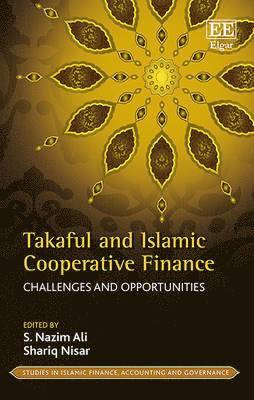
Islamic finance distinguishes itself from conventional finance with its strong emphasis on the moral consequences of financial transactions; prohibiting interest, excessive uncertainty, and finance of harmful business. When it comes to risk mitigation, it is unique in its risk sharing approach.This authoritative book tracks the evolution of the takaful industry over the course of the last four decades and makes a major attempt to highlight the importance of risk sharing through a discussion of various models of cooperation and critical analysis of their performance, including illuminating case studies and a critical assessment of the Islamic insurance model and the role of alternate financing mechanisms. Its high level discourse on shari'ah compliance and its nuances places emphasis on the importance of solidarity, cooperation, mutuality and reciprocity.Scholars and practitioners working in Islamic Finance will appreciate the context and nuance of this important book, and it will be essential reading for anyone interested in alternative forms of shari'ah compliant cooperative finance. The book is equally vital for academics and researchers interested in understanding various takaful models and their shari'ah considerations.Contributors include: A. Abozaid, A.U.F. Ahmad, A. Akhtar, S.N. Ali, H. Allam, M. Ayub, M. Al Bashir Al Amine, A. Bhatty, J.W. Bradford, S.E.B. Carmody, M.A. El-Gamal, M. Faisal, M.F. Haq, I. Bin Mahbob, A. Nana, V. Nienhaus, S. Nisar, U.A. Oseni, M. Rahman, A. Rehman, M.A. Samad, B. Shafiq, H. Sultan, A.-R. Syed, T.A. Uddin