
Ad Ilissvm - Böcker
Visar alla böcker i serien Ad Ilissvm. Handla med fri frakt och snabb leverans.
3 produkter
3 produkter
475 kr
Skickas inom 7-10 vardagar
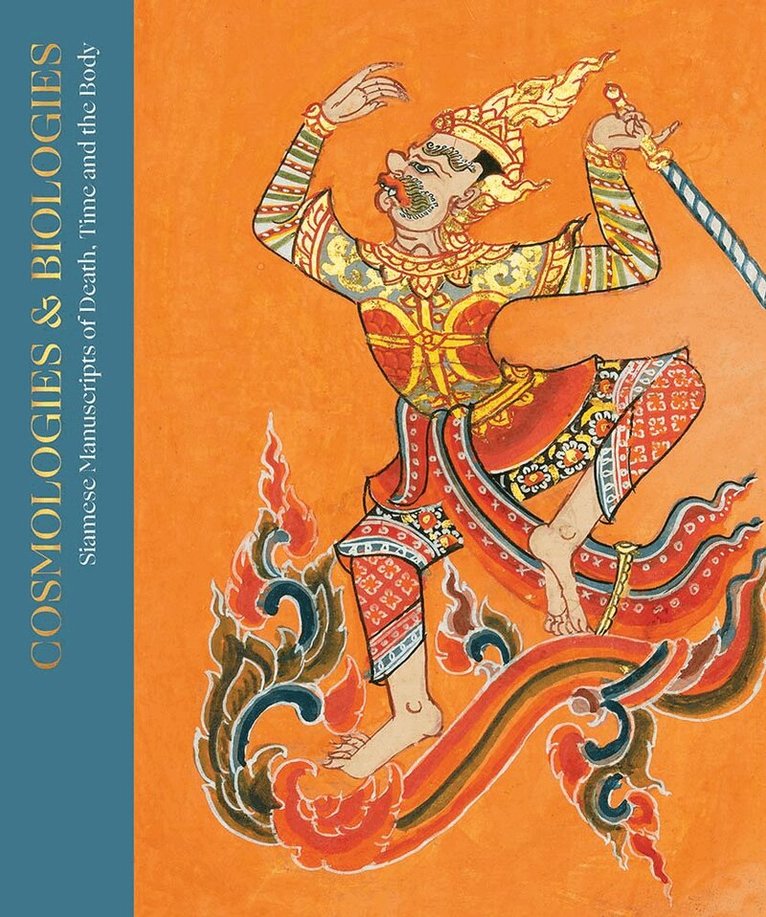
This is an important and ground-breaking study of rare Siamese manuscripts of two kinds, biological and cosmological. Beautiful in themselves, they are produced under unusual conditions and no one of these manuscripts is like another, though they draw on a common pool of rituals, actions and stories. This fascinating publication closely examines and contextualizes a collection of 30 of the most striking and visually unique manuscripts of this kind known, in or outside Thailand. These manuscripts are religious in nature, containing several genres of Buddhist texts including liturgical, narrative, historical, grammatical, psychological, ritual, and magical material, but, compared to other Thai and other Southeast Asian examples they are particularly strong in the realms of medical, biological and cosmological Thai thought. A recurrent feature is the story of Phra Malai, a monk whose travels to various heavens and hells are described and illustrated. Several rare medical manuscripts serve to reveal how mythology, biology, astrology, physiognomy and pharmacology are blended in the pre-modern Siamese/Thai tradition. These and other such illuminated manuscripts were produced in 18th- and 19th-century Siam (as Thailand was then known) and are richly illustrated both with delightful and evocative depictions of the Buddha, Hindu deities, Bodhisattvas, nuns, monks, and laypeople, and with some grotesque andterrifying ones – they attest to a particular interest in corpses and their implications among some of their readers. The author, who has both lived the Buddhist life in Thailand and researched in Thai monasteries, has extensive knowledge not only of the history but of the dynamic of Thai religion, studying not just older texts but continuing rituals and contemporary media. He was inspired to write this book by the very great value he saw in these particular manuscripts, a most unusual collection amassed with a discriminating eye. The book consists both of an explanation and a detailed catalogue of this collection of exemplary manuscripts and of a fascinating introductory essay discussing the belief systems and activities they represent.Published by Paul Holberton Publishing
905 kr
Kommande
An exploration of the diversity of porcelain made in Japan for the domestic and export marketsJapanese Porcelain from the Frelinghuysen Collection features pieces of blue and white and polychrome porcelain made for both the domestic and export markets from the seventeenth, eighteenth, and nineteenth centuries. The collection is especially rich in material from the later eighteenth and nineteenth centuries, a period that has received little scholarly attention to date. A particular focus are pieces decorated with Dutch figures and ships that were made for Japanese consumers curious about the only Europeans allowed into the country from 1641 to 1854. Through these objects, Ron Fuchs explores how Japan interacted with an increasingly interconnected and changing world and how people in Japan and around the globe used Japanese porcelain for dining and for decorating their homes. This volume follows Becky MacGuire’s Four Centuries of Blue and White: The Frelinghuysen Collection of Chinese and Japanese Export Porcelain (2023) in highlighting part of this incomparable collection. The book opens with an essay on the Japanese porcelain industry followed by beautifully illustrated entries that explore the design, function, and cultural context of individual objects.
456 kr
Kommande
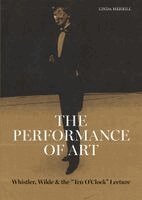
A close analysis of the “Ten O’Clock” lecture in which Whistler declared an end to the public’s participation in art. Also reveals the role played by Oscar Wilde.On 20 February 1885, James McNeill Whistler delivered his celebrated “Ten O’Clock” in Piccadilly, opposite the Royal Academy. More than a lecture, it was a witty, provocative monologue attacking conventional taste and asserting art’s independence from public opinion. Fashionable London society attended, including Oscar Wilde, whose own speaking tours partly inspired Whistler to take the stage.The event was hailed as a triumph and repeated in Oxford, Cambridge and other venues. Whistler even considered an American tour, combining the talk with an exhibition to strengthen his reputation as a professional artist – distinguishing himself from Wilde’s perceived dilettantism – but instead focused on publishing the text, enlisting Symbolist poet Stéphane Mallarmé for its French translation.The Performance of Art reassesses this episode, examining why Whistler sought the podium, the cultural context of his polemic and Wilde’s role. Through close analysis, it argues that “Ten O’Clock” stands as a work of art in itself, illuminating Whistler’s aesthetic philosophy while anticipating the widening divide between fine art and popular culture.