Adolescent Lives - Böcker
Visar alla böcker i serien Adolescent Lives. Handla med fri frakt och snabb leverans.
4 produkter
4 produkter
Del 1 - Adolescent Lives
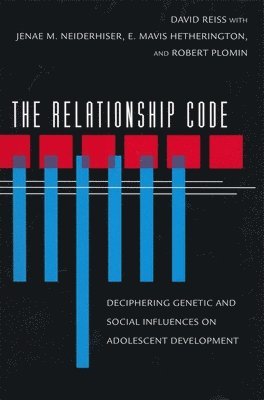
Relationship Code
Deciphering Genetic and Social Influences on Adolescent Development
Häftad, Engelska, 2003
477 kr
Skickas inom 10-15 vardagar
The Relationship Code is the report of a longitudinal study, conducted over a ten-year period, of the influence of family relationships and genetic factors on competence and psychopathology in adolescent development. The sample for this landmark study included 720 pairs of same-sex adolescent siblings—including twins, half siblings, and genetically unrelated siblings—and their parents.Using a clear expressive style, David Reiss and his coinvestigators identify specific mechanisms that link genetic factors and the social environment in psychological development. They propose a striking hypothesis: family relationships are crucial to the expression of genetic influences on a broad array of complex behaviors in adolescents. Moreover, this role of family relationships may be very specific: some genetic factors are linked to mother–child relationships, others to father–child relations, some to relationship warmth, while others are linked to relationship conflict or control. The specificity of these links suggests that family relationships may constitute a code for translating genetic influences into the ontogeny of behaviors, a code every bit as important for behavior as DNA-RNA.
340 kr
Skickas inom 10-15 vardagar
Should teenagers have jobs while they’re in high school? Doesn’t working distract them from schoolwork, cause long-term problem behaviors, and precipitate a “precocious” transition to adulthood?This report from a remarkable longitudinal study of 1,000 students, followed from the beginning of high school through their mid-twenties, answers, resoundingly, no. Examining a broad range of teenagers, Jeylan Mortimer concludes that high school students who work even as much as half-time are in fact better off in many ways than students who don’t have jobs at all. Having part-time jobs can increase confidence and time management skills, promote vocational exploration, and enhance subsequent academic success. The wider social circle of adults they meet through their jobs can also buffer strains at home, and some of what young people learn on the job—not least, responsibility and confidence—gives them an advantage in later work life.
289 kr
Skickas inom 10-15 vardagar
Gay, straight, bisexual: how much does sexual orientation matter to a teenager’s mental health or sense of identity? In this down-to-earth book, filled with the voices of young people speaking for themselves, Ritch Savin-Williams argues that the standard image of gay youth presented by mental health researchers—as depressed, isolated, drug-dependent, even suicidal—may have been exaggerated even twenty years ago, and is far from accurate today.The New Gay Teenager gives us a refreshing and frequently controversial introduction to confident, competent, upbeat teenagers with same-sex desires, who worry more about the chemistry test or their curfew than they do about their sexuality. What does “gay” mean, when some adolescents who have had sexual encounters with those of their own sex don’t consider themselves gay, when some who consider themselves gay have had sex with the opposite sex, and when many have never had sex at all? What counts as “having sex,” anyway? Teenagers (unlike social science researchers) are not especially interested in neatly categorizing their sexual orientation.In fact, Savin-Williams learns, teenagers may think a lot about sex, but they don’t think that sexuality is the most important thing about them. And adults, he advises, shouldn’t think so either.
456 kr
Skickas inom 10-15 vardagar
Seventy deeply troubled teenagers spend weeks, months, even years on a locked psychiatric ward. They’re not just failing in school, not just using drugs. They are out of control—violent or suicidal, in trouble with the law, unpredictable, and dangerous. Their futures are at risk.Twenty years later, most of them still struggle. But astonishingly, a handful are thriving. They’re off drugs and on the right side of the law. They’ve finished school and hold jobs that matter to them. They have close friends and are responsible, loving parents.What happened? How did some kids stumble out of the woods while others remain lost? Could their strikingly different futures have been predicted back during their teenage struggles? The kids provide the answers in a series of interviews that began during their hospitalizations and ended years later. Even in the early days, the resilient kids had a grasp of how they contributed to their own troubles. They tried to make sense of their experience and they groped toward an understanding of other people’s inner lives.In their own impatient voices, Out of the Woods portrays edgy teenagers developing into thoughtful, responsible adults. Listening in on interviews through the years, narratives that are often poignant, sometimes dramatic, frequently funny, we hear the kids growing into more composed—yet always recognizable—versions of their tough and feisty selves.