Advances in Urban and Regional Economics – serie
Visar alla böcker i serien Advances in Urban and Regional Economics. Handla med fri frakt och snabb leverans.
4 produkter
4 produkter
1 589 kr
Skickas inom 10-15 vardagar
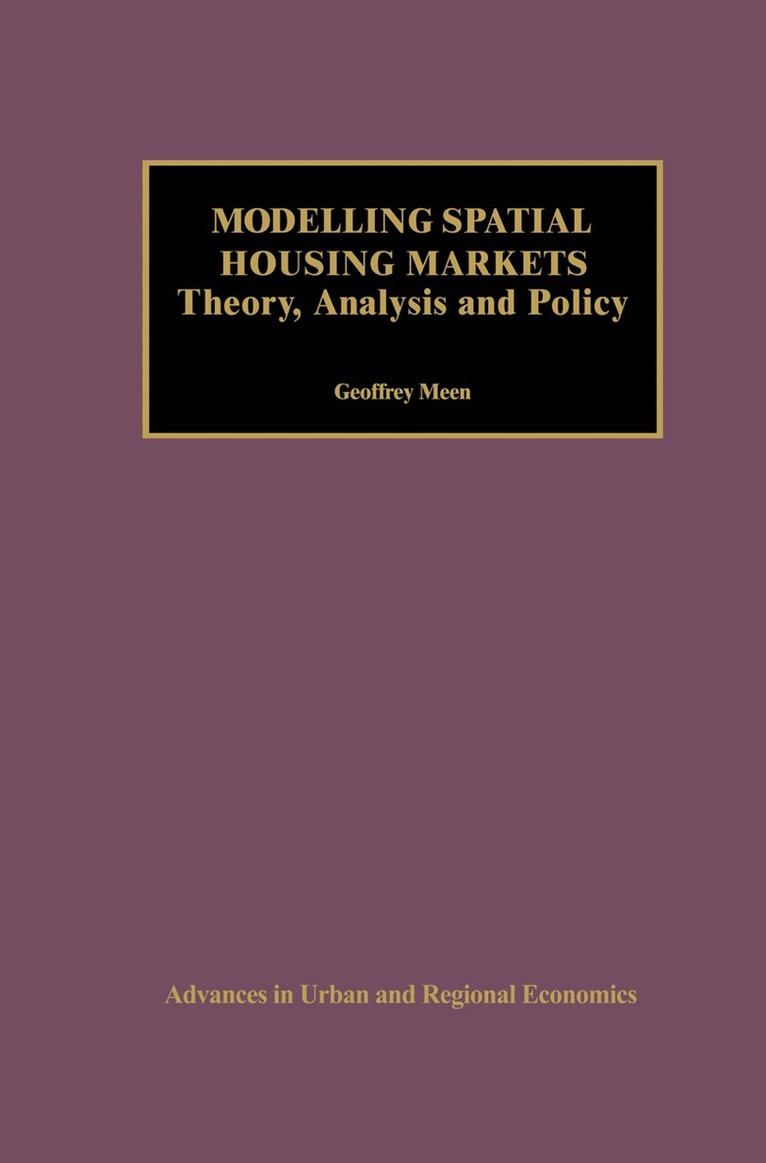
Spatial fixity is one of the characteristics that distinguishes housing from most other goods and services in the economy. In general, housing cannot be moved from one part of the country to another in response to shortages or excesses in particular areas. The modelling of housing markets and the interlinkages between markets at different spatial levels - international, national, regional and urban - are the main themes of this book. A second major theme is disaggregation, not only in terms of space, but also between households. The book argues that aggregate time-series models of housing markets of the type widely used in Britain and also in other countries in the past have become less relevant in a world of increasing income dispersion. Typically, aggregate relationships will break down, except under special conditions. We can no longer assume that traditional location or tenure patterns, for example, will continue in the future. The book has four main components. First, it discusses trends in housing markets both internationally and within nations.Second, the book develops theoretical housing models at each spatial scale, starting with national models, moving down to the regional level and, then, to urban models. Third, the book provides empirical estimates of the models and, finally, the models are used for policy analysis. Analysis ranges over a wide variety of topics, including explanations for differing international house price trends, the causes of housing cycles, the role of credit markets, regional housing market interactions and the role of housing in urban/suburban population drift.
2 180 kr
Skickas inom 10-15 vardagar
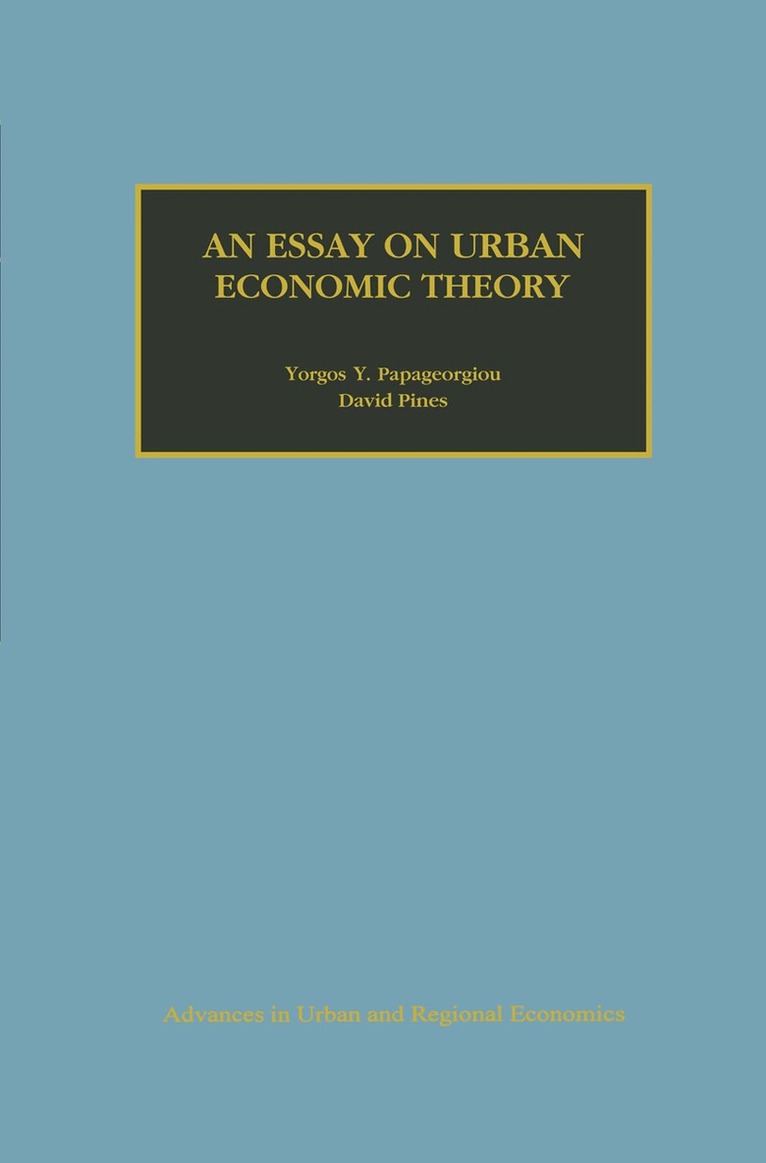
Urban economic theory has been one of the most active areas of urban and regional economic research. Static general equilibrium theory is at the core of modern microeconomics, and the topic of this book - the static allocation of resources within a city and between cities - is at the core of urban economic theory. This volume attempts to reflect the state of the field. Part I provides a rigorous presentation of several variants of the monocentric (city) model - as the centrepiece of urban economic theory - treating equilibrium, optimum, and comparative statistics. Part II explores less familiar and even some uncharted territory. The monocentric model looks at a single city in isolation, taking as given a central business district surrounded by residences. Part II, in contrast, makes the intra-urban location of residential and non-residential activity the outcome of the fundamental trade-off between the propensity to interact and the aversion to crowding; the resulting pattern of agglomeration may be polycentric.Part II also develops models of an urbanized economy with trade between specialized cities and examines how the market-determined size distribution of cities differs from the optimum. This book launches a new series, "Advances in Urban and Regional Economics". The series aims to provide an outlet for longer scholarly works dealing with topics in urban and regional economics.
1 637 kr
Skickas inom 10-15 vardagar
Spatial fixity is one of the characteristics that distinguishes housing from most other goods and services in the economy. In general, housing cannot be moved from one part of the country to another in response to shortages or excesses in particular areas. The modelling of housing markets and the interlinkages between markets at different spatial levels - international, national, regional and urban - are the main themes of this book.A second major theme is disaggregation, not only in terms of space, but also between households. The book argues that aggregate time-series models of housing markets of the type widely used in Britain and also in other countries in the past have become less relevant in a world of increasing income dispersion. Typically, aggregate relationships will break down, except under special conditions. We can no longer assume that traditional location or tenure patterns, for example, will continue in the future. The book has four main components. First, it discusses trends in housing markets both internationally and within nations. Second, the book develops theoretical housing models at each spatial scale, starting with national models, moving down to the regional level and, then, to urban models. Third, the book provides empirical estimates of the models and, finally, the models are used for policy analysis. Analysis ranges over a wide variety of topics, including explanations for differing international house price trends, the causes of housing cycles, the role of credit markets, regional housing market interactions and the role of housing in urban/suburban population drift.
2 180 kr
Skickas inom 10-15 vardagar
Over the past thirty years, urban economic theory has been one of the most active areas of urban and regional economic research. Just as static general equilibrium theory is at the core of modern microeconomics, so is the topic of this book - the static allocation of resources within a city and between cities - at the core of urban economic theory. An Essay on Urban Economic Theory well reflects the state of the field. Part I provides an elegant, coherent, and rigorous presentation of several variants of the monocentric (city) model - as the centerpiece of urban economic theory - treating equilibrium, optimum, and comparative statistics. Part II explores less familiar and even some uncharted territory. The monocentric model looks at a single city in isolation, taking as given a central business district surrounded by residences. Part II, in contrast, makes the intra-urban location of residential and non-residential activity the outcome of the fundamental tradeoff between the propensity to interact and the aversion to crowding; the resulting pattern of agglomeration may be polycentric. Part II also develops models of an urbanized economy with trade between specialized cities and examines how the market-determined size distribution of cities differs from the optimum. This book launches a new series, Advances in Urban and Regional Economics. The series aims to provide an outlet for longer scholarly works dealing with topics in urban and regional economics.