Atopia: Philosophy, Political Theory, Aesthetics - Böcker
Visar alla böcker i serien Atopia: Philosophy, Political Theory, Aesthetics. Handla med fri frakt och snabb leverans.
15 produkter
15 produkter
1 976 kr
Skickas inom 10-15 vardagar
In arguing that Nietzsche's Thus Spoke Zarathustra is a philosophical explanation of the possibility of modernism—that is, of the possibility of radical cultural change through the creation of new values—the author shows that literary fiction can do the work of philosophy.Nietzsche takes up the problem of modernism by inventing Zarathustra, a self-styled cultural innovator who aspires to subvert the culture of modernity (the repressive culture of the "last man") by creating new values. By showing how Zarathustra can become a creator of new values, notwithstanding the forces that hinder his will to innovate, Nietzsche answers the skeptic who proclaims that new-values creation is impossible. Zarathustra is a story of repeated clashes between Zarathustra's avant-garde, modernist intentions and figures of doubt who condemn those intentions.Through a close reading of Zarathustra, the author reconstructs Nietzsche's explanation of the possibility of modernism. Showing how parody, irony, and plot organization frame that explanation, he also demonstrates the central significance of Zarathustra's speeches on the body and the will to power. The author argues that Nietzsche's critique of the modern philosophy of the subject revises Kant's concept of the dynamical sublime and makes allegorical use of the myth of Theseus, Ariadne, and Dionysus. He also proposes an original interpretation of the thought of eternal recurrence (according to Nietzsche, the "fundamental conception" of Zarathustra). Breaking with conventional Nietzsche scholarship, the author conceptualizes the thought not as a theoretical or a practical doctrine that Nietzsche endorses, but as a developing drama that Zarathustra performs.
478 kr
Skickas inom 7-10 vardagar
In arguing that Nietzsche's Thus Spoke Zarathustra is a philosophical explanation of the possibility of modernism—that is, of the possibility of radical cultural change through the creation of new values—the author shows that literary fiction can do the work of philosophy.Nietzsche takes up the problem of modernism by inventing Zarathustra, a self-styled cultural innovator who aspires to subvert the culture of modernity (the repressive culture of the "last man") by creating new values. By showing how Zarathustra can become a creator of new values, notwithstanding the forces that hinder his will to innovate, Nietzsche answers the skeptic who proclaims that new-values creation is impossible. Zarathustra is a story of repeated clashes between Zarathustra's avant-garde, modernist intentions and figures of doubt who condemn those intentions.Through a close reading of Zarathustra, the author reconstructs Nietzsche's explanation of the possibility of modernism. Showing how parody, irony, and plot organization frame that explanation, he also demonstrates the central significance of Zarathustra's speeches on the body and the will to power. The author argues that Nietzsche's critique of the modern philosophy of the subject revises Kant's concept of the dynamical sublime and makes allegorical use of the myth of Theseus, Ariadne, and Dionysus. He also proposes an original interpretation of the thought of eternal recurrence (according to Nietzsche, the "fundamental conception" of Zarathustra). Breaking with conventional Nietzsche scholarship, the author conceptualizes the thought not as a theoretical or a practical doctrine that Nietzsche endorses, but as a developing drama that Zarathustra performs.
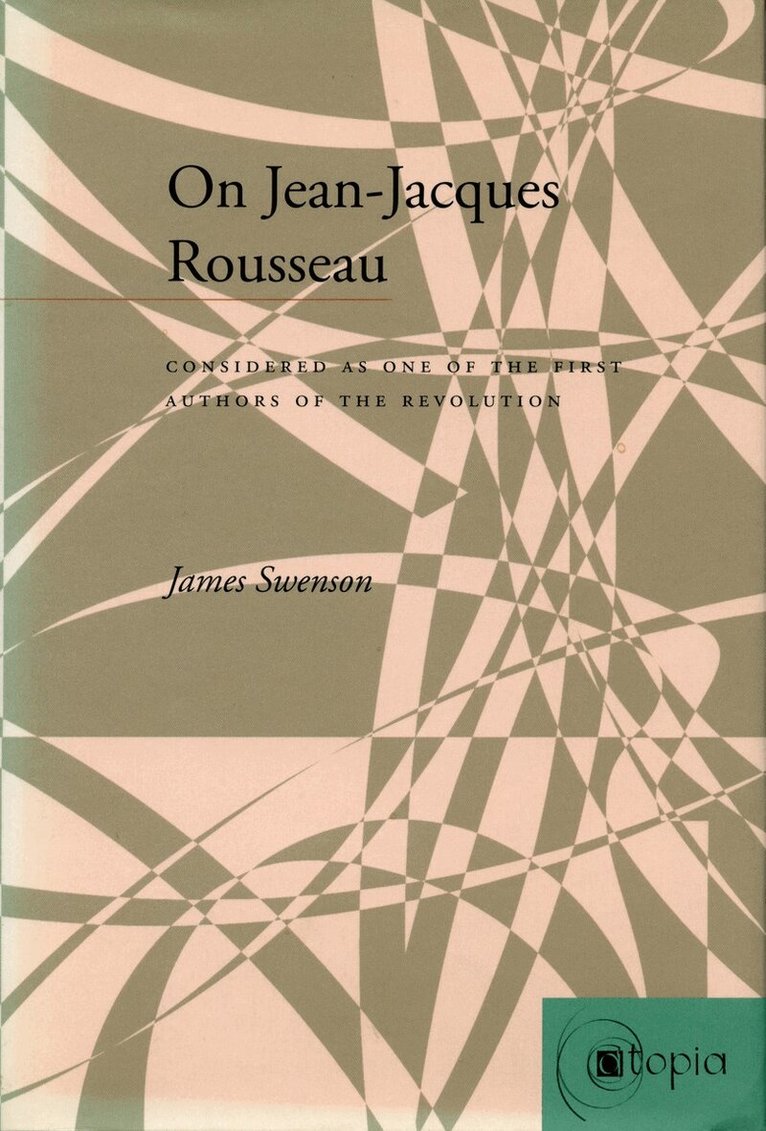
On Jean-Jacques Rousseau
Considered As One of the First Authors of the Revolution
Inbunden, Engelska, 2000
1 528 kr
Skickas inom 7-10 vardagar
In order to grasp what it means to call Rousseau an "author" of the Revolution, as so many revolutionaries did, it is necessary to take full measure of the difficulties of literary interpretation to which Rousseau's work gives rise, particularly around such a charged term as "author."On Jean-Jacques Rousseau shows that Rousseau's texts consistently generate a division in their own reading, a division both designated and masked by the fiction of authorship. These divisions can occur successively—as in the narrative reversals and discontinuities characteristic of Rousseau's fictional and autobiographical works—or simultaneously, in the form of incompatible attempts to apply the lessons of a single text to an urgent historical moment. Given the structure of these texts, their "influence" can only occur in an equally paradoxical form. Rousseau's contribution to revolutionary thinking lies in his conceptualization of the constitutive function of misunderstanding and narrative discontinuity, in history and political action as well as in literature.Such misunderstandings and discontinuities are particularly well illustrated by the vicissitudes of the reading of Rousseau's texts during the revolutionary period, a moment when "readings" occurred as political programs. The Revolution enacted Rousseau precisely to the extent that revolutionaries could not agree on what action he called for. He is "one of the first authors of the Revolution" not because he was one of its causes, but because he provided the terms in which the logic of the revolutionary process becomes intelligible.
1 463 kr
Skickas inom 7-10 vardagar
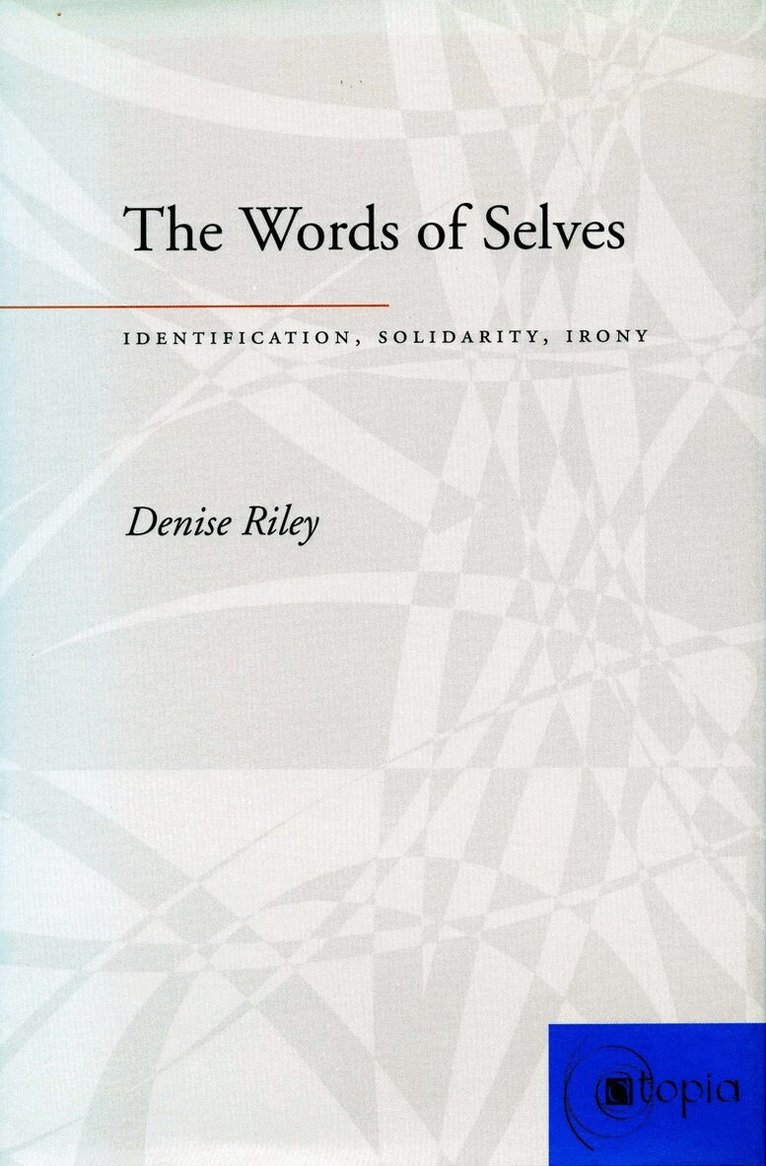
Marlene Dietrich had the last line in Orson Welles's A Touch of Evil: "What does it matter what you say about other people?" The author ponders the question: What does it matter what you say about yourself? She wonders why the requirement to be a something-or-other should be so hard to satisfy in a manner that rings true in the ears of its own subject. She decides that some hesitations and awkwardness in inhabiting many categories of the person—including those celebrated by what is sometimes termed identity politics—need not evidence either psychological weakness or political lack of nerve.Neither an "identity" nor a "nonidentity" can quite convince. But if this discomfort inhering in self-characterization needs to be fully admitted and registered—as something that is simultaneously linguistic and affective—it can also be cheerfully tolerated. Here language is not treated as a guileful thing that leads its speakers astray. Though the business of being called something, and of being positioned by that calling, is often an unhappy affair, irony can offer effective therapy. Even if uncertain and volatile categorizations do trouble the politics that they also shape, they hardly weaken the empathetic solidarity that is distinct from identification. The verbal irony of self-presentation can be politically helpful. Questioning the received diction of the self cannot be dismissed merely as a luxury of those in secure positions, but instead can move toward a conception of a constructive nonidentity.This extended meditation on the language of the self within contemporary social politics also considers the lyrical "I" and linguistic emotionality, the historical status of irony, and the possibilities of a nonidentitarian solidarity that is unapologetically alert to the affect of language.
1 184 kr
Skickas inom 10-15 vardagar
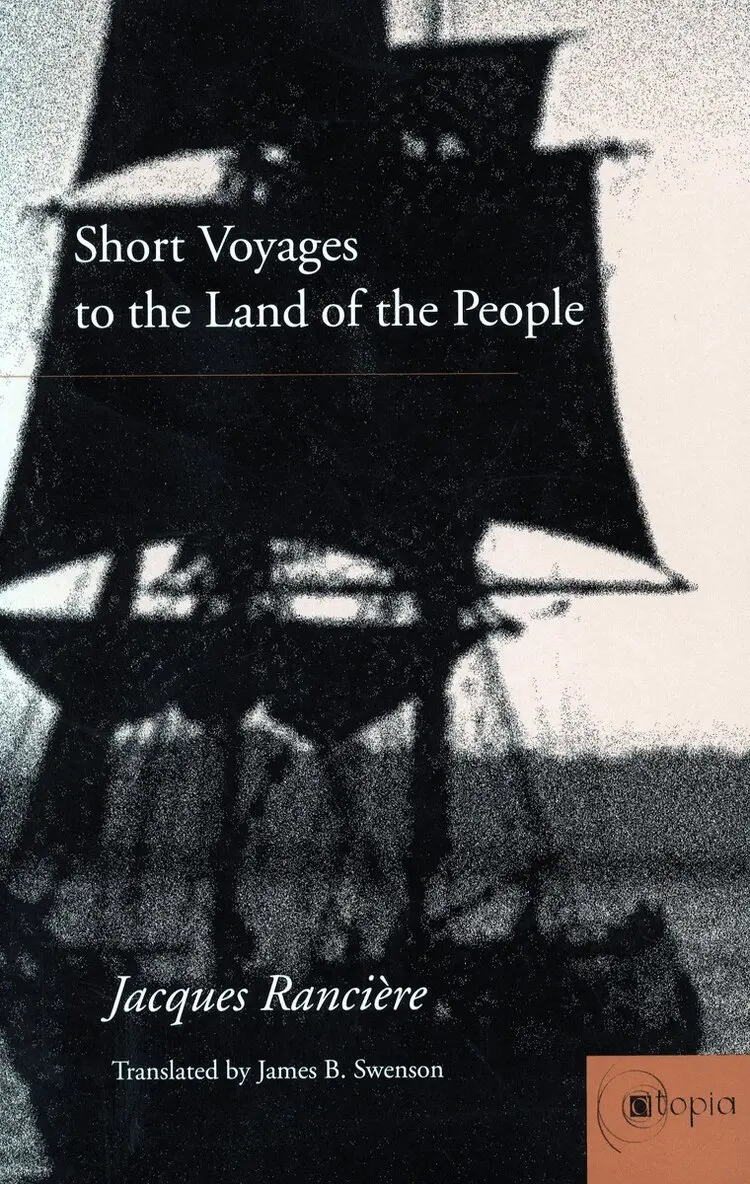
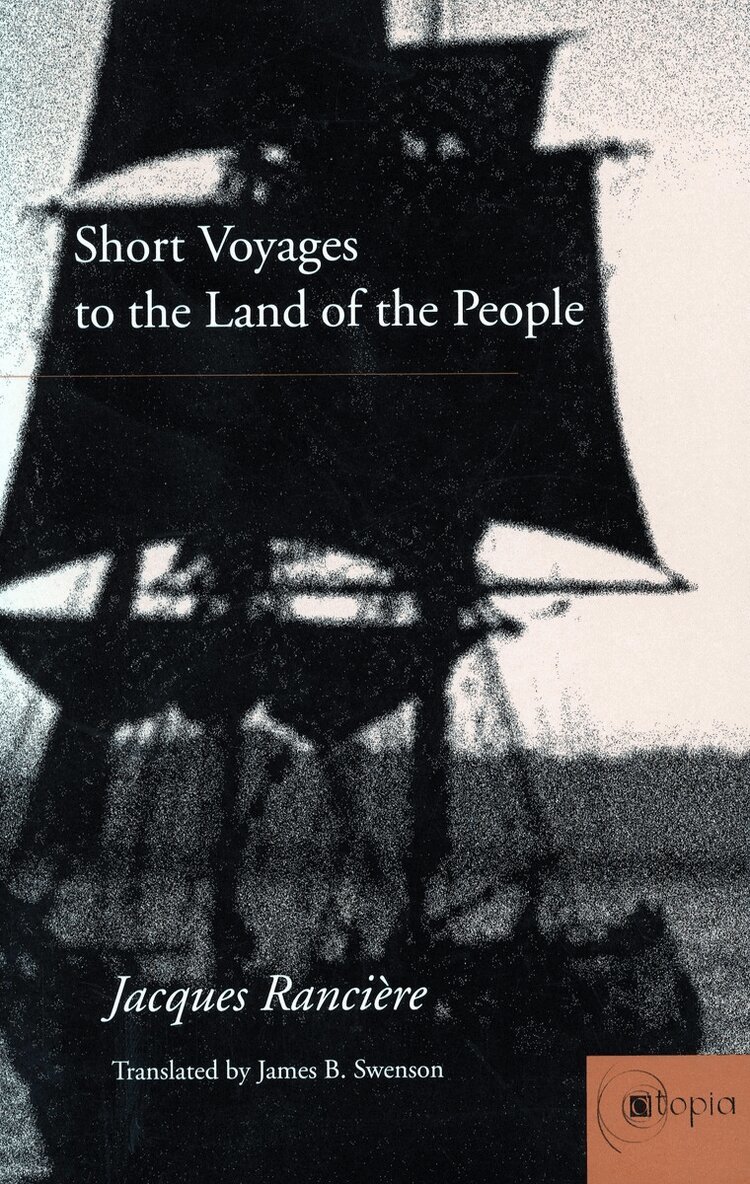
This book analyzes a range of texts that seek, in different ways, to represent "the people." Rancière approaches these texts as travel narratives or ethnographies whose authors have traveled not to distant or exotic lands but across class lines. In this truly comparative study, he examines Wordsworth's poetry, the utopian discourse of the Saint-Simoniens, the correspondence and theater of Büchner, Claude Genoux's Mémoires d'un enfant de la Savoie, Michelet's theories of history, the prose and poetry of Rilke, and the performance of Ingrid Bergman in Rossellini's postwar film Europe 51. Rancière examines the various forms of displacement that affect his subjects, enabling each to become foreign to the sites and trajectories commonly known as reality. He argues convincingly that "the people" have no proper signification in the texts under consideration, instead, they function as points of reality upon which the voyager can drape a conceptual framework shaped by the circumstances not of the other, but of the self.
288 kr
Skickas inom 10-15 vardagar
This book analyzes a range of texts that seek, in different ways, to represent "the people." Rancière approaches these texts as travel narratives or ethnographies whose authors have traveled not to distant or exotic lands but across class lines. In this truly comparative study, he examines Wordsworth's poetry, the utopian discourse of the Saint-Simoniens, the correspondence and theater of Büchner, Claude Genoux's Mémoires d'un enfant de la Savoie, Michelet's theories of history, the prose and poetry of Rilke, and the performance of Ingrid Bergman in Rossellini's postwar film Europe 51. Rancière examines the various forms of displacement that affect his subjects, enabling each to become foreign to the sites and trajectories commonly known as reality. He argues convincingly that "the people" have no proper signification in the texts under consideration, instead, they function as points of reality upon which the voyager can drape a conceptual framework shaped by the circumstances not of the other, but of the self.
863 kr
Skickas inom 10-15 vardagar
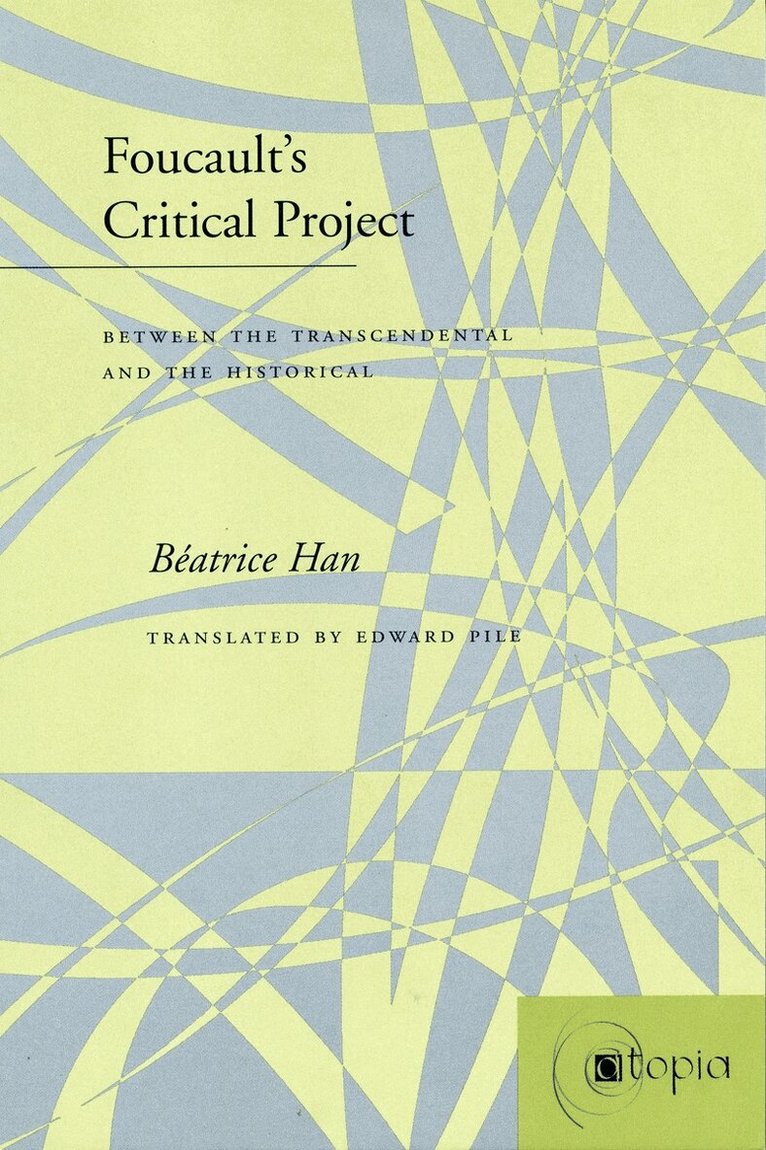
This book uncovers and explores the constant tension between the historical and the transcendental that lies at the heart of Michel Foucault's work. In the process, it also assesses the philosophical foundations of his thought by examining his theoretical borrowings from Kant, Nietzsche, and Heidegger, who each provided him with tools to critically rethink the status of the transcendental.Given Foucault's constant focus on the (Kantian) question of the possibility for knowledge, the author argues that his philosophical itinerary can be understood as a series of attempts to historicize the transcendental. In so doing, he seeks to uncover a specific level that would identify these conditions without falling either into an excess of idealism (a de-historicized, subject-centered perspective exemplified for Foucault by Husserlian phenomenology) or of materialism (which would amount to interpreting these conditions as ideological and thus as the effect of economic determination by the infrastructure).The author concludes that, although this problem does unify Foucault's work and gives it its specifically philosophical dimension, none of the concepts successively provided (such as the épistémè, the historical a priori, the regimes of truth, the games of truth, and problematizations) manages to name these conditions without falling into the pitfalls that Foucault originally denounced as characteristic of the "anthropological sleep"—various forms of confusion between the historical and the transcendental. Although Foucault's work provides us with a highly illuminating analysis of the major problems of post-Kantian philosophies, ultimately it remains aporetic in that it also fails to overcome them.
On Jean-Jacques Rousseau
Considered As One of the First Authors of the Revolution
Häftad, Engelska, 2000
374 kr
Skickas inom 7-10 vardagar
In order to grasp what it means to call Rousseau an "author" of the Revolution, as so many revolutionaries did, it is necessary to take full measure of the difficulties of literary interpretation to which Rousseau's work gives rise, particularly around such a charged term as "author."On Jean-Jacques Rousseau shows that Rousseau's texts consistently generate a division in their own reading, a division both designated and masked by the fiction of authorship. These divisions can occur successively—as in the narrative reversals and discontinuities characteristic of Rousseau's fictional and autobiographical works—or simultaneously, in the form of incompatible attempts to apply the lessons of a single text to an urgent historical moment. Given the structure of these texts, their "influence" can only occur in an equally paradoxical form. Rousseau's contribution to revolutionary thinking lies in his conceptualization of the constitutive function of misunderstanding and narrative discontinuity, in history and political action as well as in literature.Such misunderstandings and discontinuities are particularly well illustrated by the vicissitudes of the reading of Rousseau's texts during the revolutionary period, a moment when "readings" occurred as political programs. The Revolution enacted Rousseau precisely to the extent that revolutionaries could not agree on what action he called for. He is "one of the first authors of the Revolution" not because he was one of its causes, but because he provided the terms in which the logic of the revolutionary process becomes intelligible.
357 kr
Skickas inom 7-10 vardagar
Marlene Dietrich had the last line in Orson Welles's A Touch of Evil: "What does it matter what you say about other people?" The author ponders the question: What does it matter what you say about yourself? She wonders why the requirement to be a something-or-other should be so hard to satisfy in a manner that rings true in the ears of its own subject. She decides that some hesitations and awkwardness in inhabiting many categories of the person—including those celebrated by what is sometimes termed identity politics—need not evidence either psychological weakness or political lack of nerve.Neither an "identity" nor a "nonidentity" can quite convince. But if this discomfort inhering in self-characterization needs to be fully admitted and registered—as something that is simultaneously linguistic and affective—it can also be cheerfully tolerated. Here language is not treated as a guileful thing that leads its speakers astray. Though the business of being called something, and of being positioned by that calling, is often an unhappy affair, irony can offer effective therapy. Even if uncertain and volatile categorizations do trouble the politics that they also shape, they hardly weaken the empathetic solidarity that is distinct from identification. The verbal irony of self-presentation can be politically helpful. Questioning the received diction of the self cannot be dismissed merely as a luxury of those in secure positions, but instead can move toward a conception of a constructive nonidentity.This extended meditation on the language of the self within contemporary social politics also considers the lyrical "I" and linguistic emotionality, the historical status of irony, and the possibilities of a nonidentitarian solidarity that is unapologetically alert to the affect of language.
1 504 kr
Skickas inom 10-15 vardagar
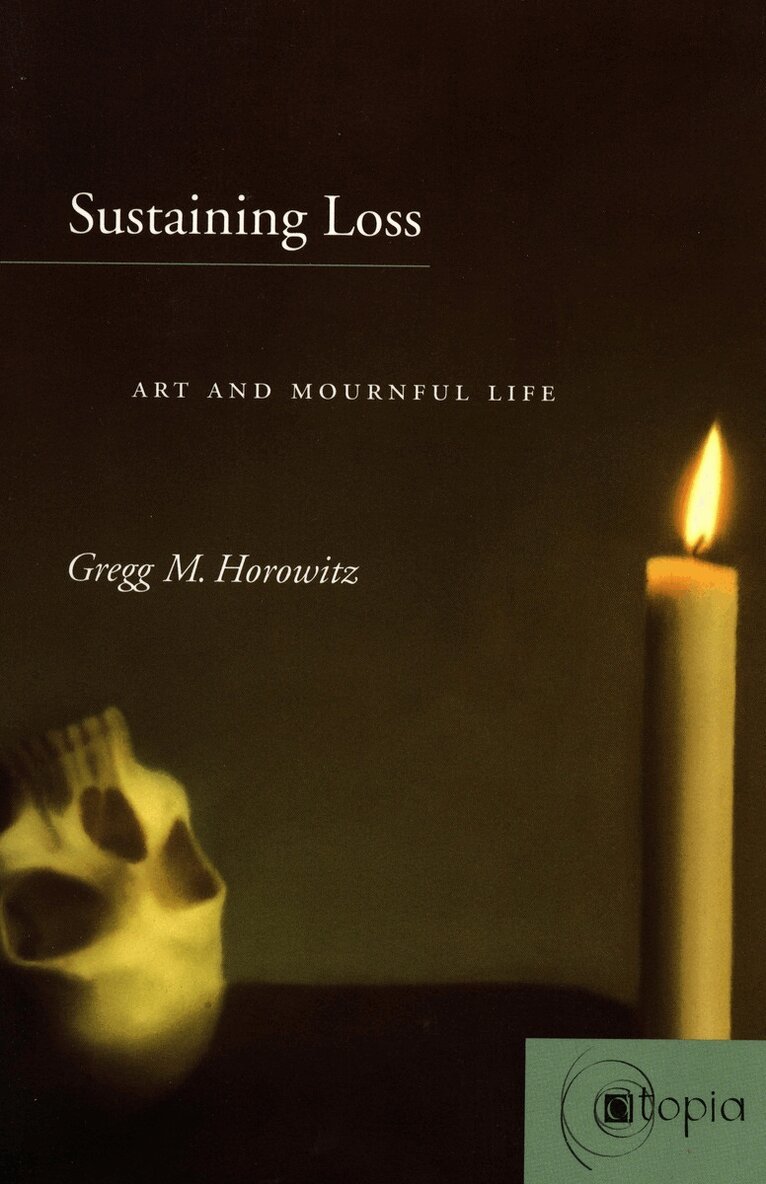
Sustaining Loss explores the uncanny, traumatic weaving together of the living and the dead in art, and the morbid fascination it holds for modern philosophical aesthetics. Beginning with Kant, the author traces how aesthetic theory has been drawn back repeatedly to the moving power of the undead body of the work of art. He locates the most potent expressions of this philosophical compulsion in Hegel's thesis that art is a thing of the past, and in Freud's view that the work of art is the haunting of the present by the endless suffering of what is dead but still has claims over the living.The book asserts that modern aesthetics holds the key to unlocking the tortured relation of modernity to the past it is perpetually leaving behind. As the capacity to withstand the inescapable force of a past that is dead for us becomes the supreme test for a fully modern, fully secular philosophy, aesthetics moves to the center of philosophical reflection. But, the author argues, this secular philosophical orientation can be sustained only if aesthetic theory remains oriented by intimate contact with modernist works of art.Sustaining Loss examines not only Kant, Hegel, and Freud, but also the contemporary artists Gerhard Richter and Ilya Kabakov, whose art turns fruitfully against art's own past. To live as a modern, the author asserts, is to live with the dead past that modernist art ceaselessly disgorges. Overall, the book aims to articulate an aesthetic theory suitable to the task of living in a time when, in Flannery O'Connor's words, "The blind don't see and the lame don't walk, and what's dead stays that way."
363 kr
Skickas inom 7-10 vardagar
Sustaining Loss explores the uncanny, traumatic weaving together of the living and the dead in art, and the morbid fascination it holds for modern philosophical aesthetics. Beginning with Kant, the author traces how aesthetic theory has been drawn back repeatedly to the moving power of the undead body of the work of art. He locates the most potent expressions of this philosophical compulsion in Hegel's thesis that art is a thing of the past, and in Freud's view that the work of art is the haunting of the present by the endless suffering of what is dead but still has claims over the living.The book asserts that modern aesthetics holds the key to unlocking the tortured relation of modernity to the past it is perpetually leaving behind. As the capacity to withstand the inescapable force of a past that is dead for us becomes the supreme test for a fully modern, fully secular philosophy, aesthetics moves to the center of philosophical reflection. But, the author argues, this secular philosophical orientation can be sustained only if aesthetic theory remains oriented by intimate contact with modernist works of art.Sustaining Loss examines not only Kant, Hegel, and Freud, but also the contemporary artists Gerhard Richter and Ilya Kabakov, whose art turns fruitfully against art's own past. To live as a modern, the author asserts, is to live with the dead past that modernist art ceaselessly disgorges. Overall, the book aims to articulate an aesthetic theory suitable to the task of living in a time when, in Flannery O'Connor's words, "The blind don't see and the lame don't walk, and what's dead stays that way."
1 238 kr
Skickas inom 10-15 vardagar
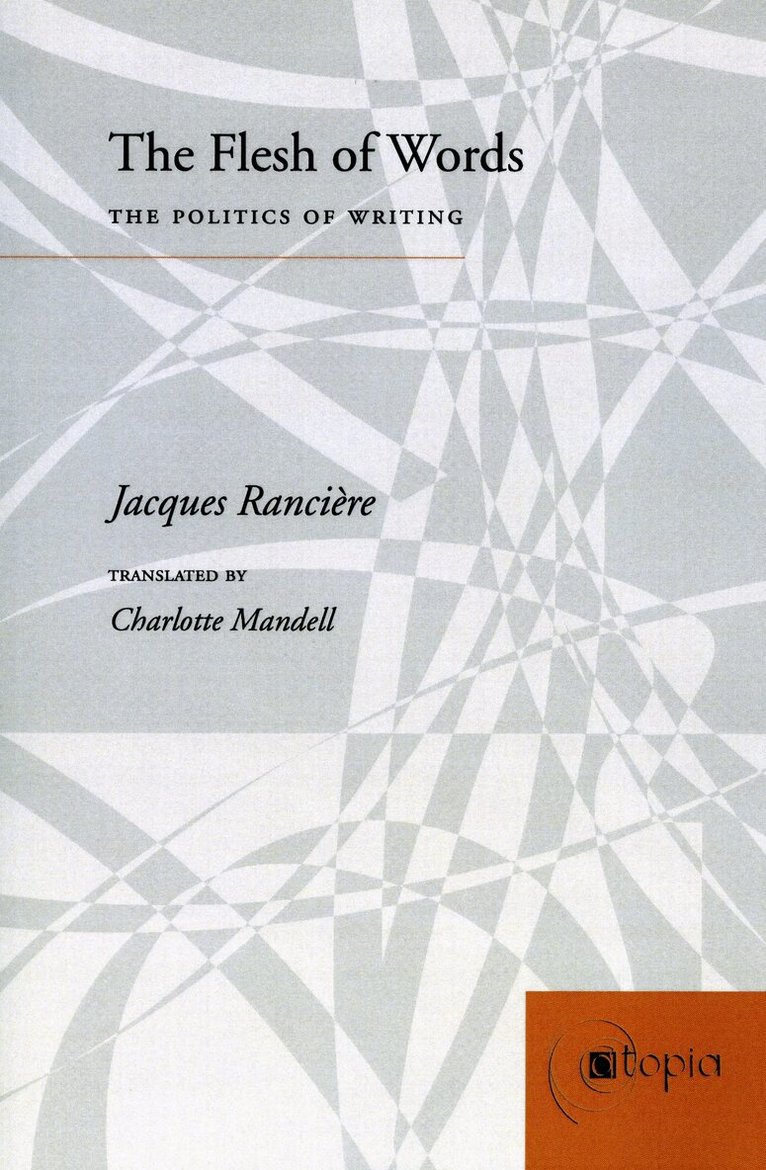
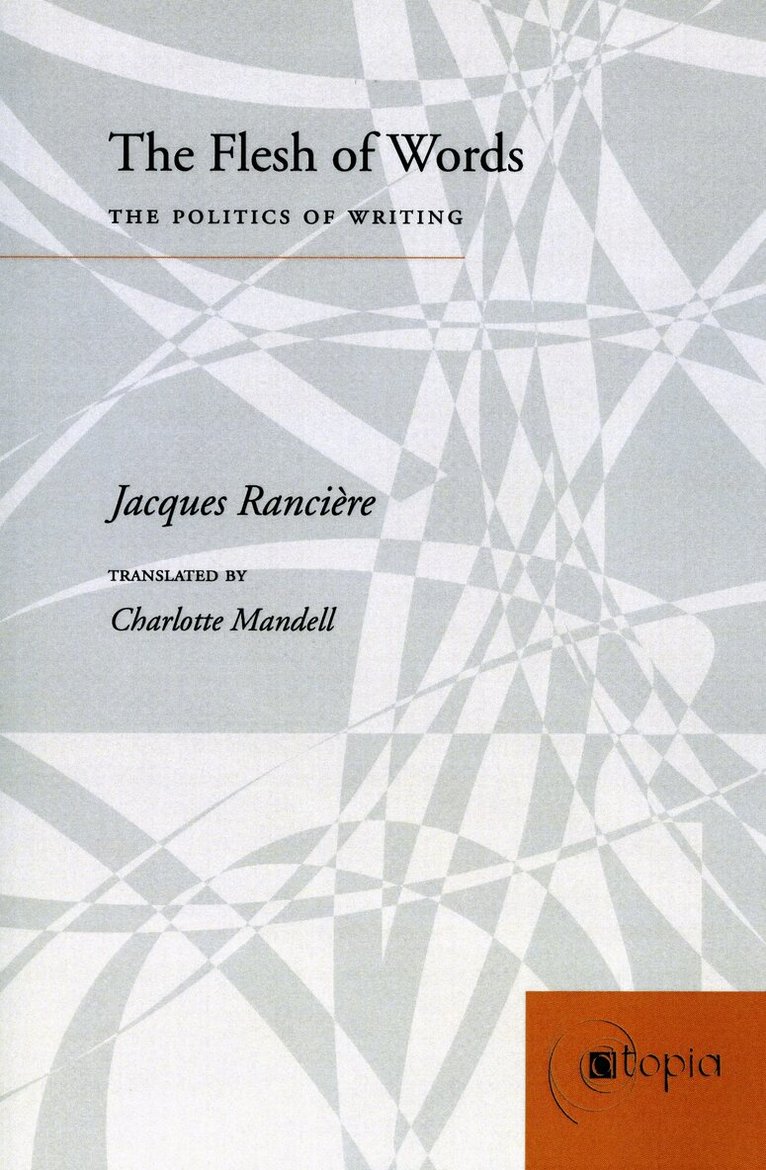
This new collection of challenging literary studies plays with a foundational definition of Western culture: the word become flesh. But the word become flesh is not, or no longer, a theological already-given. It is a millennial goal or telos toward which each text strives. Both witty and immensely erudite, Jacques Rancière leads the critical reader through a maze of arrivals toward the moment, perhaps always suspended, when the word finds its flesh. That is what he, a valiant and good-humored companion to these texts, goes questing for through seven essays examining a wide variety of familiar and unfamiliar works. A text is always a commencement, the word setting out on its excursions through the implausible vicissitudes of narrative and the bizarre phantasmagorias of imagery, Don Quixote's unsent letter reaching us through generous Balzac, lovely Rimbaud, demonic Althusser. The word is on its way to an incarnation that always lies ahead of the writer and the reader both, in this anguished democracy of language where the word is always taking on its flesh.
296 kr
Skickas inom 7-10 vardagar
This new collection of challenging literary studies plays with a foundational definition of Western culture: the word become flesh. But the word become flesh is not, or no longer, a theological already-given. It is a millennial goal or telos toward which each text strives. Both witty and immensely erudite, Jacques Rancière leads the critical reader through a maze of arrivals toward the moment, perhaps always suspended, when the word finds its flesh. That is what he, a valiant and good-humored companion to these texts, goes questing for through seven essays examining a wide variety of familiar and unfamiliar works. A text is always a commencement, the word setting out on its excursions through the implausible vicissitudes of narrative and the bizarre phantasmagorias of imagery, Don Quixote's unsent letter reaching us through generous Balzac, lovely Rimbaud, demonic Althusser. The word is on its way to an incarnation that always lies ahead of the writer and the reader both, in this anguished democracy of language where the word is always taking on its flesh.
1 184 kr
Skickas inom 10-15 vardagar
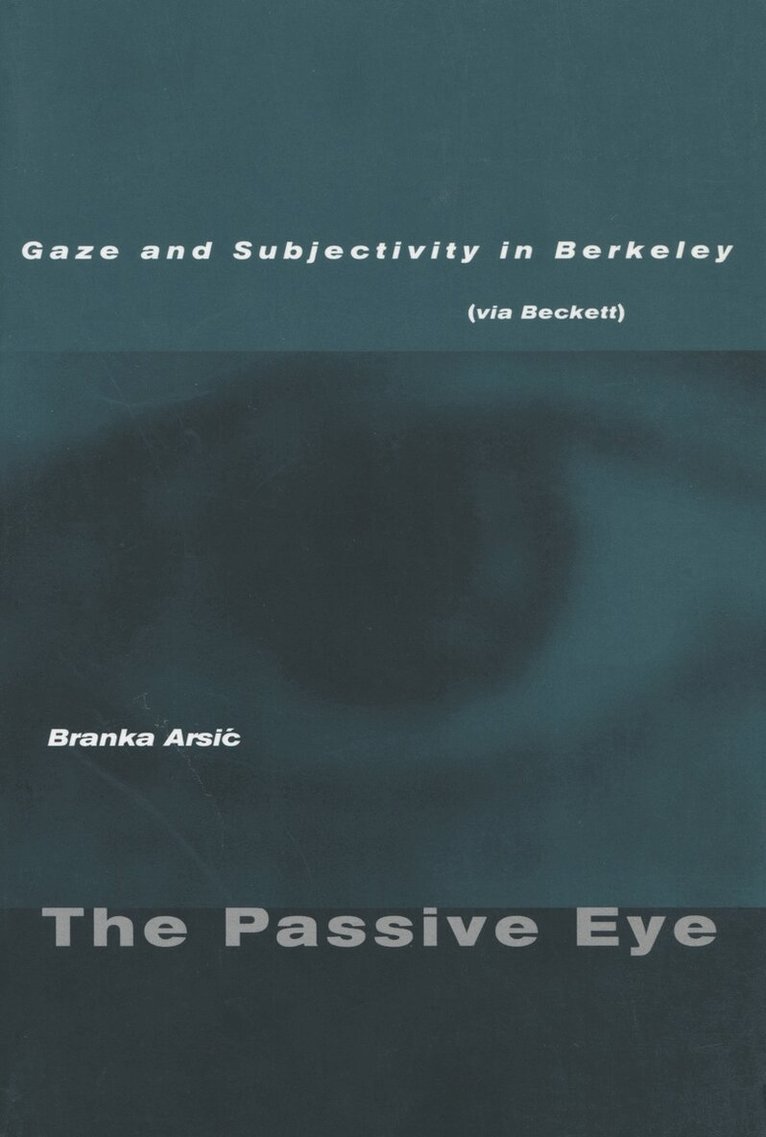
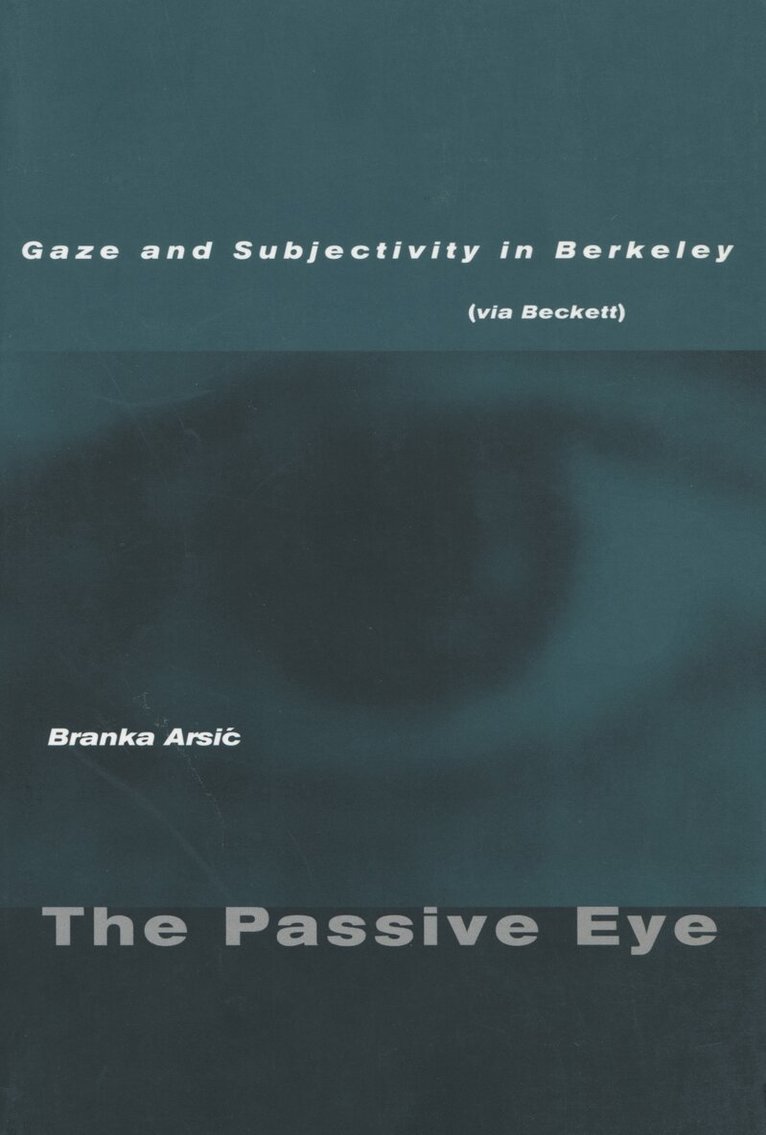
The Passive Eye is a revolutionary and historically rich account of Berkeley's theory of vision. In this formidable work, the author considers the theory of the embodied subject and its passions in light of a highly dynamic conception of infinity. Arsic shows the profound affinities between Berkeley and Spinoza, and offers a highly textual reading of Berkeley on the concept of an "exhausted subjectivity." The author begins by following the Renaissance universe of vision, particularly the paradoxical elusive nature of mirrors, then shows how this conception of vision was translated into the optical devices and in what way the various ways of deception could be conceived. Reading Berkeley against the backdrop of competing theories, in relation to Leibniz, Spinoza, Newton, Malebranche, Hume, Locke, Molyneux and others, this book gives a meticulous historic reconstruction of Berkeley's theory. This excellent scholarly work presents Berkeley's theory in a new and radical light. The book, presented in three parts, begins by presenting the conceptions of vision prior to Berkeley's intervention. In the second part, the author moves through a careful study of Descartes' theory of vision to arrive at Berkeley. The third part addresses the author's version of Berkeley in which the eye and the image become inseparable due to the collapse of the universe of representation. The problem of vision becomes not that of representation, but of presentation. Through an erudite historic reading of Berkeley's theory and astute comparative assessments, the author uncovers Berkeley's place as a contemporary theoretician, corresponding with such thinkers as Deleuze, Lacan, Foucault, and Derrida.
288 kr
Skickas inom 10-15 vardagar
The Passive Eye is a revolutionary and historically rich account of Berkeley's theory of vision. In this formidable work, the author considers the theory of the embodied subject and its passions in light of a highly dynamic conception of infinity. Arsic shows the profound affinities between Berkeley and Spinoza, and offers a highly textual reading of Berkeley on the concept of an "exhausted subjectivity." The author begins by following the Renaissance universe of vision, particularly the paradoxical elusive nature of mirrors, then shows how this conception of vision was translated into the optical devices and in what way the various ways of deception could be conceived. Reading Berkeley against the backdrop of competing theories, in relation to Leibniz, Spinoza, Newton, Malebranche, Hume, Locke, Molyneux and others, this book gives a meticulous historic reconstruction of Berkeley's theory. This excellent scholarly work presents Berkeley's theory in a new and radical light. The book, presented in three parts, begins by presenting the conceptions of vision prior to Berkeley's intervention. In the second part, the author moves through a careful study of Descartes' theory of vision to arrive at Berkeley. The third part addresses the author's version of Berkeley in which the eye and the image become inseparable due to the collapse of the universe of representation. The problem of vision becomes not that of representation, but of presentation. Through an erudite historic reading of Berkeley's theory and astute comparative assessments, the author uncovers Berkeley's place as a contemporary theoretician, corresponding with such thinkers as Deleuze, Lacan, Foucault, and Derrida.