AL-SHARK - University of Tsukuba: Studies for West Asian Archaeology – serie
Visar alla böcker i serien AL-SHARK - University of Tsukuba: Studies for West Asian Archaeology. Handla med fri frakt och snabb leverans.
2 produkter
2 produkter
Del 4 - AL-SHARK - University of Tsukuba: Studies for West Asian Archaeology
Neolithic Lithic Industry at Tell Ain El-Kerkh
Häftad, Engelska, 2020
905 kr
Skickas
Northwest Syria during the Neolithic period has been less well studied than the rest of the northern Levant, where Neolithisation first took place in the Near East. The Neolithic Lithic Industry at Tell Ain El-Kerkh presents the first attempt to unveil the Neolithisation process in northwest Syria, with the techno-typological studies of the flintstone implements from Tell Ain el-Kerkh in the Rouj basin in Idlib, which was an important large Neolithic site occupied from the from the 9th to the 7th millennium BC.Examination of the lithic record from Tell Ain el-Kerkh revealed techno-morphological changes in flint tools during the long Neolithic sequence from the Early Pre-Pottery Neolithic B (PPNB) to the end of the Pottery Neolithic. The author interprets such changes in stone tools in the socio-economic context of the Neolithic. Through the comparison between the data obtained from Tell Ain el-Kerkh and other Neolithic sites in the northern Levant, the regional characteristics of northwest Syria during the Neolithic period are highlighted. In the end, two important issues in the Neolithic Levant, diffusion of the PPNB culture and the PPNB collapse, are discussed based on the results of this study.This volume includes substantial original data, drawings, and analysis of lithics from Neolithic sites in Syria, which will be useful for future discussion of the changes in material culture in relation with the Neolithisation process in the Near East.
Del 5 - AL-SHARK - University of Tsukuba: Studies for West Asian Archaeology
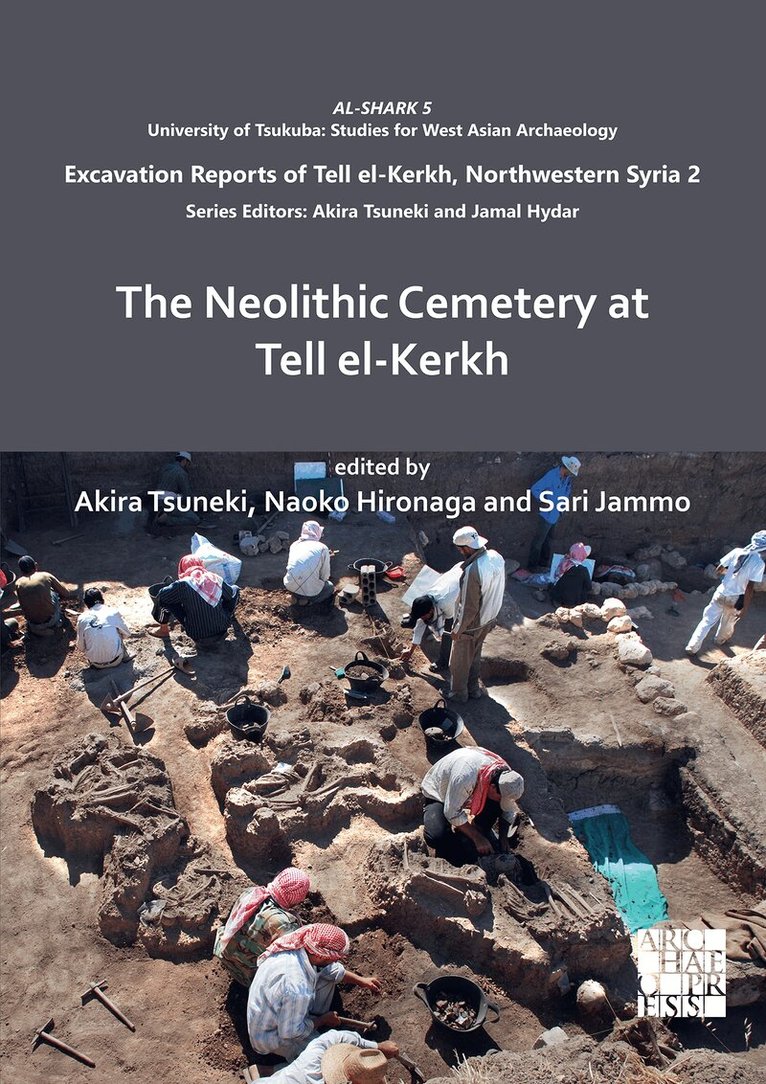
Neolithic Cemetery at Tell el-Kerkh
Häftad, Engelska, 2022
946 kr
Skickas
The Neolithic Cemetery at Tell el-Kerkh is the second volume of the final reports on the excavations at Tell el-Kerkh, northwest Syria. The 12-year field campaigns at Tell el-Kerkh yielded several unexpected archaeological findings. The existence of the oldest cultural deposits from the early Pre-Pottery Neolithic B period (c. 8700-8300 BC) in northwestern Syria was revealed. The investigations also revealed that several large and complex societies had existed from the late Pre-Pottery Neolithic B to the middle Pottery Neolithic periods (c. 7600–6000 BC). One of the most conspicuous findings of the excavations at Tell el-Kerkh was the discovery of a Pottery Neolithic cemetery dating between c. 6400 and 6100 BC, which makes it one of the oldest outdoor communal cemeteries in West Asia. This book focuses specifically on this cemetery. It reports the discovery of over 240 burials and discusses the process of the formation and development of the cemetery. Initially used for traditional house burials in a corner of the settlement, the cemetery eventually became a graveyard that was physically separated from the residential buildings and consisted only of graves. In other words, burials that were deeply related to each house developed into an outdoor communal cemetery of the settlement. The Kerkh Neolithic cemetery was a precursor to the wider development of communal cemeteries in West Asia, and its investigation provides us with a deeper understanding of Neolithic society in West Asia.