American Poetry Recovery Series - Böcker
Visar alla böcker i serien American Poetry Recovery Series. Handla med fri frakt och snabb leverans.
10 produkter
10 produkter
478 kr
Skickas inom 7-10 vardagar
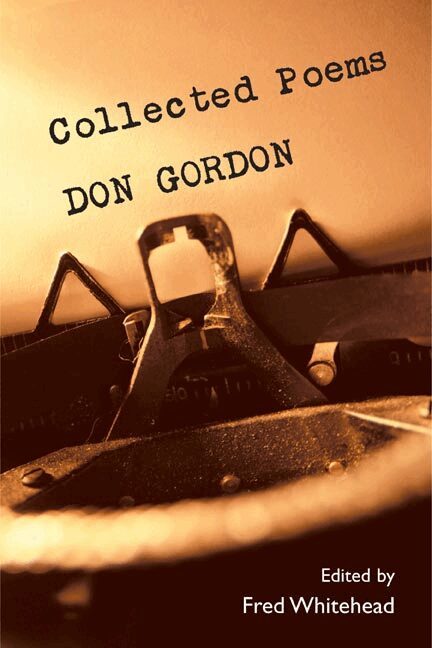
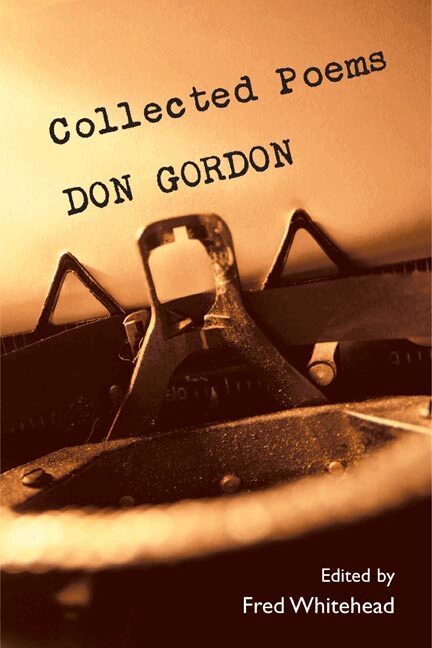
This long-overdue collection, which gathers together more than two hundred poems written over a span of six decades, along with an extended biographical analysis by Fred Whitehead, permits a comprehensive assessment of the work of a man Thomas McGrath described as "one of the very best of the revolutionary poets." Don Gordon made his name in the 1930s as a passionate and outspoken political poet, his work being published in the most prestigious American journals. In spite of his growing literary reputation he was called before the Un-American Activities Committee of the U.S. House or Representatives in September, 1951. Due to his openly communist views and his reluctance to give the committee names of fellow radical writers, Gordon was blacklisted from employment in the film industry. He devoted his time to writing poems, despite the difficulty of finding a wide audience for them. Many of Gordon's poems are suffused with themes of revolution and political activism, but this collection showcases the breadth of the subjects he addressed in his sixty years of writing, expressed with a rigorous aesthetic sensibility in a style that incorporates diverse influences, including modernism and surrealism. "Don Gordon is great," Meridel LeSueur wrote, "because he shows the vigorous and wondrous strength of the people." With this complete collection of his poems, readers can at last experience the full range of this vigorous and challenging writer.
1 524 kr
Skickas inom 7-10 vardagar
Although best known for his tales, Edgar Allan Poe himself thirsted for fame primarily as a poet. This volume, assembled by the eminent Poe scholar Thomas Ollive Mabbott, is the single most authoritative edition of Poe's poems ever published: 101 poems and their variants, including such gems as "The Raven," "The Bells," and "Annabel Lee," as well as previously uncollected poems, fragments, verses he published in reviews he wrote, and poems attributed to him.In this exhaustive collection, Mabbott takes a fresh look at these texts, aiming "to present what [Poe] wrote, to explain why he wrote it, to tell what he meant when he wrote it (if that be in any way obscure), and to give a history of its publication." Containing the definitive poems as well as pertinent biographical background, full annotations, and a meticulous enumeration of successive texts and variants, Mabbott's edition stands as a firm foundation for Poe scholarship as well as for more general appreciation.
1 160 kr
Skickas inom 7-10 vardagar
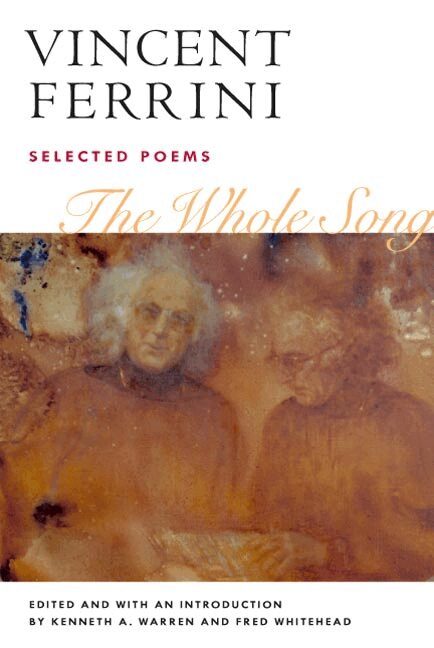
With a voice emerging from class tensions, labor struggles, the Great Depression, and World War II, Vincent Ferrini lived as a people's poet crying out for an end to exploitation and organized greed. Radical Christian gnosis and the conviction that poetry should be more than a display of word-craft distinguished him from poets like T. S. Eliot, infusing his work with dynamic images of Christ as a fighter, a revolutionary, and a martyr in opposing the mighty for the sake of the poor.
645 kr
Skickas inom 7-10 vardagar
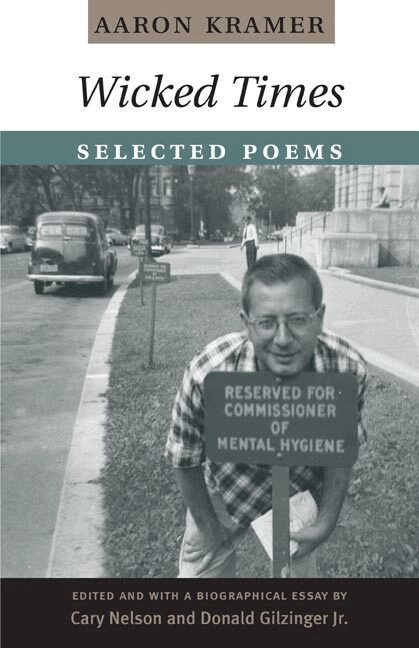
This is the collected work of a major, versatile American poet passionately engaged with everything from the Holocaust and the Spanish Civil War to his love for New York City and his wife. The editors argue that his long poem sequence, Denmark Vesey, stands as the most ambitious poem about African American history ever written by a white American. Wicked Times includes previously unpublished poems and the first detailed account of Kramer's life, along with photos and extensive explanatory notes.
235 kr
Skickas inom 7-10 vardagar
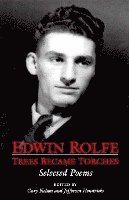
"Rolfe's voice is one that many of us feared was buried forever.. . . He stands in the forefront of an entire 'lost generation' of left-wingwriters who fused artistic craft with irrepressible political commitment."-- Alan Wald, author of The Responsibility of Intellectuals: Selected Essays on Marxist Traditions in Cultural Commitment"[Rolfe's] Spanish Civil War poems may be the best written by anAmerican writer, and his McCarthy era poems brilliantly counteract theoften apolitical, rather socially aseptic poetry of their time."-- Reginald Gibbons, editor of TriQuarterlyThe radical journalist and poet Edwin Rolfe wrote eloquently of the hardshipsof the Great Depression, the experience of war, and McCarthy era witch-hunts.More than fifty of his best poems--some beautifully lyrical and some devastatinglysatiric--are included in Trees Became Torches. Rolfe was widelyknown as the poet laureate of the Abraham Lincoln Battalion, the Americanswho volunteered to help defend the elected Spanish government during the1936-39 civil war.
326 kr
Skickas inom 7-10 vardagar
This long-overdue collection, which gathers together more than two hundred poems written over a span of six decades, along with an extended biographical analysis by Fred Whitehead, permits a comprehensive assessment of the work of a man Thomas McGrath described as "one of the very best of the revolutionary poets." Don Gordon made his name in the 1930s as a passionate and outspoken political poet, his work being published in the most prestigious American journals. In spite of his growing literary reputation he was called before the Un-American Activities Committee of the U.S. House or Representatives in September, 1951. Due to his openly communist views and his reluctance to give the committee names of fellow radical writers, Gordon was blacklisted from employment in the film industry. He devoted his time to writing poems, despite the difficulty of finding a wide audience for them. Many of Gordon's poems are suffused with themes of revolution and political activism, but this collection showcases the breadth of the subjects he addressed in his sixty years of writing, expressed with a rigorous aesthetic sensibility in a style that incorporates diverse influences, including modernism and surrealism. "Don Gordon is great," Meridel LeSueur wrote, "because he shows the vigorous and wondrous strength of the people." With this complete collection of his poems, readers can at last experience the full range of this vigorous and challenging writer.
254 kr
Skickas inom 11-20 vardagar
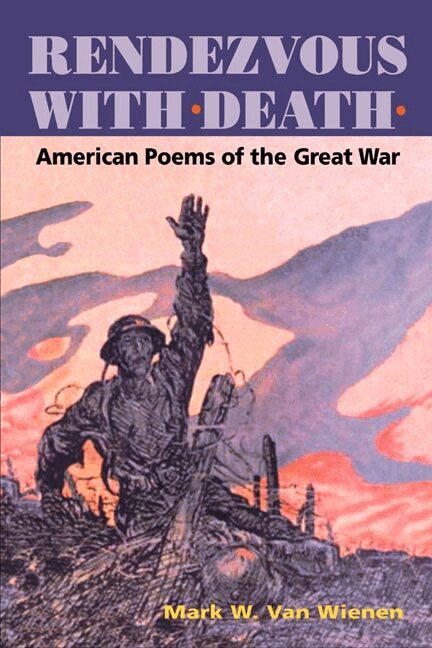
This masterfully assembled volume, arranged chronologically, reveals American poets' shifting, conflicting reactions to the war and highlights their efforts to shape U.S. policies and define American attitudes. In his introduction, Mark W. Van Wienen describes the rapid, politically charged responses possible in a culture attuned to poetry. His historical and biographical notes provide a sturdy framework for the study of poetry's role in social activism and change during the "war to end war." The most complete resource of its kind, Rendezvous with Death brings together poetry originally published in little magazines, labor journals, newspapers, and wartime anthologies. Alight with sorrow, grace, silliness, satire, pride, and anger, works by IWW members, sock poets, pacifists, and protestors take their places next to those by Edith Wharton, Alan Seeger, Wallace Stevens, James Weldon Johnson, Amy Lowell, and Claude McKay.
190 kr
Skickas inom 7-10 vardagar
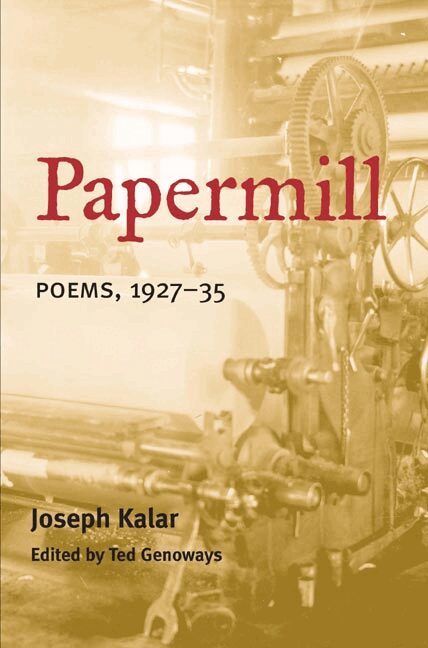
Unlike many of the protest poets of the Depression era, Joseph Kalar lived the workingman's life he wrote about. Though he produced some of the finest social protest writing of his era, the circumstances of Kalar's life--his tireless work in the unions, his long hours at the mill--meant that he wrote only occasionally and never published a book.Papermill is Kalar's most famous poem, a stark description of a shut-down factory. First published in 1931, the poem was praised by Max Eastman as "the rarest jewel so far produced by the ferment in America called proletarian poetry--and it is pure art."Stink from papermill, sulfer dioxide,burns the nose and wreathes the mindwith thoughts of beaters to be filledpumping jordans, swish swish of hot rolls,paper to be made, the crash of spruce,furred brances stabbing here and there,the arm caught pulpy in the rolls,the finger, lost . . .
281 kr
Skickas inom 7-10 vardagar
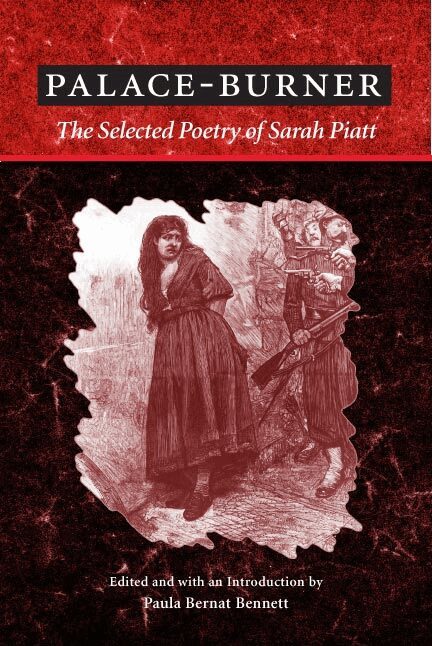
The unique and powerful voice of an extraordinary nineteenth-century woman poetSarah Morgan Bryan Piatt (1836-1919) now ranks as the strongest American woman poet of the nineteenth century after Emily Dickinson. Published heavily in all the period's most prestigious journals, Piatt was widely celebrated by her peers as a gifted stylist in the genteel tradition. This selected edition reveals Piatt's other side, a side that contemporary critics found more problematic: ironic, experimental, pushing the limits of Victorian language and the sentimental female persona. Spanning more than half a century, this collection reveals the "borderland temper" of Piatt's mind and art. As an expatriate southerner, Piatt voices guilt at her own past as the daughter of slave-holders and raw anguish at the waste of war; as an eleven-year "exile" in Ireland, she expresses her dismay at the indifference of the wealthy to the daily suffering of the poor. Her poetry, whether speaking of children, motherhood, marriage, or illicit love affairs, uses conventional language and forms but in ways that greatly broadened the range of what women's poetry could say. Going beyond and even contradicting the genteel aesthetic, Piatt's poetry moves toward an innovative kind of dramatic realism built on dialogue, an approach more familiar to modern readers, acquainted with Faulknerian polyvocal texts, than to her contemporaries, who were as ill at ease with complexity as they were with irony. This astutely edited selection of Piatt's mature work--much of it never before collected--explains why her "deviant poetics" caused her peers such discomfort and why they offer such fertile ground for study today. Illustrated with engravings from Harper's Weekly and Harper's Bazaar, both periodicals in which Piatt's work appeared, Palace-Burner marks the reemergence of one of the most interesting writers in American literary history.
254 kr
Skickas inom 11-20 vardagar
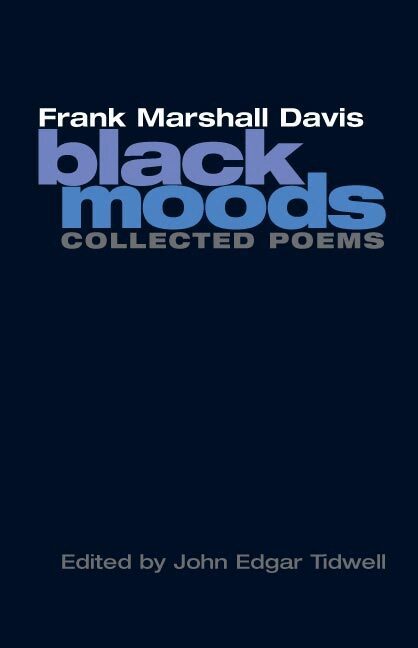
Black Moods collects for the first time all of Frank Marshall Davis’s extant published poems as well as his previously unpublished work. From sharp-edged sketches of Southside Chicago’s urban landscape to the prismatic world that lay beneath Hawaii’s placid surface, Davis’s muscular poems blend social, cultural, and political concerns--always shaped by his promise to “try to be as direct as good blues.” John Edgar Tidwell’s introduction examines both Davis’s poetry and his politics, presenting a subtle portrait of a complex writer devoted to exposing discriminatory practices and reaffirming the humanity of the common people.