American Profiles - Böcker
Visar alla böcker i serien American Profiles. Handla med fri frakt och snabb leverans.
7 produkter
7 produkter
1 413 kr
Skickas inom 5-8 vardagar
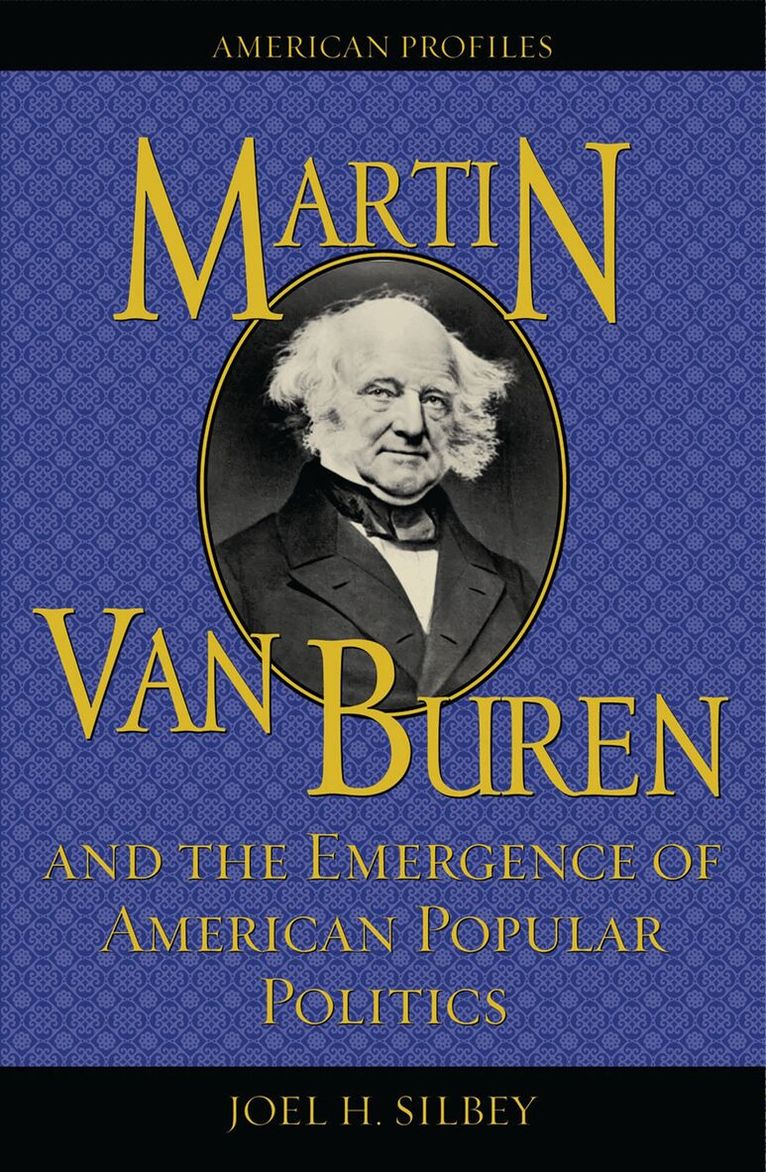
Martin Van Buren was a one-term president whose public life has long been overshadowed by the more fiery personalities of his day—Andrew Jackson, Henry Clay, Daniel Webster, and John C. Calhoun. Nevertheless, Van Buren was a transforming political figure in American history, one of the first of the new republic's professional politicians. In the early part of the nineteenth century, America was skeptical of popular politics, distrustful of political parties, and disdainful of political management. However, as prominent historian Joel H. Silbey demonstrates, Martin Van Buren took the lead among his contemporaries in remolding the old political order as he captured the New York state governorship, a seat in the United States Senate, and ultimately the Presidency. Silbey argues that Van Buren recognized the need for effective national political organization and, in the process, helped remake America's political culture. Martin Van Buren and the Emergence of American Popular Politics takes a fresh look at the life and political career of one of America's most often overlooked, yet most influential, public figures.
624 kr
Skickas inom 5-8 vardagar
Martin Van Buren was a one-term president whose public life has long been overshadowed by the more fiery personalities of his day—Andrew Jackson, Henry Clay, Daniel Webster, and John C. Calhoun. Nevertheless, Van Buren was a transforming political figure in American history, one of the first of the new republic's professional politicians. In the early part of the nineteenth century, America was skeptical of popular politics, distrustful of political parties, and disdainful of political management. However, as prominent historian Joel H. Silbey demonstrates, Martin Van Buren took the lead among his contemporaries in remolding the old political order as he captured the New York state governorship, a seat in the United States Senate, and ultimately the Presidency. Silbey argues that Van Buren recognized the need for effective national political organization and, in the process, helped remake America's political culture. Martin Van Buren and the Emergence of American Popular Politics takes a fresh look at the life and political career of one of America's most often overlooked, yet most influential, public figures.
893 kr
Skickas inom 5-8 vardagar
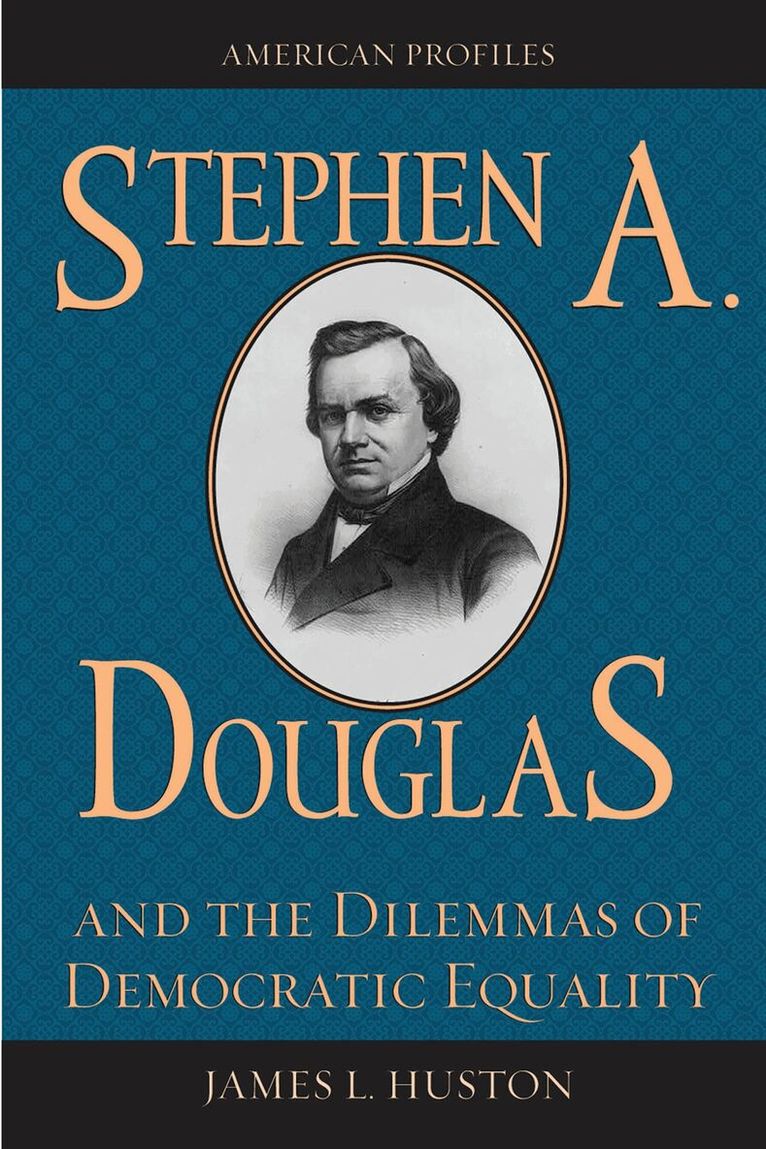
Perhaps best known for his debates with Abraham Lincoln and his role in introducing the controversial Kansas-Nebraska Act, Stephen A. Douglas was a central character in the political firestorm that culminated in the American Civil War. In this engaging new biography, James L. Huston explores the life, ideology, and historical importance of America's "Little Giant." Born in 1813, Douglas came of age during the great democratization of American life. This was a time when egalitarianism became the national creed and President Andrew Jackson stood forth as its champion. Huston sets Douglas in this social and political milieu, and examines the unfolding of the principles of democracy in and through his life. Douglas's political career as a state legislator, U.S. Congressman, and ultimately U.S. Senator from Illinois placed him at the center of the struggle over the meaning of democracy and equality at both the state and national level. The renown that his debates of 1858 with Lincoln of the Republican Party garnered is but an emblem of the status that Douglas had as a leader of the Democratic Party and as the representative of a specific interpretation of the Jacksonian legacy of democratic populism. Huston places Douglas's life within the current historiographical controversies regarding the antebellum period and updates our understanding of the role that Douglas played in the creation of the Illinois Democratic party, the development of the ideals of Manifest Destiny, the struggle over slavery's extension into the West, the meaning of popular sovereignty, and the legitimacy of peaceful secession. Extensively researched and carefully documented, the book guides readers to original archival materials via a detailed bibliography and a section on the sources of Douglas's more famous statements. Huston's impressive work is a novel and lively presentation that shows Douglas to be a figure paradigmatic of the political complexities of the United States during the antebellum era.
637 kr
Skickas inom 5-8 vardagar
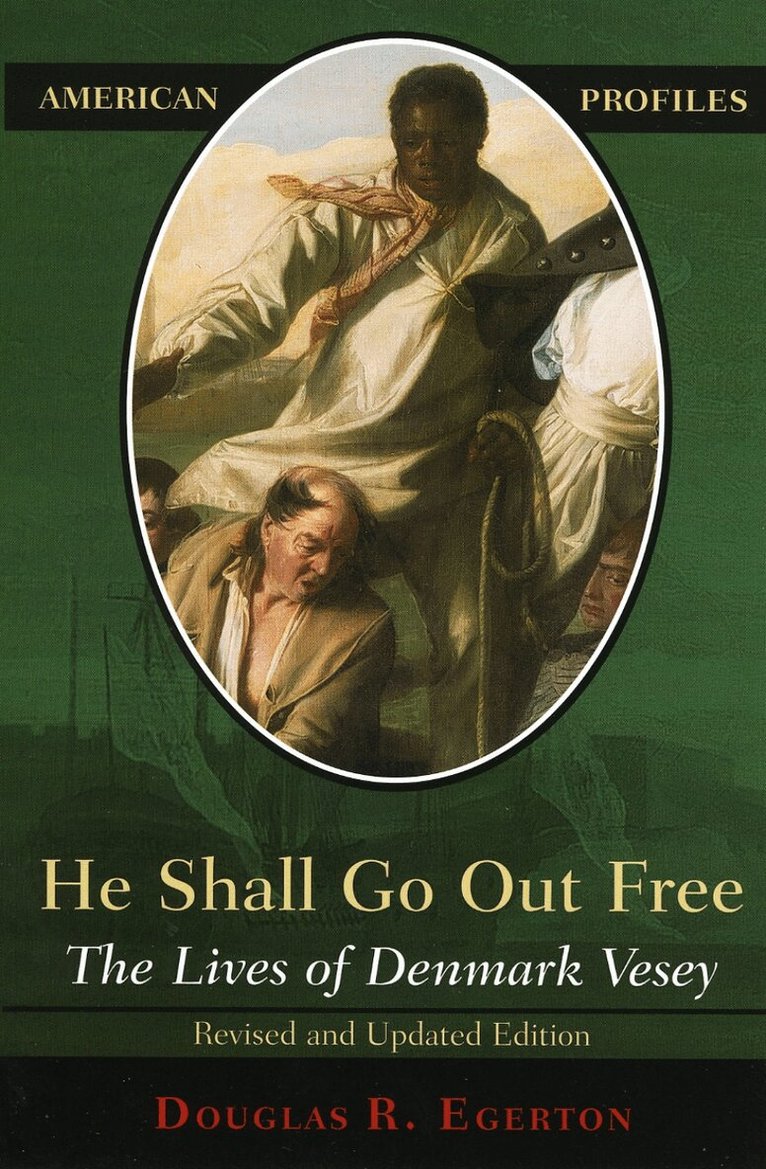
On July 2, 1822, Denmark Vesey was hanged in Charleston, S.C., for his role in planning one of the largest slave uprisings in the United States. During his long, extraordinary life Vesey played many roles—Caribbean field hand, cabin boy, chandler's man, house servant, proud freeman, carpenter, husband, father, church leader, abolitionist, revolutionary. Yet until his execution transformed him into a symbol of liberty, Vesey made it his life's work to avoid the attention of white authorities. Because he preferred to dwell in the hidden alleys of Charleston's slave community, Vesey remains as elusive as he is today celebrated, and his legend is often mistaken for fact. In this biography of the great rebel leader, Douglas R. Egerton employs a variety of historical sources—church records, court documents, travel accounts, and newspapers from America and Saint Domingue—to recreate the lost world of the mysterious Vesey. The revised and updated edition reflects the most recent scholarship on Vesey, and a new afterword by the author explores the current debate about the existence of the 1822 conspiracy. If Vesey's plot was unique in the annals of slave rebellions in North America, it was because he was unique; his goals, as well as the methods he chose to achieve them, were the product of a hard life's experience.
622 kr
Tillfälligt slut
At the time of his death in 1925, William Jennings Bryan was, as Henry Steele Commager wrote, "the most representative American of his time." To understand Bryan is to understand the United States on the cusp of modernity as regionalism declined, national political and economic institutions expanded, and the urban way of life began to eclipse the rural. Bryan's time, as today, was one of profound transition and tumult in the United States. The late nineteenth century and early twentieth century saw significant changes in economic, social, and political life which were to result in the modern nation we now recognize. At such a time Americans looked for moral leadership and yet there was no consensus about right and wrong in private or public life. In this uncertain era, Bryan stood forth as a political, moral, and economic reformer and sounded his trumpet for the values of the common man and woman as he so uncertainly understood them. As Gerald Leinwand skillfully shows, the true Bryan is not the caricature we have substituted for the man—the quixotic presidential candidate or the rural bumpkin who tried to match wits with Clarence Darrow on the matter of whether humans were descended from apes. In this important new study of Bryan's life, we find a reformer and politician of compelling power who stood at the center of American political life for thirty years. A Christian fundamentalist and a populist, Bryan was a lively mixture of Protestant revivalism and Jacksonian democracy—rural in upbringing, western in sentiment, and often a disappointed outsider to the political establishment. Best known for his fiery monetary policy crusade against the gold standard, Bryan also favored women's suffrage, direct election of U.S. Senators, and government regulation of railroads. He was a populist whose death left the socialist Eugene V. Debbs unmoved and a conservative whose name was anathema to early twentieth century plutocrats. At the time of his death, no man in public life had more devoted followers and none had more political enemies than William Jennings Bryan. How could a man who was wrong so many times, and who voiced such disharmonious opinions, dominate American life for nearly three decades? In this engaging narrative, Leinwand takes a fresh look at William Jennings Bryan, his character, and his mental, spiritual, and intellectual development. The variety of views about Bryan and the uncertainty of Bryan's own accomplishments as a politician are, as Leinwand demonstrates, reflected in the larger tumult that was American society of the era. Leinwand also includes, in an epilogue, a discussion that has engaged the attention of scholars as to whether the Wizard of Oz was in effect an allegory for Bryan's failure in his campaign for silver.
544 kr
Skickas inom 10-15 vardagar
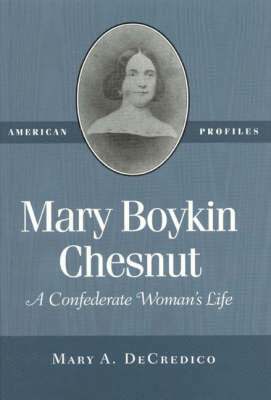
Born into the plantation gentry of South Carolina, granted the advantages of wealth, social position, and education by virtue of her family and her marriage to another prominent South Carolina family, Mary Chesnut has emerged as one of the key figures in American history, but not because of a career, her family, or her involvement in a humanitarian cause. Rather, Chesnut's significance comes from her extensive diary. Her commentary and reminiscences about the Confederate era provide an excellent window into the life and death of the Confederate nation. Her keen insight into political, economic, and social developments makes her an excellent source to understand the Southern homefront during the Civil War. Professor DeCredico uses Chesnut's life to address the role of women in the South, the ideology and leadership of the Southern white elite, and how Southern women in general—and Chesnut in particular—viewed the institution of slavery. Furthermore, DeCredico shows how Mary Chesnut's privileged position gave her an ideal perspective for observing and commenting on the events of the Confederacy.
291 kr
Skickas inom 10-15 vardagar
He was born in 1767, a subject of the British Empire, and died in 1848, a citizen of the United States and a member of Congress in company with Abraham Lincoln. In his dramatic career he had known George Washington and Benjamiin Franklin, La Fayette of France, Alexander I of Russia, and Castlereagh of Great Britain. He had both collaborated and quarrelled with Thomas Jefferson, Andrew Jackson, Henry Clay, John C. Calhoun, and Daniel Webster. In his lifetime Americans had fought for and established their independence, adopted a Constitution, fought two wars with Great Britain and one with Mexico. They had expanded south to the Rio Grande and west to the Pacific. At the time of his death, Adams was seen as a living connection between the present and past of the young republic and his passing severed one of the nation's last ties with its founding generation. As son of the second president of the United States, father of the minister to the Court of St. James, and grandfather to author Henry Adams, John Quincy Adams was part of an American dynasty. In his own career as secretary of state, President, senator, and congressman, Adams was as an actor in some of the most dramatic events of the nineteenth century. In this concise biography, Lynn Hudson Parsons masterfully chronicles the life of one of America's most absorbing figures. From the day in 1778 when, as a boy, he accompanied his father on a diplomatic mission to France, to his last years as an eloquent , cantankerous opponent of this country's foreign and domestic policies, Adams was rarely detached from public affairs. And yet, this biography reveals Adams as a man never truly at home anywhere—in Washington he was stubborn and reclusive, in Europe he was a phlegmatic ideologue, a bulldog among spaniels. His story parallels America's own.