Bordering Religions: Concepts, Conflicts, and Conversations - Böcker
Visar alla böcker i serien Bordering Religions: Concepts, Conflicts, and Conversations. Handla med fri frakt och snabb leverans.
4 produkter
4 produkter
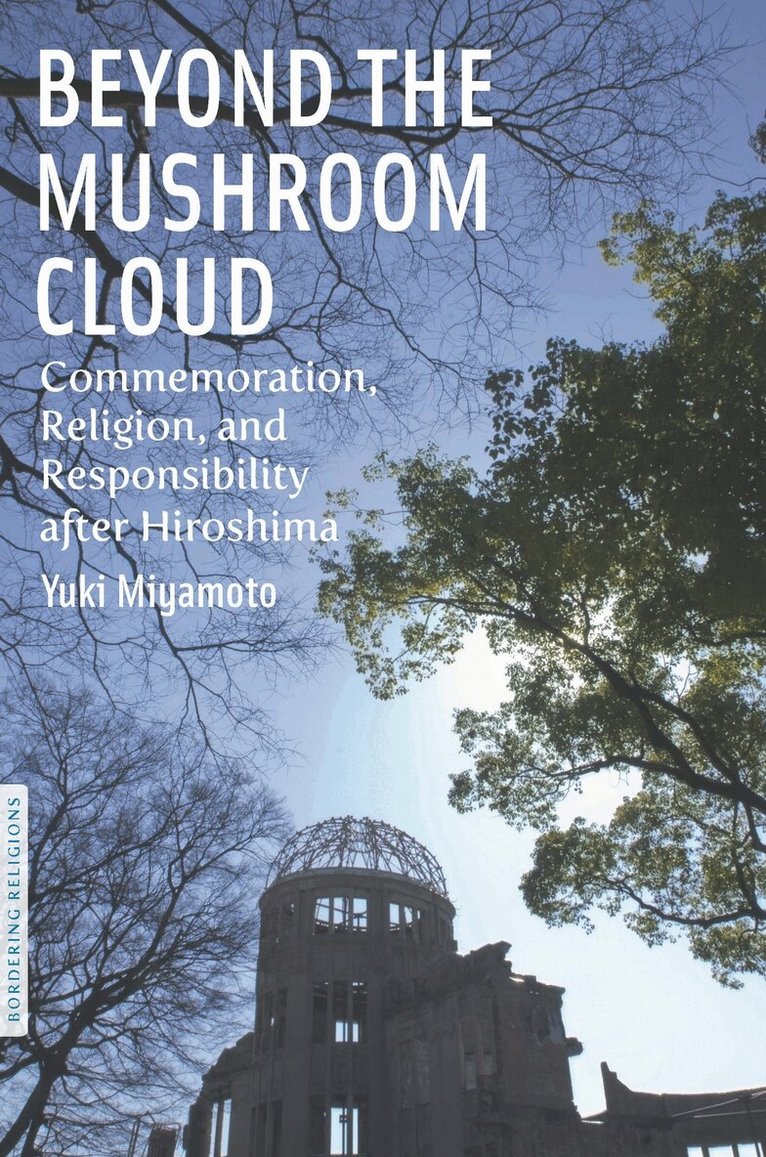
Beyond the Mushroom Cloud
Commemoration, Religion, and Responsibility After Hiroshima
Inbunden, Engelska, 2011
964 kr
Skickas inom 10-15 vardagar
This monograph explores the ethics and religious sensibilities of a group of the hibakusha (survivors) of 1945's atomic bombings. Unfortunately, their ethic of "not retaliation, but reconciliation" has not been widely recognized, perhaps obscured by the mushroom cloud—symbol of American weaponry, victory, and scientific achievement. However, it is worth examining the habakushas' philosophy, supported by their religious sensibilities, as it offers resources to reconcile contested issues of public memories in our contemporary world, especially in the post 9-11 era. Their determination not to let anyone further suffer from nuclear weaponry, coupled with critical self-reflection, does not encourage the imputation of responsibility for dropping the bombs; rather, hibakusha often consider themselves "sinners" (as with the Catholics in Nagasaki; or bonbu—unenlightened persons in the context of True Pure Land Buddhism in Hiroshima). For example, Nagai Takashi in Nagasaki's Catholic community wrote, "How noble, how splendid was that holocaust of August 9, when flames soared up from the cathedral, dispelling the darkness of war and bringing the light of peace!" He even urges that we "give thanks that Nagasaki was chosen for the sacrifice." Meanwhile, Koji Shigenobu, a True Pure Land priest, says that the atomic bombing was the result of errors on the part of the Hiroshima citizens, the Japanese people, and the whole of human kind. Based on the idea of acknowledging one's own fault, or more broadly one's sinful nature, the hibakusha's' ethic provides a step toward reconciliation, and challenges the foundation of ethics by obscuring the dichotomyies of right and the wrong, forgiver and forgiven, victim and victimizer. To this end, the methodology Miyamoto employs is moral hermeneutics, interpreting testimonies, public speeches, and films as texts, with interlocutors such as Avishai Margalit (philosopher), Sueki Fumihiko (Buddhist philosopher), Nagai Takashi (lay Catholic thinker), and Shinran (the founder of True Pure Land Buddhism).
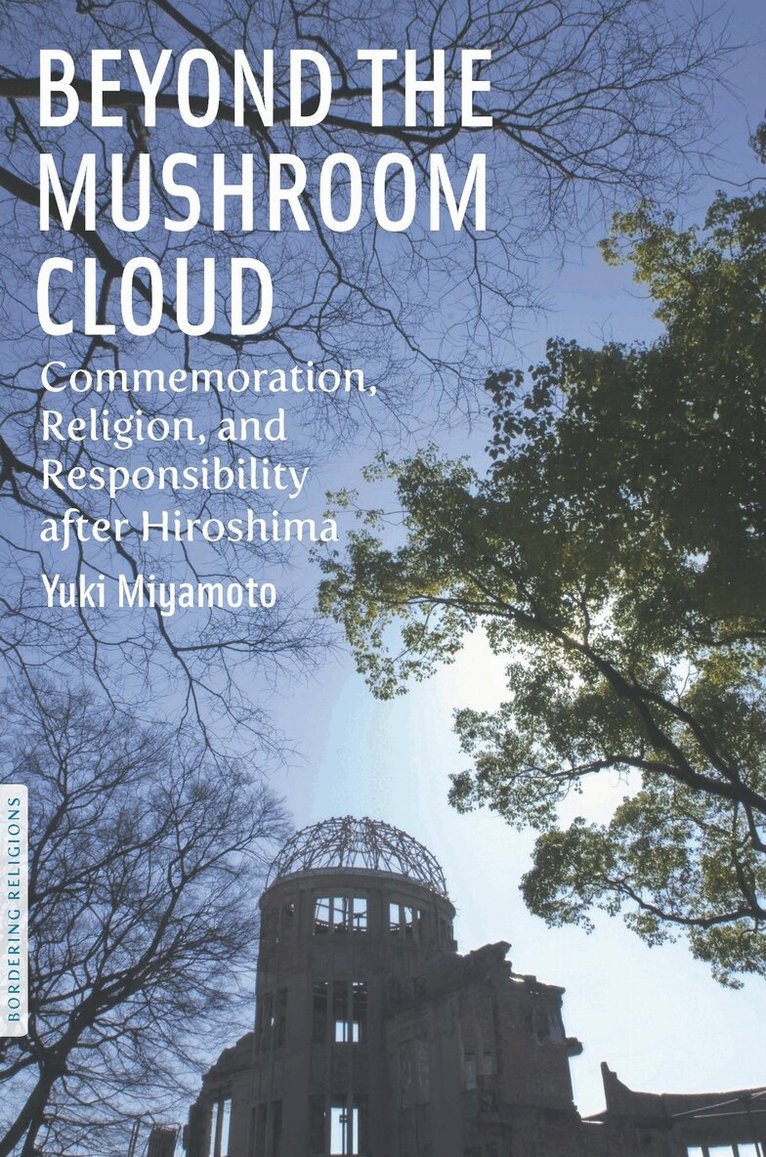
Beyond the Mushroom Cloud
Commemoration, Religion, and Responsibility After Hiroshima
Häftad, Engelska, 2011
405 kr
Skickas inom 10-15 vardagar
This monograph explores the ethics and religious sensibilities of a group of the hibakusha (survivors) of 1945's atomic bombings. Unfortunately, their ethic of "not retaliation, but reconciliation" has not been widely recognized, perhaps obscured by the mushroom cloud—symbol of American weaponry, victory, and scientific achievement. However, it is worth examining the habakushas' philosophy, supported by their religious sensibilities, as it offers resources to reconcile contested issues of public memories in our contemporary world, especially in the post 9-11 era. Their determination not to let anyone further suffer from nuclear weaponry, coupled with critical self-reflection, does not encourage the imputation of responsibility for dropping the bombs; rather, hibakusha often consider themselves "sinners" (as with the Catholics in Nagasaki; or bonbu—unenlightened persons in the context of True Pure Land Buddhism in Hiroshima). For example, Nagai Takashi in Nagasaki's Catholic community wrote, "How noble, how splendid was that holocaust of August 9, when flames soared up from the cathedral, dispelling the darkness of war and bringing the light of peace!" He even urges that we "give thanks that Nagasaki was chosen for the sacrifice." Meanwhile, Koji Shigenobu, a True Pure Land priest, says that the atomic bombing was the result of errors on the part of the Hiroshima citizens, the Japanese people, and the whole of human kind. Based on the idea of acknowledging one's own fault, or more broadly one's sinful nature, the hibakusha's' ethic provides a step toward reconciliation, and challenges the foundation of ethics by obscuring the dichotomyies of right and the wrong, forgiver and forgiven, victim and victimizer. To this end, the methodology Miyamoto employs is moral hermeneutics, interpreting testimonies, public speeches, and films as texts, with interlocutors such as Avishai Margalit (philosopher), Sueki Fumihiko (Buddhist philosopher), Nagai Takashi (lay Catholic thinker), and Shinran (the founder of True Pure Land Buddhism).
1 057 kr
Skickas inom 10-15 vardagar
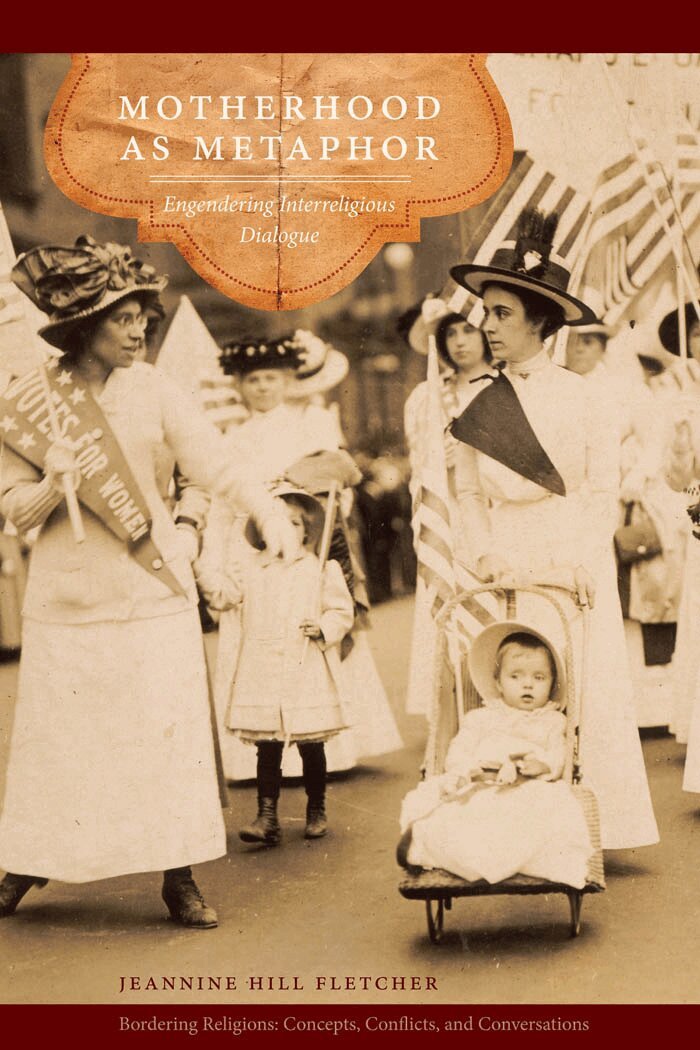
Who is my neighbor? As our world has increasingly become a single place, this question posed in the gospel story is heard as an interreligious inquiry. Yet studies of encounter across religious lines have largely been framed as the meeting of male leaders. What difference does it make when women's voices and experiences are the primary data for thinking about interfaith engagement?Motherhood as Metaphor draws on three historical encounters between women of different faiths: first, the archives of the Maryknoll Sisters working in China before World War II; second, the experiences of women in the feminist movement around the globe; and third, a contemporary interfaith dialogue group in Philadelphia. These sites provide fresh ways of thinking about our being human in the relational, dynamic messiness of our sacred, human lives.Each part features a chapter detailing the historical, archival, and ethnographic evidence of women's experience in interfaith contact through letters, diaries, speeches, and interviews of women in interfaith settings. A subsequent chapter considers the theological import of these experiences, placing them in conversation with modern theological anthropology, feminist theory, and theology. Women's experience of motherhood provides a guiding thread through the theological reflections recorded here. This investigation thus offers not only a comparative theology based on believers' experience rather than on texts alone but also new ways of conceptualizing our being human. The result is an interreligious theology, rooted in the Christian story but also learning across religious lines.
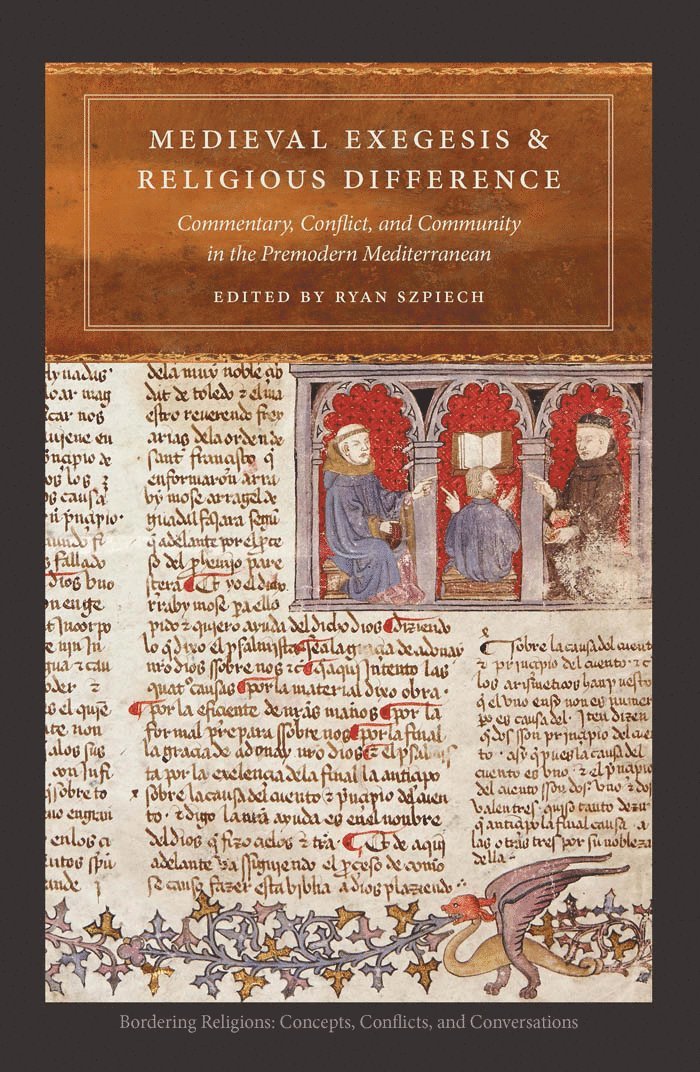
Medieval Exegesis and Religious Difference
Commentary, Conflict, and Community in the Premodern Mediterranean
Inbunden, Engelska, 2015
636 kr
Skickas inom 7-10 vardagar
Jews, Christians, and Muslims all have a common belief in the sanctity of a core holy scripture, and commentary on scripture (exegesis) was at the heart of all three traditions in the Middle Ages. At the same time, because it dealt with issues such as the nature of the canon, the limits of acceptable interpretation, and the meaning of salvation history from the perspective of faith, exegesis was elaborated in the Middle Ages along the faultlines of interconfessional disputation and polemical conflict. This collection of thirteen essays by world-renowned scholars of Judaism, Christianity, and Islam explores the nature of exegesis during the High and especially the Late Middle Ages as a discourse of cross-cultural and interreligious conflict, paying particular attention to the commentaries of scholars in the western and southern Mediterranean from Iberia and Italy to Morocco and Egypt.Unlike other comparative studies of religion, this collection is not a chronological history or an encyclopedic guide. Instead, it presents essays in four conceptual clusters ("Writing on the Borders of Islam," "Jewish-Christian Conflict," "The Intellectual Activity of the Dominican Order," and "Gender") that explore medieval exegesis as a vehicle for the expression of communal or religious identity, one that reflects shared or competing notions of sacred history and sacred text. This timely book will appeal to scholars and lay readers alike and will be essential reading for students of comparative religion, historians charting the history of religious conflict in the medieval Mediterranean, and all those interested in the intersection of Jewish,Christian, and Muslim beliefs and practices.