Studies in Crime, Law, and Criminal Justice – Serie
Visar alla böcker i serien Studies in Crime, Law, and Criminal Justice. Handla med fri frakt och snabb leverans.
4 produkter
4 produkter
Del 1 - Studies in Crime, Law, and Criminal Justice
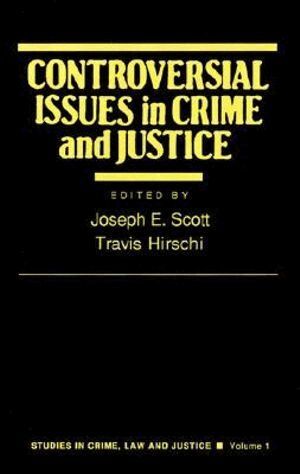
Controversial Issues in Crime and Justice
Häftad, Engelska, 1988
1 738 kr
Skickas inom 3-6 vardagar
Controversies in criminal justice are often framed in a "pro and con" format, emphasizing irreconcilable differences. Distinguished contributors to this original collection explore controversial issues in various parts of the criminal justice system, taking the approach that controversy should lead to recognition of common interests, and emphasizing a search for solutions. They examine various parts of the criminal justice system, beginning with types of crime, then focusing on the police, the courts, and finally imprisonment and its alternatives. This thorough and lucid volume is indispensable for students, scholars, and professionals interested in criminal justice. "The issues highlighted provide a good guide to major concerns in criminal justice in the States at present, covering organized crime, medical fraud, links between rape and pornography availability, killing of people by the police, police 'sting' operations, the insanity defence, wrongful conviction, home incarceration with electronic monitoring, probation, legal challenges to prison overcrowding and selective incapacitating. . . . I'm sure most readers will find something of interest." --Labour Campaign for Criminal Justice "Scott and Hirschi provide a well-organized reader that will be useful to all those studying criminal justice--students, and funding agencies as well as professionals in the field." --Foundation News "Introduces subject matter not typically covered in criminal justice or criminology courses. . . . The text has much to offer the undergraduate students." --American Journal of Police
Del 7 - Studies in Crime, Law, and Criminal Justice
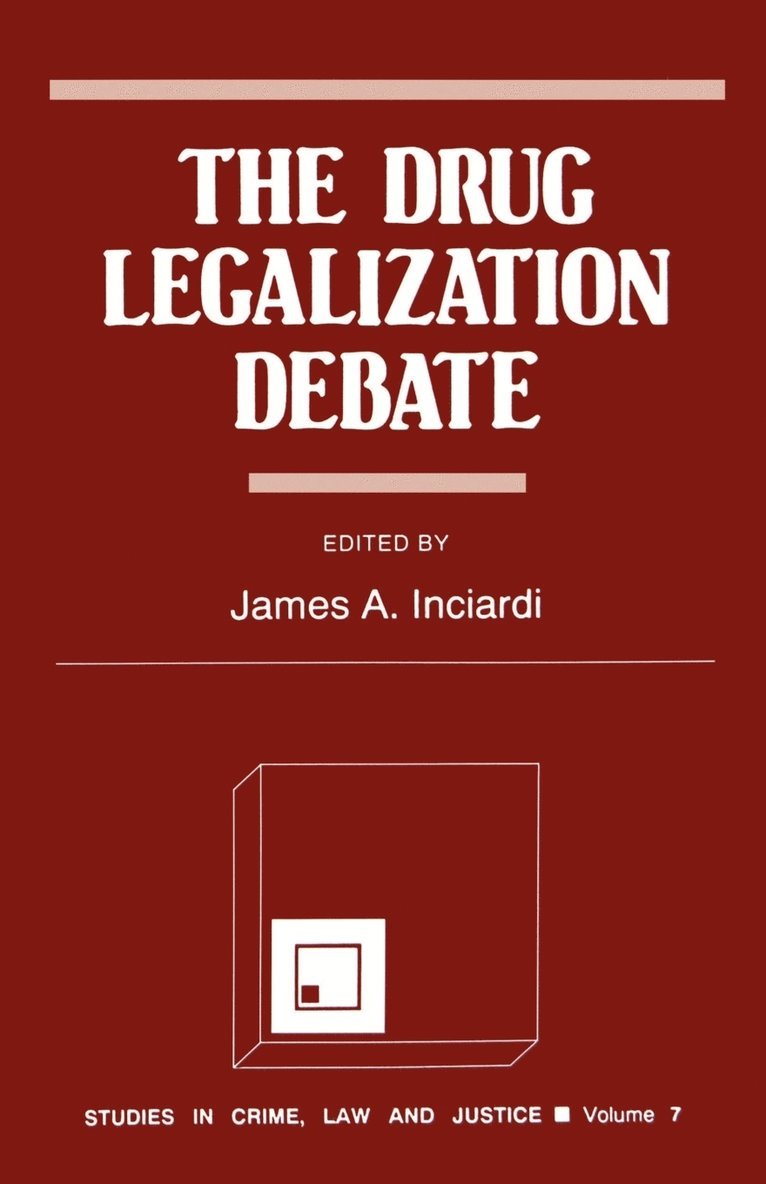
The Drug Legalization Debate
Häftad, Engelska, 1991
1 045 kr
Skickas inom 5-8 vardagar
Billions of dollars are spent each year to arrest and prosecute our nation''s drug traffickers and users, yet drug-related crime has only continued to rise. Day after day, news broadcasts bring horrifying reports of continued use of illegal drugs, cities overwhelmed with crack-cocaine, inner-city violence, street wars waged by drug traffickers, street crime, and corruption in law enforcement and other branches of government. What is the answer? Is there an effective form of intervention that can be used to combat the war on drugs? Or, should we turn to other alternatives, such as drug legalization or mandatory death sentences for drug traffickers? In The Drug Legalization Debate, the contributors offer several alternatives and address the major issues involved in the drug legalization debate. This volume delves into the history of drug use and abuse in America, and the federal government''s approach to drug control--including deterrence, treatment, education, and prevention. Articles confront topics such as the decriminalization of marijuana, the risk of a "war on drugs," an enlightened legalization policy and discussion of the ethical and legal dilemmas at stake. Originally published as a special issue in American Behavioral Scientist, The Drug Legalization Debate includes many chapters that have been updated and revised, as well as some new articles written especially for this book. Both students and professionals in substance abuse, criminology, sociology, psychology, and social work will find this book essential reading. "For anyone--professional or lay--interested in the current debate, this is a quite useful volume. The articles are especially suited for students and the book would be a good source for classroom use." --Contemporary Sociology "The book is up-to-date; the earliest article is from 1988, while the remainder were written specifically for this book. And it is indeed readable; there is very little legal jargon. In short, I highly recommend The Drug Legalization Debate to anyone interested in the issues surrounding the legalization of drugs." --Journal of Substance Abuse Treatment
Del 9 - Studies in Crime, Law, and Criminal Justice
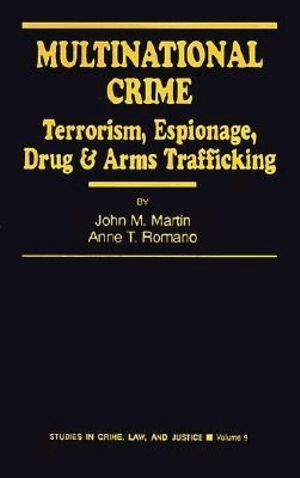
Multinational Crime
Terrorism, Espionage, Drug and Arms Trafficking
Häftad, Engelska, 1992
1 738 kr
Skickas inom 3-6 vardagar
When is a crime not a crime? Is espionage "spying" when national security is at stake? Do governments participate in arms trafficking when supplying revolutionaries the means to overthrow a despot? In a departure from past research, Martin and Romano explore multinational crime from a criminological perspective. Proceeding from an interactionist as well as a socio-cultural conflict theory, the authors argue that multinational crime is not random violence. Instead, they contend that these offenses are organized and systematic, cutting across national boundaries by involving a minimum of two countries. The starting block for more rigorous study of multinational systemic crime, this unusual volume emphasizes the value of studying organizations involved in these crimes, as well as the regional and global settings in which they operate. Chapter 1 relates multinational crime to the other major forms of crime studied by criminology and criminal justice. The following two chapters describe four types of multinational crime--drug trafficking, terrorism, espionage, and arms trafficking. Chapter 4 reviews the interrelationship of such crimes to the international scene; the role of values, interests, and power; and the part of "national security" interests in limiting information access. The authors then identify several problems in theory construction and policy development. The last chapter includes a description of three significant global regions: the Golden Triangle of Southeast Asia, the Middle East, and the Andean region of Colombia, Bolivia, and Peru. Multinational Crime responds to a world paralyzed, held hostage by the perpetration of these horrific offenses. Professionals and students in the areas of criminology, political science, sociology, foreign policy, international relations, foreign affairs, and policy studies are sure to find this volume intense and vital reading. "For those interested in a compact, well-written treatise on the subjects of terrorism, espionage, and drugs and arms trafficking and their interrelationships, this book will prove invaluable. . . .Starting from issues related to definitional and perspective problems, the authors set forth a paradigm that challenges many of the accepted approaches to studying multinational criminal activity. . . .Of particular interest is the expanding role played by governments, and the point at which their actions become criminal, as when they compound criminality by overlooking one criminal act in order to stop another crime. . . .This book should draw the attention of both practitioners and scholars, as well as policy-makers, for the authors raise a number of compelling arguments for a new approach to a better understanding of the threat of multinational crime." --Criminal Justice International "I congratulate you both [John M. Martin and Anne T. Romano] on an invaluable contribution to the study of multinational crime, and the conceptual views you express in its pages--which I fully support. These views are having a profound effect on the shaping of our operational policy." --Colonel A. D. Couperin, International Data Evaluation Program
Del 10 - Studies in Crime, Law, and Criminal Justice
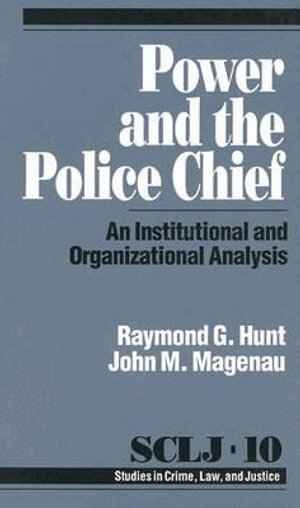
Power and the Police Chief
An Institutional and Organizational Analysis
Häftad, Engelska, 1993
1 738 kr
Skickas inom 3-6 vardagar
What does a police chief do, exactly? Little has been written and little is known about today's police chief. An institutional treatment of American police that focuses on the person and function of the police chief, Power and the Police Chief thoroughly describes the role of the police chief in the contemporary urban setting. The authors utilize institutional theory as a framework for analyzing the police-in-society. From this perspective, they review long-term tendencies toward the rationalist modernization of American police agencies and the ongoing "professionalization," unionization, and bureaucratization of police work today, a process that is resulting in entirely new law-enforcement models. They highlight the internal and external conflicts and power struggles that converted police organizations into tension-filled arenas. At stake in these conflicts, the authors argue, is the fundamental definition of police work. New policing paradigms have emerged that would move it away from rule-based, law-enforcement models toward service alternatives that emphasize the situational imperatives and discretionary essence of police work. Professors, students, and professionals in criminology, sociology, and organizational studies will find Power and the Police Chief a valuable asset.