Positions: Education, Politics, and Culture – serie
Visar alla böcker i serien Positions: Education, Politics, and Culture. Handla med fri frakt och snabb leverans.
10 produkter
10 produkter
1 987 kr
Skickas inom 10-15 vardagar
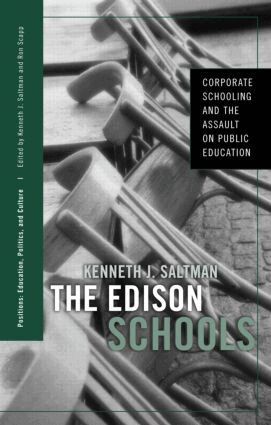
The story of the Edison Schools is a gripping tale of money, kids, and greed. What began in the 1980s as an enterprise to transform public schools quickly became a troubled business battling falling test scores and dismal stock prices. How did the most ambitious for-profit education company in U.S. history lose respect, money, and credibility in such a short time?Revealing how American McEducation went from glory to crisis, TheEdison Schools tracks entrepreneur Christopher Whittle's plan to introduce a standardized nationwide curriculum and cut administrative waste. Education specialist Kenneth J. Saltman finds that the critics' predictions came true in Edison schools across the country: Experienced teachers left in droves, students were virtually given answers to standardized tests to drive up scores, and difficult students were "counselored" out.
535 kr
Skickas inom 10-15 vardagar
The story of the Edison Schools is a gripping tale of money, kids, and greed. What began in the 1980s as an enterprise to transform public schools quickly became a troubled business battling falling test scores and dismal stock prices. How did the most ambitious for-profit education company in U.S. history lose respect, money, and credibility in such a short time?Revealing how American McEducation went from glory to crisis, TheEdison Schools tracks entrepreneur Christopher Whittle's plan to introduce a standardized nationwide curriculum and cut administrative waste. Education specialist Kenneth J. Saltman finds that the critics' predictions came true in Edison schools across the country: Experienced teachers left in droves, students were virtually given answers to standardized tests to drive up scores, and difficult students were "counselored" out.
2 053 kr
Skickas inom 10-15 vardagar
Affirmative Action examines the larger structure of institutional white privilege in education, and compares the magnitude of white racial preference with the policies typically envisioned when the term "racial preference" is used. In doing so, the book demonstrates that the American system of education is both a reflection of and a contributor to a structure of institutionalized racism and racial preference for the dominant majority.
641 kr
Skickas inom 10-15 vardagar
Affirmative Action examines the larger structure of institutional white privilege in education, and compares the magnitude of white racial preference with the policies typically envisioned when the term "racial preference" is used. In doing so, the book demonstrates that the American system of education is both a reflection of and a contributor to a structure of institutionalized racism and racial preference for the dominant majority.
2 053 kr
Skickas inom 10-15 vardagar
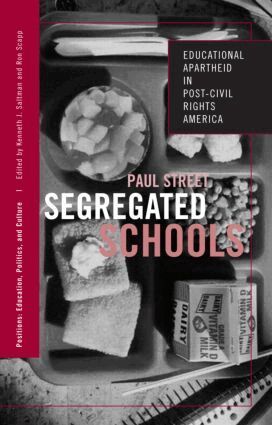
Fifty years after the US Supreme Court ruled that "separate but equal" was "inherently unequal," Paul Street argues that little progress has been made to meaningful reform America's schools. In fact, Street considers the racial make-up of today's schools as a state of de facto apartheid. With an eye to historical development of segregated education, Street examines the current state of school funding and investigates disparities in teacher quality, teacher stability, curriculum, classroom supplies, faculties, student-teacher ratios, teacher' expectations for students and students' expectations for themselves. Books in the series offer short, polemic takes on hot topics in education, providing a basic entry point into contemporary issues for courses and general; readers.
417 kr
Tillfälligt slut
Fifty years after the US Supreme Court ruled that "separate but equal" was "inherently unequal," Paul Street argues that little progress has been made to meaningful reform America's schools. In fact, Street considers the racial make-up of today's schools as a state of de facto apartheid. With an eye to historical development of segregated education, Street examines the current state of school funding and investigates disparities in teacher quality, teacher stability, curriculum, classroom supplies, faculties, student-teacher ratios, teacher' expectations for students and students' expectations for themselves. Books in the series offer short, polemic takes on hot topics in education, providing a basic entry point into contemporary issues for courses and general; readers.
2 516 kr
Skickas inom 10-15 vardagar
Pizza Hut's Book It! program rewards students with pizza for meeting their reading goals. Toys R Us paid a Kansas school five dollars for each student who took its toy survey. Cisco Systems donated internet access to a California elementary school, asking in return for the school choir to sing the company's praises while wearing Cisco t-shirts.Kids today face a barrage of corporate messages in the classroom. In School Commercialism , education expert Alex Molnar traces marketing in American schools over the last twenty-five years, raising serious questions about the role of private corporations in public education. Since the 1990s, Molnar argues, commercial activities have shaped the structure of the school day, influenced the curriculum, and determined whether children have access to computers and other technologies. He argues convincingly against advertisers' assertion that their contributions are a win-win proposition for cash-strapped schools and image-conscious companies.From the marketing of unhealthy foods to privatizing reforms such as the Edison Schools and Knowledge Universe, School Commercialism tracks trends that are more pervasive than many parents realize and shows how we might recapture schools to better serve the public interest.
535 kr
Skickas inom 10-15 vardagar
Pizza Hut's Book It! program rewards students with pizza for meeting their reading goals. Toys R Us paid a Kansas school five dollars for each student who took its toy survey. Cisco Systems donated internet access to a California elementary school, asking in return for the school choir to sing the company's praises while wearing Cisco t-shirts.Kids today face a barrage of corporate messages in the classroom. In School Commercialism , education expert Alex Molnar traces marketing in American schools over the last twenty-five years, raising serious questions about the role of private corporations in public education. Since the 1990s, Molnar argues, commercial activities have shaped the structure of the school day, influenced the curriculum, and determined whether children have access to computers and other technologies. He argues convincingly against advertisers' assertion that their contributions are a win-win proposition for cash-strapped schools and image-conscious companies.From the marketing of unhealthy foods to privatizing reforms such as the Edison Schools and Knowledge Universe, School Commercialism tracks trends that are more pervasive than many parents realize and shows how we might recapture schools to better serve the public interest.
1 723 kr
Skickas inom 10-15 vardagar
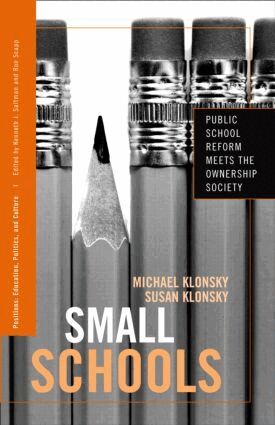
When education activists in New York, Chicago, and other urban school districts in the 1980s began the small-schools movement, they envisioned a new kind of public school system that was fair and equitable and that encouraged new relationships between teachers and students. When that movement for school reform ran head-on into the neo-conservative takeover of the Department of Education and its No Child Left Behind strategy for school change, a new model of federal power bent on the erosion of public space and the privatization of public schooling emerged. Michael and Susan Klonsky, educators who were among the early leaders of the small-schools movement, tell the story of how a once-promising model of creating new small and charter schools has been used by the neocons to reproduce many of the old inequities. Small Schools is the engaging story of what happens when the small-schools movement meets the Ownership Society.
376 kr
Skickas inom 10-15 vardagar
When education activists in New York, Chicago, and other urban school districts in the 1980s began the small-schools movement, they envisioned a new kind of public school system that was fair and equitable and that encouraged new relationships between teachers and students. When that movement for school reform ran head-on into the neo-conservative takeover of the Department of Education and its No Child Left Behind strategy for school change, a new model of federal power bent on the erosion of public space and the privatization of public schooling emerged. Michael and Susan Klonsky, educators who were among the early leaders of the small-schools movement, tell the story of how a once-promising model of creating new small and charter schools has been used by the neocons to reproduce many of the old inequities. Small Schools is the engaging story of what happens when the small-schools movement meets the Ownership Society.