Philosophy, Politics, and Economics - Böcker
Visar alla böcker i serien . Handla med fri frakt och snabb leverans.
8 produkter
8 produkter
1 469 kr
Skickas inom 3-6 vardagar
A mere two decades ago it was widely assumed that liberal democracy and the Open Society it created had decisively won their century-long struggle against authoritarianism. Although subsequent events have shocked many, F.A. Hayek would not have been surprised that we are in many ways disoriented by the society we have created. As he understood it, the Open Society was a precarious achievement in many ways at odds with our deepest moral sentiments. His path-breaking analyses argued that the Open Society runs against our evolved attraction to "tribalism" that the Open Society is too complex for moral justification; and that its self-organized complexity defies attempts at democratic governance. In his final, wide-ranging book, Gerald Gaus critically reexamines Hayek's analyses. Drawing on diverse work in social and moral science, Gaus argues that Hayek's program was manifestly prescient and strikingly sophisticated, always identifying real and pressing problems. Yet, Gaus maintains, Hayek underestimated the resources of human morality and the Open Society to cope with the challenges he perceived. Gaus marshals formal models and empirical evidence to show that our Open Society is grounded on moral foundations of human cooperation originating in our distant evolutionary past, but has built upon them a complex and diverse society that requires us to rethink both the nature of moral justification and the meaning of democratic self-governance. In these fearful, angry and inwardly-looking times, when political philosophy has itself become a hostile exchange between ideological camps, The Open Society and Its Complexities shows how moral and ideological diversity, so far from being the enemy of a free and open society, can be its foundation.
1 010 kr
Skickas inom 5-8 vardagar
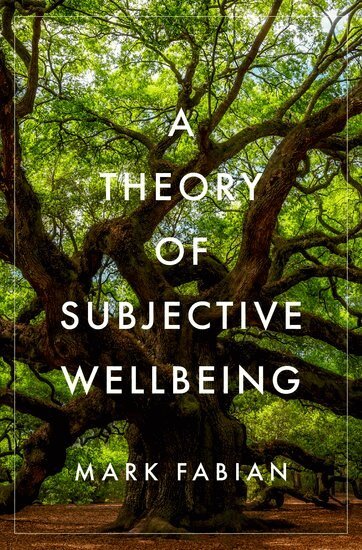
The study of 'subjective wellbeing' has seen explosive growth in recent decades, opening important new discourses in personality and social psychology, happiness economics, and moral philosophy. Now it is moving into the policy domain. In this it has arguably overstepped its limits. The shallow theoretical base of subjective wellbeing research, the limitations of its measurement instruments, and its ethical naivety makes policymaking on the basis of its findings a risky venture. The present volume is an attempt to shore up these weaknesses and set subjective wellbeing scholarship on a course for several more decades of growth and maturity. It presents a theory of subjective wellbeing in two parts. The first is the subjective wellbeing production function-a model of wellbeing as outcome. The second is the coalescence of being: a model of the self-actualisation process by which wellbeing is achieved. This two-part model integrates not only ideas in SWB studies and analytical philosophy, but also ideas from clinical, moral, and developmental psychology, continental philosophy, and welfare economics. Importantly, this theory is ethically sensitive, bridging the gap between psychological and philosophical perspectives on wellbeing that illuminates the complexities facing the application of subjective wellbeing in public policy. The book also provides a thorough review of various ways complex theories of subjective wellbeing can be studied empirically, and the hard trade offs between long surveys that capture the richness of the concept and the short surveys that are feasible in the context of social surveys and policy analysis.
875 kr
Skickas inom 5-8 vardagar
Called the "the most important number you've never heard of" by leading environmental economists, the social cost of carbon (SCC) aims to capture in a precise number the harm caused by emitting a single ton of carbon dioxide into the atmosphere. In The Social Cost of Carbon, J. Paul Kelleher offers a systematic analysis of the social cost of carbon, its theoretical basis, and its proper role in climate economics and climate policy design. The book explains that the SCC is not one concept but four, each of which is addressed to a distinct task in climate economics. Moreover, these concepts can be sorted into two families that correspond to the two branches of welfare economics, social choice theory and general equilibrium theory. Kelleher draws on these radically different theoretical frameworks to explain how a mathematically identical pair of SCC concepts can emerge from each. He then argues that the analytical power of each SCC concept is limited by its inability to fully capture the ethical considerations that bear on responsible climate policy. The book concludes by explaining how some SCC concepts can and should be put to work in real-world climate change policy analysis-providing practical advice for translating the SCC into tangible change.
1 456 kr
Skickas inom 3-6 vardagar
This highly original and innovative book is the first to comprehensively engage the ideas of the French social theorist and philosopher Michel Foucault from within the tradition of liberal political economy. Divided into two parts the book commences by demonstrating important commonalities between Foucault's ideas and those of a neglected 'post-modern' stream in liberal political and economic thought. These ideas draw on a social theory emphasising a culturally situated individualism; a philosophy of science highly critical of socio-economic 'scientism' and 'expert rule'; and an understanding of freedom as an open-ended process of 'self-creation' in the face of cultural power relations--a freedom threatened by alignments between state power and more decentred manifestations of power. Part two combines the tools of Foucault's critical social theory with those of a post-modern liberalism to problematise four separate though overlapping 'bio-political' or 'pastoral' dispositifs in contemporary liberal societies focused on social justice, public health, ecological sustainability, and law and order. Where the Foucauldian and the post-modern liberal approaches suggest that freedom requires a cultural and economic 'creative destruction' that destabilises existing modes of thought and ways of being, the pastoral dispositifs that seek to 'monitor and correct' multiple pattern anomalies are shown to stifle the space for that creative freedom. Though the book does not engage the question of whether Foucault himself moved towards endorsing liberal political economy, it throws considerable light on how key Foucauldian concerns may be addressed within the liberal tradition, and why Foucauldians may have reason to embrace a reconstituted or post-modern liberalism.
807 kr
Skickas inom 5-8 vardagar
Whether due to Donald Trump, Brexit, or the rise of populism, many are increasingly questioning the value of democracy. Complaints of ignorant voters, irrational public debate, and disconnected politicians have led some to suggest that democracies are destined to make bad decisions, and to propose alternatives. In Intelligent Democracy, political theorist Jonathan Benson rejects this new democratic scepticism. He argues that democracies can make effective use of knowledge, engage in experimentation, utilise diversity, and motivate decisions towards the common good-and that they can do all these things better than their rivals. Benson pleads that we value democracy, not only because it treats us all equally, but because it is intelligent. At the core of the book is the first systemic account of democracy's epistemic value. While it is common to focus on the faults of any one democratic body, Benson argues that democracy represents a much broader network of institutions which work together to produce a system which is more intelligent than any of its parts. The book examines how elections, deliberative assemblies, random sortition, and the open public sphere can be best connected, and offers innovative new proposals for improving our democratic systems. Through this approach, Benson shows that democracy is superior to regimes of epistocracy and political meritocracy which aim to empower the knowledgeable and exclude the ignorant, as well as proposals for granting greater powers to free markets or private companies. Drawing on work from political science, philosophy, and economics, Intelligent Democracy produces a unique epistemic justification of democratic politics and a robust answer to its critics.
1 105 kr
Skickas inom 7-10 vardagar
From Plato to the present day, political theorists have used models of idealistic societies to think about politics. In this thought-provoking book, David Wiens argues that these models cannot provide the normative guidance many theorists have hoped for--they cannot reliably show us how things should be or where we should go. Yet Wiens shows how idealistic models can sharpen our understanding by helping us interpret the concepts we use to explain and evaluate real-world political behavior and institutions. By developing a novel framework for analyzing how political thinkers use these models, Wiens demonstrates both their limitations and their value to political inquiry, showing in the end how we can use idealistic thinking to integrate our explanatory aims with our normative aspirations. From the Best to the Rest thus offers a fresh perspective on long-standing debates about how idealistic thinking can help us understand real-world politics.
319 kr
Skickas inom 5-8 vardagar
From Plato to the present day, political theorists have used models of idealistic societies to think about politics. In this thought-provoking book, David Wiens argues that these models cannot provide the normative guidance many theorists have hoped for--they cannot reliably show us how things should be or where we should go. Yet Wiens shows how idealistic models can sharpen our understanding by helping us interpret the concepts we use to explain and evaluate real-world political behavior and institutions. By developing a novel framework for analyzing how political thinkers use these models, Wiens demonstrates both their limitations and their value to political inquiry, showing in the end how we can use idealistic thinking to integrate our explanatory aims with our normative aspirations. From the Best to the Rest thus offers a fresh perspective on long-standing debates about how idealistic thinking can help us understand real-world politics.
Social Choice and Public Reason
On the Possibility of Agreement and Justification in Open Societies
Inbunden, Engelska, 2026
929 kr
Kommande
How is it possible to justify social choices to individuals when these choices unavoidably interfere with their freedom and when individuals disagree about most relevant considerations? This fundamental question about how to live together assumes pressing significance in contemporary liberal and open societies marked by unprecedented diversity and pluralism. While such diversity creates opportunities to improve lives, it also poses acute moral, political, and social challenges. In Social Choice and Public Reason, economist and philosopher Cyril Hédoin addresses these challenges by bringing together two major intellectual traditions: social choice theory and public reason liberalism.This book introduces a new framework for addressing how agreement and justification become possible in open societies: The Public Reason Model of Social Choice and connects this model with a game-theoretic account of rule-following behavior. It examines how this framework applies to complex societies characterized by deep moral pluralism and pervasive disagreement, identifying several forms of disagreement within the Public Reason Model. Additionally, it considers political institutions that enable public justification in open societies prone to moral disagreement.Drawing on normative economics, game theory, and political and social philosophy, Social Choice and Public Reason offers a novel and ambitious theoretical treatment of a foundational issue for contemporary liberal societies.