Statistics for Industry, Technology, and Engineering - Böcker
Visar alla böcker i serien Statistics for Industry, Technology, and Engineering. Handla med fri frakt och snabb leverans.
10 produkter
10 produkter
1 064 kr
Skickas inom 10-15 vardagar
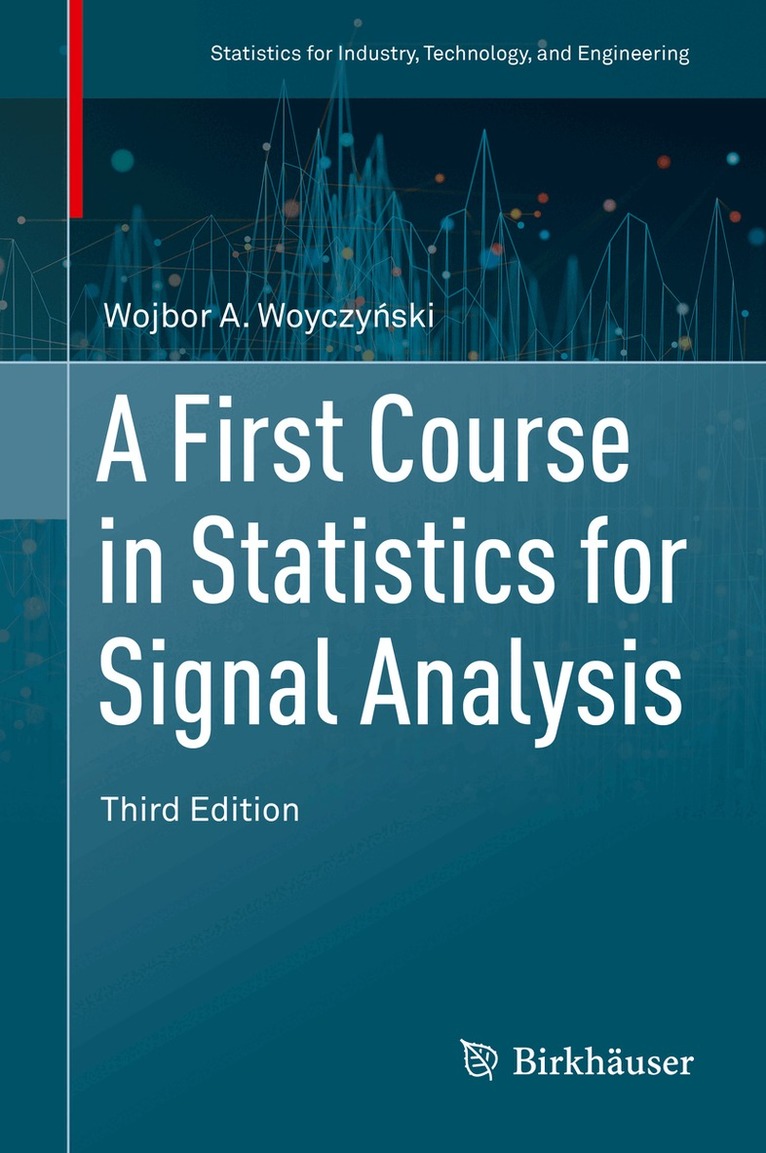
This essentially self-contained, deliberately compact, and user-friendly textbook is designed for a first, one-semester course in statistical signal analysis for a broad audience of students in engineering and the physical sciences. The emphasis throughout is on fundamental concepts and relationships in the statistical theory of stationary random signals, explained in a concise, yet fairly rigorous presentation.Topics and Features:· Fourier series and transforms—fundamentally important in random signal analysis and processing—are developed from scratch, emphasizing the time-domain vs. frequency-domain duality;· Basic concepts of probability theory, laws of large numbers, the central limit theorem, and statistical parametric inference procedures are presented so that no prior knowledge of probability and statistics is required; the only prerequisite is a basic two–three semester calculus sequence;· Computer simulation algorithms of stationary random signals with a given power spectrum density;· Complementary bibliography for readers who wish to pursue the study of random signals in greater depth;· Many diverse examples and end-of-chapter problems and exercises.Developed by the author over the course of many years of classroom use, A First Course in Statistics for Signal Analysis, Second Edition may be used by junior/senior undergraduates or graduate students in electrical, systems, computer, and biomedical engineering, as well as the physical sciences. The work is also an excellent resource of educational and training material for scientists and engineers working in research laboratories. This third edition contains two additional chapters that present wavelets and the uncertainty principle, and the forecasting problems for stationary time series. These two topics are essential for students to attain a deeper understanding of statistical analysis of random signals.Reviews from previous editions:A First Course in Statistics for Signal Analysis is a small, dense, and inexpensive book that covers exactly what the title says: statistics for signal analysis. The book has much to recommend it. The author clearly understands the topics presented. The topics are covered in a rigorous manner, but not so rigorous as to be ostentatious. JASA (Review of the First Edition)This is a nicely written self-contained book and it is a good candidate for adoption as a textbook for upper-level undergraduate and even for a graduate course for engineering and physical sciences students. … I have no hesitation in recommending it as a textbook for the targeted course and audience. Technometrics, Vol. 53 (4), November, 2011 (Review of the Second Edition)
747 kr
Skickas inom 10-15 vardagar
This essentially self-contained, deliberately compact, and user-friendly textbook is designed for a first, one-semester course in statistical signal analysis for a broad audience of students in engineering and the physical sciences. The emphasis throughout is on fundamental concepts and relationships in the statistical theory of stationary random signals, explained in a concise, yet fairly rigorous presentation.Topics and Features:· Fourier series and transforms—fundamentally important in random signal analysis and processing—are developed from scratch, emphasizing the time-domain vs. frequency-domain duality;· Basic concepts of probability theory, laws of large numbers, the central limit theorem, and statistical parametric inference procedures are presented so that no prior knowledge of probability and statistics is required; the only prerequisite is a basic two–three semester calculus sequence;· Computer simulation algorithms of stationary random signals with a given power spectrum density;· Complementary bibliography for readers who wish to pursue the study of random signals in greater depth;· Many diverse examples and end-of-chapter problems and exercises.Developed by the author over the course of many years of classroom use, A First Course in Statistics for Signal Analysis, Second Edition may be used by junior/senior undergraduates or graduate students in electrical, systems, computer, and biomedical engineering, as well as the physical sciences. The work is also an excellent resource of educational and training material for scientists and engineers working in research laboratories. This third edition contains two additional chapters that present wavelets and the uncertainty principle, and the forecasting problems for stationary time series. These two topics are essential for students to attain a deeper understanding of statistical analysis of random signals.Reviews from previous editions:A First Course in Statistics for Signal Analysis is a small, dense, and inexpensive book that covers exactly what the title says: statistics for signal analysis. The book has much to recommend it. The author clearly understands the topics presented. The topics are covered in a rigorous manner, but not so rigorous as to be ostentatious. JASA (Review of the First Edition)This is a nicely written self-contained book and it is a good candidate for adoption as a textbook for upper-level undergraduate and even for a graduate course for engineering and physical sciences students. … I have no hesitation in recommending it as a textbook for the targeted course and audience. Technometrics, Vol. 53 (4), November, 2011 (Review of the Second Edition)
535 kr
Skickas inom 10-15 vardagar
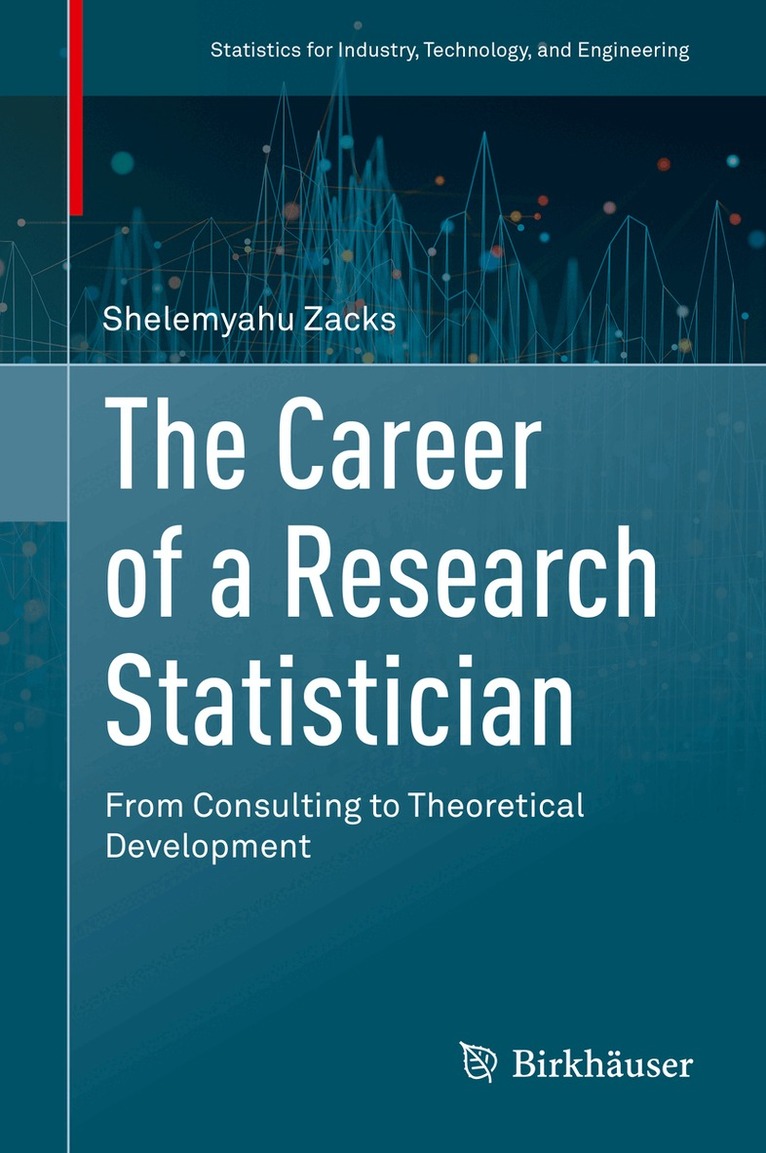
This monograph highlights the connection between the theoretical work done by research statisticians and the impact that work has on various industries.
535 kr
Skickas inom 10-15 vardagar
This monograph highlights the connection between the theoretical work done by research statisticians and the impact that work has on various industries.
1 169 kr
Skickas inom 10-15 vardagar
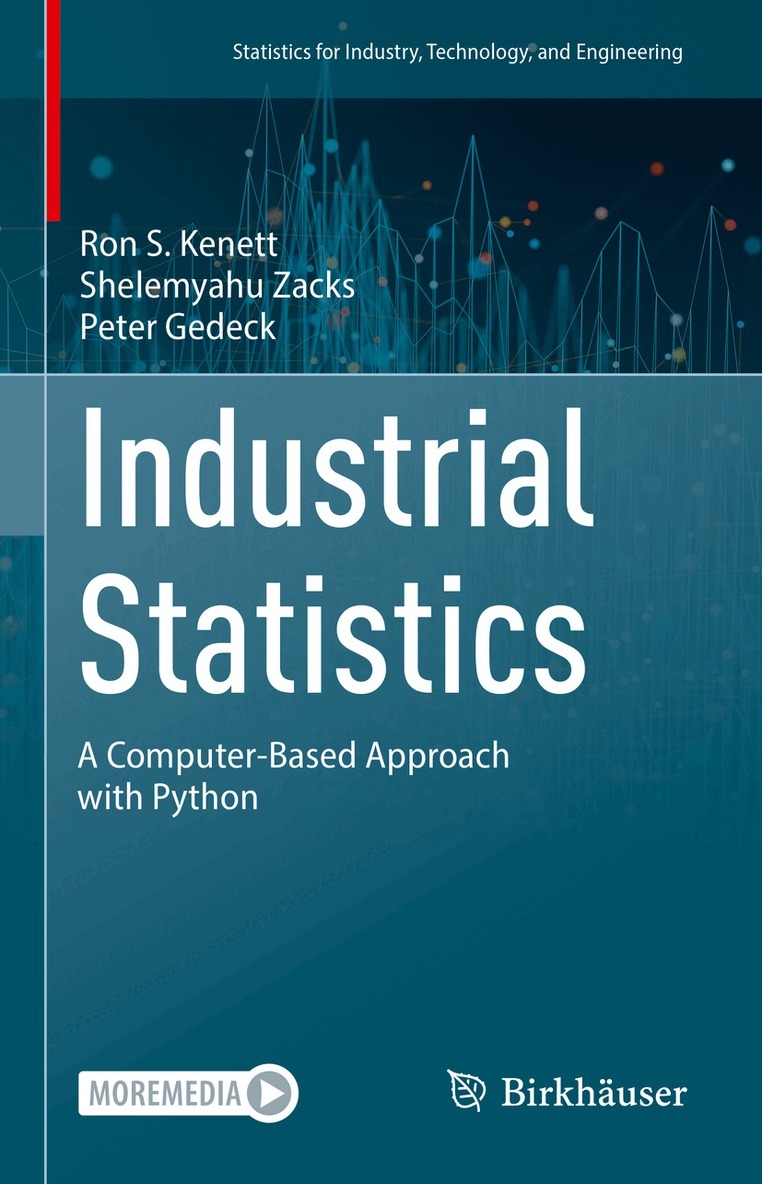
It covers topics such as statistical process control, including multivariate methods, the design of experiments, including computerexperiments and reliability methods, including Bayesian reliability.
852 kr
Skickas inom 10-15 vardagar
It covers topics such as statistical process control, including multivariate methods, the design of experiments, including computerexperiments and reliability methods, including Bayesian reliability.
1 472 kr
Skickas inom 10-15 vardagar
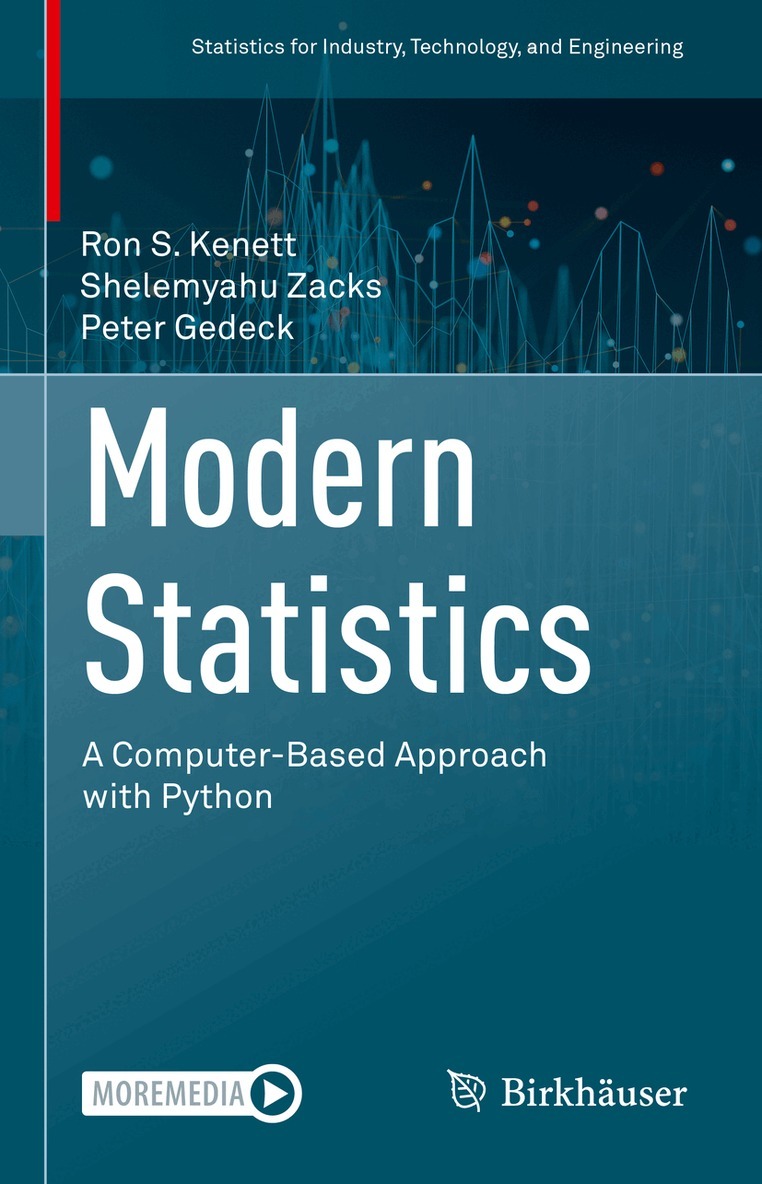
This innovative textbook presents material for a course on industrial statistics that incorporates Python as a pedagogical and practical resource.
1 064 kr
Skickas inom 7-10 vardagar
This innovative textbook presents material for a course on industrial statistics that incorporates Python as a pedagogical and practical resource.
905 kr
Skickas inom 10-15 vardagar
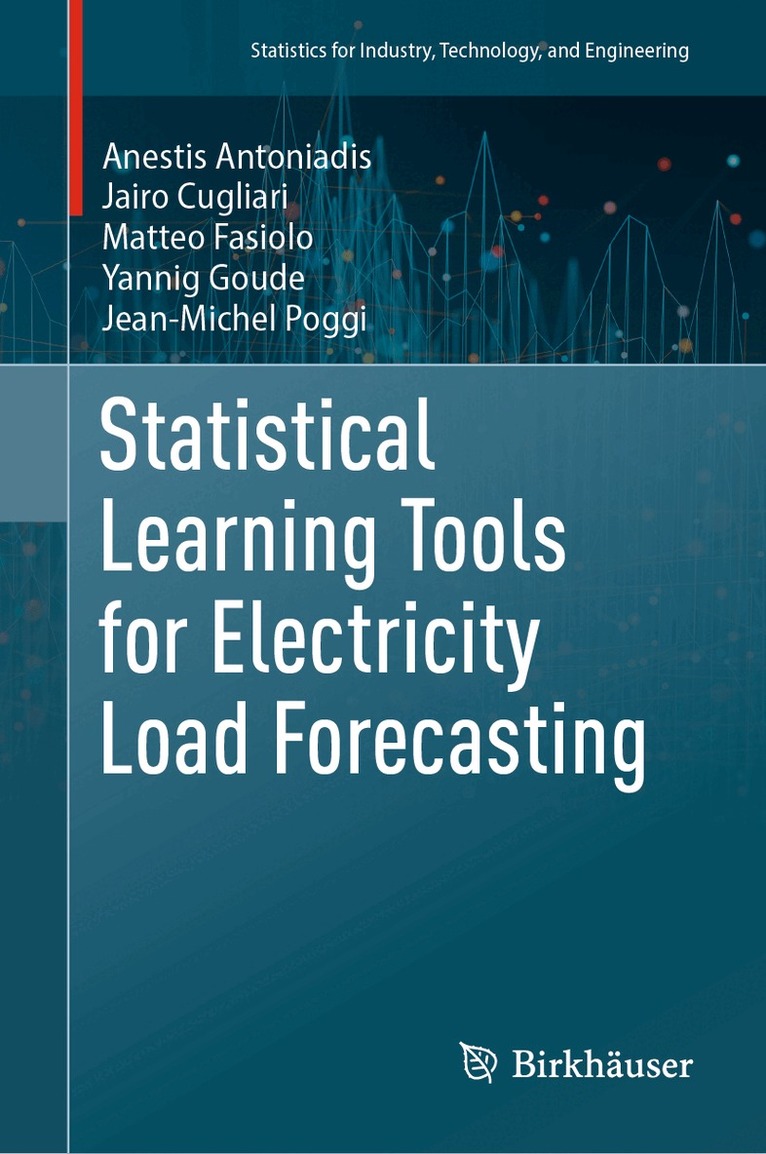
This monograph explores a set of statistical and machine learning tools that can be effectively utilized for applied data analysis in the context of electricity load forecasting. Drawing on their substantial research and experience with forecasting electricity demand in industrial settings, the authors guide readers through several modern forecasting methods and tools from both industrial and applied perspectives – generalized additive models (GAMs), probabilistic GAMs, functional time series and wavelets, random forests, aggregation of experts, and mixed effects models. A collection of case studies based on sizable high-resolution datasets, together with relevant R packages, then illustrate the implementation of these techniques. Five real datasets at three different levels of aggregation (nation-wide, region-wide, or individual) from four different countries (UK, France, Ireland, and the USA) are utilized to study five problems: short-term point-wise forecasting, selection of relevant variables for prediction, construction of prediction bands, peak demand prediction, and use of individual consumer data.This text is intended for practitioners, researchers, and post-graduate students working on electricity load forecasting; it may also be of interest to applied academics or scientists wanting to learn about cutting-edge forecasting tools for application in other areas. Readers are assumed to be familiar with standard statistical concepts such as random variables, probability density functions, and expected values, and to possess some minimal modeling experience.
905 kr
Skickas inom 10-15 vardagar
This monograph explores a set of statistical and machine learning tools that can be effectively utilized for applied data analysis in the context of electricity load forecasting. Drawing on their substantial research and experience with forecasting electricity demand in industrial settings, the authors guide readers through several modern forecasting methods and tools from both industrial and applied perspectives – generalized additive models (GAMs), probabilistic GAMs, functional time series and wavelets, random forests, aggregation of experts, and mixed effects models. A collection of case studies based on sizable high-resolution datasets, together with relevant R packages, then illustrate the implementation of these techniques. Five real datasets at three different levels of aggregation (nation-wide, region-wide, or individual) from four different countries (UK, France, Ireland, and the USA) are utilized to study five problems: short-term point-wise forecasting, selection of relevant variables for prediction, construction of prediction bands, peak demand prediction, and use of individual consumer data.This text is intended for practitioners, researchers, and post-graduate students working on electricity load forecasting; it may also be of interest to applied academics or scientists wanting to learn about cutting-edge forecasting tools for application in other areas. Readers are assumed to be familiar with standard statistical concepts such as random variables, probability density functions, and expected values, and to possess some minimal modeling experience.