Studies in Musical Genesis, Structure, and Interpretation - Böcker
Visar alla böcker i serien Studies in Musical Genesis, Structure, and Interpretation. Handla med fri frakt och snabb leverans.
7 produkter
7 produkter
1 208 kr
Skickas inom 5-8 vardagar
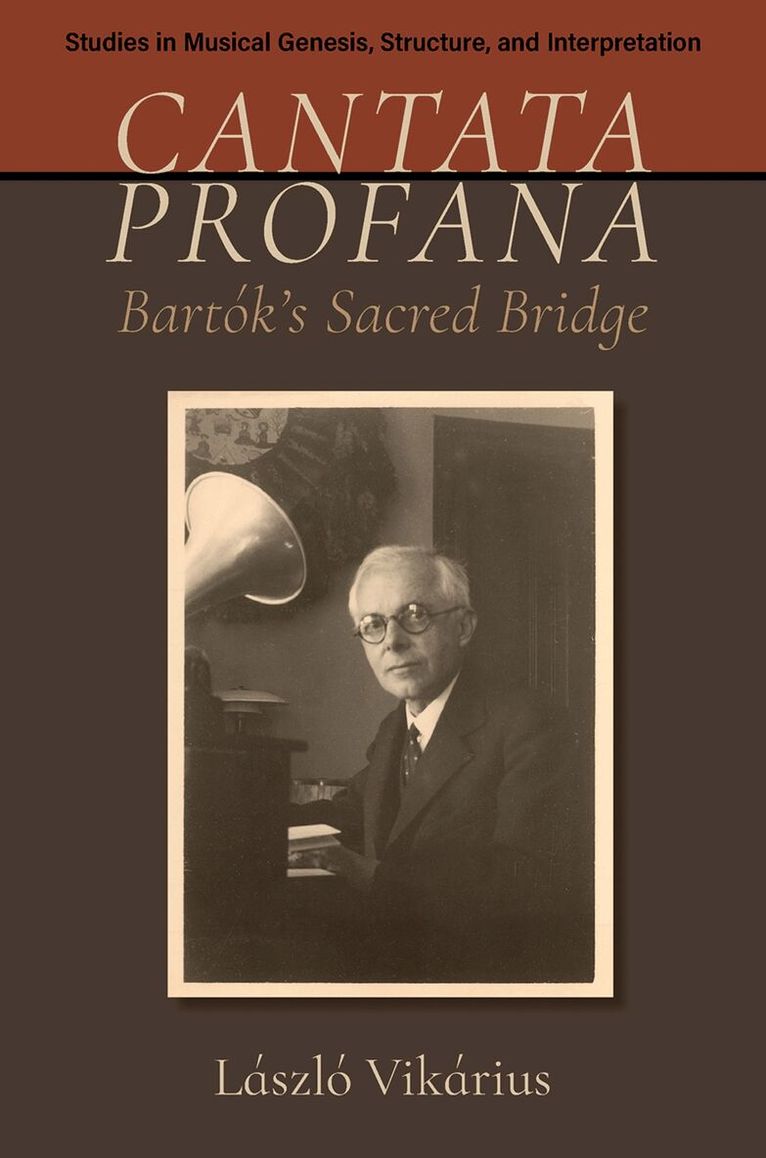
Hungarian composer Béla Bartók declared his Cantata profana, composed in 1930 and premièred in London in 1934, his "credo," the composition of which was inseparable from the history of his involvement with folklore. Not only was Bartók one of the twentieth century's most important composers, he was also one of the founders of comparative musicology, the precursor to the field of ethnomusicology. His collection and analytical studies of Hungarian, Romanian, and Slovak folk musics shaped his distinctive musical style, as well as complex scholarly publications. In this volume of the Studies in Musical Genesis, Structure, and Interpretation series, László Vikárius, a leading authority on Bartók, uncovers the many layers of ethnographic, historical, and personal meaning embedded in the Cantata profana. The work's libretto was based on a Romanian folk ballad from his collection, and the mystical story of a hunter's nine sons who turn into stags--never to return home--was close to the composer's heart. Vikárius analyzes the origins of the piece, rooted in one of Bartók's most intensive periods of collecting activities in Transylvania just before the outbreak of World War I. The multi-ethnic folkloric landscape of "historic" Hungary (part of Austro-Hungary at the time) is embodied by the source materials for Cantata profana that survive in full to be analyzed, from the sketches to the various translations of the libretto. As Vikárius demonstrates, the choice of a Romanian winter solstice ceremonial text as libretto for Cantata profana combines Bartók's folklorism with a markedly neoclassical allusion to J. S. Bach's St Matthew Passion and is necessarily underpinned by the severe criticism Bartók faced because of his interest in and work on Romanian folklore. Throughout the book, Vikárius reveals numerous hidden details that prove crucial to the concept of the work and explores how its ideologically charged text underlines the aesthetic concept behind the musical decisions.
966 kr
Skickas inom 5-8 vardagar
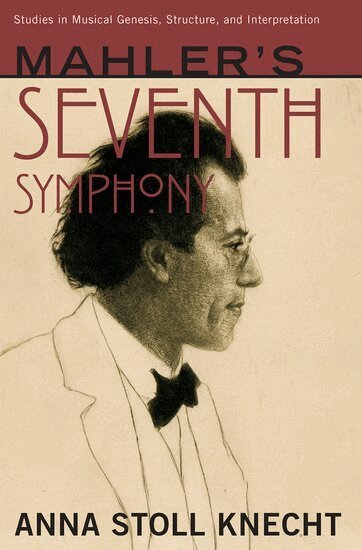
Gustav Mahler's Seventh Symphony stands out as one of the most provocative symphonic statements of the early twentieth century. Throughout its performance history, it has often been heard as "existing in the shadow" of the Sixth Symphony or as "too reminiscent" of Richard Wagner's opera Die Meistersinger von Nürnberg. Anna Stoll Knecht's Mahler's Seventh Symphony offers a new interpretation of the Seventh based on a detailed study of Mahler's compositional materials and a close reading of the finished work. With a focus on sketches previously considered as "discarded," Stoll Knecht exposes unexpected connections between the Seventh and both the Sixth and Meistersinger, confirming that Mahler's compositional project was firmly grounded in a dialogue with works from the past. This referential aspect acts as an important interpretive key to the work, enabling the first thorough analysis of the sketches and drafts for the Seventh, and shedding light on its complex compositional history. Considering each movement of the symphony through a double perspective, genetic and analytic, Stoll Knecht demonstrates how sketch studies and analytical approaches can interact with each other. Mahler's Seventh Symphony exposes new facets of Mahler's musical humor and leads us to rethink much-debated issues concerning the composer's cultural identity, revealing the Seventh's pivotal role within his output.
571 kr
Skickas inom 5-8 vardagar
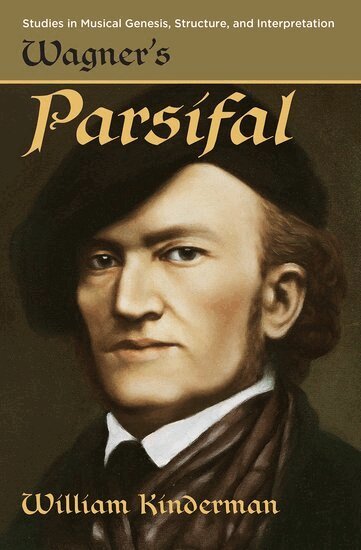
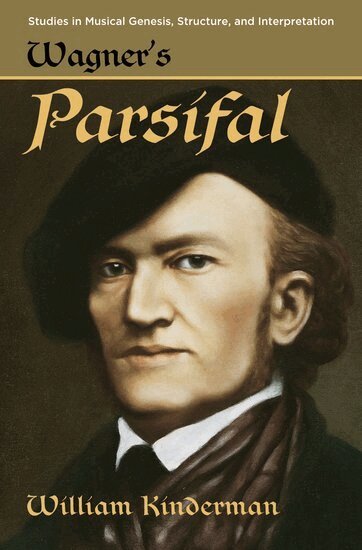
William Kinderman's detailed study of Parsifal, described by the composer as his "last card," explores the evolution of the text and music of this inexhaustible yet highly controversial music drama across Wagner's entire career. This book offers a reassessment of the ideological and political history of Parsifal, shedding new light on the connection of Wagner's legacy to the rise of National Socialism in Germany. The compositional genesis is traced through many unfamiliar manuscript sources, revealing unsuspected models and veiled connections to Wagner's earlier works. Fresh analytic perspectives are revealed, casting the dramatic meaning of Parsifal in a new light. Much debated aspects of the work, such as Kundry's death at the conclusion, are discussed in the context of its stage history.Path-breaking as well is Kinderman's analysis of the religious and ideological context of Parsifal. During the half-century after the composer's death, the Wagner family and the so-called Bayreuth circle sought to exploit Wagner's work for political purposes, thereby promoting racial nationalism and anti-Semitism. Hitherto unnoticed connections between Hitler and Wagner's legacy at Bayreuth are explored here, while differences between the composer's politics as an 1849 revolutionary and the later response of his family to National Socialism are weighed in a nuanced account. Kinderman combines new historical research, sensitive aesthetic criticism, and probing philosophical reflection in this most intensive examination of Wagner's culminating music drama.
876 kr
Skickas inom 5-8 vardagar
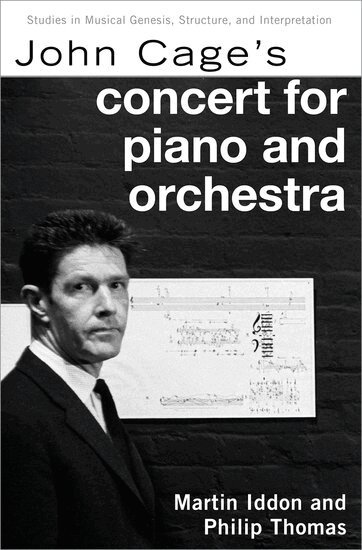
John Cage's Concert for Piano and Orchestra is one of the seminal works of the second half of the twentieth century, and the centerpiece of the middle period of Cage's output. It is a culmination of Cage's work up to that point, incorporating notation techniques he had spent the past decade developing - techniques which remain radical to this day. But despite Cage's vitality to the musical development of the twentieth century, and the Concert's centrality to his career, the work is still rarely performed and even more rarely examined in detail.In this volume, Martin Iddon and Philip Thomas provide a rich and critical examination of this enormously significant piece, tracing its many contexts and influences - particularly Schoenberg, jazz, and Cage's own compositional practice - through a wide and previously untapped range of archival sources. Iddon and Thomas explain the Concert through a reading of its many histories, especially in performance - from the legendary performer disobedience and audience disorder of its 1958 New York premiere to a no less disastrous European premiere later the same year. They also highlight the importance of the piano soloist who premiered the piece, David Tudor, and its use alongside choreographer Merce Cunningham's Antic Meet. A careful examination of an apparently bewildering piece, the book explores the critical response to the Concert's performances, re-interrogates the mythology surrounding it, and finally turns to the music itself, in all its component parts, to see what it truly asks of performers and listeners.
1 576 kr
Skickas inom 5-8 vardagar
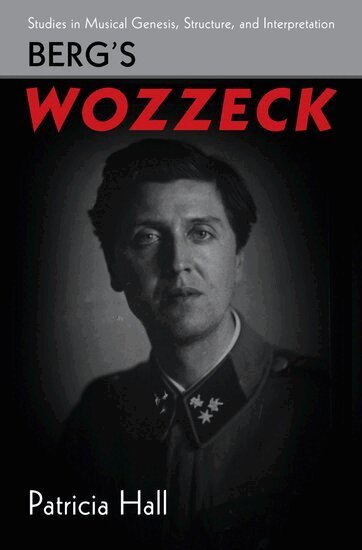
Although Berg decided immediately after seeing Büchner's play Woyzeck in May 1914 to set it to music, he did not complete his opera until 1922, with the Berlin premiere taking place in 1925. Berg's Wozzeck traces the composer's slow but determined progress. Using compositional sketches, diaries, notebooks and other archival material, author Patricia Hall reveals the challenges Berg faced--from his induction as a soldier in World War I, to the hyper-inflation of the twenties. In addition to the precise chronology of the opera, the sketches show how Berg derived large-scale form from the Büchner text, and how his compositional style evolved during the nine years in which he composed the opera. A comprehensive visual database on the book's companion website of the extant sketches from seven archives in the United States, Germany and Austria allows the reader to examine, for the first time, Berg's sketches in high resolution color scans.
1 469 kr
Skickas inom 5-8 vardagar
William Kinderman's detailed study of Parsifal, described by the composer as his "last card," explores the evolution of the text and music of this inexhaustible yet highly controversial music drama across Wagner's entire career, and offers a reassessment of the ideological and political history of Parsifal, shedding new light on the connection of Wagner's legacy to the rise of National Socialism in Germany. The compositional genesis is traced through many unfamiliar manuscript sources, revealing unsuspected models and veiled connections to Wagner's earlier works. Fresh analytic perspectives are revealed, casting the dramatic meaning of Parsifal in a new light. Much debated aspects of the work, such as Kundry's death at the conclusion, are discussed in the context of its stage history.Path-breaking as well is Kinderman's analysis of the religious and ideological context of Parsifal. During the half-century after the composer's death, the Wagner family and the so-called Bayreuth circle sought to exploit Wagner's work for political purposes, thereby promoting racial nationalism and anti-Semitism. Hitherto unnoticed connections between Hitler and Wagner's legacy at Bayreuth are explored here, while differences between the composer's politics as an 1849 revolutionary and the later response of his family to National Socialism are weighed in a nuanced account. Kinderman combines new historical research, sensitive aesthetic criticism, and probing philosophical reflection in this most intensive examination of Wagner's culminating music drama.
998 kr
Skickas inom 7-10 vardagar
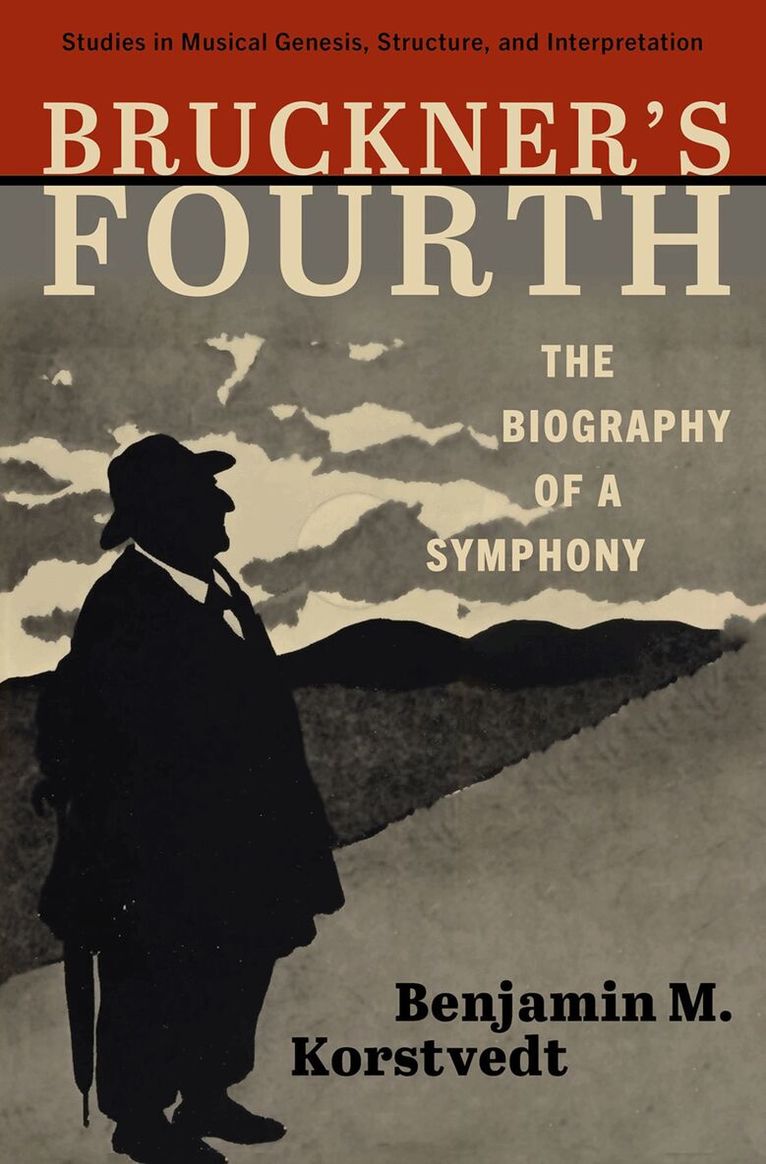
Anton Bruckner's Fourth Symphony is one of the most beloved and frequently performed works in the orchestral repertoire. Despite this, a great deal about the work and its genesis has been either unknown, poorly understood, or starkly misrepresented. The work's extraordinary history is the source of much of this confusion. Bruckner worked on the Fourth over fifteen years before he finally published the score in 1889. During the process, he created several earlier versions of the work, which remained unknown until decades after his death. The first attempts to comprehend the work's compositional history were made by German scholars in the 1930s, but these not only proved partial but sowed the seeds of a long tradition of misunderstanding. This book offers the first complete and coherent account, which draws upon numerous previously overlooked sources, of the extraordinary compositional evolution of this magnificent symphony. What emerges is the story of Bruckner's remarkable efforts to produce a symphony that would, as he put it, be able to "make its effect" in performance.The heart of the book is an exploration, based on comprehensive archival research and critical analysis, of the creative development of the Fourth Symphony. It explains the nature and significance of the different versions through which the work passed, considers the impact of early performances, delves into the complicated roles played by Bruckner's collaboration with other musicians in the later stages of the work's evolution, and situates all of this in Bruckner's biographical, social, and musical context. The book also critiques the conventional wisdom about the so-called problem posed by the versions of Bruckner's works by deconstructing long-established myths, developing new insights, and bringing the musical logic of Bruckner's approach into clear focus. The book offers a searching yet accessible account of the music of the Fourth and a critical survey of the varying ways the work has been interpreted in performance and, starting in the 1930s, on recordings.