Race, Gender, and Science - Böcker
Visar alla böcker i serien Race, Gender, and Science. Handla med fri frakt och snabb leverans.
6 produkter
6 produkter
313 kr
Skickas inom 10-15 vardagar
" . . . thoughtful critiques of the myriad issues between women and science." —Belles Lettres"Outstanding collection of essays that raise the fundamental questions of gender in what we have been taught are objective sciences." —WATERwheel" . . . all of the articles are well written, informative, and convincing. Admirable editorial work makes this anthology unusually helpful for scholars and students . . . Highly recommended . . . " —ChoiceQuestioning the objectivity of scientific inquiry, this volume addresses the scope of gender bias in science. The contributors examine the ways in which science is affected by and reinforces sexist biases. The essays reveal science to be a cultural institution, structured by the political, social, and economic values of the culture within which it is practiced.
393 kr
Skickas inom 10-15 vardagar
"The classic and recent essays gathered here will challenge scholars in the natural sciences, philosophy, sociology, anthropology, and women's studies to examine the role of racism in the construction and application of the sciences. Harding . . . has also created a useful text for diverse classroom settings." —Library Journal"A rich lode of readily accessible thought on the nature and practice of science in society. Highly recommended." —Choice"This is an excellent collection of essays that should prove useful in a wide range of STS courses." —Science, Technology, and Society" . . . important and provocative . . . " —The Women's Review of Books"The timeliness and utility of this large interdisciplinary reader on the relation of Western science to other cultures and to world history can hardly be overemphasized. It provides a tremendous resource for teaching and for research . . . " —Ethics"Excellent." —The Reader's Review"Sandra Harding is an intellectually fearless scholar. She has assembled a bold, impressive collection of essays to make a volume of illuminating power. This brilliantly edited book is essential reading for all who seek understanding of the multicultural debates of our age. Never has a book been more timely." —Darlene Clark HineThese authors dispute science's legitimation of culturally approved definitions of race difference—including craniology and the measurement of IQ, the notorious Tuskegee syphilis experiments, and the dependence of Third World research on First World agendas.
Less Noble Sex
Scientific, Religious, and Philosophical Conceptions of Woman's Nature
Häftad, Engelska, 1993
246 kr
Skickas inom 10-15 vardagar
"This highly-readable work traces a set of beliefs about the nature of woman that have informed, and in turn have been reinforced by, science, religion, and philosophy from the classical period to the nineteenth century. . . . [T]his book's analysis lends support to claims that the gender system affected our very conceptions of science." —Journal of the History of the Behavioral Sciences"An important book for the educated general public as well as for scholars in many disciplines. Highly recommended." —Library Journal"Students and researchers alike will welcome this carefully argued volume that so clearly traces the dominant contours of Western conceptions about women." —Isis"Nancy Tuana's book is brillant. In under two hundred pages she presents a concise account of how women have been perceived in relation to men in the Western world for the past 2,500 years." —American Historical Review"A wide-ranging discussion of conceptions of women in science, philosophy and religion from ancient times to the late nineteenth century, Tuana's book makes it devastatingly clear how powerful and how deeply rooted was the Western idea of women as men's inferiors." —Women's Review of Books" . . . an unusually readable account of the image of women from the Greeks to the nineteenth century, wedded to a highly interesting argument about the way religion and philosophy affect the direction of the work of scientists, and how the work of scientists is used by philosophers and clergy to give authority to the more abstract world of ideas." —Magill Book ReviewsProvides a framework for understanding the persistence of the Western patriarchal view of woman as inferior. Tuana examines beliefs that were accepted a priori as evidence of women's inferiority and studies early theories of woman's nature to illustrate the way scientific literature, was influenced by—and in turn affected—religious and philosophical tenets.
Deviant Bodies
Critical Perspectives on Difference in Science and Popular Culture
Häftad, Engelska, 1995
326 kr
Skickas inom 10-15 vardagar
". . . the papers in Deviant Bodies reveal an ongoing Western preoccupation with the sources of identity and human character." —Times Literary Supplement"Highly recommended for cultural studies . . . " —The Reader's Review"It would be useful for upper-level undergraduate and graduate courses in the sociology of the body, the history and sociology of science and medicine, and women's studies courses, particularly those exploring the feminist critiques of science and medicine." —Contemporary Sociology". . . a powerful deconstruction of the scientific gaze in configuring bodily deviance as a means of legitimating the social order within multiple historical and social contexts. . . . the many excellent selections will make for compelling reading for students of medical anthropology and the history of science." American AnthropologistDeviant Bodies reveals that the "normal," "healthy" body is a fiction of science. Modern life sciences, medicine, and the popular perceptions they create have not merely observed and reported, they have constructed bodies: the homosexual body, the HIV-infected body, the infertile body, the deaf body, the colonized body, and the criminal body.
214 kr
Skickas inom 10-15 vardagar
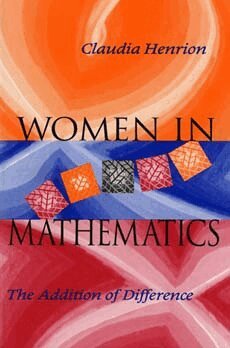
" . . . a wonderful addition to any mathematics teacher's professional bookshelf." —The Mathematics Teacher"The individual biographies themselves make for enthralling, often inspiring, reading . . . this volume should be compelling reading for women mathematics students and professionals. A fine addition to the literature on women in science . . . Highly recommended." —Choice". . . it makes an important contribution to scholarship on the interrelations of gender, mathematics, and culture in the U.S. in the second half of the twentieth century." —Notices of the AMS"Who is the audience for this book? Certainly women who are interested in studying mathematics and women already in mathematics who have become discouraged will find much to interest and help them. Faculty who teach such women would put it to good use. But it would be a loss to relegate the book to a shelf for occasional reference to an interested student or beginning mathematician. Everyone in the mathematics community in which each of Henrion's subjects struggled so hard to find a place could benefit by a thoughtful reading." —Society for Industrial and Applied Mathematics (SIAM) NewsMathematics is often described as the purest of the sciences, the least tainted by subjective or cultural influences. Theoretically, the only requirement for a life of mathematics is mathematical ability. And yet we see very few women mathematicians. Why?Based upon a series of ten intensive interviews with prominent women mathematicians throughout the United States, this book investigates the role of gender in the complex relationship between mathematician, the mathematical community, and mathematics itself.
207 kr
Skickas inom 10-15 vardagar
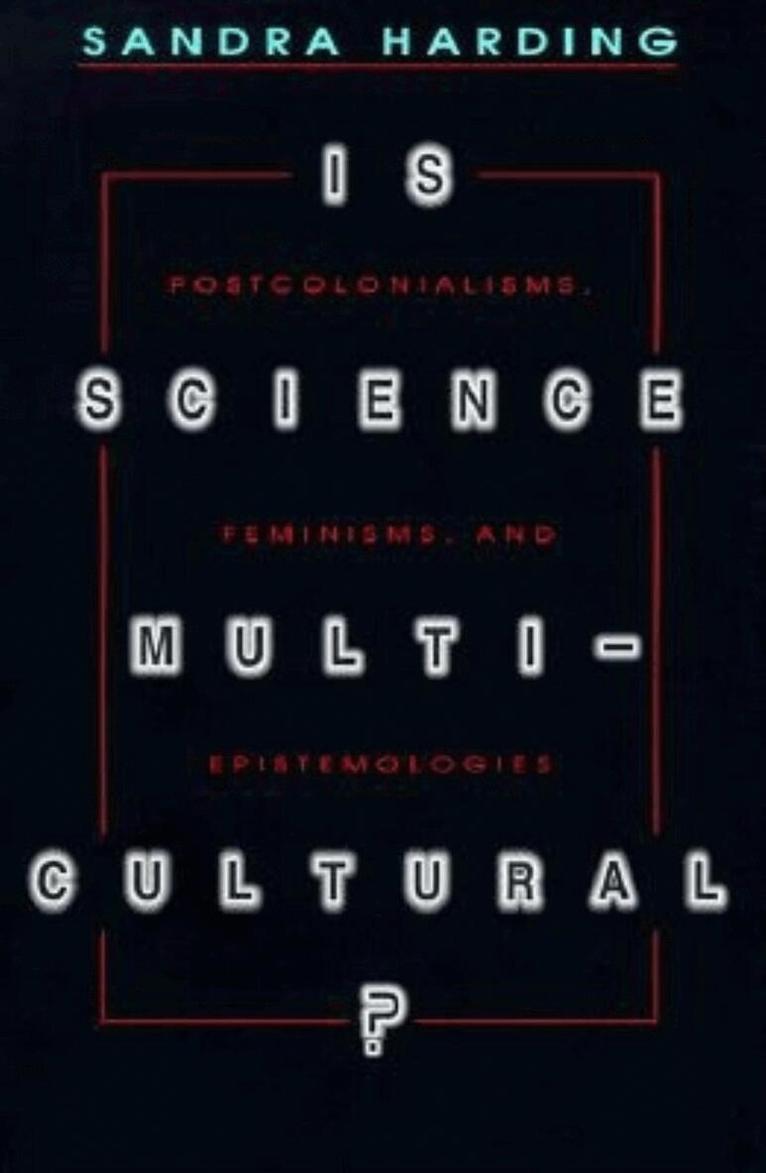
Is Science Multicultural? explores what the last three decades of European/American, feminist, and postcolonial science and technology studies can learn from each other. Sandra Harding introduces and discusses an array of postcolonial science studies, and their implications for "northern" science. All three science studies strains have developed in the context of post-World War II science and technology projects. They illustrate how technoscientific projects mean different things to different groups. The meaning attached by the culture of the West may not be shared or may be diametrically opposite in the cultures in other parts of the world. All, however, would agree that scientific projects—modern science included—are "local knowledge systems." The interests and discursive resources that the various science studies bring groups to their projects, and the ways that they organize the production of their kind of science studies, are distinctively culturally-local also. While their projects may be unintentionally converging, they also conflict in fundamental respects.How is this inevitable cultural-situatedness of knowledge both an invaluable resource as well as a limitation on the advance of knowledge about nature? What are the distinctive resources that the feminist and postcolonial science theorists offer in thinking about the history of modern science; the diversity of "scientific" traditions in non-European as well as in European cultures; and the directions that might be taken by less androcentric and Eurocentric scientific projects? How might modern sciences' projects be linked more firmly to the prodemocratic yearnings that are so widely voiced in contemporary life? Carefully balancing poststructuralist and conventional epistemological resources, this study concludes by proposing new directions for thinking about objectivity, method, and reflexivity in light of the new understandings developed in the post-World War II world.