Culture, Politics, and the Cold War – Serie
Visar alla böcker i serien Culture, Politics, and the Cold War. Handla med fri frakt och snabb leverans.
5 produkter
5 produkter
347 kr
Skickas inom 7-10 vardagar
Traditional interpretations of the 1950s have emphasised how American anti-communists deployed censorship and the blacklist to silence dissent, particularly in the realm of foreign policy. Yet those efforts at repression did not always succeed. Throughout the early years of the Cold War, a significant number of writers and performers continued to express controversial views about international relations in Hollywood films, through the new medium of television, on the Broadway stage, and from behind the scenes. By promoting superpower co-operation, decolonisation, nuclear disarmament, and other taboo causes, dissident artists such as Lillian Hellman, Arthur Miller, Rod Serling, Dalton Trumbo, Reginald Rose, and Paddy Chayefsky managed both to stretch the boundaries of Cold War ideology and to undermine some of its basic assumptions. Working at times under assumed names and in some cases outside the United States, they took on the role of informal diplomats who competed with Washington in representing America to the world. Ironically, the dissidents’ international appeal eventually persuaded the U.S. foreign policy establishment that their unconventional views could be an asset in the Cold War contest for “hearts and minds,” and their artistic work an effective means to sell American values and culture abroad. By the end of the 1950s, the Eisenhower administration not only appropriated the work of these talented artists but enlisted some of them to serve as official voices of Cold War cultural diplomacy.
387 kr
Skickas inom 7-10 vardagar
From the congressional debate over the “fall of China” to the drama of the Army–McCarthy hearings to the kitchen faceoff between Richard Nixon and Nikita Khrushchev, the political history of the early Cold War was long dominated by studies of presidential administrations, anti communism, and foreign policy. In Liberty and Justice for All? a group of distinguished historians representing a variety of disciplinary perspectives—social history, cultural history, intellectual history, labour history, urban history, women’s history, African American studies, and media studies—expand on the political history of the early Cold War by rethinking the relationship between politics and culture. How, for example, did folk music help to keep movement culture alive throughout the 1950s? How did the new medium of television change fundamental assumptions about politics and the electorate? How did American experiences with religion in the 1950s strengthen the separation of church and state? How did race, class, and gender influence the relationship between citizens and the state? These are just some of the questions addressed in this wide-ranging set of essays. In addition to volume editor Kathleen G. Donohue, contributors include Howard Brick, Kari Frederickson, Andrea Friedman, David Greenberg, Grace Elizabeth Hale, Jennifer Klein, Laura McEnaney, Kevin M. Schultz, Jason Scott Smith, Landon R. Y. Storrs, and Jessica Weiss.
387 kr
Skickas inom 7-10 vardagar
Unlike earlier U.S. interventions in Latin America, the Reagan administration’s attempt to overthrow the Sandinista government of Nicaragua during the 1980s was not allowed to proceed quietly. Tens of thousands of American citizens organised and agitated against U.S. aid to the counterrevolutionary guerrillas, known as “contras.” Believing the Contra War to be unnecessary, immoral, and illegal, they challenged the administration’s Cold War stereotypes, warned of “another Vietnam,” and called on the United States to abide by international norms. A Call to Conscience offers the first comprehensive history of the anti–Contra War campaign and its Nicaragua connections. Roger Peace places this eight-year campaign in the context of previous American interventions in Latin America, the Cold War, and other grassroots oppositional movements. Based on interviews with American and Nicaraguan citizens and leaders, archival records of activist organisations, and official government documents, this book reveals activist motivations, analyses the organisational dynamics of the anti–Contra War campaign, and contrasts perceptions of the campaign in Managua and Washington. Peace shows how a variety of civic groups and networks—religious, leftist, peace, veteran, labour, women’s rights—worked together in a decentralised campaign that involved extensive transnational cooperation.
336 kr
Skickas inom 7-10 vardagar
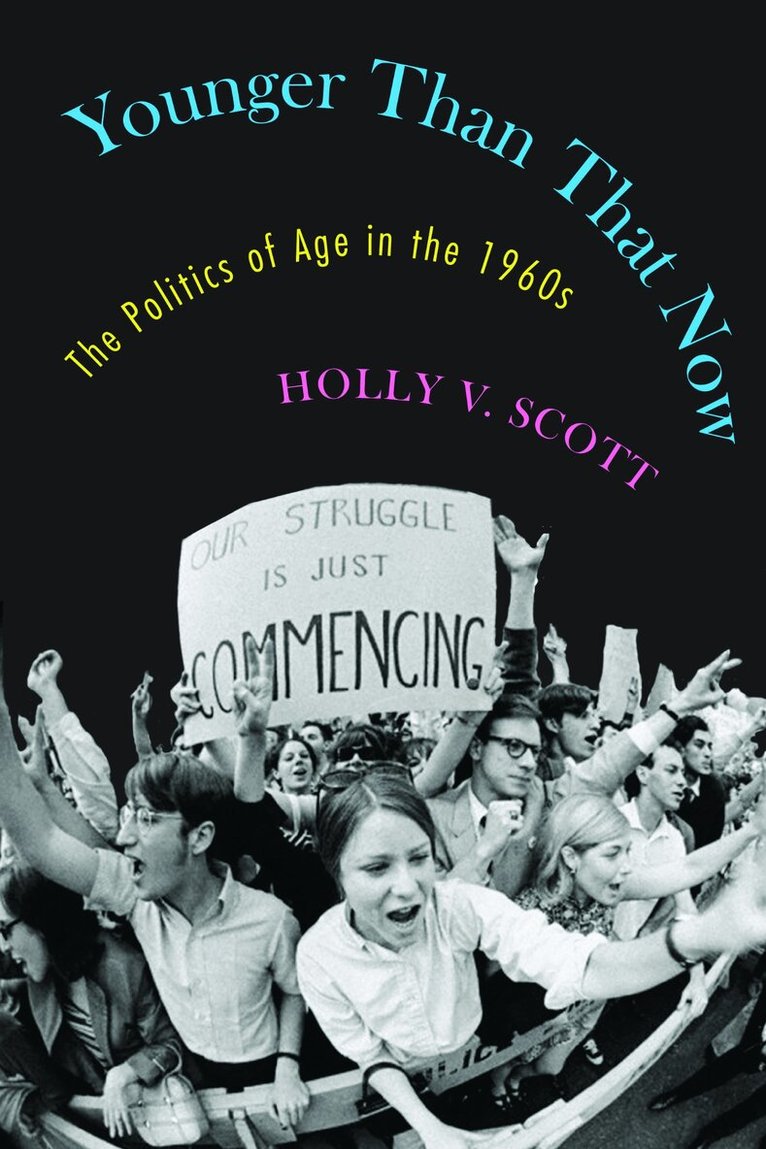
Retrospectives of the 1960s routinely include the face of youth rebellion: long-haired students occupying campus buildings, young men burning draft cards, hippies dancing at Woodstock. In Younger Than That Now, Holly V. Scott explores how the idea of “youth” served as a tactic in the political and social activism of these years. In the early part of that decade, young white activists began to learn from the civil rights movement’s defiance of racism. They examined their own lives and concluded that campus rules and the draft were repression as well. As a group, they were ripe for revolution, and their age gave them a unique perspective for understanding and protesting against injustice. In short, young people began to use their youth as a political strategy.Some in the New Left were dubious of this strategy and asked how it might damage long-term progress. Young feminists and people of color were particularly quick to question the idea that age alone was enough to sustain a movement. And the media often presented young people as impulsive and naive, undermining their political legitimacy. In tracing how “youth” took on multiple meanings as the 1960s progressed, Scott demonstrates the power of this idea to both promote and hinder social change.
628 kr
Skickas inom 3-6 vardagar
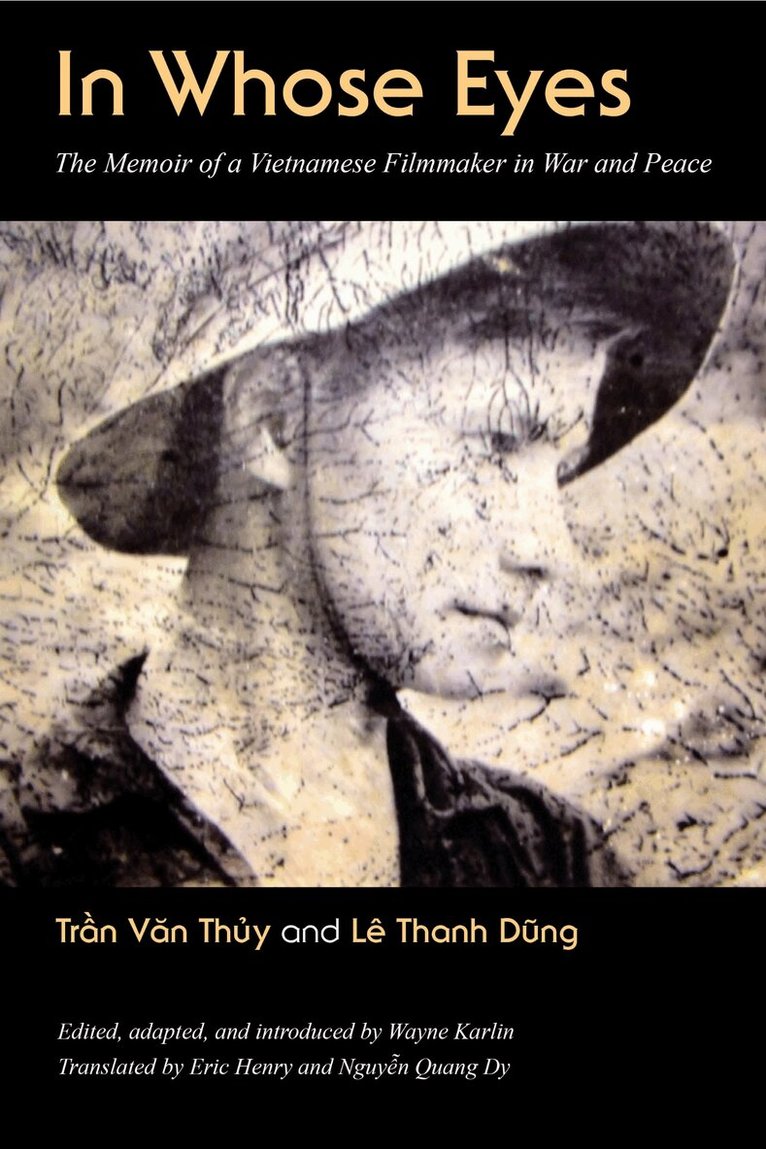
Tran Van Thuy is a celebrated Vietnamese filmmaker of more than twenty award-winning documentaries. A cameraman for the People's Army of Vietnam during the Vietnam War, he went on to achieve international fame as the director of films that address the human costs of the war and its aftermath.Thuy's memoir, when published in Vietnam in 2013, immediately sold out. In this translation, English-language readers are now able to learn in rich detail about the life and work of this preeminent artist. Written in a gentle and charming style, the memoir is filled with reflections on war, peace, history, freedom of expression, and filmmaking. Thuy also offers a firsthand account of the war in Vietnam and its aftermath from a Vietnamese perspective, adding a dimension rarely encountered in English-language literature.