Center Books on Space, Place, and Time - Böcker
Visar alla böcker i serien Center Books on Space, Place, and Time. Handla med fri frakt och snabb leverans.
3 produkter
3 produkter
398 kr
Skickas inom 7-10 vardagar
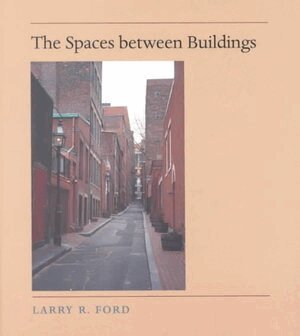
Gates and fences, sidewalks and driveways, alleys and parking lots-these ordinary features have an important architectural impact, influencing how a building relates to the spaces around it. As geographer Larry R. Ford argues, architectural histories and guidebooks tell us surprisingly little about the character of American cities because they concentrate on buildings taken out of context, buildings divorced from space. In The Spaces between Buildings, Ford focuses on the neglected "nooks and crannies" between structures, supplementing his analysis with three photographic essays. Long before Ford knew anything about geography or architecture, he was a connoisseur of front porches, alleys, and loading docks. As a kid in Columbus, Ohio, he knew where to find coal chutes to play in, which rooftops and fire escapes were ideally suited for watching parades, and which stoops were perfect for waiting for a bus. To him the spaces between buildings seemed wonderfully integrated and connected. The Spaces between Buildings is the result of Ford's preoccupation with the relationship of buildings to one another and how their means of access and boundaries organize the areas around us.As Ford observes, a city with friendly, permeable facades and a great variety of street-level doors is more conducive to civic life than a city characterized by fortresslike structures with blank walls and invisible doors. Life on the street is defined and guided by the nature of the surrounding buildings. Similarly, a residential neighborhood with front porches, small lawns or gardens, and houses with lots of windows and architectural details presents a more walkable and gregarious setting than a neighborhood where public space is surrounded by walls, three-car garage doors, blank facades, and concrete driveways. Ford begins by looking at the growth of four urban places, each representing a historical era as much as a geographic location: the Islamic medina; the city shaped by the Spanish renaissance; the nineteenth-century North American city; and the twentieth-century American city. His first essay also discusses the evolution of the free-standing structure as a basic urban building type and the problems encountered in beautifying the often work-a-day back and side yards that have helped to create the image of the untidy American city.The second essay examines the urban trend toward viewing lawns, gardens, hedges, and trees as an essential adjunct to architecture. The final essay focuses on pedestrian and vehicular spaces. Here the author includes the landscape of the garage, sidewalks, streets, and alleys. In its exploration of how spaces become places, The Spaces between Buildings invites readers to see anew the spaces they encounter every day and often take for granted.

302 kr
Tillfälligt slut
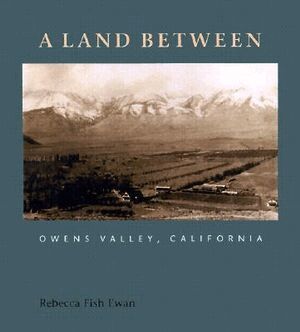
"Owens Valley is a land between, a place tucked behind high mountains, arid yet soaked in water history, draped in desert vegetation yet remembered for its verdant farms, sparsely dotted with towns-some no more than dreams on a map. It exists between stories, between vitality and decline, between granite mountains."-from the Introduction A unique landscape history, A Land Between explores the central idea of how people's preconceptions and perceptions of a place-in this case, Owens Valley-influence their interventions on the land. Rebecca Fish Ewan draws on primary sources, oral histories, and conversations, offering a story that reaches beyond the oft-told tale of water wars with Los Angeles. Ewan's gentle and poetic essays, illustrated with historical images and her own photographs of the region, provide a complex, multifaceted perspective on the land, the history, and the people of Owens Valley.Beginning with the land itself, the book's introduction describes the physical setting of Owens Valley and examines first impressions of the land-including accounts from Numu myth, observations by nineteenth-century settlers, and excerpts from the author's journal of her own travels on horseback from the valley into the Sierra Nevada. The first essay explores the valley's natural history, focusing on the water, mountains, and plants to show a connection between the ecology of place and human use. The second essay chronicles the major periods of human occupation, beginning with the Numu (also referred to as Owens Valley Paiute in many sources) and ending in 1913, when the Department of Water and Power first diverted Owens River into the Los Angeles aqueduct. The third essay considers the valley after the diversion of water, from 1913 to the present-including its use as a World War II Japanese internment camp and as a scenic locale for movies, especially westerns. Owens Valley is renowned for its unique topography and its striking contrasts in elevation-rising from the below-sea-level depths of Death Valley to the 14,496-foot peak of Mt. Whitney.To search for the natural and cultural history embedded in Owens Valley, the author hiked to the top of that mountain, traveled on horseback across the meadows of the Kern Plateau, ventured on every forgotten dirt road in the valley that her truck could negotiate, and rambled on foot over the ancient stones of the Alabama Hills. A Land Between tells the stories of the people who have lived in the valley and uncovers the marks they have left on the land.
517 kr
Tillfälligt slut
The shopping mall seems an unlikely place to go for health care services. Yet, the mall has become home to such services as well as a model for redesigning other health care facilities. In Medicine Moves to the Mall, David Charles Sloane and Beverlie Conant Sloane document the historical changes to our health care landscape by exploring the interactions between medicine and place. This unique combination of architectural history and the history of medicine provides a thought-provoking analysis of the geography of the practice of medicine. The book presents three essays, each accompanied by a gallery of historical and recent photos. The authors discuss the rise of modern hospitals and how they were shaped into scientifically sterile and humanly stark "medical workshops." Starting in the 1970s, hospital facilities were altered in appearance to become more friendly and welcoming. The integration of a shopping mall's spaciousness and open design with technology and scientific innovation served in "humanizing the hospital."Most recently, the accessibility and convenience of shopping center and roadside clinics have invited Americans to go "shopping for health" in the increasingly commercialized medical system. Medicine Moves to the Mall will appeal to scholars and professionals in fields ranging from health care to cultural geography and from urban studies to architectural history, as well as to readers interested in the shifting status of medicine in American society.