Applied Psycholinguistics and Communication Disorders - Böcker
Visar alla böcker i serien . Handla med fri frakt och snabb leverans.
6 produkter
6 produkter
1 094 kr
Skickas inom 10-15 vardagar
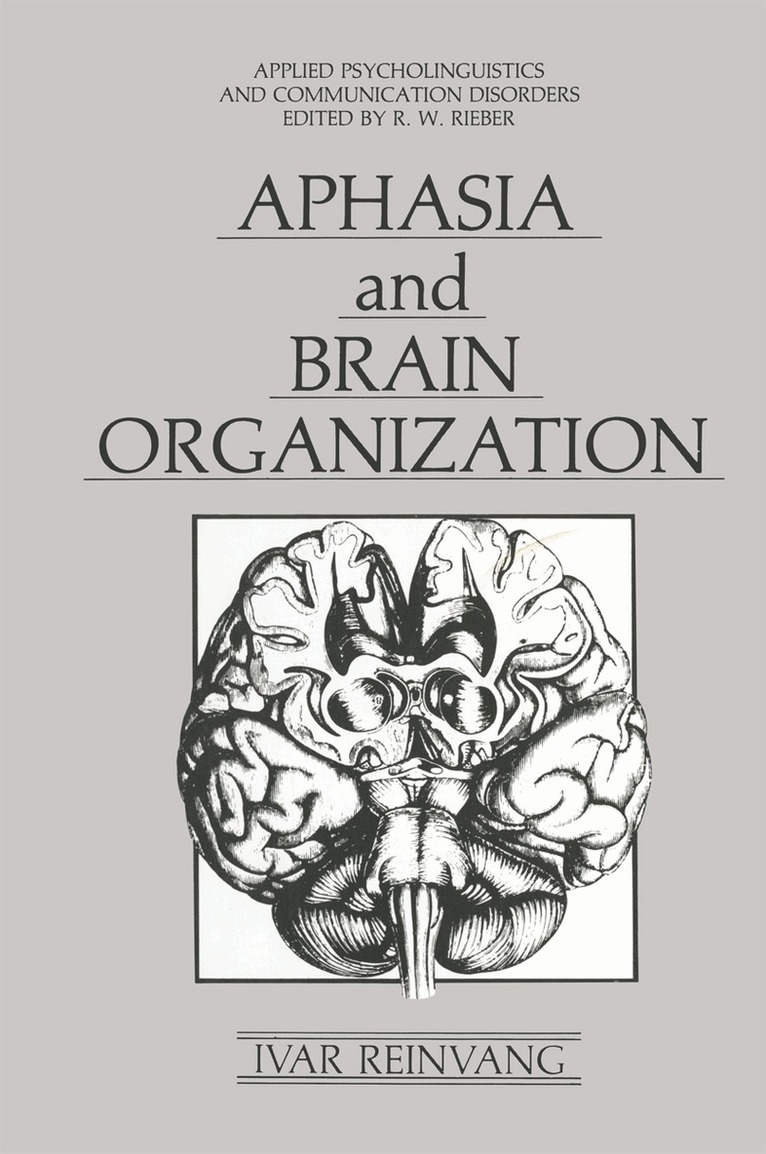
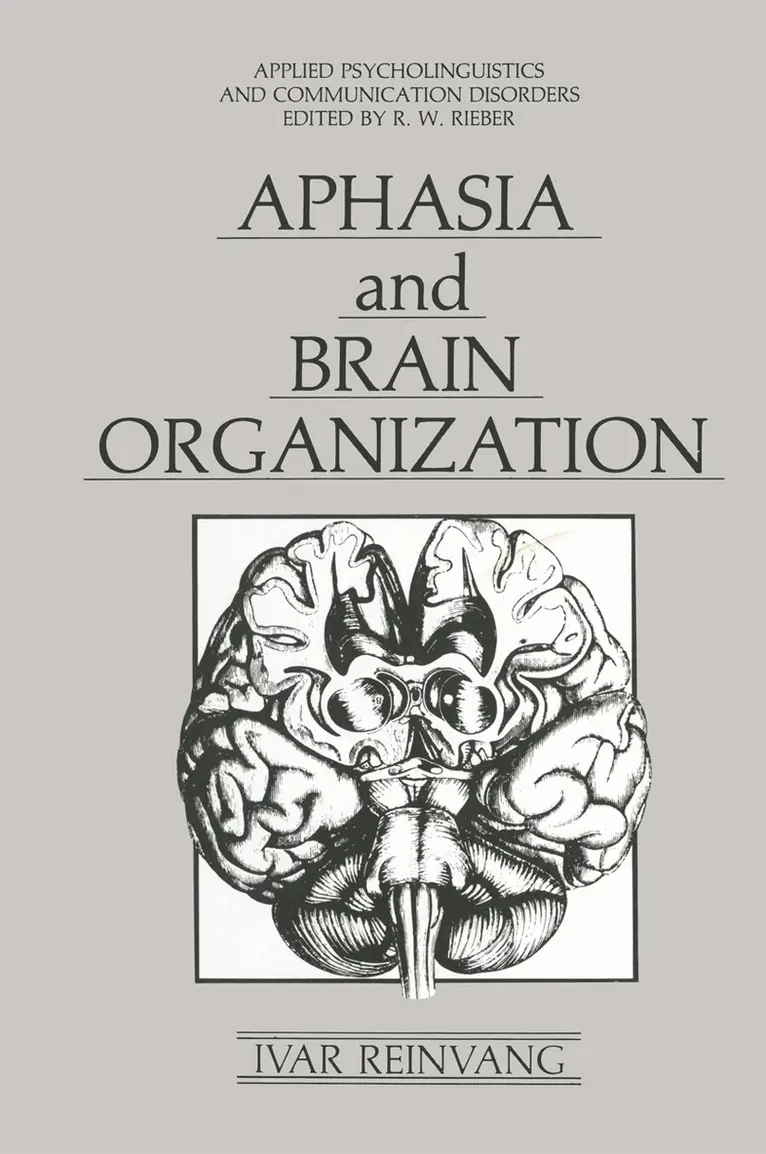
This book presents the work on aphasia coming out of the Institute for Aphasia and Stroke in Norway during its 10 years of existence. Rather than reviewing previously presented work, it was my desire to give a unified analysis and discussion of our accumulated data. The empirical basis for the analysis is a fairly large group (249 patients) investigated with a standard, comprehensive set of procedures. Tests of language functions must be developed anew for each language, but comparison of my findings with other recent compre hensive studies of aphasia is faciliated by close parallels in test meth ods (Chapter 2). The classification system used is currently the most accepted neurological system, but I have operationalized it for research purposes (Chapter 3). The analyses presented are based on the view that aphasia is an aspect of a multidimensional disturbance of brain function. Find ings of associated disturbances and variations in the aphasic condition over time have been dismissed by some as irrelevant to the study of aphasia as a language deficit. My view is that this rich and complex set of findings gives important clues to the organization of brain functions in humans. I present analyses of the relationship of aphasia to neuropsychological disorders in conceptual organization, memory, visuospatial abilities and apraxia (Chapters 4, 5, and 6), and I study the variations with time of the aphasic condition (Chapter 8).
1 947 kr
Skickas inom 10-15 vardagar
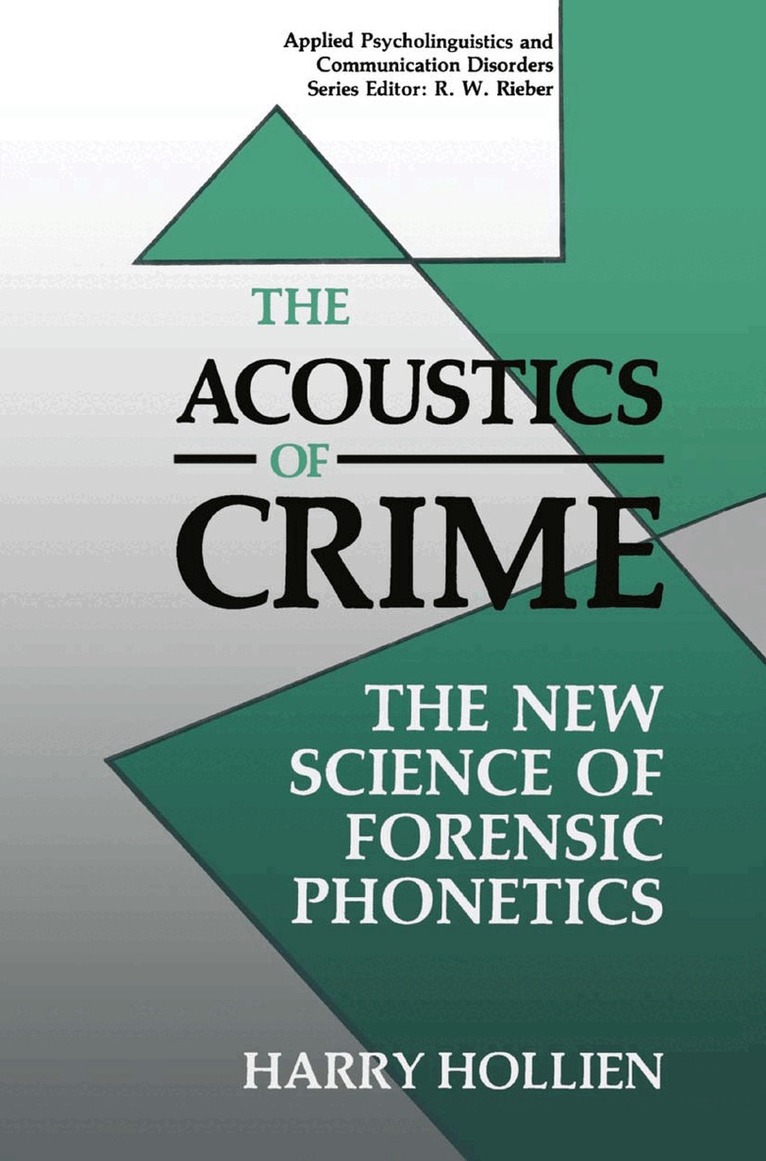
There are many reasons for writing a book; this one was conceived and devel oped mainly for two. First, a new area has emerged from within the forensic sciences-that of forensic phonetics. As with all new specialties, it is necessary to define it, identify its boundaries, justify its importance and compile a list of the elements it encompasses. This book attempts to outline these several rela tionships. Second, over the past decade I have become fascinated with forensics in general and the rapidly expanded subarea of forensic phonetics in particular. Admittedly, the latter field is one that is not as yet sufficiently appreciated-and much more needs to be known about its nature and extent. Yet, I have found it to be a most enjoyable area of study and my attempts to describe its domains were quite informative. It was especially interesting to struggle with the interfaces between forensic phonetics and related fields, and discover how they overlap. Only a few comments will be made about the book's contents here in the preface. For one thing, they are described in some detail in the first chapter.
519 kr
Skickas inom 10-15 vardagar
A discussion of the relationship between the human body and language seems to be the inevitable result of any reflexion by man on his particular condi tion. This has held true since the earliest records in written tradition. It may be an excessively ambitious undertaking to try to catalogue the themes in that reflexion and reconstruct its successive stages within the confines of a book of fairly modest proportions such as this one; but the challenge has been stimulating enough to call for a response. The long research work that preceded the writing of this book and the large collection of source material accumulated over a period of several years at least afford the writer the satisfaction of appreciating more than anyone else the care for accuracy and completeness that went into the gradual reduction of this text to manageable proportions. Moreover, it is hoped to make available to all those interested at a later date the rich and rare corpus of documents that forms the basis of this book, in an anthology of selected readings. It was originally intended to publish these documents in a companion volume to this book.
550 kr
Skickas inom 10-15 vardagar
1 062 kr
Skickas inom 10-15 vardagar
This book presents the work on aphasia coming out of the Institute for Aphasia and Stroke in Norway during its 10 years of existence. Rather than reviewing previously presented work, it was my desire to give a unified analysis and discussion of our accumulated data. The empirical basis for the analysis is a fairly large group (249 patients) investigated with a standard, comprehensive set of procedures. Tests of language functions must be developed anew for each language, but comparison of my findings with other recent compre hensive studies of aphasia is faciliated by close parallels in test meth ods (Chapter 2). The classification system used is currently the most accepted neurological system, but I have operationalized it for research purposes (Chapter 3). The analyses presented are based on the view that aphasia is an aspect of a multidimensional disturbance of brain function. Find ings of associated disturbances and variations in the aphasic condition over time have been dismissed by some as irrelevant to the study of aphasia as a language deficit. My view is that this rich and complex set of findings gives important clues to the organization of brain functions in humans. I present analyses of the relationship of aphasia to neuropsychological disorders in conceptual organization, memory, visuospatial abilities and apraxia (Chapters 4, 5, and 6), and I study the variations with time of the aphasic condition (Chapter 8).
2 365 kr
Skickas inom 10-15 vardagar
There are many reasons for writing a book; this one was conceived and devel oped mainly for two. First, a new area has emerged from within the forensic sciences-that of forensic phonetics. As with all new specialties, it is necessary to define it, identify its boundaries, justify its importance and compile a list of the elements it encompasses. This book attempts to outline these several rela tionships. Second, over the past decade I have become fascinated with forensics in general and the rapidly expanded subarea of forensic phonetics in particular. Admittedly, the latter field is one that is not as yet sufficiently appreciated-and much more needs to be known about its nature and extent. Yet, I have found it to be a most enjoyable area of study and my attempts to describe its domains were quite informative. It was especially interesting to struggle with the interfaces between forensic phonetics and related fields, and discover how they overlap. Only a few comments will be made about the book's contents here in the preface. For one thing, they are described in some detail in the first chapter.