Approaches to the Novel - Böcker
Visar alla böcker i serien Approaches to the Novel. Handla med fri frakt och snabb leverans.
5 produkter
5 produkter
Gone Girls, 1684-1901
Flights of Feminist Resistance in the Eighteenth- and Nineteenth-Century British Novel
Häftad, Engelska, 2026
320 kr
Kommande
In Gone Girls, 1684-1901, Nora Gilbert argues that the persistent trope of female characters running away from some iteration of 'home' played a far more influential role in the histories of both the rise of the novel and the rise of modern feminism than previous accounts have acknowledged. For as much as the eighteenth- and nineteenth-century British novel may have worked to establish the private, middle-class, domestic sphere as the rightful (and sole) locus of female authority in the ways that prior critics have outlined, it was also continually showing its readers female characters who refused to buy into such an agenda--refusals which resulted, strikingly often, in those characters' physical flights from home.
Gone Girls, 1684-1901
Flights of Feminist Resistance in the Eighteenth- and Nineteenth-Century British Novel
Inbunden, Engelska, 2023
1 530 kr
Skickas inom 3-6 vardagar
In Gone Girls, 1684-1901, Nora Gilbert argues that the persistent trope of female characters running away from some iteration of 'home' played a far more influential role in the histories of both the rise of the novel and the rise of modern feminism than previous accounts have acknowledged. For as much as the eighteenth- and nineteenth-century British novel may have worked to establish the private, middle-class, domestic sphere as the rightful (and sole) locus of female authority in the ways that prior critics have outlined, it was also continually showing its readers female characters who refused to buy into such an agenda--refusals which resulted, strikingly often, in those characters' physical flights from home. The steady current of female flight coursing through this body of literature serves as a powerful counterpoint to the ideals of feminine modesty and happy homemaking it was expected officially to endorse, and challenges some of novel studies' most accepted assumptions. Just as the #MeToo movement has used the tool of repeated, aggregated storytelling to take a stand against contemporary rape culture, Gone Girls, 1684-1901 identifies and amplifies a recurrent strand of eighteenth- and nineteenth-century British storytelling that served both to emphasize the prevalence of gendered injustices throughout the period and to narrativize potential ways and means for readers facing such injustices to rebel, resist, and get out.
1 271 kr
Kommande
The Tamil Realist Novel in South and Southeast Asia traces the emergence of Tamil literary realism as a transregional formation across India, Sri Lanka, Malaysia, and Singapore from the 1940s to the 1980s. Focusing on a pivotal period when realism was being actively redefined, the book argues that Tamil writers turned to the novel not simply as a mirror of social life, but as a generative form for negotiating political struggle, articulating new modes of individuality, and reimagining the self within rapidly changing postcolonial landscapes. Through close readings of authors such as Kaa. Naa. Subramanyam, Kalki Krishnamoorthy, C. N. Annadurai, Puthumaipithan, P. Singaram, Kalki Krishnamurthy, Poomani, T. M. C. Raghunathan, K. Daniel, and Sundara Ramasamy, the book explores how literary realism (yatharthvatham) was adopted as a self-conscious strategy for articulating Tamil ethnic identity, caste critique, and socialist thought. It situates the realist novel within a broader media environment--serialized fiction, political oratory, cinema, and popular periodicals--that shaped how the "real" was imagined and made legible. By situating Tamil literary production within a transregional frame, this book challenges dominant histories of modern South Asian literature that privilege Anglophone, Hindi-Urdu, and Bengali traditions. In doing so, it offers a new comparative framework for reading vernacular modernisms, one that foregrounds mobility, fracture, and interconnectedness over fixed origins or unified narratives.
1 208 kr
Skickas inom 5-8 vardagar
A constellational novel is a novel that has an associative, essayistic, digressive, and densely patterned prose form. The Constellational Novel aims to shed light on the field of contemporary literature by offering a definitive theory of the constellational novel. These novels are recognizable by the presence of a first-person narrator committed to drawing affinities and making connections among disparate things. Beginning with Marcel Proust, Klee's argument focuses on novels published over roughly the last two decades (between 2001 and 2020) by writers such as W. G. Sebald, Lisa Robertson, Teju Cole, Jacqueline Rose, and Olga Tokarczuk. Strikingly, it is often assumed that the attunement of their narrators to an unfolding web of potential interconnections holds an ethical promise of new ways of relating to oneself, others, and the world. Klee considers this implication of ethics and associative form to be peculiar and, in some important respects, unprecedented in the history of the novel. How is recognizing connections between things ethical, exactly? Could it not simply be the working of a resourceful or possibly even deranged intelligence, one that obsessively sees patterns everywhere? Why should the value of literature hinge on such an idiosyncratic process? And what does finding affinities have to do with the more familiar categories of novelistic form, like character and narrative? Taking inspiration from the work of Walter Benjamin, this book analyzes the distinctive ethics of affinity offered by these novels, and thus seeks to clarify one of the most intriguing and consequential developments in the contemporary novel.
1 208 kr
Skickas inom 5-8 vardagar
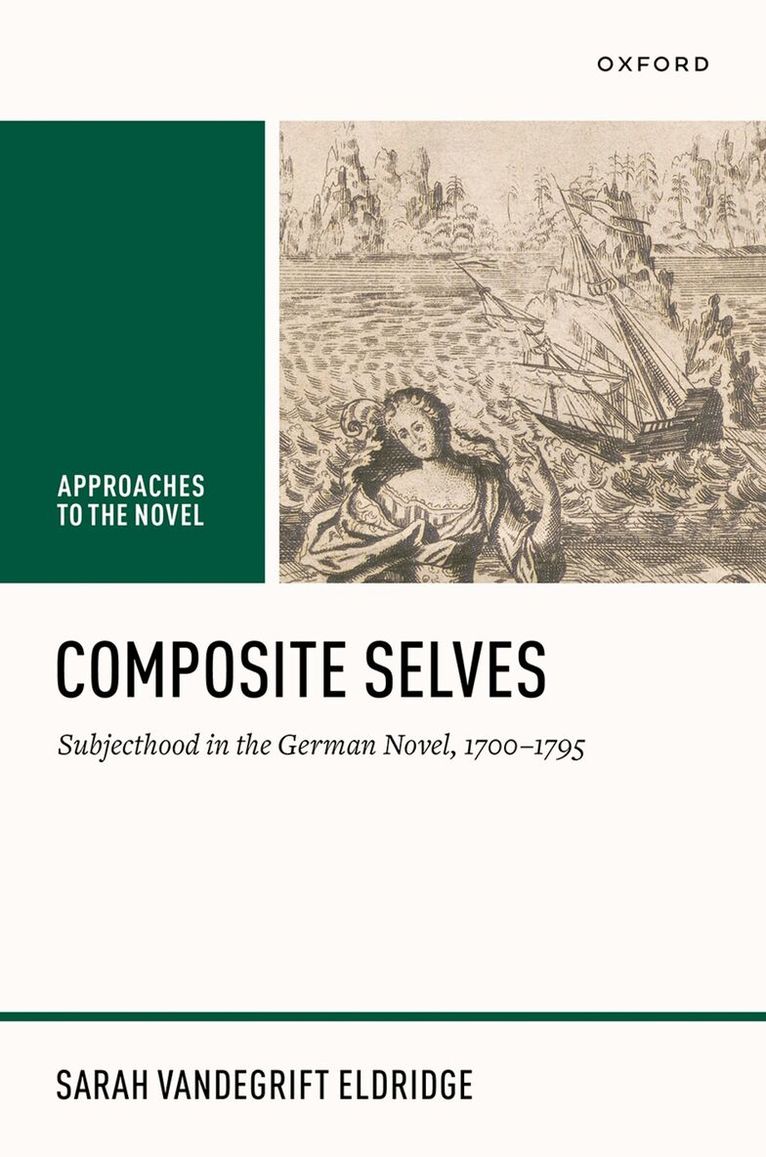
Composite Selves contributes to studies of the novel rooted in but continuing beyond the eighteenth century by reflecting on the ways in which a broad corpus of German-language novels reveals the self as composite. It uses detailed literary analysis to trace the changing and contingent models of selfhood presented in three clusters of novels: courtly novels from the 1720s and 30s; adventure novels from the 1750s; and sentimental novels of interiority from the 1770s and 80s. Drawing on insights from critical whiteness studies and historical analysis, it illuminates how literary selfhood changes over the century and how even the supposedly 'natural' interior selves of the late eighteenth-century novel are constituted by their encounters with an exterior literary world. Responding to debates over aesthetic education and literary universality that run through humanism, deconstruction, and cognitive literary studies, this project insists on recognizing the socially-turned qualities of novelistic 'selves' and on asking how these qualities relate to groups historically excluded from full selfhood and the social and cultural access that selfhood affords. This book is thus also a story about the construction of literary whiteness in the eighteenth-century novel--a story that fills a notable gap in German literary studies and thus uncovers a missing facet of narratives of the European novel from its earliest phases.