Archive Publishing - Böcker
Visar alla böcker i serien Archive Publishing. Handla med fri frakt och snabb leverans.
4 produkter
4 produkter
228 kr
Skickas
228 kr
Skickas
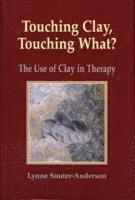
This book is a `MUST READ' for all play therapists and professionals trained to worktherapeutically with children, adolescents, families and groups.
235 kr
Skickas
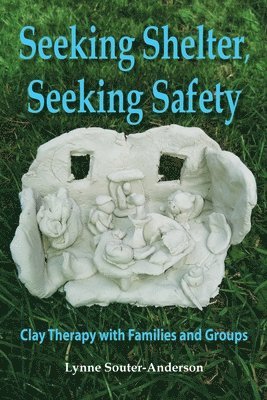
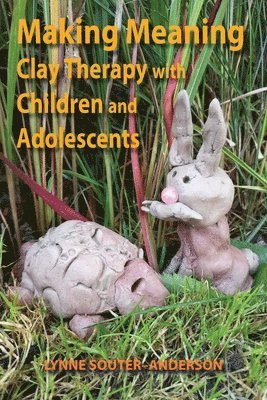
It is delightful to see another book by Lynne Souter-Anderson, contributing to the field of Clay Therapy. Her first book, TouchingClay, Touching What?: The Use of Clay in Therapy (2010), gave credence and credibility to using clay in therapy. It was apioneering book in the field of the creative arts therapies and gave a broad perspective on working in this modality with all age groups ; This new book is written for already qualified professionals who want to add the use of Clay Therapy in their work with children and adolescents. It is a hands-on book for practitioners and easy to read. However, the application of clay therapy in this specialist field requires appropriate additional training ; Lynne’s book is a significant addition to the small but growing library of books on the market about specialist therapeutic approaches with young children and adolescents. Play Therapy UK (PTUK)’s research analysis of over 300,000 therapeutic sessions using the ‘toolkit ‘(sand, music, clay, art/drawing, puppets, movement,drama, therapeutic story, creative visualisation etc.) has shown that clay is the fifth most used medium in play therapy sessions. It is therefore an important medium to offer to children and adolescents to support their healing process ; Lynne achieves a good balance between the application of theory and the actual process, which is always valuable for the reader. This is especially well demonstrated in Chapter 1, ‘Clay Therapy: Theoretical Underpinning of Clay Therapy’, in which the author explains her own theoretical basis, ‘The Theory of Contact: Physical, Emotional, Spiritual and Metaphorical’. She uses the analogy of the ’five lenses’ to demonstrate the stages of immersion and discovery in the clay therapy process, and includes an invaluable diagram to clarify her theory about the evolving nature of the process ; For me the book comes really alive through the ten case studies, which demonstrate how clay therapy has been used with the younger clients and adolescents, a client group that can prove to be difficult to reach and work with in therapy. The illustrations used deepen the experience and understanding of the process for the reader. Throughout the case studies glimpses of the quality of the therapist’s presence are seen, because she has the courage to show her own process thereby offering authenticity to the work ; To be able to do this effectively specialised training is required There is still very little published in the field, but it is heartening and exciting to see recent research initiatives described in the master’s dissertations produced by students at the Academy of Play and Child Psychotherapy and Cambridge University, which are included towards the end of the book ; Lynne’s book is a ‘must-read’ for all creative play and arts therapists.
167 kr
Skickas
On my thirty-eighth birthday, my mother, Margaret, died, crossing over with her now adult children at her bedside. Even now, years on, whenever I see mothers and daughters conversing intimately, my heart quietly grieves. Whoeverfirst said, "We're born alone, and we die alone" misses the point- the woman who bore you knows that she was with you on the day you were born!After my mother's death, I felt both bereft and fortunate to have been with her in the months before she died ofcancer. Her death felt doubly hard because I had lived abroad formany years. When I left the United States for Europe at twenty-five, she cried, "You will never come back!" Her words proved prophetic, for although I returned home often for visits, I settled in England.If you have loved and lost your mother, you will have a sense of grief personal to you, one that resurfaces when you suddenly have the urge to talk with her or give her a hug.Like me, you may wish you had got on better with your mother and had known her more as a person in her own right. It can be all the harder to accept the loss if shehas left without saying "I love you", or without your having the chance to say the same. There may not have been time to ask for mutual forgiveness and understanding, leaving you both with many unanswered "Whys?".Whether or not your mother has passed to the "other side", I present you, the reader, with a hope - that love continues beyond the grave. Even when the human relationship has been fraught, the departed soul, free from the adversitiesof life, will so often seek to love and make amends.I share here the story of how my relationship with my mother deepened after her death as she initiated me into lucid dreaming.Some readers might say my visions of my mother are nothing more than a projection of my dreaming mind. Others might argue that from beyond the veil she truly appeared.But I sense both are true.Either way, I hope that my own experience will speak to you in a personal way and that my sharing these dreams my mother taught me may reassure you that lovenever dies.