Barker Texas History Center Series - Böcker
Visar alla böcker i serien Barker Texas History Center Series. Handla med fri frakt och snabb leverans.
5 produkter
5 produkter
178 kr
Skickas inom 7-10 vardagar
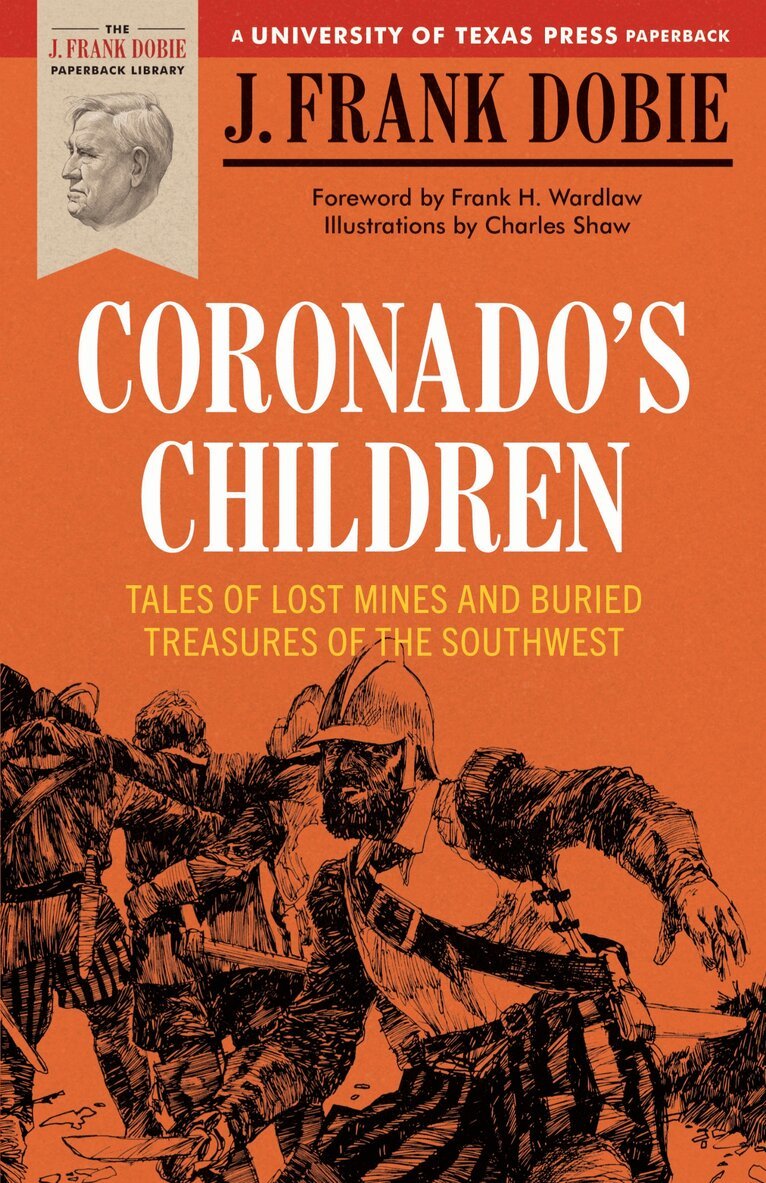
Written in 1930, Coronado's Children was one of J. Frank Dobie's first books, and the one that helped gain him national prominence as a folklorist. In it, he recounts the tales and legends of those hardy souls who searched for buried treasure in the Southwest following in the footsteps of that earlier gold seeker, the Spaniard Coronado."These people," Dobie writes in his introduction, "no matter what language they speak, are truly Coronado's inheritors.... l have called them Coronado's children. They follow Spanish trails, buffalo trails, cow trails, they dig where there are no trails; but oftener than they dig or prospect they just sit and tell stories of lost mines, of buried bullion by the jack load... "This is the tale-spinning Dobie at his best, dealing with subjects as irresistible as ghost stories and haunted houses.
296 kr
Skickas inom 10-15 vardagar
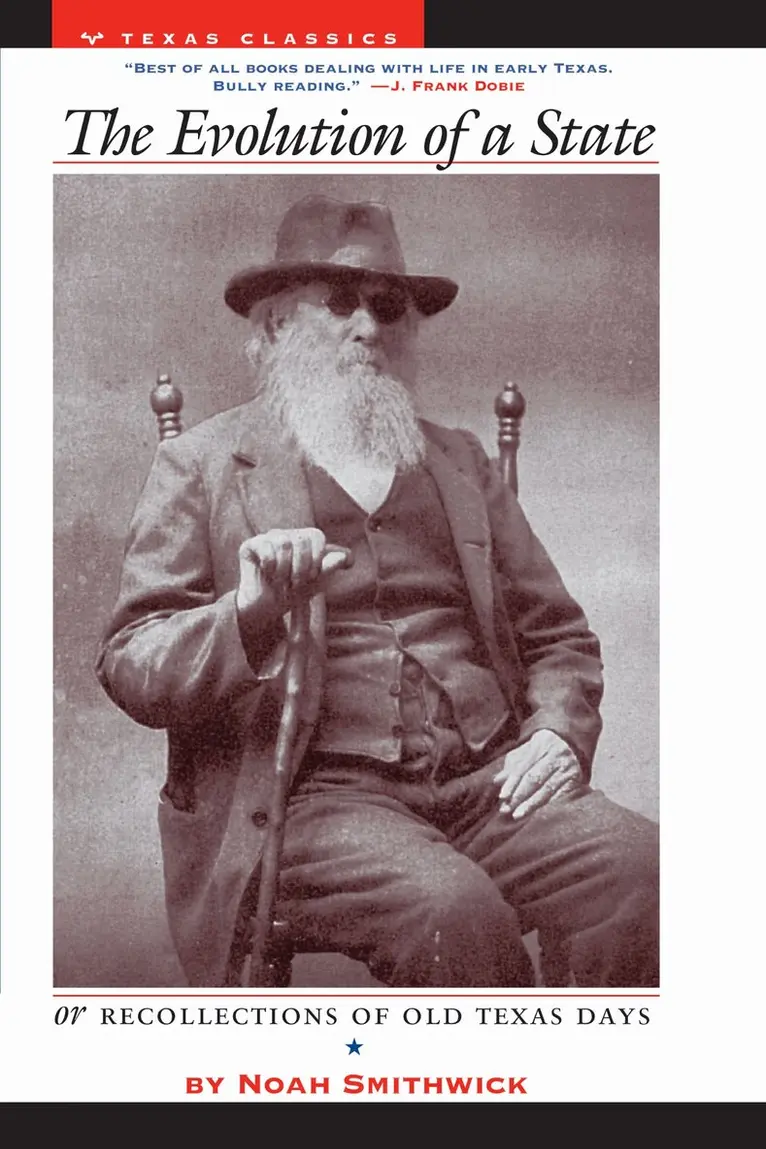
"I was but a boy in my nineteenth year, and in for adventure when I started out from Hopkinsville, Kentucky, with all my worldly possessions, consisting of a few dollars in money, a change of clothes, and a gun, of course, to seek my fortune in this lazy man's paradise." Noah Smithwick was an old man, blind and near his ninetieth year, when his daughter recorded these words. He had stayed on in "paradise"-Texas-from 1827 to 1861, when his opposition to secession took him to California. The Evolution of a State is his story of these "old Texas days." A blacksmith and a tobacco smuggler, Noah Smithwick made weapons for the Battle of ConcepciÓn, and he fought in that battle. With Hensley's company, he chased the Mexican army south of the Rio Grande after the Battle of San Jacinto. Twice he served with the Texas Rangers. In quieter times, he was a postmaster and justice of the peace in little Webber's Prairie. Eyewitness to so much Texas history, Smithwick recounts his life and adventures in a simple, straightforward style, with a wry sense of humor. His keen memory for detail-what the people wore, what they ate, how they worked and played- vividly evokes the sights, sounds, and smells of the frontier. First published in part by the Dallas Morning News, Smithwick's recollections gained such popularity that they were published in book form, as The Evolution of a State, in 1900. This new edition of a Texas classic makes widely available for the first time in many years this "best of all books dealing with life in early Texas."
277 kr
Skickas inom 10-15 vardagar
A crack shot, expert skinner and tanner, seamstress, sculptor, and later writer-a list that only hints at her intelligence and abilities-Ella Elgar Bird Dumont was one of those remarkable women who helped tame the Texas frontier. First married at sixteen to a Texas Ranger, she followed her husband to Comanche Indian country in King County, where they lived in a tepee while participating in the final slaughter of the buffalo. Living off the land until the frontier was opened for ranching, Ella and Tom Bird typified the Old West ideals of self-sufficiency and generosity, with a hesitancy to complain about the hard life in the late 1800s. Yet, in one important way, Ella Dumont was unsuited for life on the frontier. Endowed with an instinctive desire and ability to carve and sculpt, she was largely prevented from pursuing her talents by the responsibilities of marriage and frontier life and later, widowhood with two small children. Even though her second marriage, to Auguste Dumont, made life more comfortable, the realities of her existence still prevented the fulfillment of her artistic longings. Ella Bird Dumont’s memoir is rich with details of the frontier era in Texas, when Indian depredations were still a danger for isolated settlers, where animals ranged close enough to provide dinner and a new pair of gloves, and where sheer existence depended on skill, luck, and the kindness of strangers. The vividness and poignancy of her life, coupled with the wealth of historical material in the editor’s exhaustive notes, make this Texas pioneer’s autobiography a very special book.
269 kr
Skickas inom 10-15 vardagar
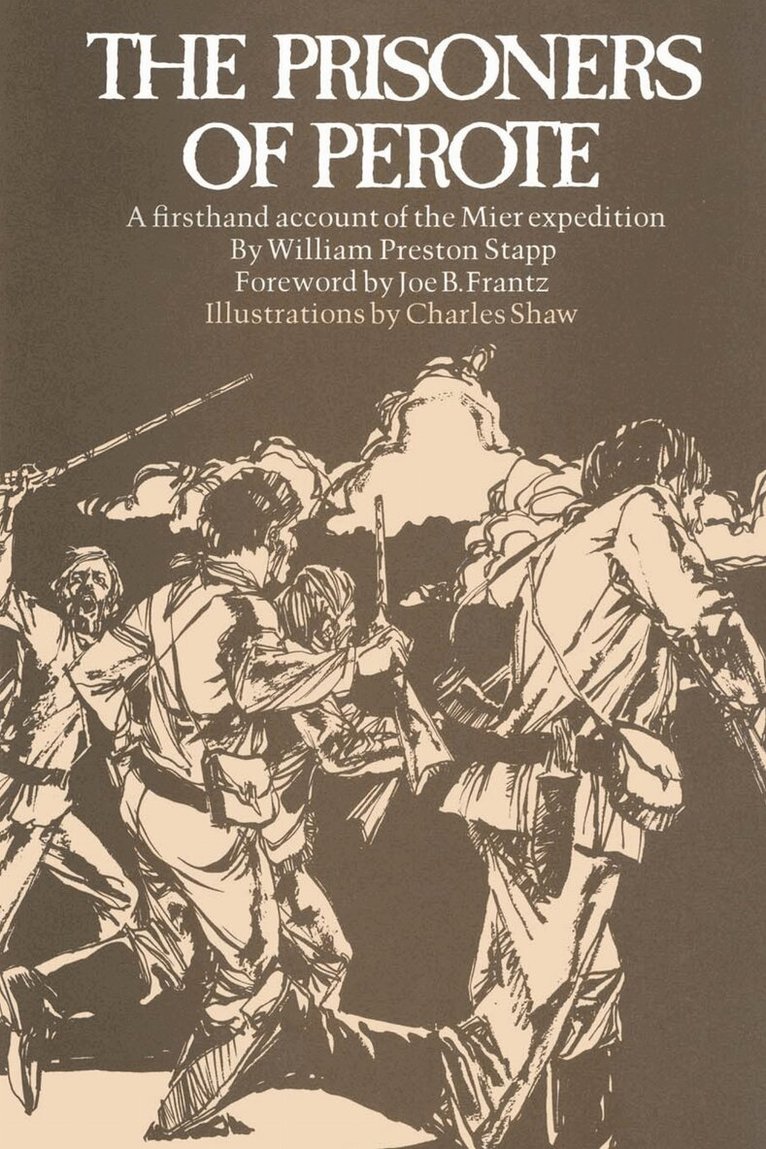
In late 1842, Private William Preston Stapp and about three hundred other citizens of the Republic of Texas took it upon themselves to invade Mexico. They intended to retaliate for a recent Mexican attack on San Antonio and to humiliate President Sam Houston, who had been hesitant to seek revenge.Stapp provides a closely observed, day-by-day narrative of the disastrous adventure later known as the Mier expedition. While his style might be described as "elegantly restrained" in comparison to the literary excesses of that early Victorian age, Stapp's flair for drama and description makes for colorful reading.In response to the public outrage prompted by the San Antonio incident, Houston issued a presidential proclamation inviting volunteers for a retaliatory expedition across the Rio Grande. After the bloodless "capture" and pillage of two Mexican border towns, he called the volunteers back home. Most were relieved to comply, but some felt compelled to pursue the honor of the Republic further, and the Mier expedition was launched on December 20, 1842. On the day after Christmas, all save a forty-man camp guard were captured outside of Mier, a few miles across the Mexican border.The prisoners faced a brutal forced march to Mexico City. Stapp was one of a large group that escaped along the way, became lost in the mountains, and suffered badly from hunger and thirst before recapture. He survived the notorious Black Bean Episode in which 17 of the 176 returned escapees were shot after drawing black beans in a lottery. The Texans were delivered to Perote Prison near Mexico City in September 1843, where a few of them tunneled to freedom and many more died in captivity. Mexico released the last of the prisoners in 1844, and Stapp was among them.First published in 1845 and later issued in pamphlet form in 1933 by the La Grange Journal, The Prisoners of Perote is a fascinating view of a painful episode in Texas history.The foreword by Joe B. Frantz provides a perspective on the Texas-Mexico relations during this period "when both countries were shaking down and had not yet found their way." He points out that The Prisoners of Perote provides some clues to the reasons behind the inherent tenseness that exists between Texas and Mexico today.
423 kr
Skickas inom 10-15 vardagar
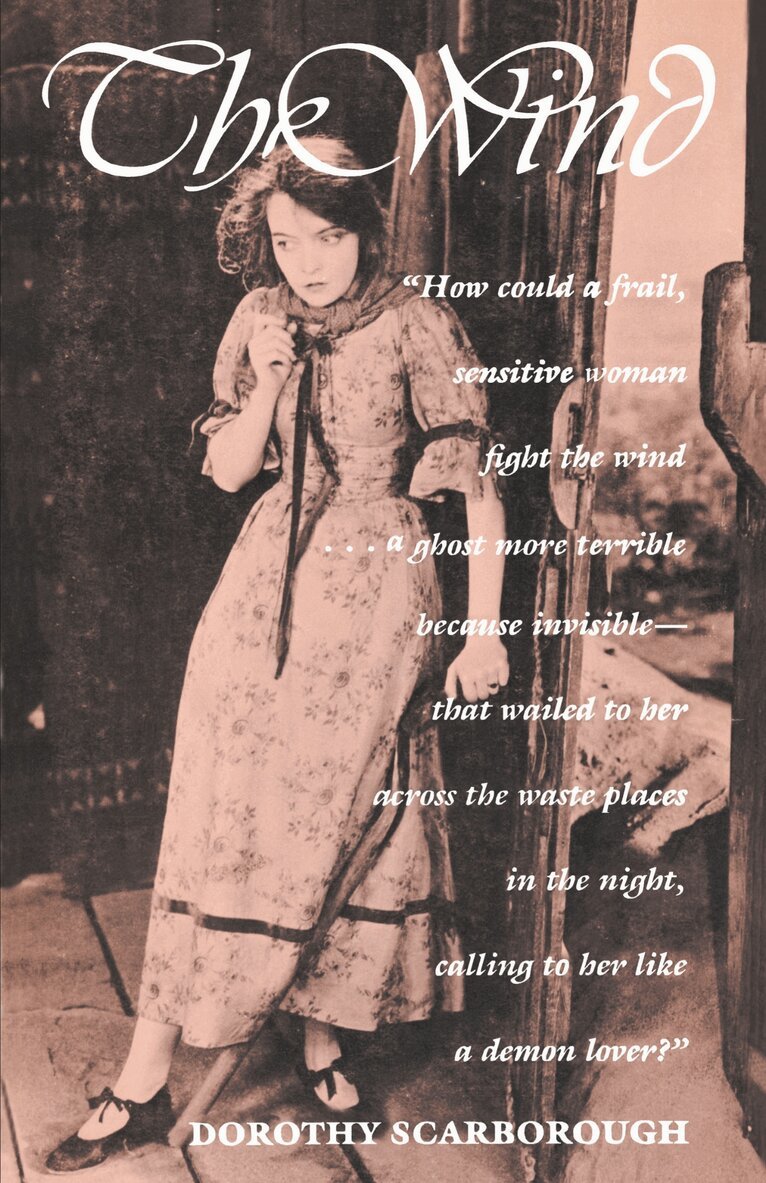
The Wind stirred up a fury among Texas readers when it was first published in 1925. This is the story of Letty, a delicate girl who is forced to move from lush Virginia to desolate West Texas. The numbing blizzards, the howling sand storms, and the loneliness of the prairie all combine to undo her nerves. But it is the wind itself, a demon personified, that eventually drives her over the brink of madness. While the West Texas Chamber of Commerce rose up in anger over this slander of their state, Dorothy Scarborough's depiction of the cattle country around Sweetwater during the drought of the late 1880s is essentially accurate. Her blend of realistic description, authentic folklore, and a tragic heroine, bound together by a supernatural theme, is unique in Southwestern literature. As a story by and about a woman, The Wind is a rarity in the early chronicles of the cattle industry. It is also one of the first novels to deal realistically with the more negative aspects of the West. Sylvia Ann Grider's foreword reports on the life and work of Dorothy Scarborough, a native Texan and a well-respected scholar.