Bioengineering of Materials - Böcker
Visar alla böcker i serien Bioengineering of Materials. Handla med fri frakt och snabb leverans.
3 produkter
3 produkter
1 069 kr
Skickas inom 10-15 vardagar
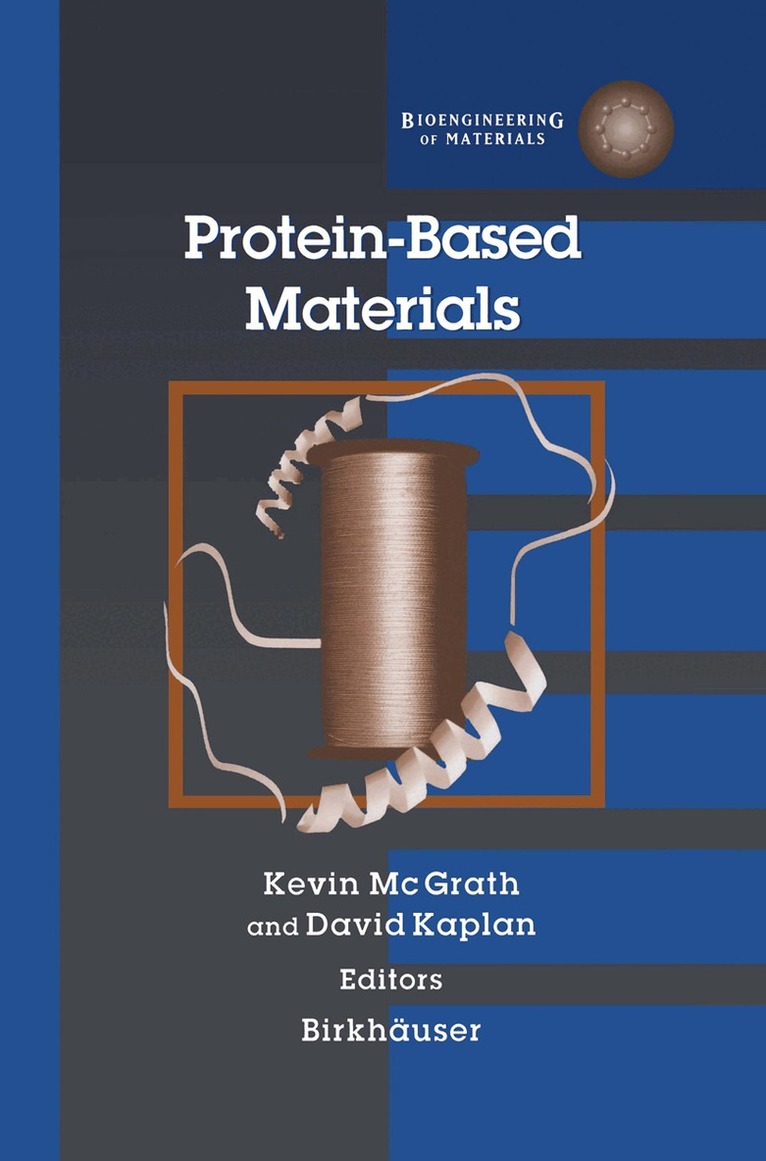
This review of protein-based materials from a materials science perspective is divided into three sections: the chemical and biological approaches to this class of materials; introductions to the key classes of protein materials - silks, protein composites and elastomeric and adhesive proteins; and processing issues, such as liquid crystal phase formation, the spinning of protein fibres, formation of protein-based films and coatings, and self-organizing protein systems. This book is the first in a sequence of Birkhauser texts describing biologically-inspired materials and their role in biotechnology. This interdisciplinary field, best described by the term "biomimetics" (as in mimicking nature), is a cross-section of biology, chemistry, materials science and engineering.
1 069 kr
Skickas inom 10-15 vardagar
The properties of materials depend on the nature of the macromolecules, small molecules and inorganic components and the interfaces and interactions between them. Polymer chemistry and physics, and inorganic phase structure and density are major factors that influence the performance of materials. In addition, molecular recognition, organic-inorganic interfaces and many other types of interactions among components are key issues in determining the properties of materials for a wide range of applications. Materials require ments are becoming more and more specialized to meet increasingly demand ing needs, from specific environmental stresses to high performance or biomedical applications such as matrices for controlled release tissue scaf folds. One approach to meet these performance criteria is to achieve better control over the tailoring of the components and their interactions that govern the material properties. This goal is driving a great deal of ongoing research in material science laboratories. In addition, control at the molecular level of interactions between these components is a key in many instances in order to reach this goal since traditional approaches used to glue, stitch or fasten parts together can no longer suffice at these new levels of manipulation to achieve higher performance. In many cases, molecular recognition and self-assembly must begin to drive these processes to achieve the levels of control desired. This same need for improved performance has driven Nature over millenia to attain higher and higher complexity.
1 101 kr
Skickas inom 10-15 vardagar
Nature learned long ago how useful proteins are as a diverse set of building blocks to make materials with very diverse properties. Spider webs, egg whites, hair follicles, and skeletal muscles are all largely protein. This book provides a glimpse into both nature's strategies for the design and produc tion of protein-based materials, and how scientists have been able to go beyond the constraints of natural materials to produce synthetic analogs with potentially wider ranges of properties. The work presented is very much the beginning of the story. Only recently has there been much progress in obtaining a molecular understanding of some of nature's com plex materials, and the mimicry or replacement of these by synthetic or genetically engineered variants is a field still in its infancy. Yet this book will serve as a useful introduction for those wishing to get started in what is sure to be an active and productive field throughout the 21st century. The authors represent a wide range of interests and expertise, and the topics chosen are comprehensive. Charles R. Cantor Center for Advanced Biotechnology Boston University Series Preface The properties of materials depend on the nature of the macromolecules, small molecules and inorganic components and the interfaces and interac tions between them. Polymer chemistry and physics, and inorganic phase structure and density are major factors that influence the performance of materials.