Black Feminism on the Edge - Böcker
Visar alla böcker i serien Black Feminism on the Edge. Handla med fri frakt och snabb leverans.
10 produkter
10 produkter
1 151 kr
Skickas inom 7-10 vardagar
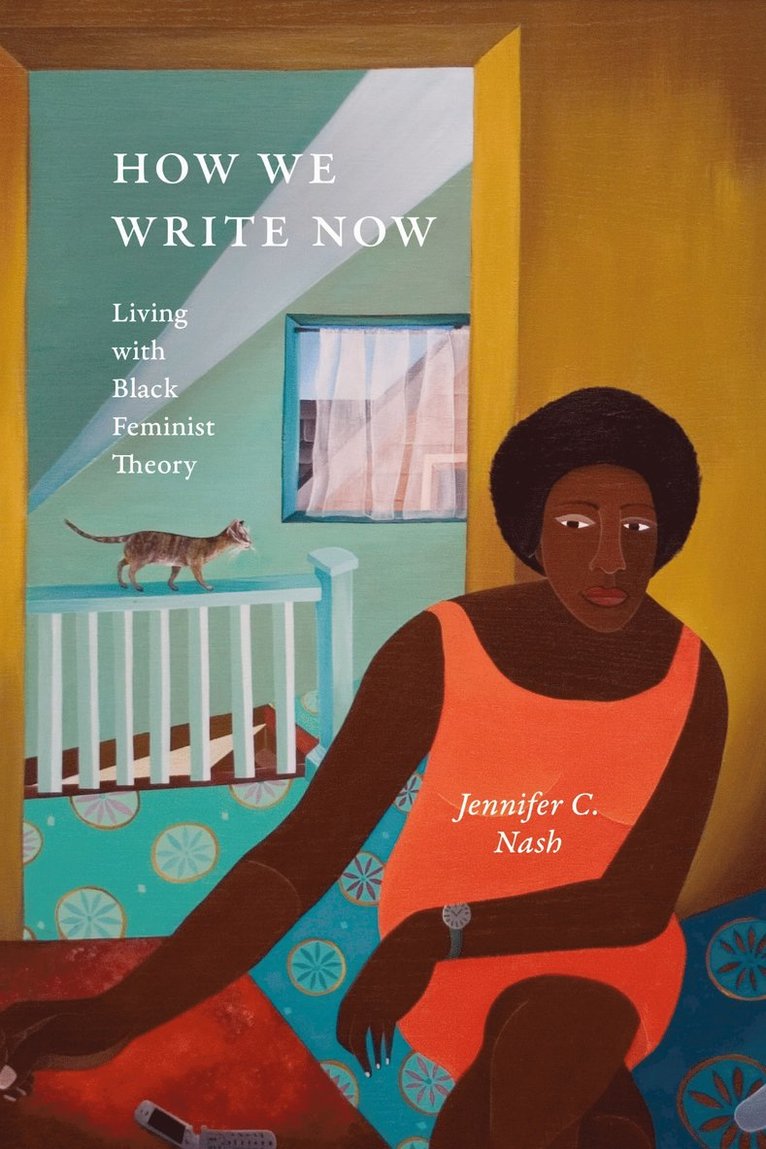
In How We Write Now Jennifer C. Nash examines how Black feminists use beautiful writing to allow writers and readers to stay close to the field’s central object and preoccupation: loss. She demonstrates how contemporary Black feminist writers and theorists such as Jesmyn Ward, Elizabeth Alexander, Christina Sharpe, and Natasha Trethewey mobilize their prose to ask readers to feel, undo, and reassemble themselves. These intimate invitations are more than a set of tools for decoding the social world; Black feminist prose becomes a mode of living and feeling, dreaming and being, and a distinctly affective project that treats loss as not only paradigmatic of Black life but also an aesthetic question. Through her own beautiful writing, Nash shows how Black feminism offers itself as a companion to readers to chart their own lives with and in loss, from devastating personal losses to organizing around the movement for Black lives. Charting her own losses, Nash reminds us that even as Black feminist writers get as close to loss as possible, it remains a slippery object that troubles memory and eludes capture.
1 452 kr
Skickas inom 7-10 vardagar
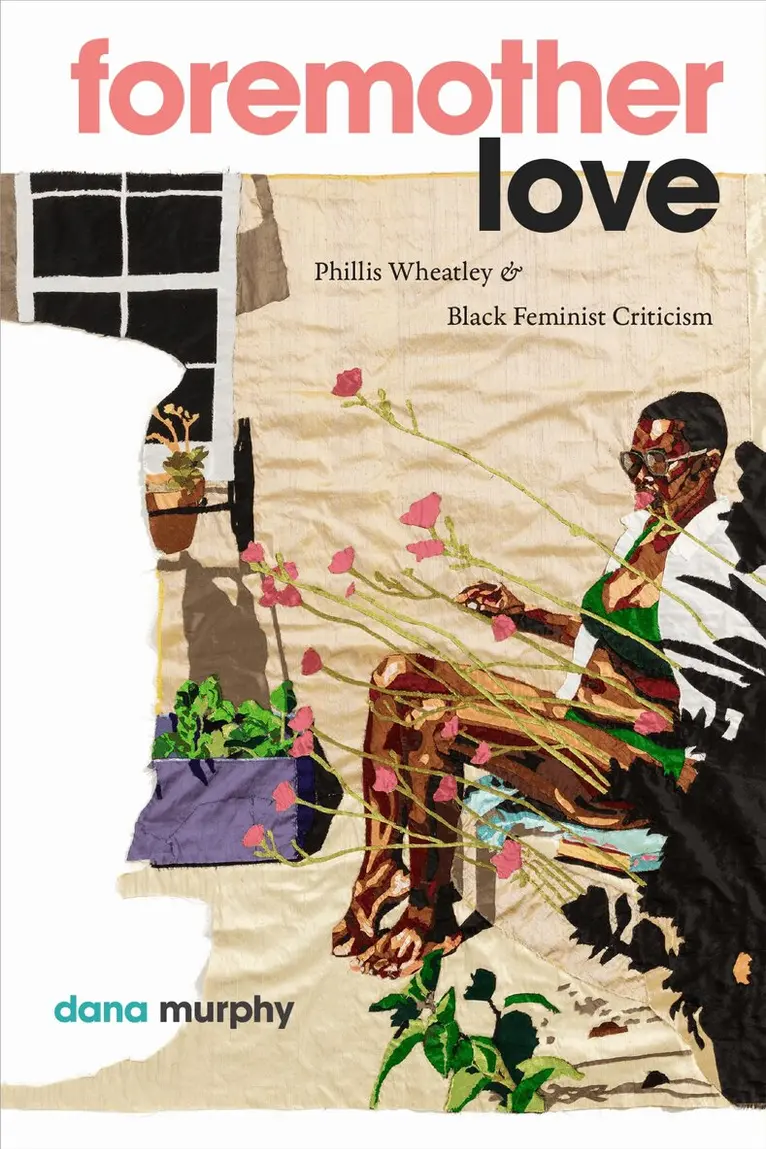
In Foremother Love, Dana Murphy examines the importance of eighteenth-century poet Phillis Wheatley as a foundational figure for Black feminist criticism. Murphy establishes Phillis (as she refers to her) as a writer who wrote in response to and in conversation with other creators as well as a critic who was invested in sharing, explaining, and evaluating her own and others’ work and contexts. Indeed, Phillis played a key role in the development of what Murphy calls “foremother love” - the Black feminist depiction of the love of an unrelated feminist ancestor as a legitimate relation for the practice of inheritance, mourning, liberation, and friendship. Drawing on the work of Barbara Christian, June Jordan, Audre Lorde, Barbara Smith, and others, Murphy shows that Black feminist criticism becomes a transhistorical theorization when read in conjunction with Phillis’s labor and vision. Revealing how Phillis lives on in Black feminist criticism, Murphy contends that foremother love is an ethic of critical care that implores readers to recognize the affective labor of all those working in the field.
1 452 kr
Skickas inom 7-10 vardagar
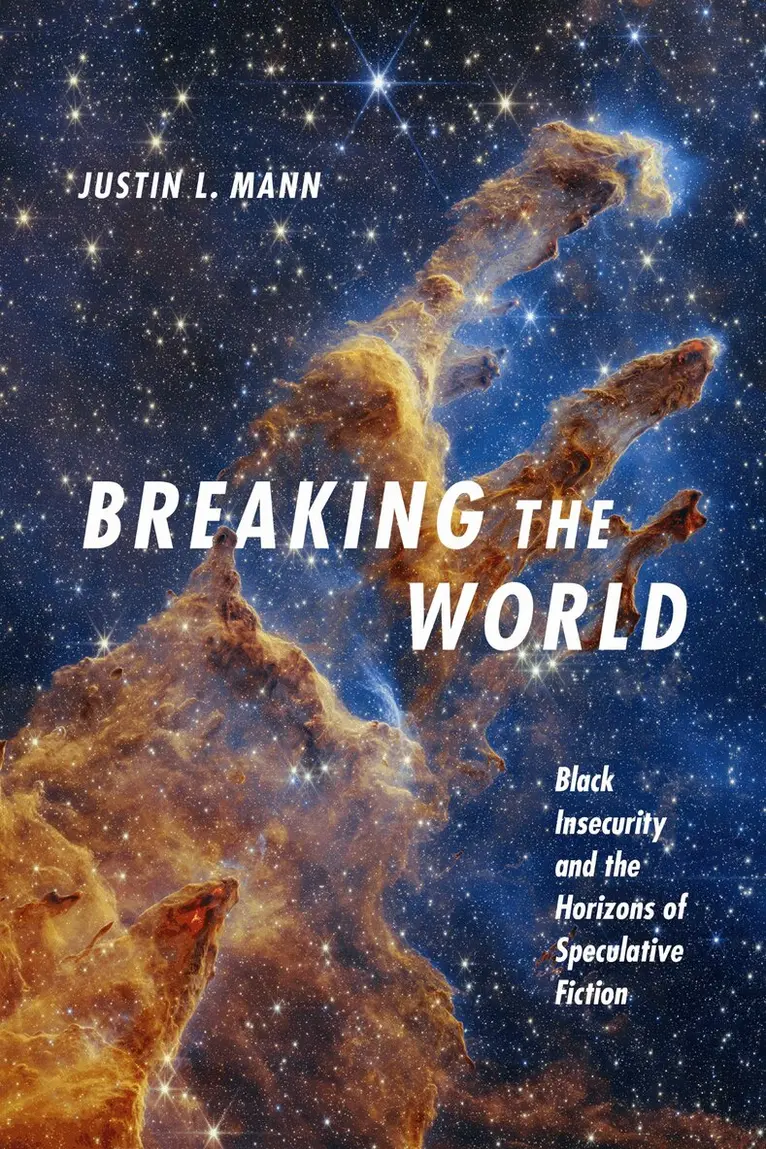
In Breaking the World, Justin L. Mann argues that Black speculative fictions are an essential but overlooked archive for understanding the modern security ambitions of the United States. Foregrounding how the contemporary security state renders Black life insecure, Mann theorizes worldbreaking: speculative narrative, aesthetic, and ethical strategies that Black writers, musicians, and artists employ to unmake the processes by which state and parastate agents augment and build up the tools, techniques, and infrastructures intended to make people safer. He shows how the techniques of worldbreaking in the works of Octavia E. Butler, Colson Whitehead, N.K. Jemisin, Janelle MonÁe, and the Marvel and DC Cinematic Universes chart the distinction between securitization and Black insecurity. These works illuminate the difference between the antiblackness of state security and the power of Black collectivity. Contending that speculative worldbreaking is a vital part of the Black radical imagination, Mann shows that its destructive strategies can help transform worlds of securitization to worlds of liberation.
294 kr
Skickas inom 7-10 vardagar
In How We Write Now Jennifer C. Nash examines how Black feminists use beautiful writing to allow writers and readers to stay close to the field’s central object and preoccupation: loss. She demonstrates how contemporary Black feminist writers and theorists such as Jesmyn Ward, Elizabeth Alexander, Christina Sharpe, and Natasha Trethewey mobilize their prose to ask readers to feel, undo, and reassemble themselves. These intimate invitations are more than a set of tools for decoding the social world; Black feminist prose becomes a mode of living and feeling, dreaming and being, and a distinctly affective project that treats loss as not only paradigmatic of Black life but also an aesthetic question. Through her own beautiful writing, Nash shows how Black feminism offers itself as a companion to readers to chart their own lives with and in loss, from devastating personal losses to organizing around the movement for Black lives. Charting her own losses, Nash reminds us that even as Black feminist writers get as close to loss as possible, it remains a slippery object that troubles memory and eludes capture.
354 kr
Skickas inom 7-10 vardagar
In Foremother Love, Dana Murphy examines the importance of eighteenth-century poet Phillis Wheatley as a foundational figure for Black feminist criticism. Murphy establishes Phillis (as she refers to her) as a writer who wrote in response to and in conversation with other creators as well as a critic who was invested in sharing, explaining, and evaluating her own and others’ work and contexts. Indeed, Phillis played a key role in the development of what Murphy calls “foremother love” - the Black feminist depiction of the love of an unrelated feminist ancestor as a legitimate relation for the practice of inheritance, mourning, liberation, and friendship. Drawing on the work of Barbara Christian, June Jordan, Audre Lorde, Barbara Smith, and others, Murphy shows that Black feminist criticism becomes a transhistorical theorization when read in conjunction with Phillis’s labor and vision. Revealing how Phillis lives on in Black feminist criticism, Murphy contends that foremother love is an ethic of critical care that implores readers to recognize the affective labor of all those working in the field.
339 kr
Skickas inom 7-10 vardagar
In Breaking the World, Justin L. Mann argues that Black speculative fictions are an essential but overlooked archive for understanding the modern security ambitions of the United States. Foregrounding how the contemporary security state renders Black life insecure, Mann theorizes worldbreaking: speculative narrative, aesthetic, and ethical strategies that Black writers, musicians, and artists employ to unmake the processes by which state and parastate agents augment and build up the tools, techniques, and infrastructures intended to make people safer. He shows how the techniques of worldbreaking in the works of Octavia E. Butler, Colson Whitehead, N.K. Jemisin, Janelle MonÁe, and the Marvel and DC Cinematic Universes chart the distinction between securitization and Black insecurity. These works illuminate the difference between the antiblackness of state security and the power of Black collectivity. Contending that speculative worldbreaking is a vital part of the Black radical imagination, Mann shows that its destructive strategies can help transform worlds of securitization to worlds of liberation.
1 347 kr
Kommande
Inside the Body of Black Feminism charts a cultural genealogy of anti-racist and feminist engagement with some of the most objectified internal “parts” of racist medical and scientific inquiry: bones and blood, brains and hearts, wombs and guts. In a move counterintuitive to Black feminism’s emphasis on externalized representations of the body, Samantha Pinto reinterprets the relationship between embodiment, health, and race through cultural archives that reimagine the inside of the Black body. Working through materials such as medical textbooks, memoirs, data visualizations, museum displays, speculative fiction, and horror films, Pinto explores how a visually inaccessible corporeal interior becomes discernable and racialized in the public sphere. Inside the Body of Black Feminism engages expressive cultural work to ask how we might know the inside of the black body differently through Black feminist theory and how scientific and medical inquiry might enable us to understand political subjectivity anew.
1 659 kr
Kommande
292 kr
Kommande
Inside the Body of Black Feminism charts a cultural genealogy of anti-racist and feminist engagement with some of the most objectified internal “parts” of racist medical and scientific inquiry: bones and blood, brains and hearts, wombs and guts. In a move counterintuitive to Black feminism’s emphasis on externalized representations of the body, Samantha Pinto reinterprets the relationship between embodiment, health, and race through cultural archives that reimagine the inside of the Black body. Working through materials such as medical textbooks, memoirs, data visualizations, museum displays, speculative fiction, and horror films, Pinto explores how a visually inaccessible corporeal interior becomes discernable and racialized in the public sphere. Inside the Body of Black Feminism engages expressive cultural work to ask how we might know the inside of the black body differently through Black feminist theory and how scientific and medical inquiry might enable us to understand political subjectivity anew.
334 kr
Kommande