Bodega Marine Laboratory Marine Science Series - Böcker
Visar alla böcker i serien Bodega Marine Laboratory Marine Science Series. Handla med fri frakt och snabb leverans.
2 produkter
2 produkter
534 kr
Skickas inom 10-15 vardagar
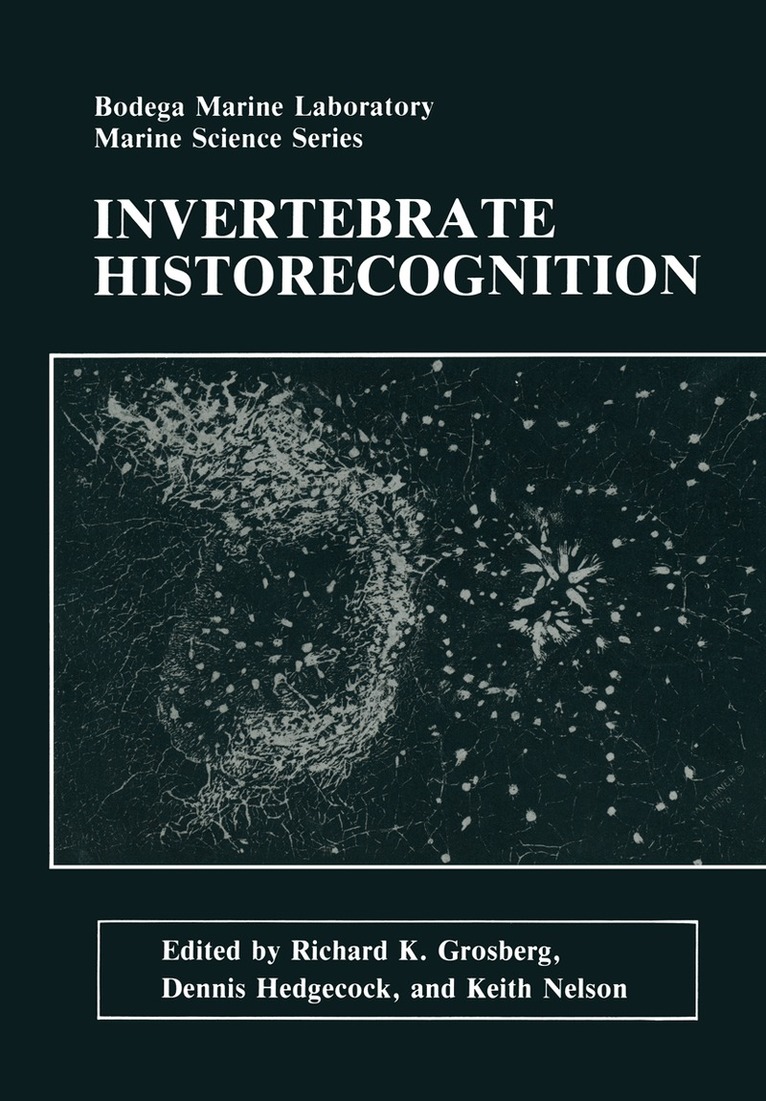
Historecognition, broadly defined, spans the processes responsible for the regulation of the genetic integrity of self in the face of conspecific (allogeneic) and heterospecific (xenogeneic) nonself. The existence of precise historecognition systems in the invertebrates can be traced back to Bancroft's discovery in 1903 of ,strain specific regulation of colony fusion in the compound ascidian Botryllus schlosseri, and Wilson's report in 1907 of species-specific sponge re-aggregation. Despite this provocative history, invertebrate historecognition remained largely unexplored for over half a century, while studies of vertebrate immune systems prospered. Then, in the 1970's, interest in invertebrate his tore cognition grew once again, this time cast largely in terms of understanding the mechanisms and evolutionary history of vertebrate immunity. From our current understanding of vertebrate immunity and invertebrate historecognition, three generalizations about their relationships can be drawn. First, despite substantial knowledge about the genetics and molecular biology of cell recognition in the context of vertebrate immunity and to a lesser extent of invertebrate historecognition, the evolutionary relationships between invertebrate self/nonself recognition and vertebrate immune systems remain obscure. Second, although vertebrate allograft recognition is of dubious functional significance itself (because intergenotypic cellular contacts are unusual, except during fertilization and pregnancy), natural allografts occur frequently as sedentary invertebrates grow and compete for living space. It is now known that the operation of invertebrate his tore cognition systems can profoundly affect the outcomes of competitive interactions by mediating allogeneic aggressivebehavior and somatic fusion.
1 062 kr
Skickas inom 10-15 vardagar
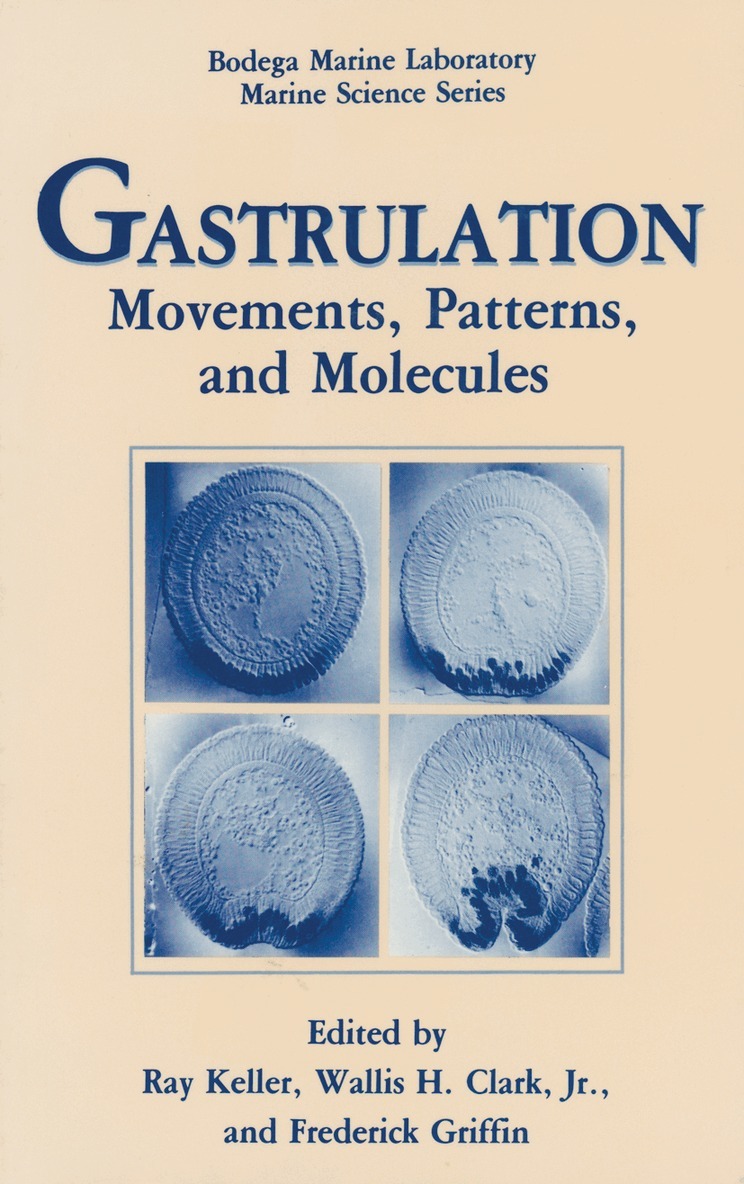
Gastrulation is a fundamental process of early embryonic development. It involves virtually every aspect of cell and developmental biology and results in the formation of fundamental structural elements around which a developing animal's body plan is organized. As such it is not only an important process, but also one that is complicated and not easily dissected into its component parts. To understand the mechanisms of gastrulation one must acknowledge that gastrulation is fundamentally a biomechanical process (that is, a problem of cells generating forces in a three dimensional array, patterned in space and time such that appropriate tissue movements are executed). Three intertwined questions emerge: what cell activities generate forces, how are these cell activities patterned in space and time, and how are the resulting forces harnessed in three dimensional domains? To address these issues it is important to define and characterize regional cell behaviors and to learn how they are patterned in the egg and/ or by subsequent cell and tissue interactions. At the biochemical level, what are the cellular and extracellular molecules that control cell behavior? Finally, how are specific patterns of cellular activity integrated to produce tissue behavior? The task of answering the above questions, an immense task in itself, is compounded by the fact that the morphogenetic movements of gastrulation and their underlying mechanisms vary between different organisms.