Texas Experience, Books Made Possible by Sarah '84 and Mark '77 Philpy - Böcker
Visar alla böcker i serien Texas Experience, Books Made Possible by Sarah '84 and Mark '77 Philpy. Handla med fri frakt och snabb leverans.
14 produkter
14 produkter
496 kr
Skickas inom 7-10 vardagar
In the vast, sparsely populated area of West Texas known as the Big Bend, life takes place on a different scale. The nearest neighbor can be forty miles away, perhaps located not just in another town but another country, the border historically less obvious than it is today. In the small-town, bicultural atmosphere of the Big Bend, musicians from both sides of the Rio Grande come together, creating music that spans genre, culture, and international borders.From Ojinaga, Mexico, to Alpine, Texas, and most points in between, writer Marcia Hatfield Daudistel and photographer Bill Wright have gathered, through hours of interviews, a trove of anecdotes, images, and personal recollections that explore what makes music - and musicians - in the Big Bend slightly different from anything found elsewhere. Playing big band music one night for a dance at Marfa Army Air Field and border polkas the next evening at a quinceaÑera; playing a traditional norteÑo and conjunto but throwing in the saxophone to change the dynamic; making a living with their music or keeping their day jobs and playing when they can: these are the stories that demonstrate the cultural and musical versatility required for musicians in the Big Bend.From the porch at Terlingua's Starlight Theatre to the jukebox at Lajitas, Across the Border and Back: Music in the Big Bend features the people, the history, the local color, the venues, and, above all, the distinctive attitude that have defined music-making in this place, at once one of the most remote and most unique in the country.
292 kr
Skickas inom 7-10 vardagar
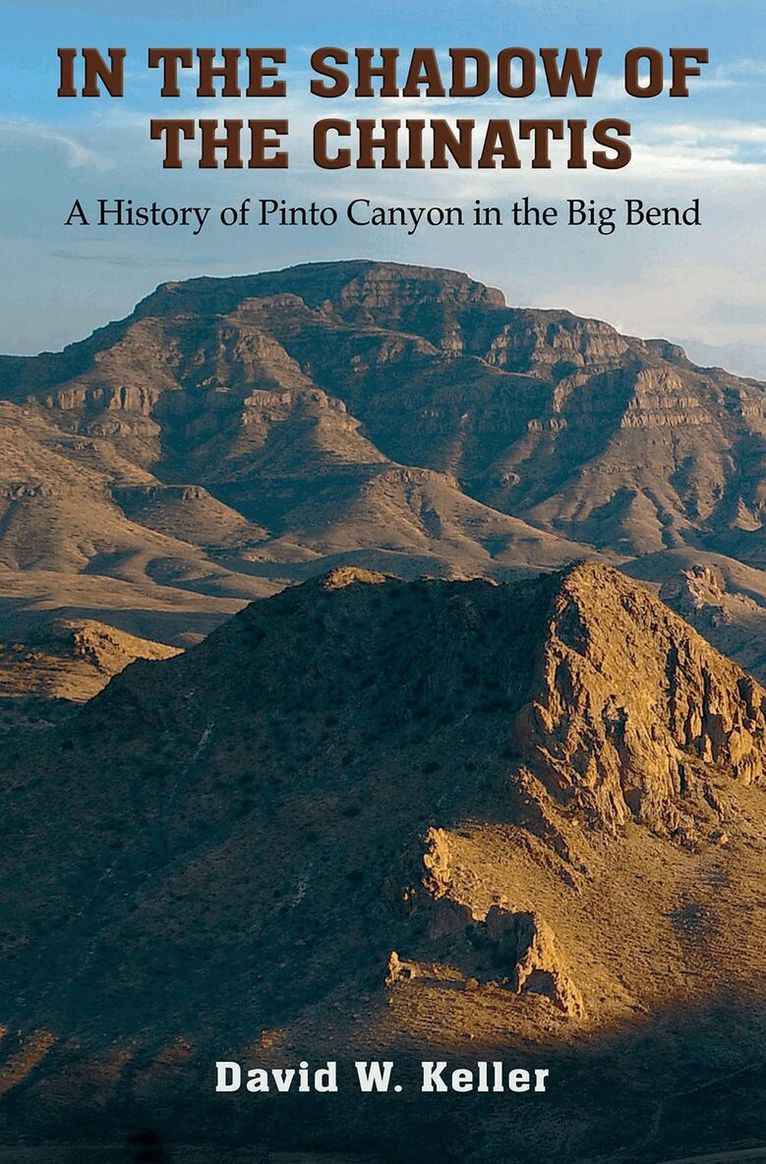
Winner, 2020 Al Lowman Memorial Prize for Best Book on Texas County or Local HistoryThere is a deep and abiding connection between humans and the land in Pinto Canyon—a remote and rugged place near the border with Mexico in the Texas Big Bend. Here the land assumes a certain primacy, defined not by the ephemera of plants and animals but by the very bedrock that rises far above the silvery flow of Pinto Creek— looming masses that break the horizon into a hundred different vistas. Yet, over time, people managed to survive and sometimes even thrive in this harsh environment.In the Shadow of the Chinatis combines the rich narratives of history, natural history, and archeology to tell the story of the landscape as well as the people who once inhabited it. Settling the land was difficult, staying on it even more so, but one family proved especially resilient. Rising above their meager origins, the Prietos eventually amassed a 12,000-acre ranch in the shadow of the Chinati Mountains to become the most successful of Pinto Canyon’s early settlers. But starting with the tense years of the Great Depression, the family faced a series of tragedies: one son was killed by a Texas Ranger, and another by the deranged son of Chico Cano, the Big Bend’s most notorious bandit. Ultimately, growing rifts in the family forced the sale of the ranch, marking the end of an era.Bearing the hallmarks of an epic tragedy, the departure of the Prieto family signaled a transition away from ranching towards a new style of landownership based on a completely different model. Today, Pinto Canyon’s scenic and scientific value increasingly overshadows the marginal economics of its past.In the Shadow of the Chinatis reveals a rich tapestry of interaction between humans and their environment, providing a unique examination of the Big Bend region and the people who call it home.
151 kr
Skickas
From 1983 to 1987, author Mark Dunn worked as a court clerk for a justice of the peace in Travis County, Texas, where, he says, “I learned more about human nature . . . than I could have learned in any other job I might have taken up as a bushy-tailed kid from Tennessee.” Based on interviews with 200 justices of the peace from all parts of Texas, Texas People’s Court promises to take readers on a tour of what it means to be a Texas justice of the peace: an experience that is by turns hilarious, sobering, heart-wrenching, and, from one end to the other, fascinating.Here in the Texas justice court, wrongs can be righted and lives changed in profound ways. A priceless family necklace might finally be restored to the rightful owner; an occupational driver’s license fortuitously granted. A death inquest may become an opportunity for family reflection and valediction, with the attending judge as sympathetic witness.In each of its chapters, Texas People’s Court takes up a different aspect, duty, or area of thought related to the profession of justice of the peace taken from conversations with JPs throughout the state of Texas—from those who serve in its most populous municipalities to rural county JPs—putting a human face on the responsibilities, attitudes, and perspectives that motivate their judgments. The result is a thoroughly entertaining, sympathetic view of what Dunn calls “the day-to-day observation of human conflict in microcosm.”
387 kr
Skickas inom 7-10 vardagar
While sometimes mischaracterized as the last respite of alcoholism, despair, and questionable motives, Texas dive bars are a reminder that life is not limited to the pressures and profits of the 9-to-5 world. A true dive earns its status through age and patron loyalty, so while dives are outposts from much of society, they’re typically stable businesses and often active in their neighborhoods. Dives are also gathering places, where the members, lubricated by affordable beer and long pours of whisky, solve the world’s problems on a regular basis.In Texas Dives: Enduring Neighborhood Bars of the Lone Star State, veteran writer Anthony Head and internationally recognized photographer Kirk Weddle visit twelve bars in twelve Texas cities. With pithy text and revealing images, they tell the stories of some of these off-the-radar hangouts of Americana, shining light on the bars and their owners, staffs, and regulars. Head and Weddle are quick to point out that this book is not about drinking, per se: it’s a book about Texas culture intimately observed, plus just enough participation to claim with confidence that dives also serve as community anchor points, social clubs, and even, on occasion, places where enduring friendships are made.This witty and sympathetic portrayal is sure to become a bucket-list book for general readers, fans of Texana, and almost anyone who has ever ducked around to the corner pub for a quick drink.
413 kr
Skickas inom 7-10 vardagar
On April 27, 1997, Richard Lance McLaren and his followers in the so-called “Republic of Texas (ROT)” militia held Joe and Margaret Ann Rowe hostage inside their own home at the Davis Mountain Resort, near Fort Davis, Texas, and demanded the release of jailed ROT members Jo Ann Turner and Robert Jonathan Scheidt. McLaren’s demand initiated a seven-day standoff with local law enforcement and the Texas Rangers that came to be called the “Republic of Texas War.” Opening with a foreword by the FBI negotiator who served as an on-site consultant throughout the crisis, author Donna Marie Miller presents the first full-length book treatment of the events leading up to McLaren’s “declaration of war” and its aftermath. The result is an absorbing account of manipulation by a leader as charismatic as he was deluded; of misinformed individuals motivated by desperation who aligned themselves with an extremist; and of law enforcement officials caught in the tension between their duty to protect the public and their desire to avoid a repeat of disasters like those at Ruby Ridge, Idaho, and the Branch Davidian compound outside Waco, Texas. Central to the story is Jo Ann Turner, a frantic woman drowning in debt who was drawn into the false ideology espoused by McLaren, which eventually led to her personal undoing. Based on archival research and interviews with persons involved—including McLaren, who has been incarcerated since 1998—this riveting account provides a multifaceted perspective of the historical incident and a detailed chronicle of a modern American anti-government militia, its victims, and the events that led to its eventual downfall.
659 kr
Skickas inom 7-10 vardagar
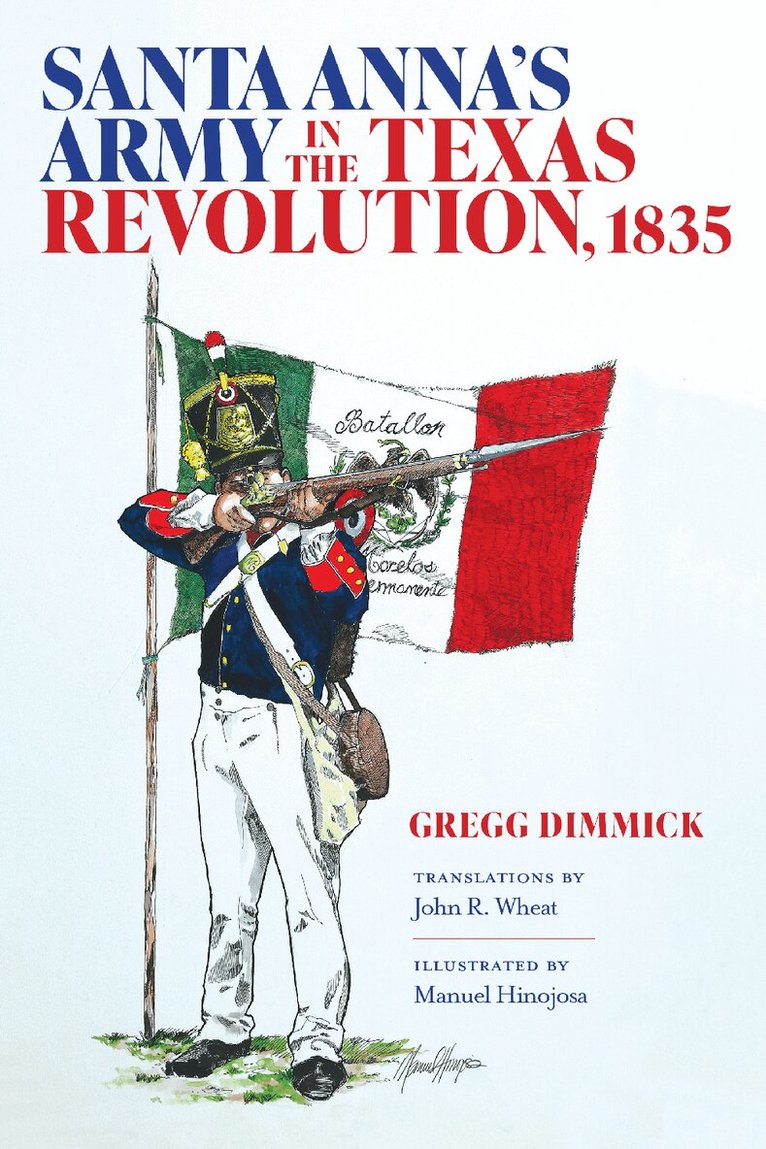
The history of the Mexican Army’s activity in the Texas Revolution is well documented but often hidden away. Many important primary sources have been lost or destroyed, but an impressive amount of period documentation has survived. And yet many of these handwritten, Spanish documents have been shelved in the back rooms of museums and libraries long enough to have been forgotten. Various archives are scattered in locations across Spain, Mexico, and the United States, with very few documents having been translated into English until now.Little can be found in Texan sources that addresses the actions, motivations, and opinions of the Mexican participants in the Texas Revolution. What does exist in Texan accounts was either added in passing or, worse, grossly fabricated. In short, the Texan side of the story has been told, and often at the expense of the perspective of Mexican participants.Author Gregg J. Dimmick makes available this new perspective, including a consideration of the many external forces affecting the Mexican government and its military leaders. At the same time Texans were fighting for independence, Mexican officials faced revolts across several states, battled each other for political control, responded to Spain’s attempts to reacquire Mexico, and contended with numerous foreign powers, including the United States and Britain. In Santa Anna’s Army in the Texas Revolution, 1835 Dimmick sheds new light on the complex motivations of the Mexican Army facing the Texas Revolution.
385 kr
Skickas inom 7-10 vardagar
It might seem unlikely that a place designed for the departed could be teeming with life. Cemeteries have a long history of serving the dual purpose of honoring the deceased while also proving a space for the living to gather and grieve in the embrace of nature. Touted as some of the earliest public parks in the country— with mature trees, open grasslands, meadows of wildflowers—cemeteries are also attractive to birds and wildlife. In an age of distractions and disconnection, cemeteries create a sense of place where visitors can reconnect with nature while exploring the cultural history of a region. For bird watchers, cemeteries offer easy walking, open spaces to peer into habitats, and a peaceful place to feel the breeze and listen to the quiet conversations of nature.Cemetery Birding builds upon the unique and approachable experiences introduced in Jennifer L. Bristol’s first book, Parking Lot Birding. While cemeteries offer accessible places to bird watch, Bristol highlights the need to tread carefully and ethically when exploring these sacred spaces. Her treatment of each of the nearly 100 locations provides information about what birds can be observed in various seasons and offers readers a snapshot of the cemetery and community’s history. Filled with rich photos, Bristol deciphers headstone symbolism in “Tombstone Tales” and offers fun facts about individual species of birds in “Tombstone Tails.” Locations range from the heart of Houston to the wide-open spaces of West Texas and every ecoregion in between.
561 kr
Skickas inom 7-10 vardagar
Nearly three-quarters of Texans live on the “dry side” of Texas—the South and Central Texas expanse west of I-35, which includes the Rio Grande Valley north through San Antonio, Austin, and the Dallas–Fort Worth area—that receives fewer than 40 inches of rain annually. In Gardening on the Dry Side of Texas, Southwestern horticulturist Mary Irish presents a guide to the selection and care of plants that will be successful in these and other increasingly hot and dry conditions. Gardening on the Dry Side of Texas opens with a section on garden design; water conservation, capture, and management; and how plants cope in drought conditions. The heart of the book is 180 plant species included for their hardiness in Texas, even amid the challenges of a changing climate with longer and hotter summers, more erratic and less reliable rainfall, and increasingly costly and scarce water. These plants have low to moderate water needs and grow well in both the hot and cold conditions of the region. Most are native plants, with special consideration to those that are also reasonably available to the public. Many of the species presented will also be useful in the prairie and desert areas of West Texas and beyond, making Gardening on the Dry Side of Texas a valuable resource for gardeners looking to work with their local climate instead of against it.
530 kr
Skickas
According to author Joe Holley, the story of the Texas Electric Cooperatives, a collective of some 76 member-owned electric providers throughout the state, is a story of neighborliness and community, grit and determination, and persuasion and political savvy. It’s the story of a grassroots movement that not only energized rural Texas but also showed residents the power they have when they band together to find strength in unity.Opening with the coming of electricity to Texas’ major cities at the turn of the twentieth century, Power: How the Electric Co-op Movement Energized the Lone Star State describes the dramatic differences between urban and rural life. Though the major cities of Texas were marvels of nighttime brilliance, the countryside remained as dark as it had been for centuries before. It was not economical for the startup electrical companies to provide service to far-flung rural areas, so they were forced to do without.Beginning with the New Deal–era efforts of Sam Rayburn, Lyndon Johnson, and others, Holley chronicles the birth and development of the electric cooperative movement in Texas, including the 1935 federal act that created the Rural Electrification Administration. Holley concludes with the devastation wrought by Winter Storm Uri in February 2021 and the intense debate that continues around climate resilience and the Electric Reliability Council of Texas (ERCOT), overseer of the state’s electric grid, all of which has profound implications for rural electric cooperatives who receive their allocations according to procedures administered by ERCOT. Power is sure to enlighten, entertain, and energize readers and policymakers alike.
413 kr
Skickas inom 7-10 vardagar
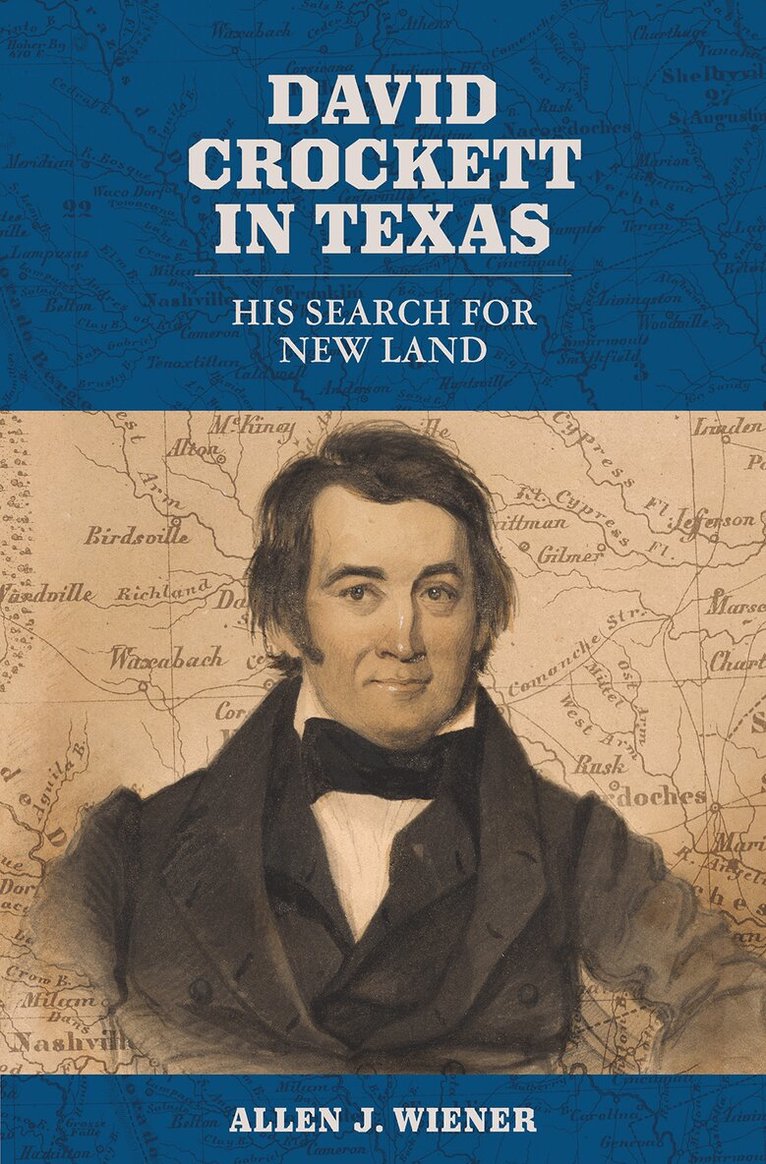
David Crockett in Texas: His Search for New Land, by Allen J. Wiener, takes a fresh look at the well-known figure from the perspective of his quest for land in Texas and the new start it promised for his family. This retelling of what the author terms “the last adventure in the life of a nineteenth-century Tennessee frontiersman who became a national celebrity” presents a picture of Crockett that contrasts with the popular image of the brash adventurer who sought glory on the battlefield as well as that of the bitter, failed politician who came to Texas as a last resort. Wiener presents a nuanced examination of Crockett’s motivations that places them in the context of the full arc of his career and aspirations, starting long before he ventured to the south side of the Red River. Notably, this book devotes a full chapter to the fate of Crockett’s family after his death, contributing perhaps the most complete account to date of the astute legal actions taken by Elizabeth Crockett to secure title to the land obtained by her late husband’s enlistment in the Texian cause. Uniquely to studies of Crockett, Wiener presents Elizabeth Crockett as a shrewd businesswoman who ably managed her husband’s various enterprises at home while he was off campaigning or serving in Washington, DC. David Crockett in Texas offers fascinating new evaluations of what we thought we already knew about one of the most studied and debated figures in Texas and American history.
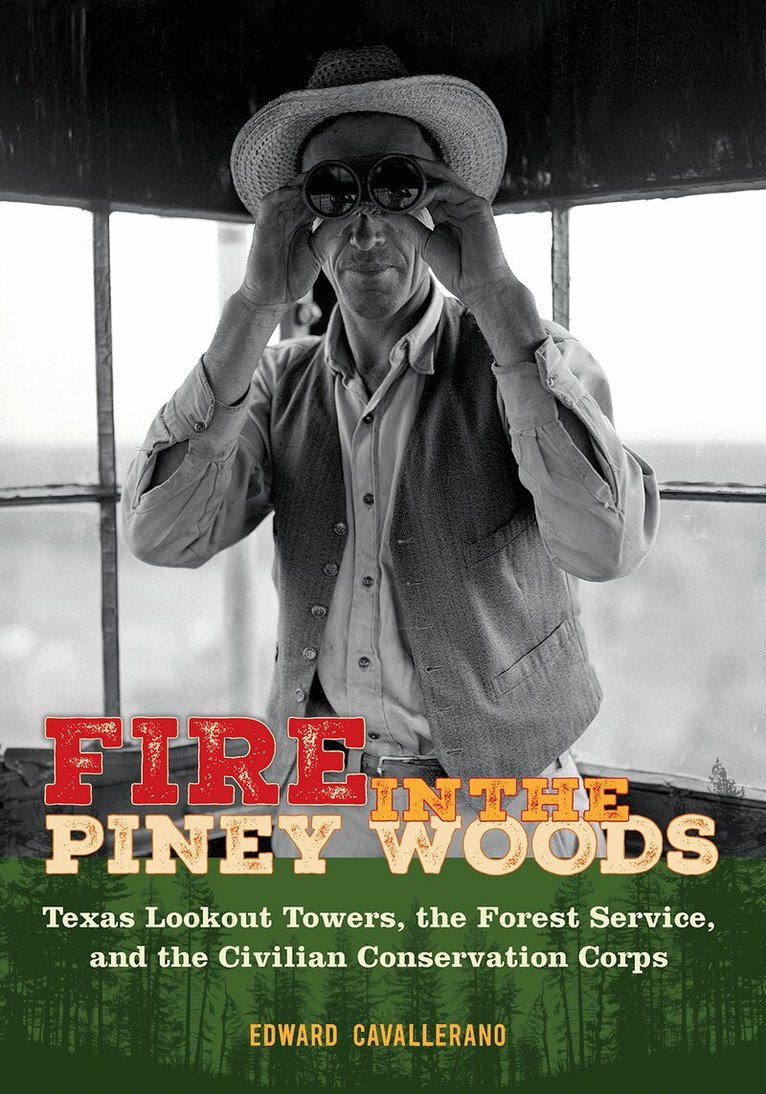
Fire in the Piney Woods
Texas Lookout Towers, the Forest Service, and the Civilian Conservation Corps
Inbunden, Engelska, 2025
496 kr
Skickas inom 7-10 vardagar
Fire lookout towers are enjoying a retrospective rebirth, attracting the curious and the adventurous, as Americans seeking escape for moments of solitude rediscover the structures’ national significance. Though the Civilian Conservation Corps’ national fire control policies and reforestation efforts have been covered elsewhere, each state’s legacy is as unique as its people, forest conditions, traditions, and legislative history. In Texas, what emerges is a story that shaped national policies and examines the ethos of a generation. Edward Cavallerano’s Fire in the Piney Woods develops several parallel stories. The first describes the Piney Woods and the antecedent conditions that necessitated fire prevention, forest fire detection, and the development of Texas’ fire lookout network. Second, through collected stories, poetry, and primary accounts, it pays tribute to a generation of Civilian Conservation Corps enrollees, foresters, surveyors, and dedicated, self-sufficient lookouts who redeveloped or protected the forestlands of Texas and educated rural communities about the value of their natural resources. Finally, it describes the location and design of the lookout towers and associated structures in Texas by consolidating a decade of observations. In this effort, Cavallerano introduces methodologies to assess tower characteristics that may be useful to workers in other regions. Taken together, the book shares an appreciation of the past and celebrates the heritage these sites still possess. Fire in the Piney Woods preserves the history of forest fire protection in Texas, enhances readers’ recreational experiences, and builds a compelling case among Texans to preserve the lookout towers that still stand.
319 kr
Skickas inom 7-10 vardagar
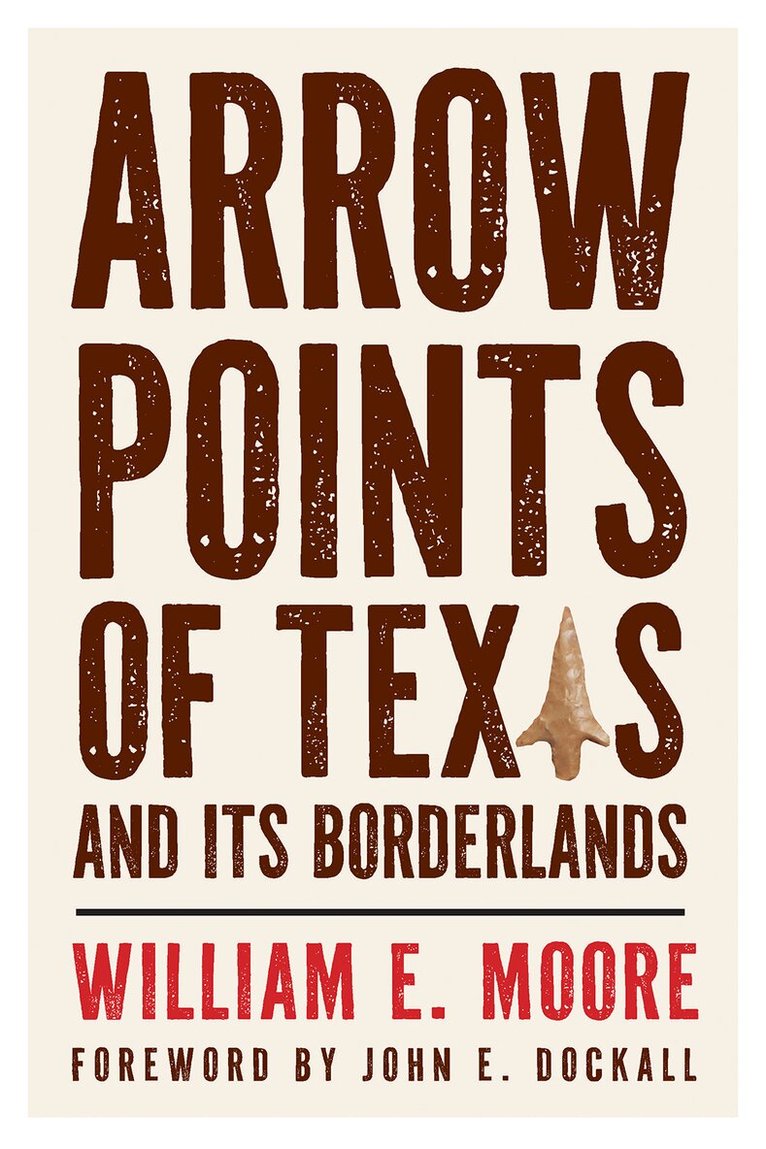
State and federal entities of the relatively new United States may have set borders—but archaeological history does not. Arrow Points of Texas and Its Borderlands illuminates surviving archaeological material in the form of Native American arrow points commonly found in Texas and the surrounding regions. After a fourteen-year gap without an updated field book, professional archaeologist and cultural resources consultant William E. Moore has assembled the latest research on typology and distribution to produce this handy guide. Incorporating points found not only in Texas but also in the nearby areas of Arkansas, Oklahoma, New Mexico, Louisiana, and northern Mexico, this book provides, in the words of the foreword by noted lithic specialist John E. Dockall, “a much-needed synthesis of regional and chronological data that will be useful to professional and avocational archaeologists alike.” Indeed, by taking such an approach, Moore helps to alleviate some of the persistent confusion arising from arbitrary boundaries and resulting provincial perspectives. Including helpful references, a field guide, and distribution maps in addition to detailed illustrations, the book pulls together in a single, easy-to-use volume much information that was previously diffused among an array of archives and “gray literature” reports. Arrow Points of Texas and Its Borderlands will find a welcome place on the bookshelves of professional and avocational archaeologists and collectors throughout the Southwest.
347 kr
Skickas inom 7-10 vardagar
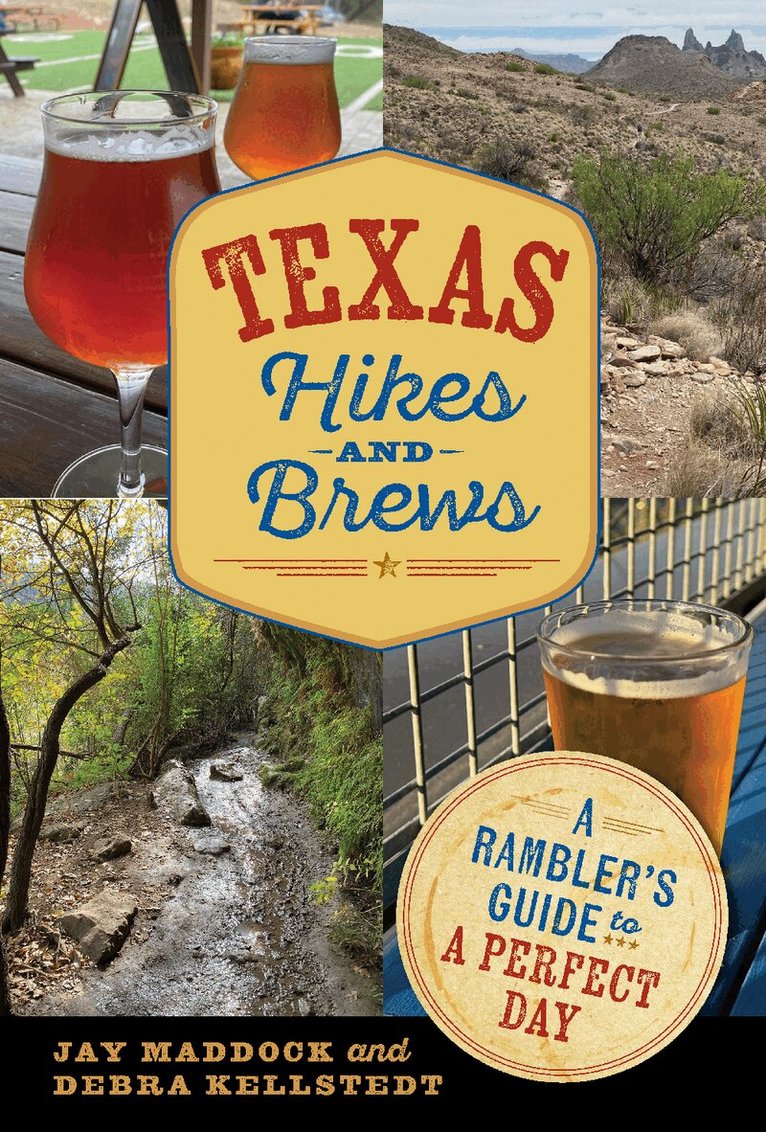
Is there a better way to spend a Texas afternoon than outdoors on a trail and then sitting back to relax with a cold one? Authors Jay Maddock and Debra Kellstedt would say there isn’t. Texas Hikes and Brews: A Rambler’s Guide to a Perfect Day presents twenty-four different hiking itineraries throughout the Lone Star State, each coupled with an outstanding independent brewery.While Texas abounds with hiking opportunities, Maddock and Kellstedt focus on exploring the less-traveled spots across the state, selecting routes primarily located in state parks and an occasional national park and local greenway. Divided into four geographic sections radiating outwards from their home base of College Station, readers will find sites local to Central Texas and stretching all the way out to Big Bend. From short hikes of just over a mile to some of more than ten miles, there’s a hike for those of all skill levels, designed to reveal the beauty of Texas. The breweries represent the independent flavor of Texas craft brewing, providing a full picture of the specialties, the physical space, and food offerings.Each hike includes data points such as type of trail, completion time, miles, number of steps, and other vital information (restroom facilities, for example) for readers. Maddock and Kellstedt further expound on individual subjects such as landscape features, Texas history, facts about beer and brewing, and “pro tips” from the authors (state park annual passes are a must).Whether you’re interested in discovering new sites for getting into the Lone Star state’s great outdoors or are a craft beer aficionado looking to support small business breweries—or maybe even both—Texas Hikes and Brews is for you.
Austin–San Antonio Megaregion
Opportunity and Challenge in the Lone Star State
Inbunden, Engelska, 2025
306 kr
Skickas inom 7-10 vardagar
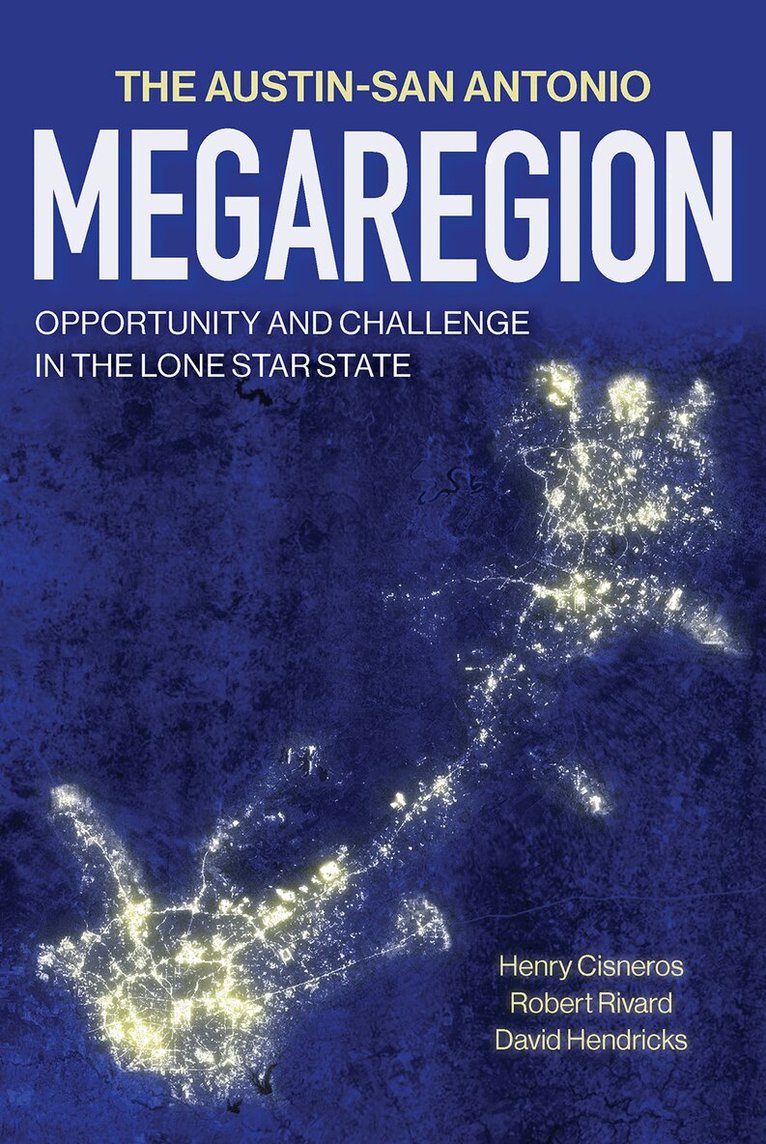
A cascade of recent reports has described unprecedented growth in every category measured—population, employment, new business starts, manufacturing indices, traffic counts, in-migration, school attendance, and airport enplanements—highlighting the dynamism of the two “anchor cities” of Central Texas: Austin and San Antonio. In The Austin–San Antonio Megaregion: Opportunity and Challenge in the Lone Star State, authors Henry Cisneros, Robert Rivard, and David Hendricks reflect on the implications of this growth in light of what will be required to sustain the economic attractiveness and quality-of-life attributes that sparked this moment of expansion.In asking fundamental questions such as “Is this much growth actually good for the region?” and “If it is, are we prepared for it?” this book grapples with the realities of infrastructure. What emerges is a vision for this burgeoning urban corridor that, if implemented, can position the region to continue to thrive: attracting economic development and supporting a superior standard of living for its citizens for years to come.In their preface, the authors state, “The task before us is not easy, but it can be done. It is not a matter of liberal or conservative politics, of red or blue ideologies; it is a matter of realistic leadership and practical public consensus. The reality of the Austin–San Antonio megaregion is becoming more evident every day to those of us who live here. We try in this book to undergird those impressions with facts, data, and scenarios for the future.” The Austin–San Antonio Megaregion can serve as both a blueprint for future planning and a springboard for informed discussion about growth in this vital region.