Cambridge Monographs and Texts in Applied Psycholinguistics - Böcker
Visar alla böcker i serien Cambridge Monographs and Texts in Applied Psycholinguistics. Handla med fri frakt och snabb leverans.
3 produkter
3 produkter
416 kr
Skickas inom 7-10 vardagar
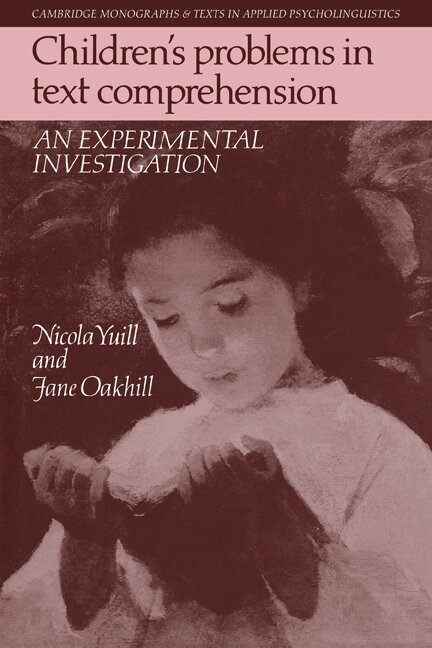
Although some young children can read aloud with apparent fluency, they fail to understand fully or remember connected discourse. Much research on reading has focused on problems at the word recognition level and less attention has been given to comprehension difficulties. The authors of this 1991 work observed that teachers usually monitored reading ability by listening to children read aloud, or by using reading tests that concentrate on word recognition skills. Thus, comprehension problems could go unnoticed. The authors provide an introduction and an overview of adult and child text comprehension. They then describe their own research on children who have a specific comprehension deficit. Such children have difficulties in making inferences from text, in using working memory to integrate information into a coherent mental model and in reflecting on their own comprehension. The authors relate these findings to educational practice and make suggestions for comprehension improvement. Psychologists and educators will welcome this presentation of fresh, thorough research on an important topic.
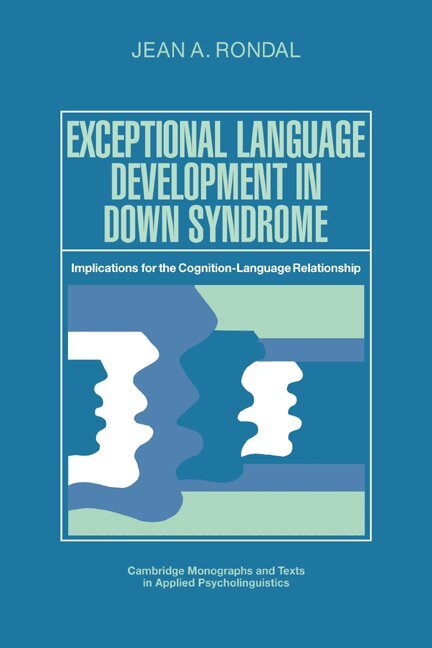
Exceptional Language Development in Down Syndrome
Implications for the Cognition-Language Relationship
Inbunden, Engelska, 1995
1 716 kr
Skickas inom 7-10 vardagar
Is normal language acquisition possible in spite of serious intellectual impairment? The answer, it would appear, is positive. This book summarizes and discusses recent evidence in this respect. The bulk of the argument comes from the in depth study of a Down Syndrome adult woman with standard trisomy 21, exhibiting virtually normal expressive and receptive grammar. The case is compared to a small number of other exceptional cases of language development in mental retardation, as published in the recent specialized literature. Cases such as those are powerful arguments against 'cognition drives language' or better 'cognition drives grammar' theories and hypotheses. Data analysis and comparison with other empirical indications in language pathology (specific language impaired children, aphasic syndromes, degenerative syndromes, dementias) suggest dividing lines in the language system relevant to the modularity problem. Also, comparison of data on language exceptional and language-typical mentally retarded subjects supplies interesting arguments in favor of a conception of grammatical development as the gradual unfolding of innate species-specific dispositions, which are prevented to be realized ontogenetically in typical mental retardates for reason of the anomalies of early brain development in these subjects.
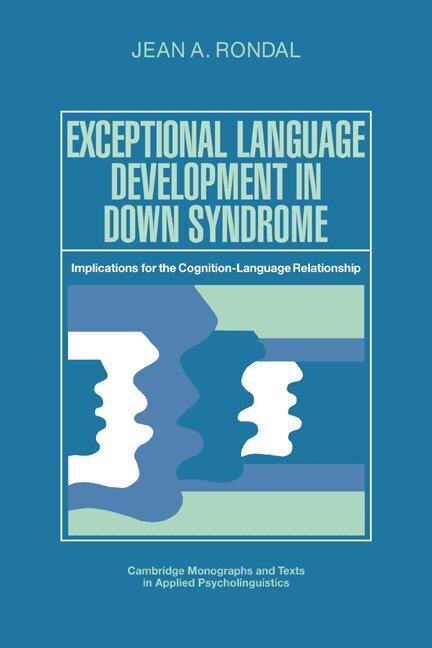
Exceptional Language Development in Down Syndrome
Implications for the Cognition-Language Relationship
Häftad, Engelska, 1995
672 kr
Skickas inom 7-10 vardagar
Is normal language acquisition possible in spite of serious intellectual impairment? The answer, it would appear, is positive. This book summarizes and discusses recent evidence in this respect. The bulk of the argument comes from the in depth study of a Down Syndrome adult woman with standard trisomy 21, exhibiting virtually normal expressive and receptive grammar. The case is compared to a small number of other exceptional cases of language development in mental retardation, as published in the recent specialized literature. Cases such as those are powerful arguments against 'cognition drives language' or better 'cognition drives grammar' theories and hypotheses. Data analysis and comparison with other empirical indications in language pathology (specific language impaired children, aphasic syndromes, degenerative syndromes, dementias) suggest dividing lines in the language system relevant to the modularity problem. Also, comparison of data on language exceptional and language-typical mentally retarded subjects supplies interesting arguments in favor of a conception of grammatical development as the gradual unfolding of innate species-specific dispositions, which are prevented to be realized ontogenetically in typical mental retardates for reason of the anomalies of early brain development in these subjects.